Topics / #sglang
Sglang projects on GitHub
Serving engine for fast LLM inference and structured generation.
As of , the most-starred Sglang projects on GitHub are self-llm (32.5K stars), Unlimited-OCR (27.7K stars) and ktransformers (19.6K stars). GitHub.Locker tracks 25 Sglang repositories with 154.8K stars combined. The fastest-growing on October 17 was Unlimited-OCR, with +84 stars in a day.
Hot right now
Most stars gained in a day · Oct 17
 +84
+84Unlimited-OCR
baidu/Unlimited-OCR · ★ 27.7KIt's an open-source OCR model from Baidu built for one-shot parsing of long documents — the team positions it as pushing Deepseek-OCR one step further, with an arXiv paper backing the approach.
 +11
+11self-llm
datawhalechina/self-llm · ★ 32.5KSelf-llm is a Chinese-language tutorial collection that teaches beginners how to configure environments, deploy, and fine-tune (full-parameter or LoRA) 50+ open-source large language models and multimodal models on Linux.
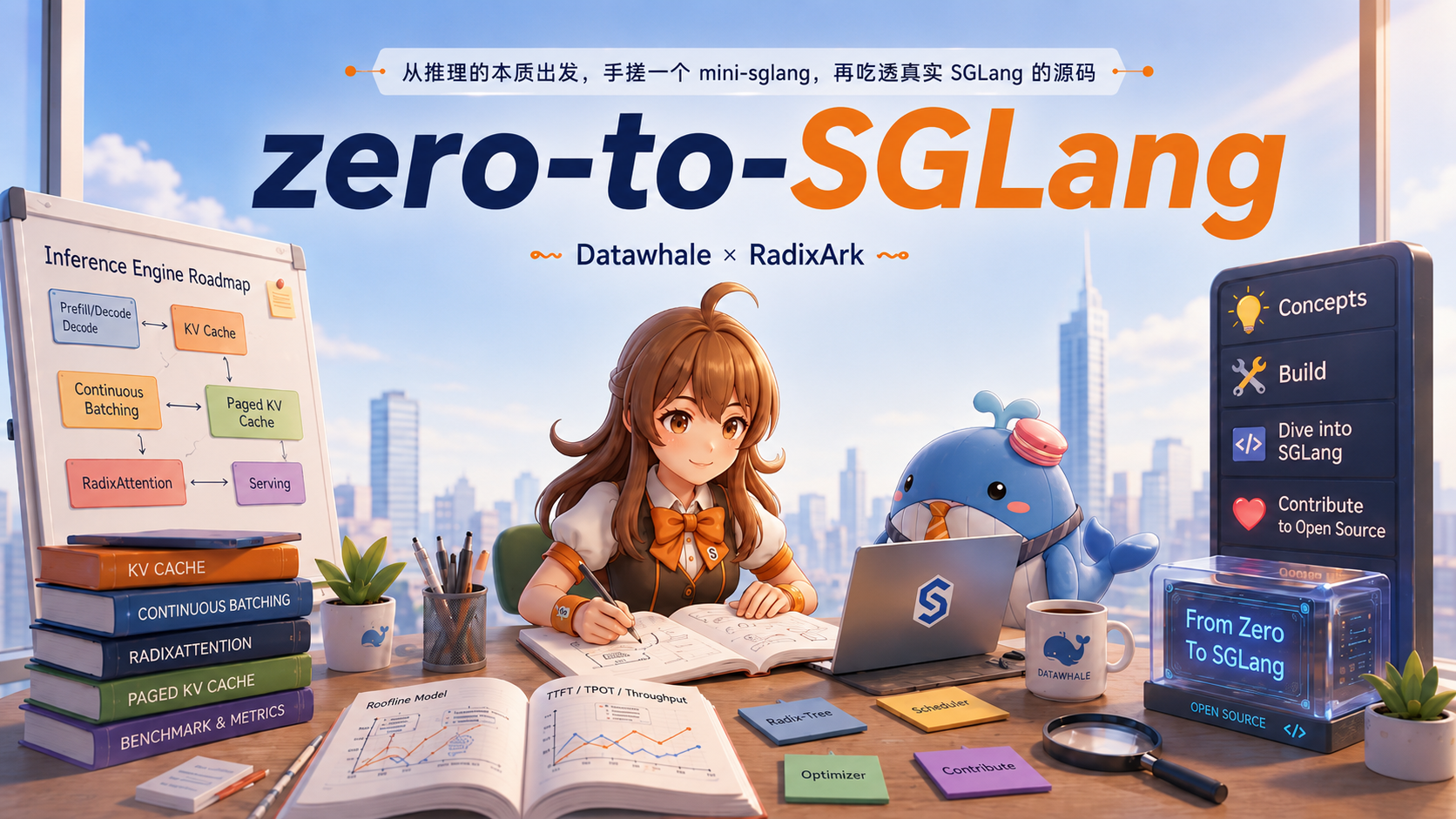 +11
+11zero-to-sglang
datawhalechina/zero-to-sglang · ★ 1.5KThe official SGLang x Datawhale course on LLM inference: it teaches how inference engines work, has you build a mini-sglang from scratch, and then digs into the real SGLang source code.
 +11
+11Hy-MT2
Tencent-Hunyuan/Hy-MT2 · ★ 1.3KHy-MT2 is Tencent Hunyuan's family of 'fast-thinking' multilingual translation models, released in three sizes (1.8B, 7B, and 30B-A3B MoE), that translate among 33 languages and follow complex translation instructions.
The all-time top
25 projects · by stars
- 32.5K#1 · datawhalechina/self-llm
self-llm
Self-llm is a Chinese-language tutorial collection that teaches beginners how to configure environments, deploy, and fine-tune (full-parameter or LoRA) 50+ open-source large language models and multimodal models on Linux.
- 27.7K#2 · baidu/Unlimited-OCR
Unlimited-OCR
It's an open-source OCR model from Baidu built for one-shot parsing of long documents — the team positions it as pushing Deepseek-OCR one step further, with an arXiv paper backing the approach.
- 19.6K
#3 · kvcache-ai/ktransformers
ktransformers
KTransformers is a research framework for efficient inference and fine-tuning of large language models through CPU-GPU heterogeneous computing, letting huge MoE models run on hardware that doesn't have enough VRAM to hold them entirely on GPU.
- 4
ms-swift
15.9Kmodelscope/ms-swift · Pythonms-swift is the ModelScope community's fine-tuning and deployment framework for LLMs and multimodal models, covering training, inference, evaluation, quantization and deployment in one pipeline.
- 5

reef
7.6KHuman-Agent-Society/reef · PythonReef is open-source infrastructure for continually self-improving agents. It wires together agent inference, feedback collection, learning, and versioned delivery so an agent keeps getting better from how you interact with it.
- 6

GLM-OCR
7.5Kzai-org/GLM-OCR · PythonGLM-OCR is a multimodal OCR model for complex document understanding, built on a GLM-V encoder-decoder architecture with a lightweight SDK and inference toolchain around it.
- 7

lectures
6.9Kgpu-mode/lectures · Jupyter NotebookThis is the supplementary material repository for the GPU MODE lectures YouTube channel — a growing collection of notebooks, slides and code from each numbered lecture on GPU and CUDA programming.
- 8
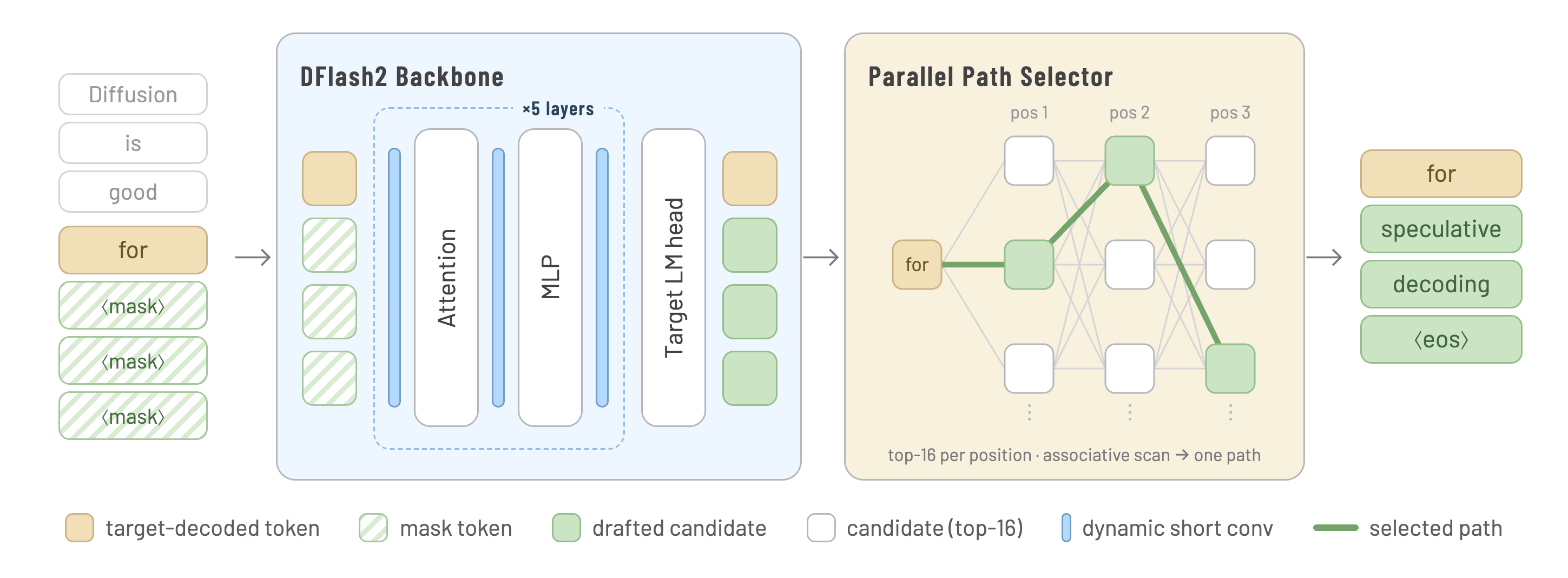
dflash
6.2Kz-lab/dflash · PythonDFlash is a lightweight block diffusion model built for speculative decoding, drafting tokens in parallel blocks so a larger target LLM can verify them faster than generating one token at a time.
- 9

OpenClaw-RL
5.7KGen-Verse/OpenClaw-RL · PythonOpenClaw-RL is a fully asynchronous reinforcement learning framework that turns everyday conversations with an agent into training signals, letting you train a personalized OpenClaw agent just by talking to it, or train general agents for terminal, GUI, SWE, and tool-call tasks.
- 10

Model-Optimizer
5.4KNVIDIA/Model-Optimizer · PythonNVIDIA Model Optimizer (ModelOpt) is a Python library that bundles state-of-the-art model-compression techniques - quantization, pruning, neural architecture search, distillation, speculative decoding and sparsity - to shrink and speed up deep learning models before deployment.
- 11
Qwen3.8
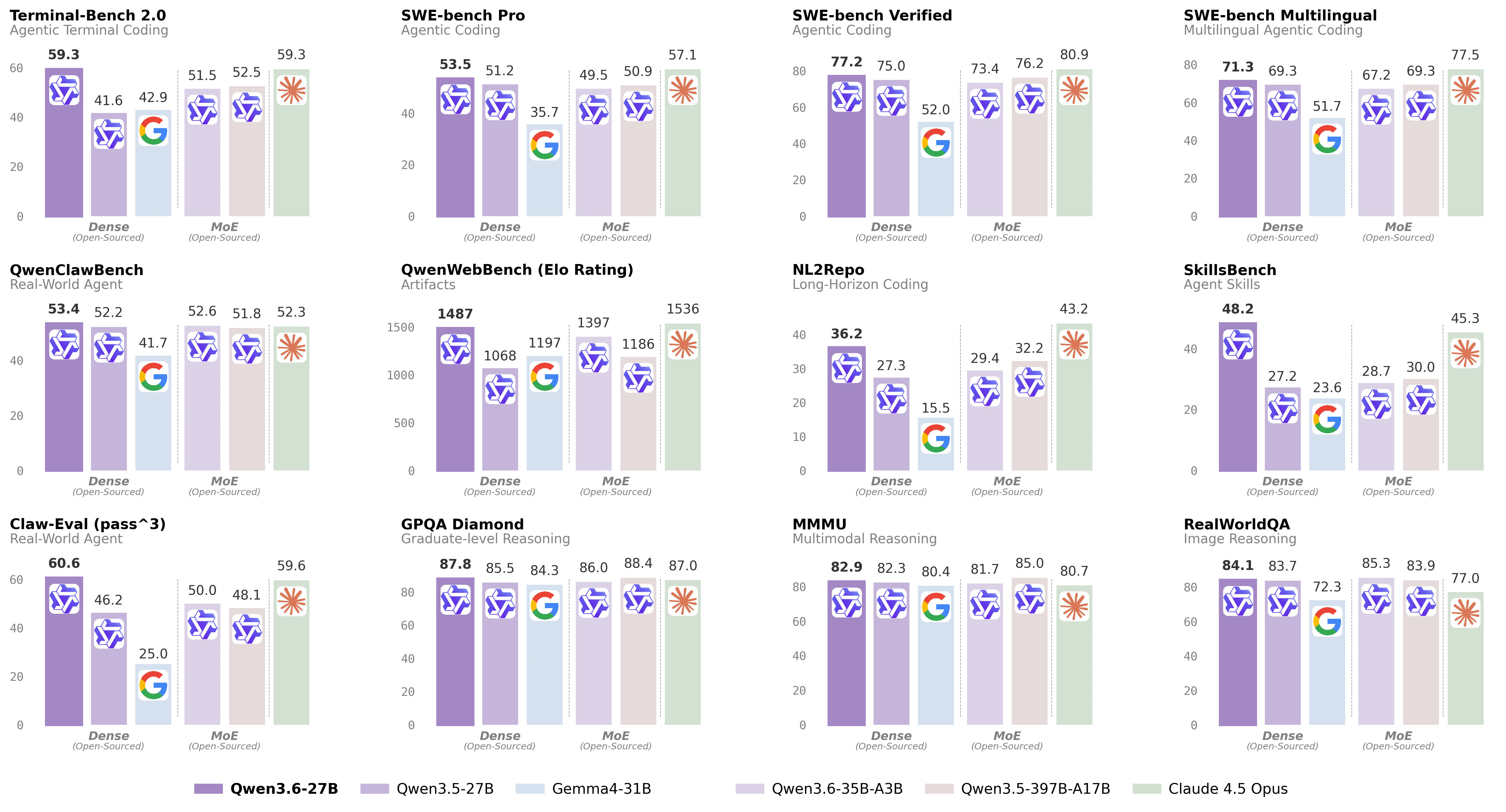
4.3KQwenLM/Qwen3.8Qwen3.8 is the latest open large language model release from Alibaba's Qwen team, part of the Qwen3.5 series that also includes Qwen3.5 and Qwen3.6, aimed at coding, professional work, research, and long-horizon agentic tasks.
- 12

InfraTech
4.2KCalvinXKY/InfraTech · Jupyter NotebookInfraTech is a collection of Jupyter notebooks and articles sharing AI Infra knowledge: training/inference frameworks (PyTorch, vLLM/SGLang, slime/vime), performance acceleration, deep learning fundamentals and AI hardware/software basics.
- 13
WeMM-Embedding
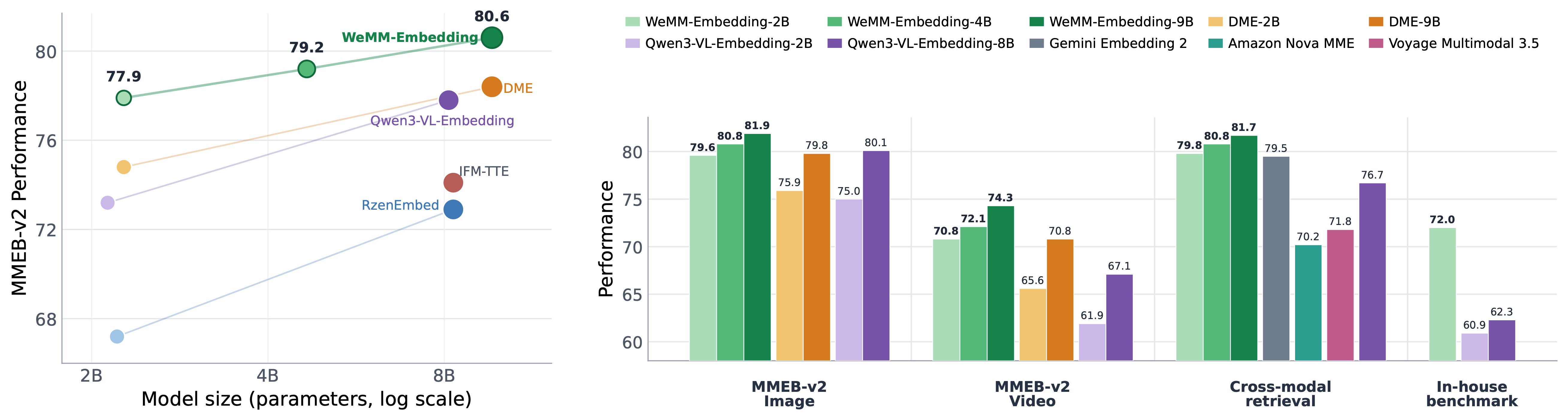
1.8KTencent/WeMM-Embedding · PythonWeMM-Embedding is a family of multimodal embedding models (2B, 4B, 9B) built by the WeChat Vision Team at Tencent that produce unified embeddings for text, images, videos, visual documents, and interleaved multimodal inputs for search and retrieval tasks.
- 14
NeoHorse
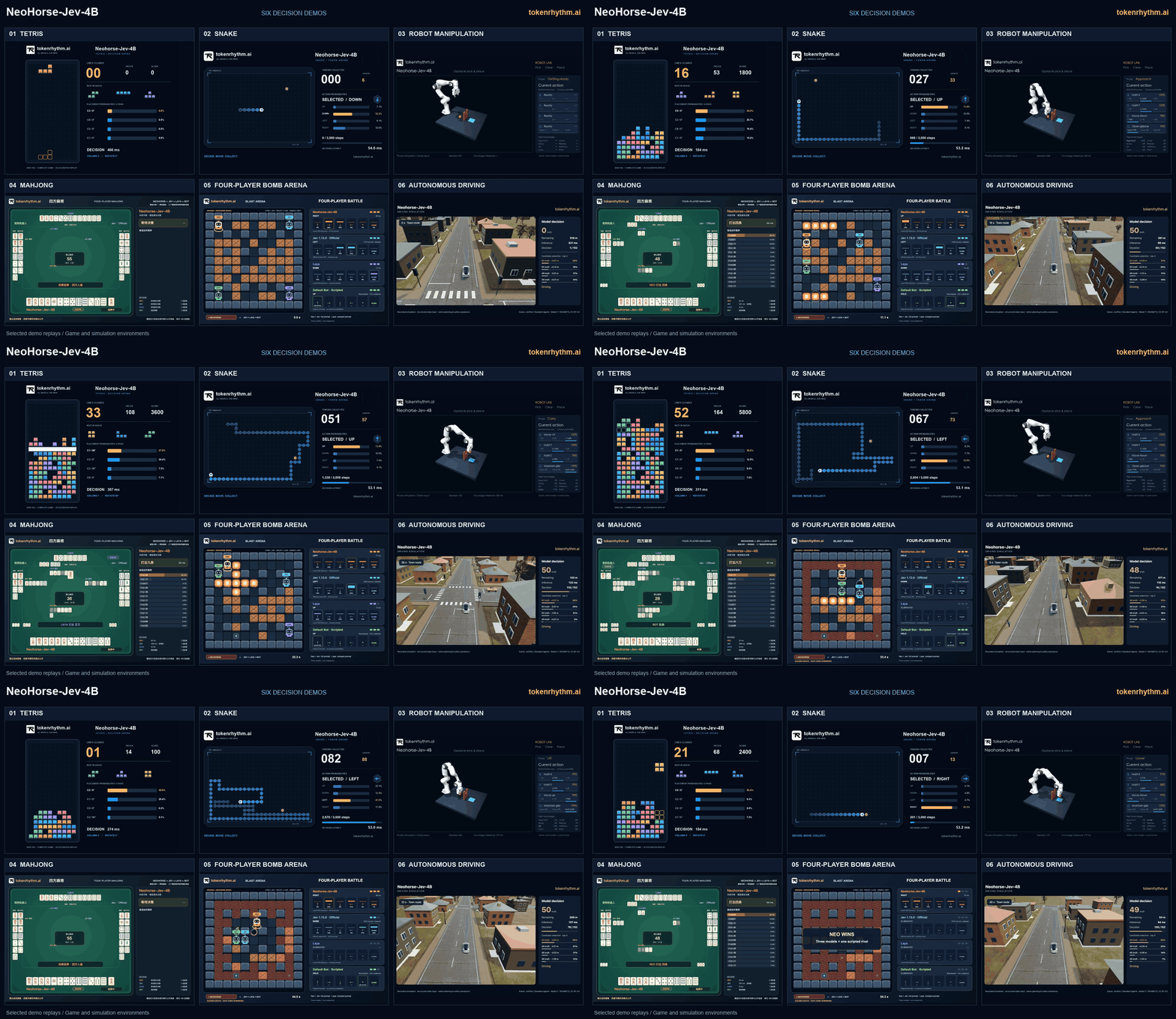
1.7KTokenRhythm/NeoHorse · PythonNeoHorse is TokenRhythm's family of open-weight language models built for agent workflows, with the 4B and 9B NeoHorse-1 checkpoints handling tool use, coding, and instruction following, plus a companion decision model called NeoHorse-Jev.
- 15
zero-to-sglang
1.5Kdatawhalechina/zero-to-sglang · PythonThe official SGLang x Datawhale course on LLM inference: it teaches how inference engines work, has you build a mini-sglang from scratch, and then digs into the real SGLang source code.
- 16
Hy-MT2
1.3KTencent-Hunyuan/Hy-MT2 · PythonHy-MT2 is Tencent Hunyuan's family of 'fast-thinking' multilingual translation models, released in three sizes (1.8B, 7B, and 30B-A3B MoE), that translate among 33 languages and follow complex translation instructions.
- 17

MiniMax-Music3
963MiniMax-AI/MiniMax-Music3MiniMax Music 3 is a music generation model that creates complete songs up to five minutes long from lyrics and a music description, producing 32 kHz 16-bit stereo WAV audio with coherent structure and expressive vocals.
- 18

halo
825whitecircle/halo · PythonHalo is an open-source framework from White Circle for training large language and multimodal models: pre-training, SFT, preference optimization, and fully asynchronous multi-turn RL in one codebase, from a single GPU up to multi-node clusters.
- 19

Spark-X2.5
812XHToken/Spark-X2.5Spark-X2.5 is a series of two open-source language models (4B and 1.7B parameters) built for everyday conversation, writing, translation, coding, reasoning and agentic tool-use tasks, aiming for strong performance in a compact size.
- 20
verl
718XiaomiMiMo/verl · Pythonverl is an open-source RL post-training framework for large language models, started by ByteDance Seed as the open-source version of the HybridFlow paper. This XiaomiMiMo fork adds agentic RL training code for MiMo, with reproduction code for five RL environments on top of verl 0.9.0.dev.
- 21

Qwen3.8-27B-SGLang-DGX-Spark
474MiaAI-Lab/Qwen3.8-27B-SGLang-DGX-Spark · ShellA set of opinionated, ready-to-run Docker scripts that serve the Qwen3.8-27B model through SGLang on an NVIDIA DGX Spark (GB10, aarch64), offering three swap-in speculative-decoding modes — EAGLE/MTP, DSpark, and DFlash2 — each tuned with on-device measurements rather than guesses.
- 22

Hy4-preview
396Tencent-Hunyuan/Hy4-preview · PythonHy4 preview is Tencent Hunyuan's newest open-source large language model, a 770B-parameter Mixture-of-Experts model (49B active per token) built for coding, office/data analysis, game development, and scientific research tasks.
- 23
llm-inference-engineering
348amitshekhariitbhu/llm-inference-engineering · MarkdownA free, continuously growing blog series that teaches LLM inference engineering step by step, covering KV cache, PagedAttention, continuous batching, speculative decoding, and serving engines like vLLM, SGLang, TensorRT-LLM, and GGUF.
- 24
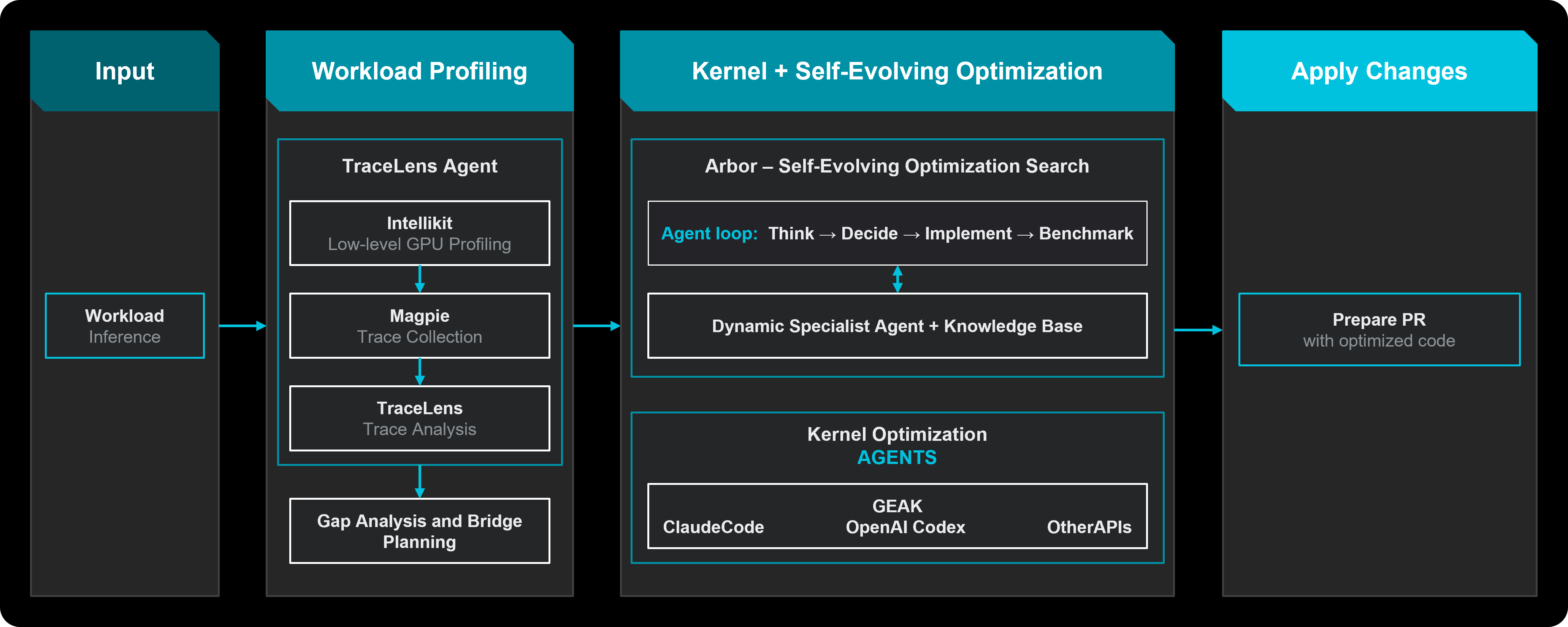
Hyperloom
241AMD-AGI/Hyperloom · PythonA multi-agent harness that autonomously optimizes LLM inference on AMD Instinct GPUs: it profiles your workload, searches framework and GPU-kernel optimizations, validates every candidate end to end, and saves proven results into a recipe knowledge base.
- 25

dgx-spark-qwen38
229hasso5703/dgx-spark-qwen38 · PythonA one-command installer that sets up a hardened, boot-persistent SGLang serving stack for the Qwen3.8 model family on a single NVIDIA DGX Spark (GB10), reaching 50 tok/s greedy median and up to 1M context on the 27B NVFP4 config, with a 176B Flash-Next MoE model also fitting on one box.
Related topics
Often tagged together