Topics / #classification
Classification projects on GitHub
Image and data classification models, training, and annotation.
As of , the most-starred Classification projects on GitHub are scikit-learn (67.7K stars), supervision (51.2K stars) and laya (33.2K stars). GitHub.Locker tracks 45 Classification repositories with 544.1K stars combined. The fastest-growing on October 16 was StartLux-Decision, with +150 stars in a day.
Hot right now
Most stars gained in a day · Oct 16
 +150
+150StartLux-Decision
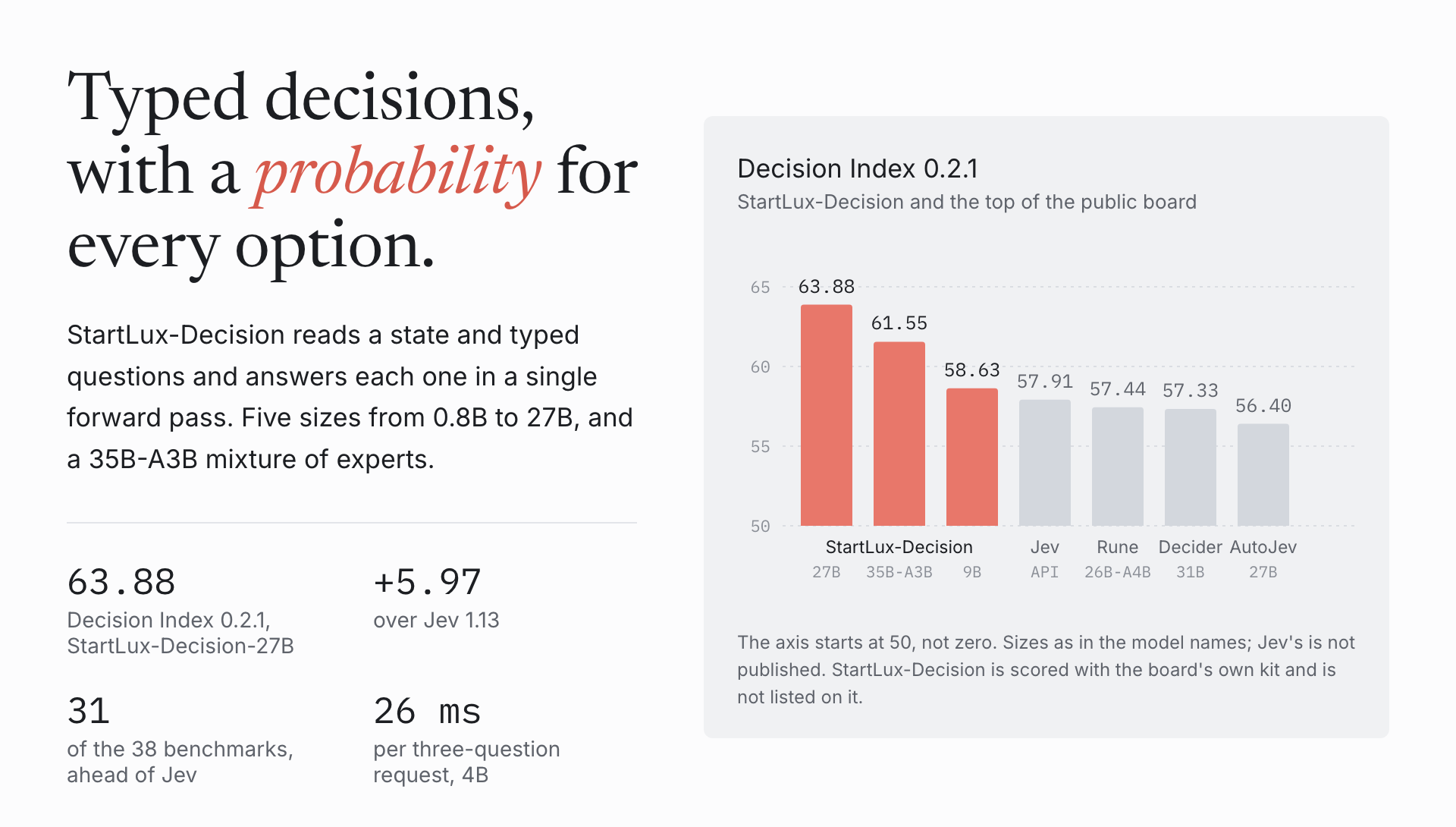
StartLuxLabs/StartLux-Decision · ★ 648StartLux-Decision is a family of typed decision models (five dense sizes from 0.8B to 27B plus a 35B-A3B mixture-of-experts) that answer a question with a probability for each option instead of generating text.
 +130
+130laya
NandhaKishorM/laya · ★ 33.2KLaya is a non-autoregressive decision engine: instead of generating text, it answers typed questions — multiple choice, a numeric score, or yes/no — about any text in a single forward pass, across 100+ languages. A built-in router detects the language and picks the right checkpoint per request.
 +120
+120Hands-On-Large-Language-Models
HandsOnLLM/Hands-On-Large-Language-Models · ★ 29.7KThe official code repo for the O'Reilly book 'Hands-On Large Language Models', known as the Illustrated LLM Book. It contains a Jupyter notebook for each of the book's 12 chapters.
 +63
+63AnyJev
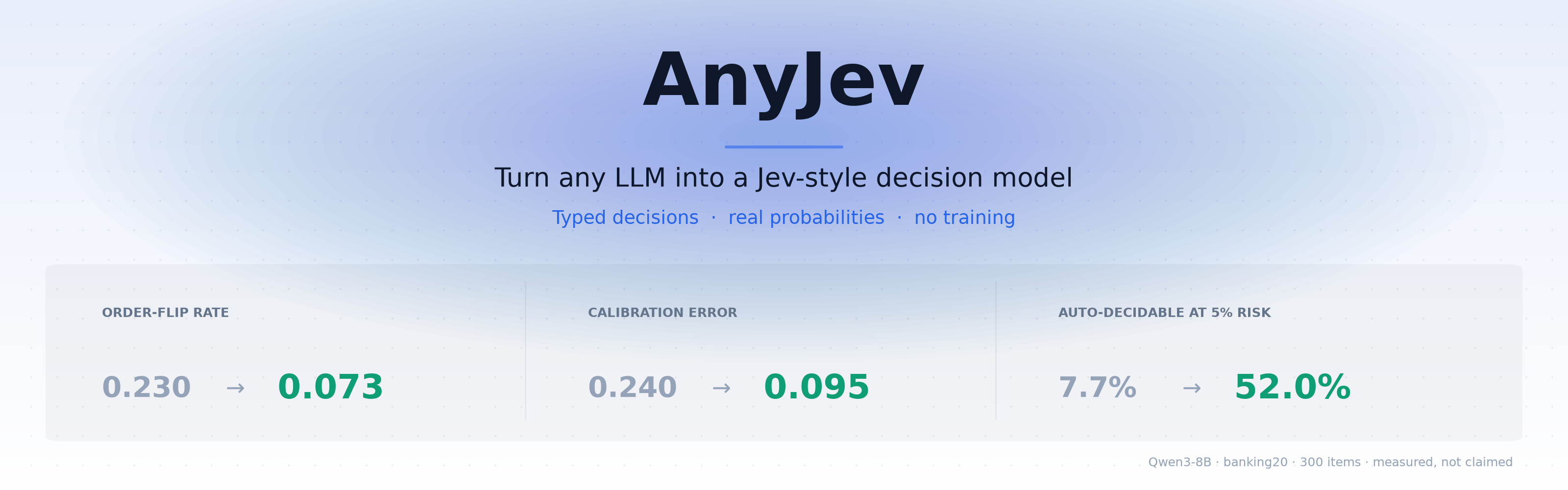
nokia-applied-research/AnyJev · ★ 1.4KA Python library that turns any open LLM into a Jev-style decision model: ask a typed question, get back a choice with a probability you can threshold — no generation, no parsing, no fine-tuning.
The all-time top
45 projects · by stars
- 67.7K
 #1 · scikit-learn/scikit-learn
scikit-learn
scikit-learn is a Python library for machine learning, offering ready-made algorithms for classification, regression, clustering, dimensionality reduction and more, built on top of SciPy.
- 51.2K
 #2 · roboflow/supervision
supervision
Supervision is a Python library with reusable computer vision building blocks: detection/segmentation/classification result handling, annotators, trackers, and dataset utilities that plug into any model.
- 33.2K#3 · NandhaKishorM/laya
laya
Laya is a non-autoregressive decision engine: instead of generating text, it answers typed questions — multiple choice, a numeric score, or yes/no — about any text in a single forward pass, across 100+ languages. A built-in router detects the language and picks the right checkpoint per request.
- 4
Hands-On-Large-Language-Models
29.7KHandsOnLLM/Hands-On-Large-Language-Models · Jupyter NotebookThe official code repo for the O'Reilly book 'Hands-On Large Language Models', known as the Illustrated LLM Book. It contains a Jupyter notebook for each of the book's 12 chapters.
- 5

fastText
26.5Kfacebookresearch/fastText · HTMLfastText is a library from Facebook Research for efficiently learning word vector representations and training text classifiers, such as for sentiment analysis.
- 6

deep-learning-for-image-processing
26.4KWZMIAOMIAO/deep-learning-for-image-processing · PythonA video-based deep learning course that walks through classic computer-vision architectures for image classification, object detection, segmentation and keypoint detection, pairing each network with a lecture and runnable code.
- 7

vit-pytorch
25.6Klucidrains/vit-pytorch · PythonA PyTorch implementation of the Vision Transformer (ViT), an image classification model that reaches SOTA results using just a single transformer encoder instead of convolutions.
- 8
homemade-machine-learning
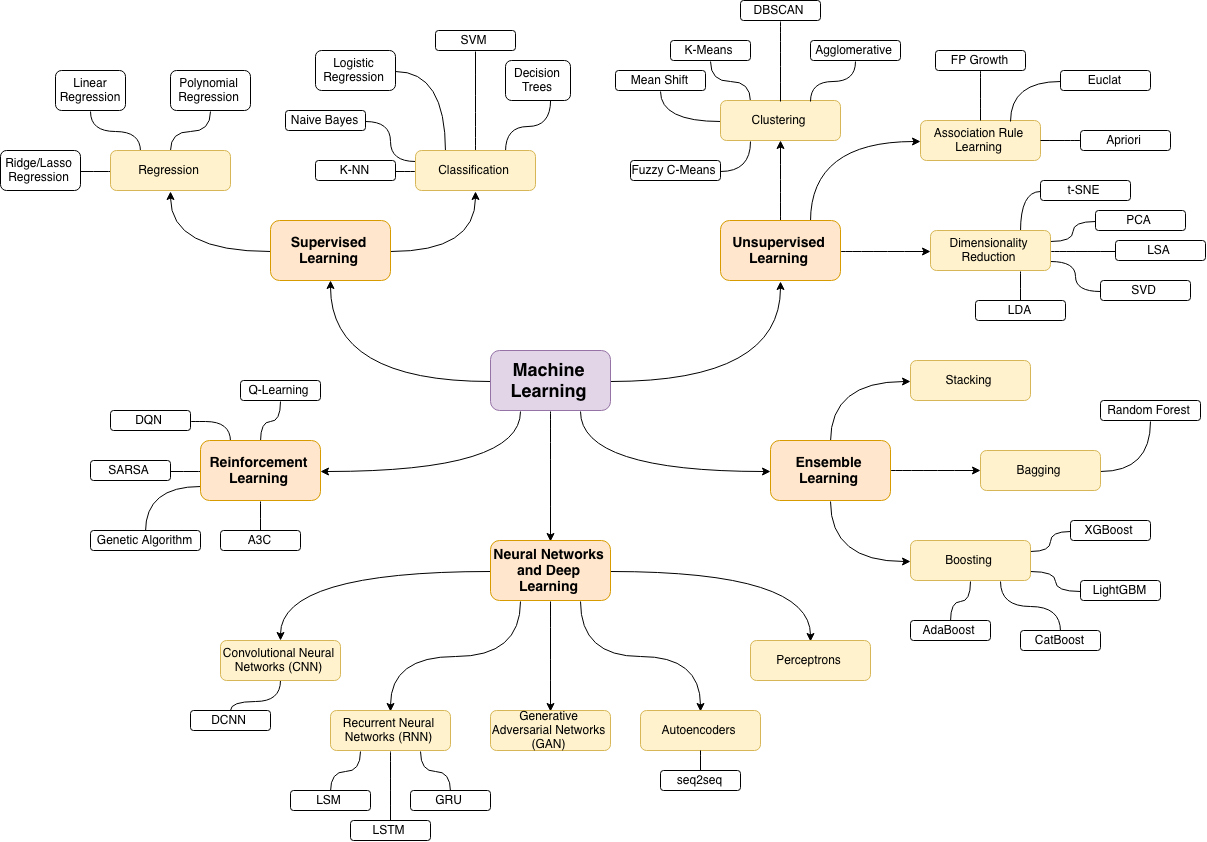
24.8Ktrekhleb/homemade-machine-learning · Jupyter NotebookA collection of popular machine learning algorithms implemented from scratch in Python, each paired with an interactive Jupyter Notebook demo and an explanation of the math behind it.
- 9

LightGBM
18.9Klightgbm-org/LightGBM · C++LightGBM is a gradient boosting framework that uses tree-based learning algorithms, used for ranking, classification and many other machine learning tasks.
- 10
magika
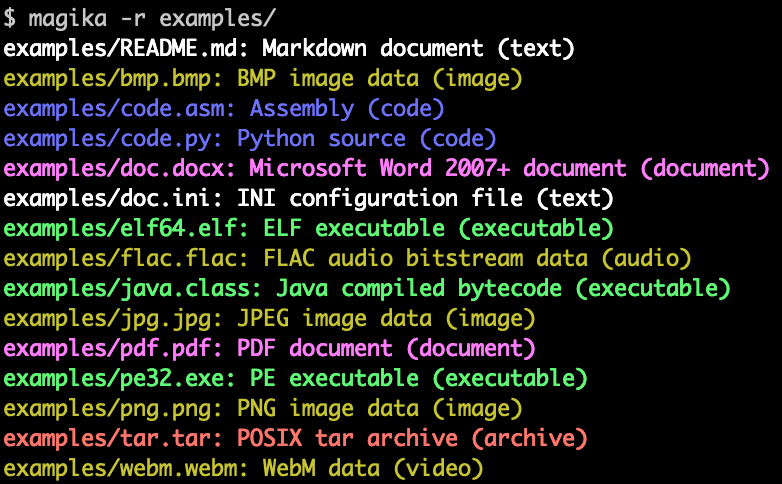
18.7Kgoogle/magika · RustMagika is an AI-powered file type detection tool: a small deep learning model (a few MB) identifies what a file actually is within milliseconds, even on a single CPU.
- 11

labelme
16.2Kwkentaro/labelme · PythonLabelme is a graphical image annotation tool written in Python: you draw polygons, rectangles, circles, lines and points on images to build labeled datasets for computer vision work.
- 12

openface
15.4Kcmusatyalab/openface · LuaOpenFace is a free, open-source face recognition toolkit built on deep neural networks, developed by Carnegie Mellon University.
- 13

detr
15.3Kfacebookresearch/detr · PythonDETR is Facebook AI Research's object detection model that treats detection as a direct set prediction problem using a Transformer encoder-decoder, replacing the usual hand-crafted detection pipeline (anchors, NMS, etc).
- 14

machine-learning-zoomcamp
14.8KDataTalksClub/machine-learning-zoomcamp · Jupyter NotebookMachine Learning Zoomcamp is a free, hands-on course that teaches you how to build, evaluate, and deploy real machine learning systems, going from a raw problem all the way to a production service.
- 15

nltk
14.7Knltk/nltk · PythonNLTK is a suite of open source Python modules, bundled data sets, and tutorials supporting research and development in Natural Language Processing.
- 16

facenet
14.4Kdavidsandberg/facenet · PythonThis is a TensorFlow implementation of FaceNet, a face recognition system that converts face images into 128-dimensional embeddings for recognition and clustering, based on the paper 'FaceNet: A Unified Embedding for Face Recognition and Clustering'.
- 17

Time-Series-Library
13Kthuml/Time-Series-Library · PythonTSLib is an open-source Python library for deep learning researchers working on time series: a clean codebase to evaluate advanced deep time series models or develop your own, with around 13,000 GitHub stars.
- 18

fashion-mnist
12.9Kzalandoresearch/fashion-mnist · PythonA dataset of Zalando's article images for benchmarking machine learning algorithms: 60,000 training and 10,000 test examples, each a 28x28 grayscale image with a label from 10 classes. It is meant as a direct drop-in replacement for the original MNIST.
- 19

python-machine-learning-book
12.7Krasbt/python-machine-learning-book · Jupyter NotebookThis is the official code repository for the 1st edition of the 'Python Machine Learning' book by Sebastian Raschka, published by Packt in 2015. It holds the Jupyter notebooks with all the code examples from the book's 13 chapters, from basic classifiers to neural networks.
- 20
lime
12.2Kmarcotcr/lime · JavaScriptLIME (Local Interpretable Model-agnostic Explanations) is a Python package that explains individual predictions of any machine learning classifier, whether it works on text, tabular data, or images.
- 21

convnetjs
11.2Kkarpathy/convnetjs · JavaScriptConvNetJS is a JavaScript implementation of neural networks that lets you train Convolutional Neural Networks, ordinary fully-connected nets, and even reinforcement learning agents directly in the browser.
- 22
natural
10.9KNaturalNode/natural · JavaScriptNatural is a general-purpose natural language processing library for Node.js that bundles tokenizers, stemmers, classifiers and other NLP utilities into one package.
- 23

doccano
10.8Kdoccano/doccano · PythonDoccano is an open-source text annotation tool that lets humans label data for machine learning tasks like text classification, sequence labeling, and sequence-to-sequence problems such as summarization or translation.
- 24

Machine-Learning
10.4KJack-Cherish/Machine-Learning · PythonA Chinese-language tutorial project that implements classic machine learning algorithms in Python3 - kNN, Decision Tree, Naive Bayes, Logistic Regression, SVM, Regression, Regression Tree and AdaBoost - following the exercises in the book 'Machine Learning in Action', with companion blog articles explaining each chapter.
- 25

sktime
10.1Ksktime/sktime · Pythonsktime is a Python library for machine learning with time series: one unified interface for forecasting, classification, clustering, and anomaly or changepoint detection.
- 26

kev
9.3Kjaredpalmer/kev · PythonKev is an open family of small decision models (0.8B to 27B parameters) built on Qwen3.5/3.8 that answer yes/no, multiple-choice and rating questions about text with calibrated probabilities, acting as a self-hosted drop-in replacement for TypeSafe's hosted Jev model.
- 27

awesome-jev
2.4Kyibie/awesome-jev · PythonA curated list of public projects, integrations, and discussions built on Jev — TypeSafe AI's System One model for typed decisions. It tracks who is actually building with it and which decision patterns transfer across industries.
- 28

deepopen
2Kdeepopen-com/deepopen · PythonDeepOpen is an open-source, non-autoregressive 'System 1' decision engine: instead of generating text token-by-token like an LLM, it makes typed decisions (choice, score, or boolean) over text, email, tickets or JSON in a single forward pass, across 100+ languages, in as little as 33ms.
- 29

jeff
1.5Kfirelex/jeff · PythonJeff is a family of small (0.8B-2B parameter) open-weight models fine-tuned from Qwen3.5 and Gemma 4 that act as fast 'System 1' decision-makers: you describe a situation and a list of options in plain text, and Jeff returns a calibrated probability for each option from a single forward pass, with no generated text to parse.
- 30
AnyJev
1.4Knokia-applied-research/AnyJev · PythonA Python library that turns any open LLM into a Jev-style decision model: ask a typed question, get back a choice with a probability you can threshold — no generation, no parsing, no fine-tuning.
- 31
jev
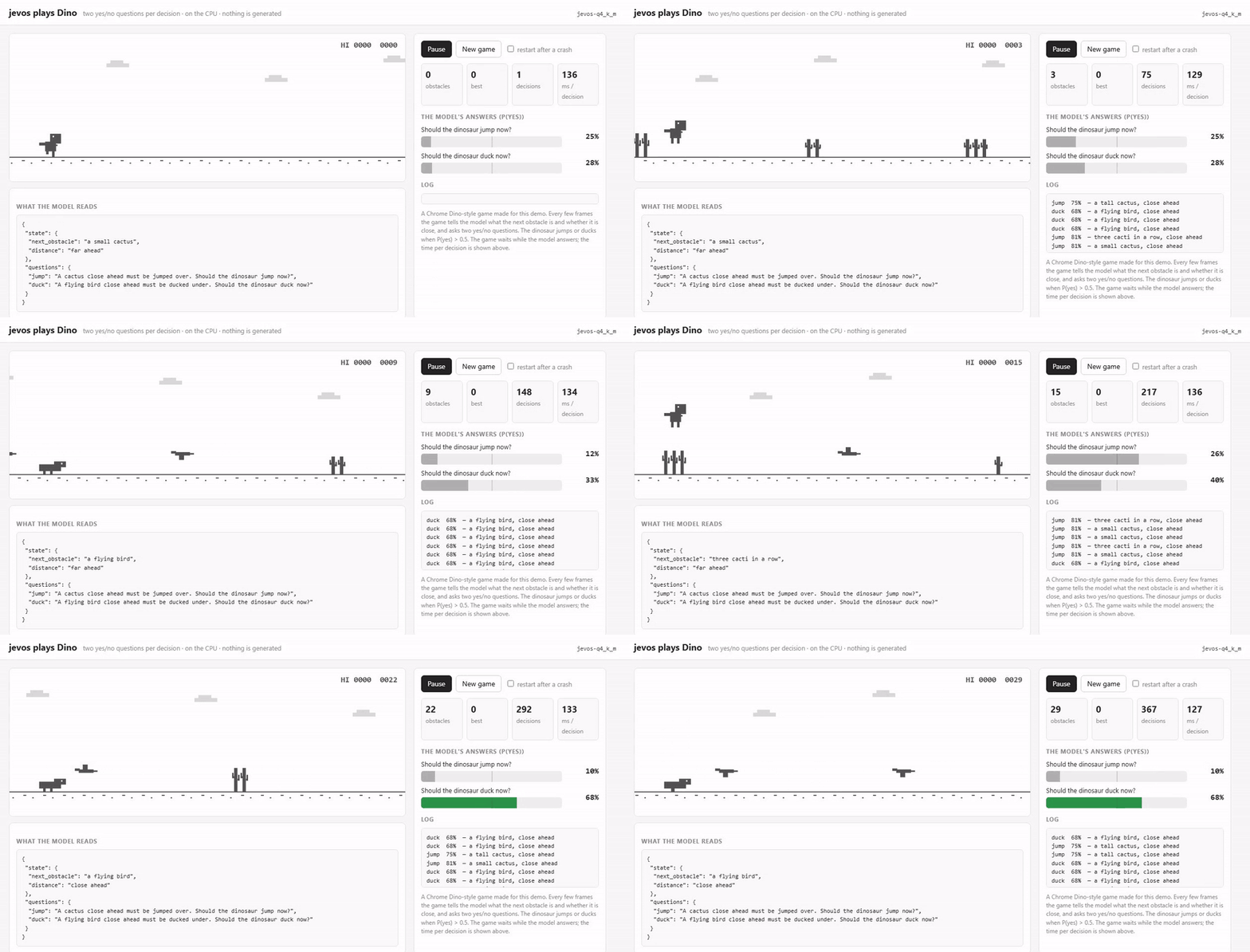
1.4Kfeder-cr/jev · C++jevos-1b is a free, open-source yes/no decision engine that runs locally on your laptop's CPU, returning the probability that the answer is 'yes' for a given text plus question in about 50-220 ms, as a self-hosted alternative to the cloud-based Jev service.
- 32
jevlike
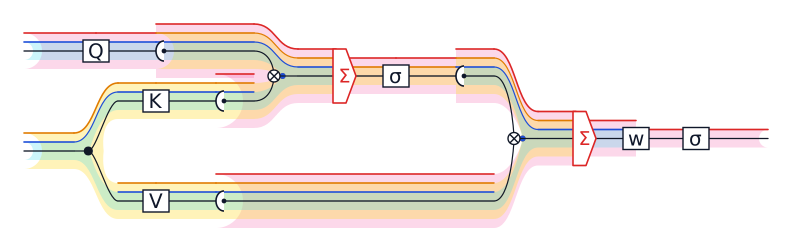
1.4Kvinnylarouge/jevlike · PythonA small research model that reads a piece of text plus a list of options and returns a probability for each option in one pass, instead of writing an answer token by token.
- 33

pg-jev
1.2KrealZachi/pg-jev · Shellpg-jev (jev) is a PostgreSQL extension that lets you filter, rank and classify table rows using plain-language conditions instead of SQL predicates. Each row is judged by TypeSafe's Jev, a model that returns calibrated probabilities rather than generated text.
- 34
shapeshift
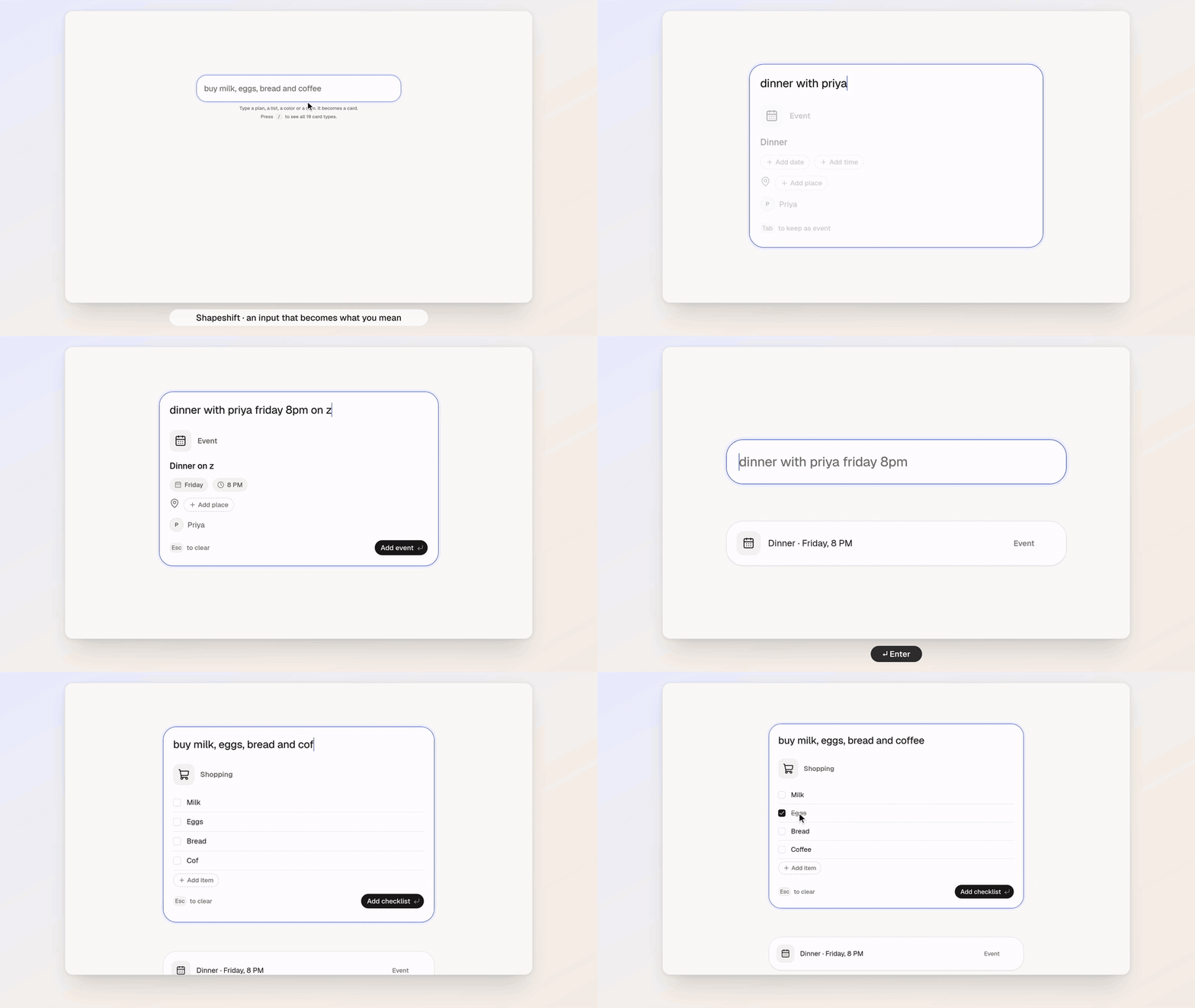
970anishfn/shapeshift · TypeScriptShapeshift is a single text input that morphs into the right UI widget as you type — an event card, checklist, timer, color picker, bill splitter, poll, converter and more — based on what it thinks you mean.
- 35

von
916wfzyx/von · PythonVon is an open-source, non-autoregressive decision model (395M parameters, 1.5 GB) that makes calibrated discrete, probabilistic, and ordinal decisions in a single forward pass in under 25 ms — a local, free alternative to the proprietary TypeSafe Jev.
- 36

strands-decider
664strands-labs/strands-decider · PythonStrands Decider is a small, fast 'system one' decision model built for agentic workflows. Instead of generating free text like an LLM, it picks between a set of options or rates something on a scale, and returns a calibrated confidence score for every decision.
- 37
StartLux-Decision
648StartLuxLabs/StartLux-Decision · PythonStartLux-Decision is a family of typed decision models (five dense sizes from 0.8B to 27B plus a 35B-A3B mixture-of-experts) that answer a question with a probability for each option instead of generating text.
- 38
awesome-jev
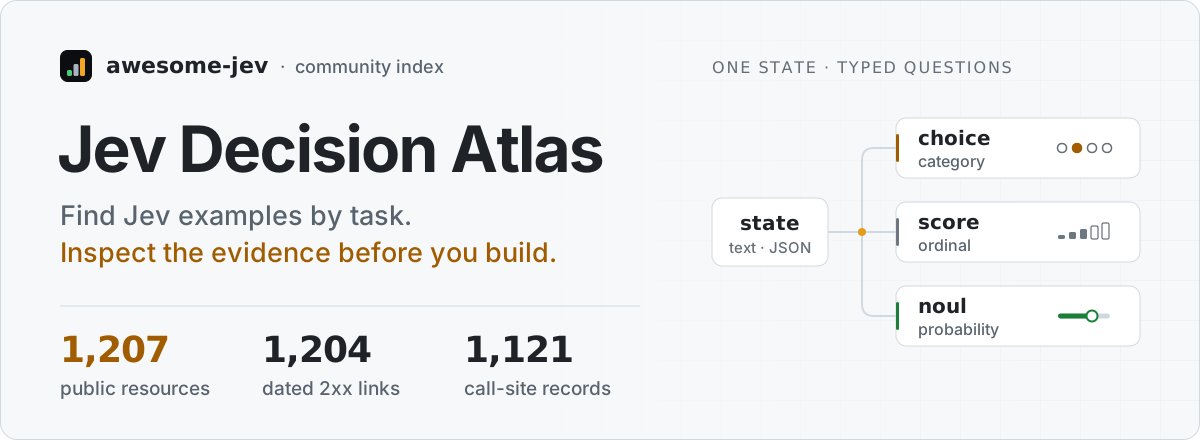
602kydlikebtc/awesome-jev · PythonA curated index of 1207 public resources for Jev, TypeSafe AI's System One decision model, organised by the decision each resource illustrates. It's an independent catalog, not the product or an SDK.
- 39

GLiClass
563Knowledgator/GLiClass · PythonGLiClass is an efficient zero-shot model for sequence classification, inspired by GLiNER: give it a text and a list of candidate labels, and it classifies the text with accuracy comparable to cross-encoders.
- 40

jeeves
425PostHog/jeeves · PythonJeeves is a reasoning-enhanced 'Jev-like' decision model built on Qwen3.5-9B with LoRA. It thinks through a reasoning chain before giving calibrated yes/no, multiple-choice, or rating answers, and ships with a diffusion drafter for faster inference.
- 41

jev-align
309sutro-sh/jev-align · PythonAn experimental CLI from Sutro for building calibrated AI Functions on TypeSafe's Jev: it finds uncertain examples in your dataset, has you label them, and uses GEPA to keep improving the function.
- 42

vegaml
254NandhaKishorM/vegaml · Pythonvegaml wraps a frozen language model and a small calibration engine so that a state plus a fixed-type question (choice, score, or boolean) returns a value your code can use directly, with a calibrated probability, a conformal answer set, and an explicit abstain flag. No text is ever generated in the path.
- 43

AutoLOGIC
209sethGu/AutoLOGIC · PythonAutoLOGIC is an agentic framework for automated tabular machine learning across classification, regression, and clustering. It turns a task specification into coordinated feature, model, optimization, and output-control plans and then executes them with task-specific tools.
- 44
open-jev
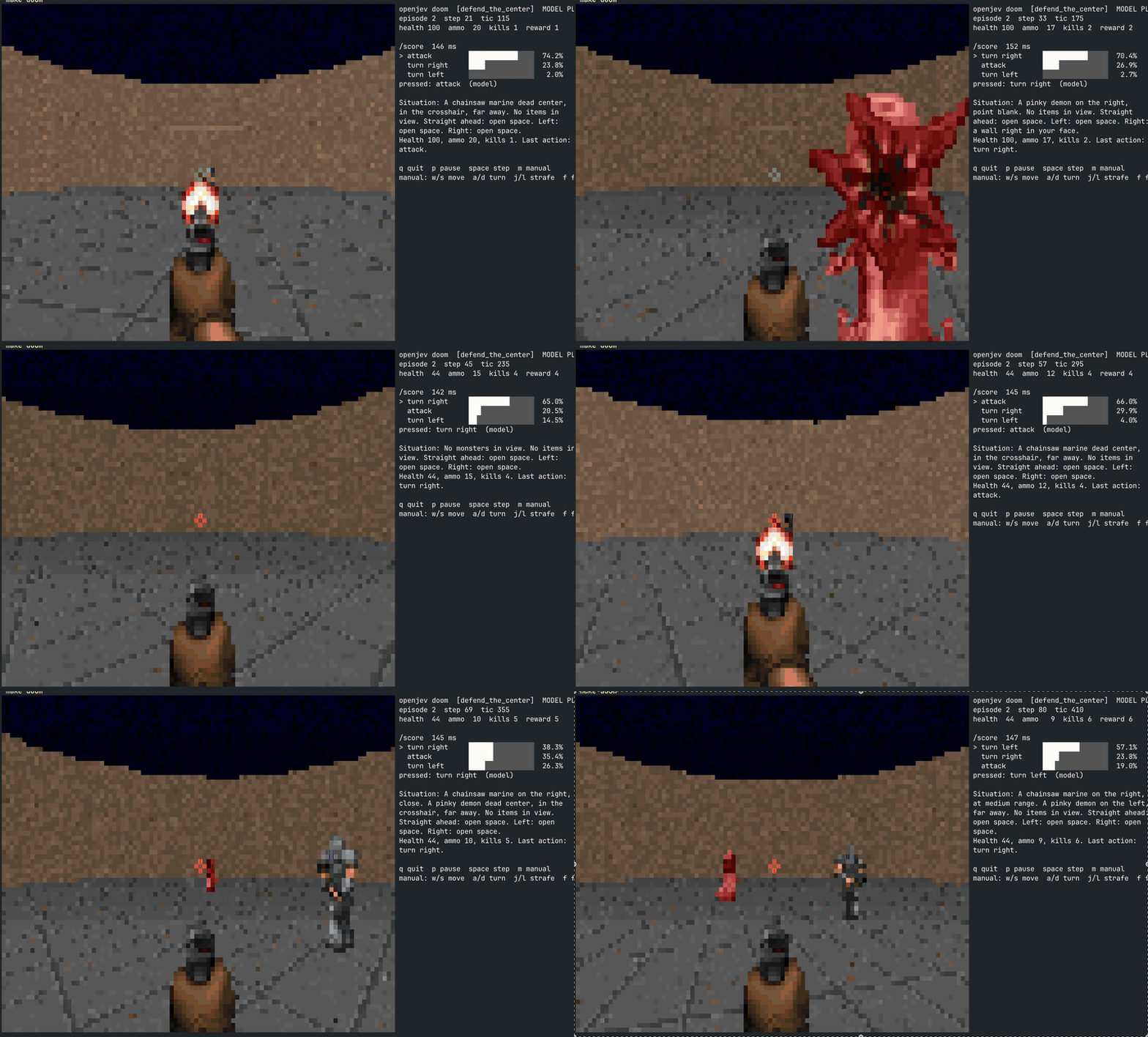
134daseinlabs/open-jev · PythonAn open implementation of Jev: a local Gemma 3 4B (via MLX) scores a list of pre-written options against a context in one batched forward pass on Apple silicon — no text generation, just log-probabilities per option.
- 45

Bud-Decision-Studio
110BudEcosystem/Bud-Decision-Studio · HTMLBud Decision Studio is a cross-platform desktop app and local serving system for 'decision models' (Jev-like 'System One' models): you give it a situation and typed questions, and it returns a calibrated probability for every allowed answer instead of generated text.
Related topics
Often tagged together