


这是什么?
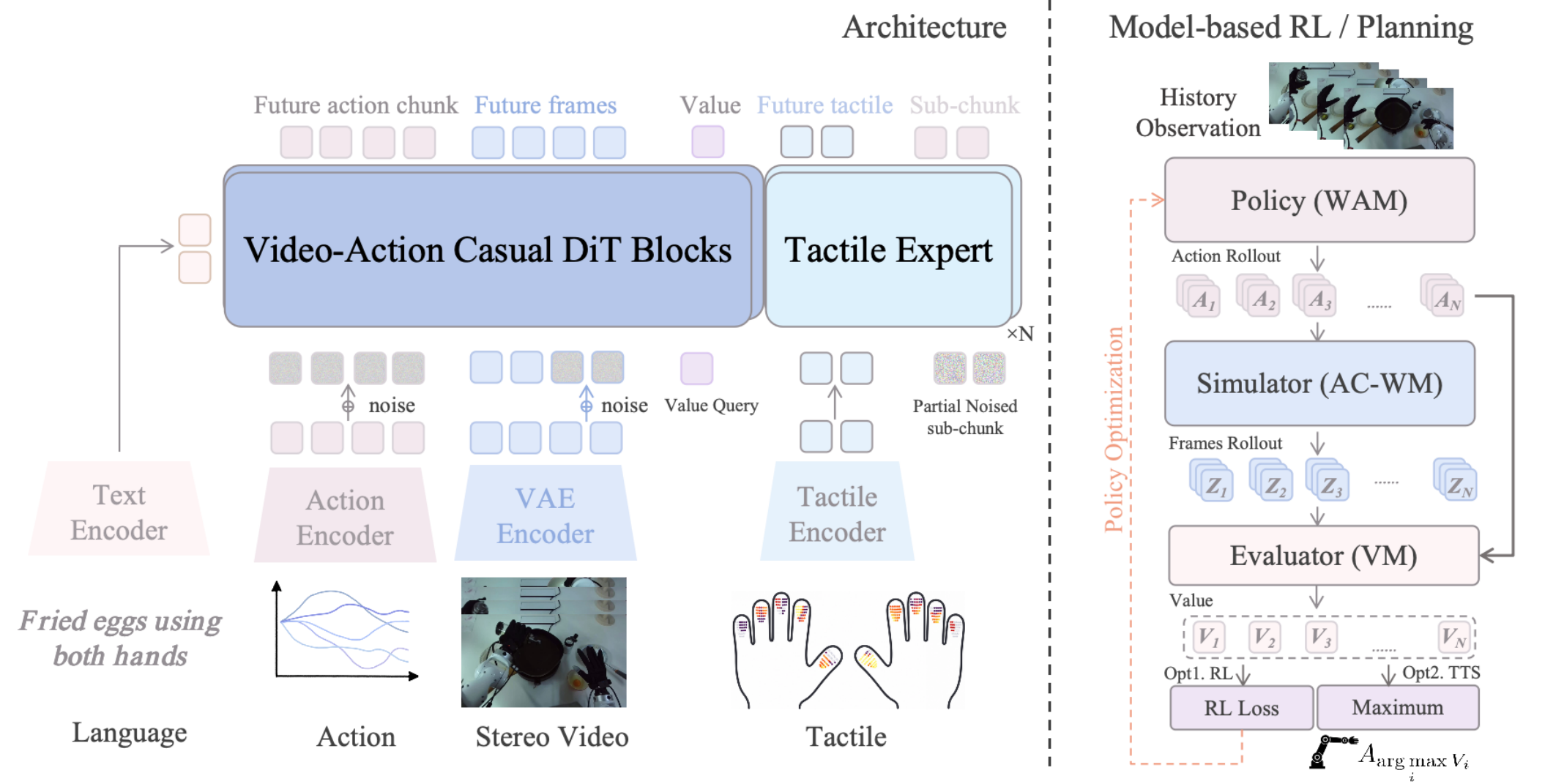
 Motus2 是一个面向灵巧机器人操作的自进化通用世界模型。一个共享权重的单一模型同时充当策略、模拟器和评估器,并把三者耦合为闭环的决策与学习回路,使系统能够感知、预测、行动并自我改进。
Motus2 是一个面向灵巧机器人操作的自进化通用世界模型。一个共享权重的单一模型同时充当策略、模拟器和评估器,并把三者耦合为闭环的决策与学习回路,使系统能够感知、预测、行动并自我改进。这是开箱即用的模型,还是更像一个研究框架?它是研究性质的模型/代码库,不是拿来即用的工具:单一模型暴露出三个协同工作的控制接口(策略、模拟器、评估器),设计上要靠大规模第一视角和机器人数据来扩展,而不是开箱即用。
它是研究性质的模型/代码库,不是拿来即用的工具:单一模型暴露出三个协同工作的控制接口(策略、模拟器、评估器),设计上要靠大规模第一视角和机器人数据来扩展,而不是开箱即用。我怎么让它跑起来?目前还不行——尚未发布任何代码或检查点。作者计划在 2026 年 9 月内逐步发布预训练检查点和训练代码(视频预训练、价值/MBRL 训练、记忆基础设施、触觉代码)。
目前还不行——尚未发布任何代码或检查点。作者计划在 2026 年 9 月内逐步发布预训练检查点和训练代码(视频预训练、价值/MBRL 训练、记忆基础设施、触觉代码)。现在有什么要注意的?开源路线图上的所有条目都还未勾选——预训练检查点、视频预训练代码、价值训练代码、MBRL 代码、记忆基础设施和触觉代码都仍待发布。
开源路线图上的所有条目都还未勾选——预训练检查点、视频预训练代码、价值训练代码、MBRL 代码、记忆基础设施和触觉代码都仍待发布。策略、模拟器和评估器接口具体是做什么的?策略提出候选动作块,模拟器预测其视觉后果,评估器评估这些预测结果的好坏,从而形成用于改进策略的闭环决策与学习回路。
策略提出候选动作块,模拟器预测其视觉后果,评估器评估这些预测结果的好坏,从而形成用于改进策略的闭环决策与学习回路。Motus2 如何扩展它的训练数据?它从大规模单目第一视角视频进阶到同步双目第一视角数据,再适配到机器人轨迹,并辅以人机对齐数据来完成域迁移。
它从大规模单目第一视角视频进阶到同步双目第一视角数据,再适配到机器人轨迹,并辅以人机对齐数据来完成域迁移。它为什么被称为“自进化”?因为失败和次优的交互(而不仅是精选的专家演示)也会反馈到动力学和价值学习中,让模型通过耦合的模拟器-评估器回路改进自己的策略,而不是只依赖人工标注的成功数据。
因为失败和次优的交互(而不仅是精选的专家演示)也会反馈到动力学和价值学习中,让模型通过耦合的模拟器-评估器回路改进自己的策略,而不是只依赖人工标注的成功数据。Motus2 面向什么硬件?一个具备双目视觉、双臂、双灵巧手和触觉感知的全仿生机器人平台,并加入触觉反馈以实现接触感知控制。
一个具备双目视觉、双臂、双灵巧手和触觉感知的全仿生机器人平台,并加入触觉反馈以实现接触感知控制。What are similar projects?Zero-WAM, lerobot, WholebodyVLA, Zetta-Embodiment, Embodied-AI-Guide, flex-pi, RoboICL, video-prediction-policy-2
Zero-WAM, lerobot, WholebodyVLA, Zetta-Embodiment, Embodied-AI-Guide, flex-pi, RoboICL, video-prediction-policy-2Which topics is it in?physical-ai, generative-model, self-evolving-agents, pretraining, deep-reinforcement-learning, robot, world-models, embodied-ai, pretrained-models, paper, robotics, simulation
physical-ai, generative-model, self-evolving-agents, pretraining, deep-reinforcement-learning, robot, world-models, embodied-ai, pretrained-models, paper, robotics, simulation