523 ·GitHub
What is this?
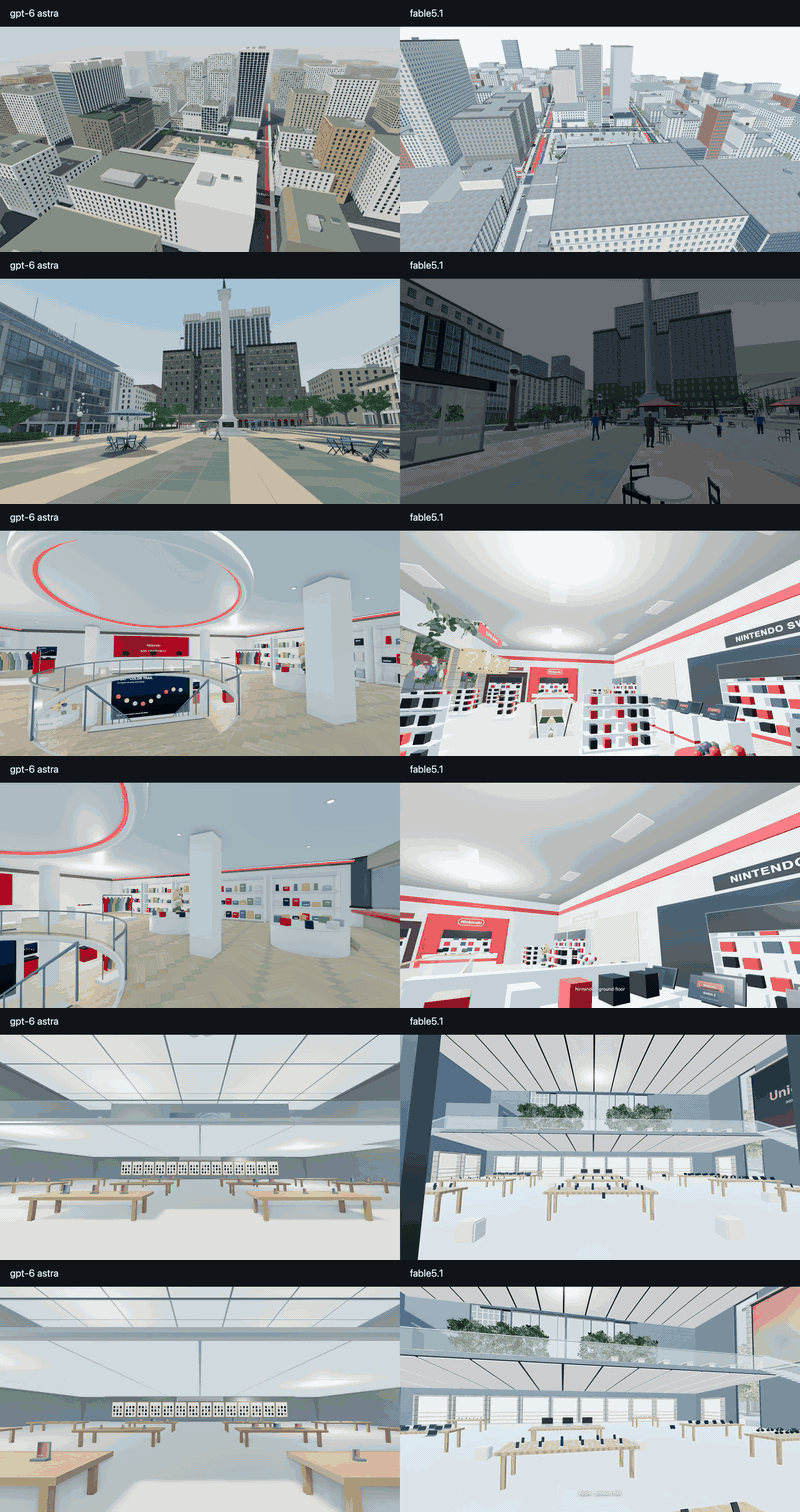
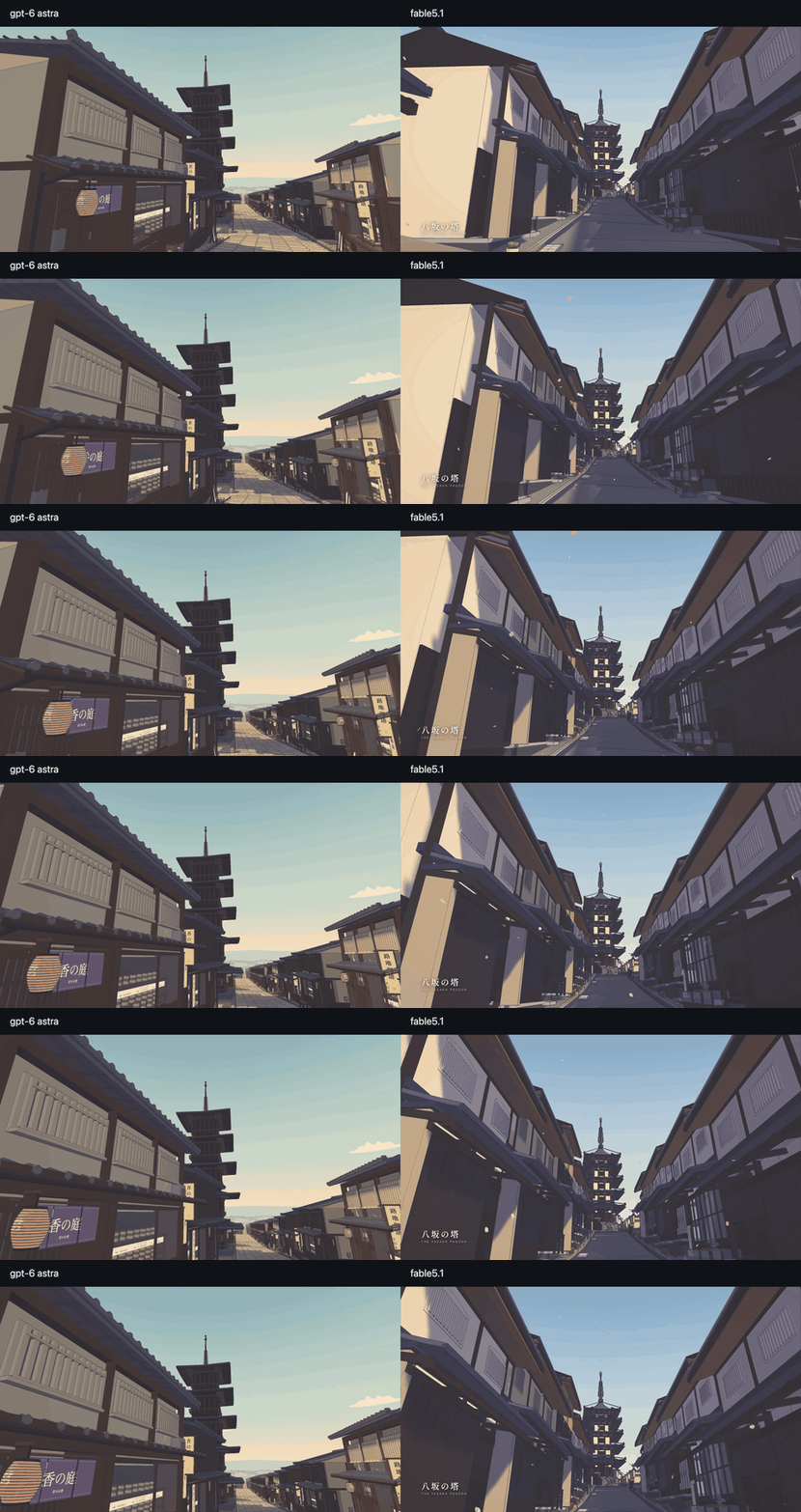
 This project turns a single brief - a sentence, a photograph, or a video clip - into a walkable 3D world, generated by Claude-based agent swarms called 'Fable 5.1' that research the real place, model it, render it, and verify it.
Is this a game engine, or something else?It is not a game engine: every world ships as a plain Three.js web app, with no proprietary 3D tiles and no downloaded meshes, since every building, sign, and tree is generated by code in the repo.
It is not a game engine: every world ships as a plain Three.js web app, with no proprietary 3D tiles and no downloaded meshes, since every building, sign, and tree is generated by code in the repo.How are these worlds actually built and re-run?Every stage can be re-run from the repo: reconnaissance agents pull map and elevation data, asset-generation scripts emit façades and props, a Three.js runtime assembles the scene from JSON specs, and Playwright-driven verification diffs screenshots against real photographs.
Every stage can be re-run from the repo: reconnaissance agents pull map and elevation data, asset-generation scripts emit façades and props, a Three.js runtime assembles the scene from JSON specs, and Playwright-driven verification diffs screenshots against real photographs.What powers the pipeline - Claude, Three.js, something else?The pipeline is built on Claude agent swarms for research and generation, a pure Three.js runtime for rendering, Playwright for automated verification, and real-world geometry pulled from OpenStreetMap, USGS 3DEP, and the GSI elevation service.
The pipeline is built on Claude agent swarms for research and generation, a pure Three.js runtime for rendering, Playwright for automated verification, and real-world geometry pulled from OpenStreetMap, USGS 3DEP, and the GSI elevation service.Is the whole roadmap already working, or just part of it?Only the interactive-scenes stage is live right now; animation/video, agent training environments, 4D/embodiment/robotics simulation, and test-time scaling benchmarks are all listed as upcoming roadmap items, not shipped features.
Only the interactive-scenes stage is live right now; animation/video, agent training environments, 4D/embodiment/robotics simulation, and test-time scaling benchmarks are all listed as upcoming roadmap items, not shipped features.Do I need a game engine or special hardware to view a world?No - the generated worlds open directly in a standard browser via WebGL and Three.js, with no proprietary engine, installer, or downloaded assets required.
No - the generated worlds open directly in a standard browser via WebGL and Three.js, with no proprietary engine, installer, or downloaded assets required.What's the licensing on the code and the generated worlds?Code and generated assets are MIT licensed, but the underlying geometry is derived from OpenStreetMap (ODbL), USGS 3DEP (public domain), and the GSI elevation service, and reference photographs are not redistributed.
Code and generated assets are MIT licensed, but the underlying geometry is derived from OpenStreetMap (ODbL), USGS 3DEP (public domain), and the GSI elevation service, and reference photographs are not redistributed.What is Fable 5.1 exactly?It is the name of the Claude-based agent swarm system that researches, models, renders, and verifies each generated world, and it is directly compared head-to-head against GPT-6 Astra on identical briefs.
It is the name of the Claude-based agent swarm system that researches, models, renders, and verifies each generated world, and it is directly compared head-to-head against GPT-6 Astra on identical briefs.How does the verification step actually check a world?Playwright drives the running app, screenshots fixed viewpoints, and diffs them against real photographs taken from the same spot; independent reviewer agents (architect, geographer, technical artist, interaction) file QA reports that feed the next fix cycle.
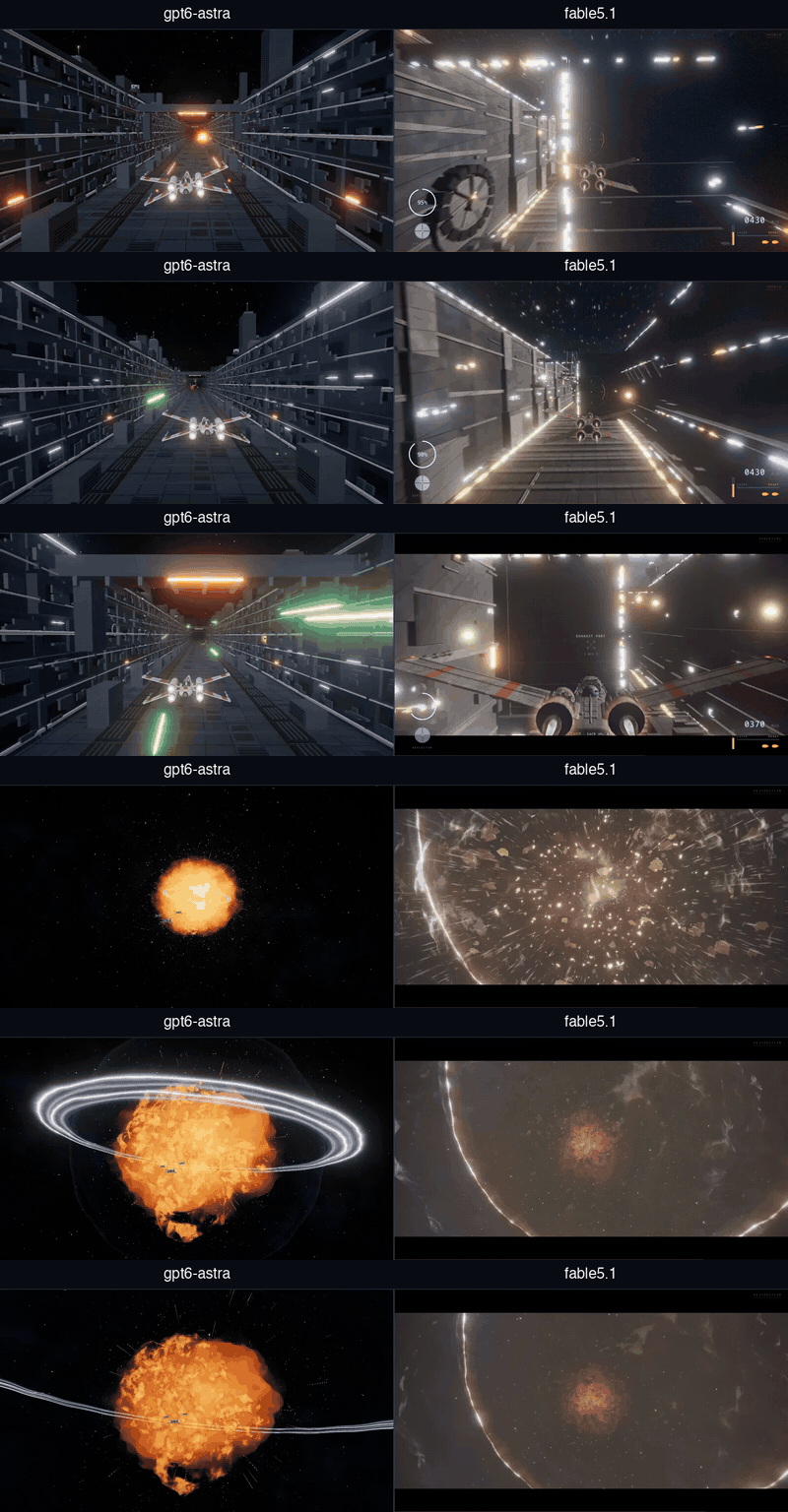
Playwright drives the running app, screenshots fixed viewpoints, and diffs them against real photographs taken from the same spot; independent reviewer agents (architect, geographer, technical artist, interaction) file QA reports that feed the next fix cycle.Can I feed it a video clip instead of just text?Yes - inputs can be text, a single photograph, or a video clip, as shown by the Death Star Trench Run example, which extrapolated the full set behind a film shot from one reference clip.
Yes - inputs can be text, a single photograph, or a video clip, as shown by the Death Star Trench Run example, which extrapolated the full set behind a film shot from one reference clip.Why build worlds as code instead of generating pixels or video?Code is verifiable (you can run it and check it against reality), compositional (reusable modules like façade and roof generators), and editable (a request like deeper shopfront recesses becomes a precise diff rather than a full re-roll).
Code is verifiable (you can run it and check it against reality), compositional (reusable modules like façade and roof generators), and editable (a request like deeper shopfront recesses becomes a precise diff rather than a full re-roll).What are similar projects?natural-disasters, threejs-architecture-effects, LinearAbilityExtThreeJS, dream-loop, genart-skill, image-to-3d-pipeline, anyCreature, Hermes3D
natural-disasters, threejs-architecture-effects, LinearAbilityExtThreeJS, dream-loop, genart-skill, image-to-3d-pipeline, anyCreature, Hermes3DWhich topics is it in?openstreetmap, 3d-graphics, procedural-generation, 3d-reconstruction, world-models, threejs, simulation, webgl, playwright, game-development, 3d, agentic-ai
openstreetmap, 3d-graphics, procedural-generation, 3d-reconstruction, world-models, threejs, simulation, webgl, playwright, game-development, 3d, agentic-ai