


Что это такое?
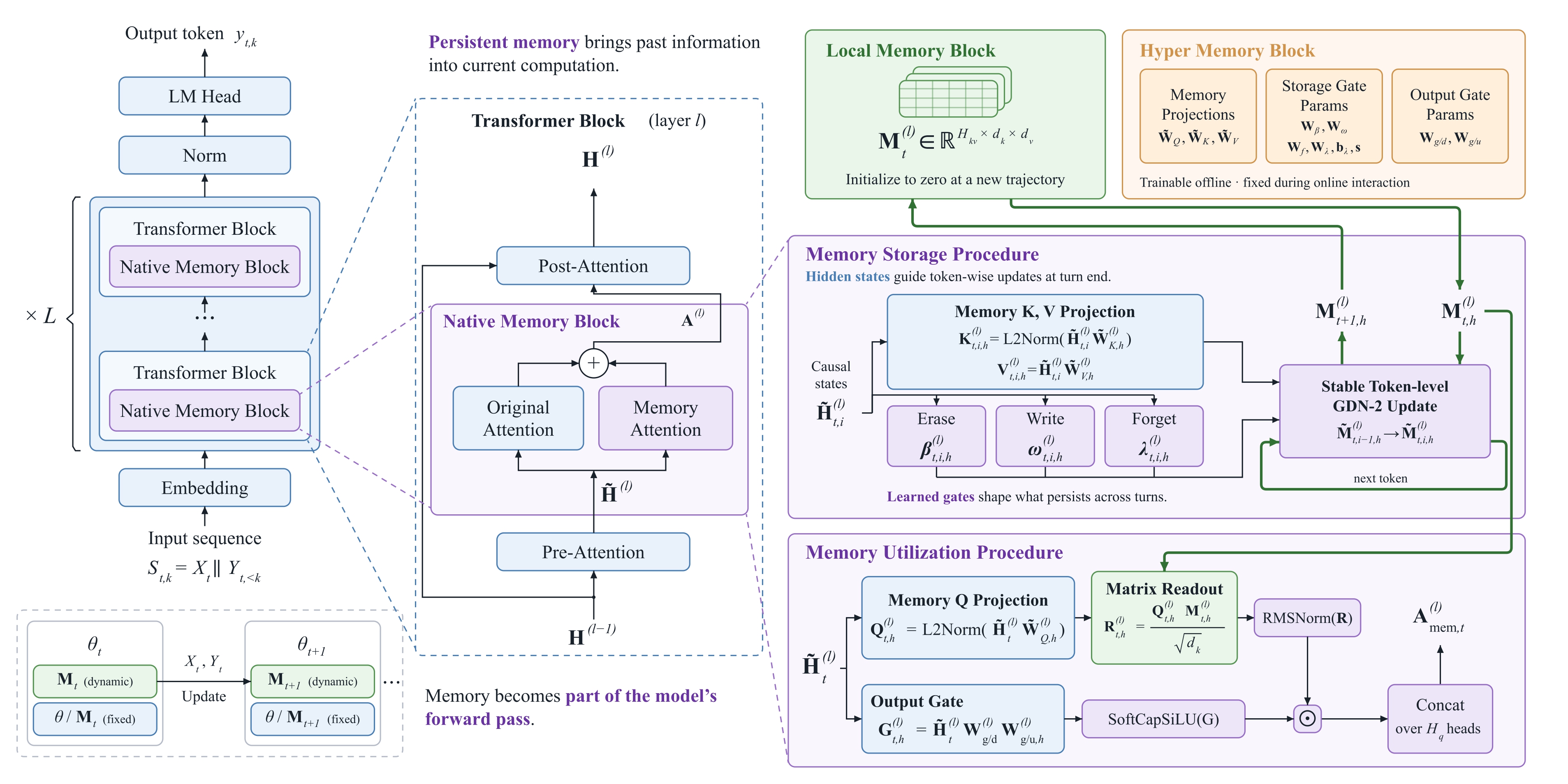
 MemT-1.0 — это новое поколение базовых моделей с памятью, в которых постоянная память, динамически развивающаяся в процессе работы, становится неотъемлемой частью вычислений модели. Благодаря этому модель может сохранять и повторно использовать исторические данные, не перечитывая исходный контекст во время вывода.
Это модель, которую я скачиваю, или библиотека, с которой я пишу код?И то, и другое: это семейство обученных LLM с расширенной памятью (Nano и Flash), которые вы запускаете через SGLang, а также клиентская библиотека на Python под названием 'memtsglang' для диалогов с учётом памяти на запущенном сервере.
И то, и другое: это семейство обученных LLM с расширенной памятью (Nano и Flash), которые вы запускаете через SGLang, а также клиентская библиотека на Python под названием 'memtsglang' для диалогов с учётом памяти на запущенном сервере.Как запустить модель?Установите пакет из каталога inference репозитория на Linux-сервере с NVIDIA CUDA, запустите сервер SGLang с полной контрольной точкой BF16 (веса, конфигурация, токенизатор), затем подключитесь с помощью клиента memtsglang с подходящими локальными файлами токенизатора.
Установите пакет из каталога inference репозитория на Linux-сервере с NVIDIA CUDA, запустите сервер SGLang с полной контрольной точкой BF16 (веса, конфигурация, токенизатор), затем подключитесь с помощью клиента memtsglang с подходящими локальными файлами токенизатора.Что нужно перед тем, как попробовать?Машина с Linux и NVIDIA CUDA, Python 3.11 или новее, а также полная локальная контрольная точка MemT-1.0 с соответствующими весами BF16, конфигурацией и токенизатором; пример быстрого старта запускает модель Nano на двух GPU.
Машина с Linux и NVIDIA CUDA, Python 3.11 или новее, а также полная локальная контрольная точка MemT-1.0 с соответствующими весами BF16, конфигурацией и токенизатором; пример быстрого старта запускает модель Nano на двух GPU.Есть ли подвох при использовании кода или весов?Программное обеспечение репозитория распространяется по некоммерческой лицензии, поэтому коммерческое использование без связи с авторами не допускается. Веса моделей, бенчмарки и наборы данных явно не подпадают под эти условия и будут получать собственные лицензии при публикации.
Программное обеспечение репозитория распространяется по некоммерческой лицензии, поэтому коммерческое использование без связи с авторами не допускается. Веса моделей, бенчмарки и наборы данных явно не подпадают под эти условия и будут получать собственные лицензии при публикации.Для кого это предназначено?Для исследователей и инженеров, которые работают с LLM с длинным контекстом и расширенной памятью, а также с агентными системами, особенно для тех, кто изучает повторное использование опыта в агентах для программирования с длинным горизонтом задач.
Для исследователей и инженеров, которые работают с LLM с длинным контекстом и расширенной памятью, а также с агентными системами, особенно для тех, кто изучает повторное использование опыта в агентах для программирования с длинным горизонтом задач.Какие два варианта моделей MemT-1.0?Nano работает на базе Qwen3.6-35B-A3B (всего 36 млрд параметров, из них 3 млрд активируются; 451 млн обучаемых параметров памяти; 10 млн состояния памяти), а Flash — на базе DeepSeek-V4-Flash (всего 288 млрд параметров, из них 17 млрд активируются; 3,61 млрд обучаемых параметров памяти; 336 млн состояния памяти).
Nano работает на базе Qwen3.6-35B-A3B (всего 36 млрд параметров, из них 3 млрд активируются; 451 млн обучаемых параметров памяти; 10 млн состояния памяти), а Flash — на базе DeepSeek-V4-Flash (всего 288 млрд параметров, из них 17 млрд активируются; 3,61 млрд обучаемых параметров памяти; 336 млн состояния памяти).Насколько архитектура памяти экономит место по сравнению с KV-кешем?Постоянное состояние памяти сохраняет свой размер и уменьшает объём хранения примерно в 66 раз по сравнению с полным KV-кешем контекста при длине истории 128K.
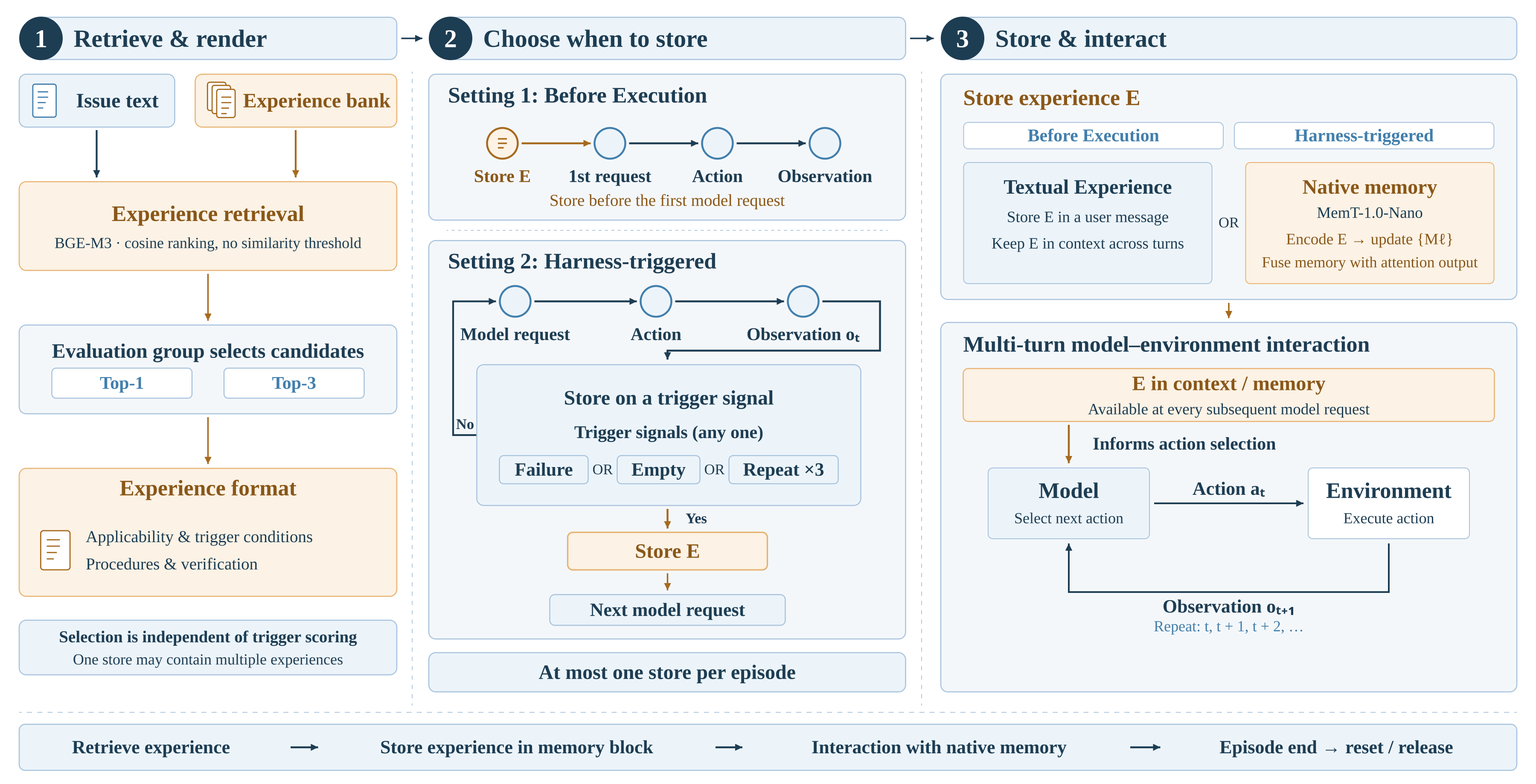
Постоянное состояние памяти сохраняет свой размер и уменьшает объём хранения примерно в 66 раз по сравнению с полным KV-кешем контекста при длине истории 128K.Что такое агентное программирование, управляемое опытом?Это подход, при котором накопленный опыт программирования хранится во встроенной памяти и извлекается через механизм внимания к памяти во время выполнения задачи. Это повышает качество работы над задачами с длинным горизонтом, не добавляя текст этого опыта в окно контекста.
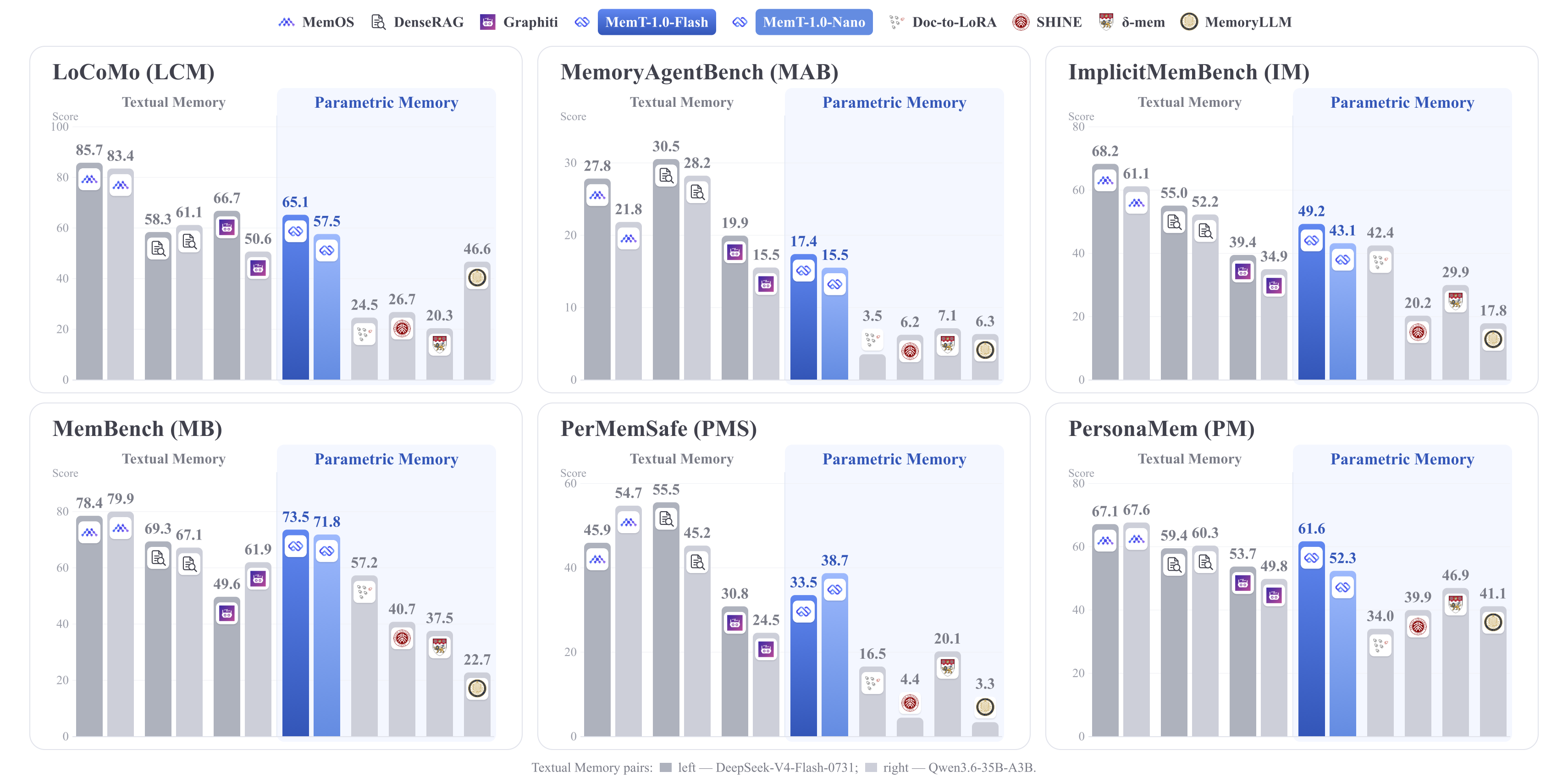
Это подход, при котором накопленный опыт программирования хранится во встроенной памяти и извлекается через механизм внимания к памяти во время выполнения задачи. Это повышает качество работы над задачами с длинным горизонтом, не добавляя текст этого опыта в окно контекста.Каковы результаты на бенчмарках памяти?На 11 бенчмарках памяти Flash и Nano занимают первое и второе место среди оценённых методов параметрической памяти, однако специализированные системы поиска по текстовой памяти по-прежнему лидируют на очень длинных историях, где требуются подробные доказательства.
На 11 бенчмарках памяти Flash и Nano занимают первое и второе место среди оценённых методов параметрической памяти, однако специализированные системы поиска по текстовой памяти по-прежнему лидируют на очень длинных историях, где требуются подробные доказательства.Какие есть похожие проекты?jeeves, CLM, ZDTaichu5.0-9B, StartLux-Decision, NeoHorse, MSA, TypeLLM, Hy4-preview
jeeves, CLM, ZDTaichu5.0-9B, StartLux-Decision, NeoHorse, MSA, TypeLLM, Hy4-previewВ каких он темах?long-context, sglang, foundation-models, bilingual, long-term-memory, model-serving, inference-engine, agentic-coding, llm-inference, evaluation, agent-memory, memory
long-context, sglang, foundation-models, bilingual, long-term-memory, model-serving, inference-engine, agentic-coding, llm-inference, evaluation, agent-memory, memory