Что это?
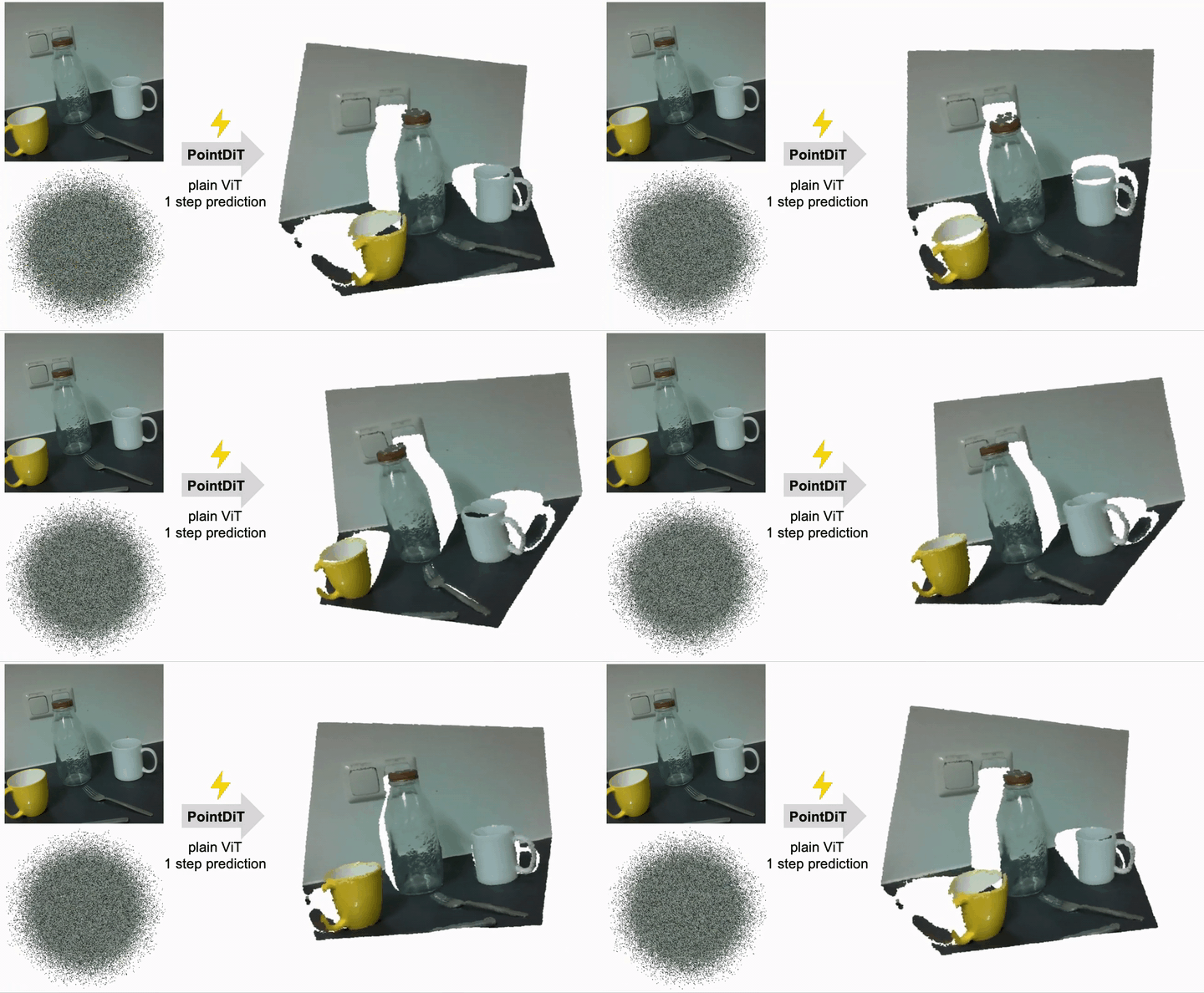
 PointDiT — исследовательский код минималистичного Diffusion Transformer, работающего в пиксельном пространстве: он оценивает 3D-геометрию (карты точек) по одному монокулярному изображению.
PointDiT — исследовательский код минималистичного Diffusion Transformer, работающего в пиксельном пространстве: он оценивает 3D-геометрию (карты точек) по одному монокулярному изображению.Это особая архитектура или гибридная система?Это обычный Vision Transformer, который деноизирует сырые патчи 3D-карт точек прямо в пиксельном пространстве, используя в качестве условия image-токены от замороженного предобученного энкодера DINOv3 — без токенизатора карт точек, без латентной диффузии, без гибридной архитектуры.
Это обычный Vision Transformer, который деноизирует сырые патчи 3D-карт точек прямо в пиксельном пространстве, используя в качестве условия image-токены от замороженного предобученного энкодера DINOv3 — без токенизатора карт точек, без латентной диффузии, без гибридной архитектуры.Как запустить его на своих изображениях?Задайте IMAGEDIR в начале scripts/demo_l512.sh и запустите его; загрузчик рекурсивно подхватывает файлы .jpg/.png (вложенные папки допустимы), а результаты сохраняются в generation/. Ground truth и внутренние параметры камеры не нужны.
Задайте IMAGEDIR в начале scripts/demo_l512.sh и запустите его; загрузчик рекурсивно подхватывает файлы .jpg/.png (вложенные папки допустимы), а результаты сохраняются в generation/. Ground truth и внутренние параметры камеры не нужны.Что нужно установить перед началом?Python 3.12, PyTorch 2.7.0 и CUDA 12.8, плюс закрытые (gated) веса DINOv3, которые нужно отдельно запросить в официальном репозитории DINOv3 и положить в pretrained/dinov3/.
Python 3.12, PyTorch 2.7.0 и CUDA 12.8, плюс закрытые (gated) веса DINOv3, которые нужно отдельно запросить в официальном репозитории DINOv3 и положить в pretrained/dinov3/.Включают ли выпущенные чекпоинты всё необходимое для запуска модели?Нет — веса энкодера DINOv3 закрыты и не подлежат распространению, поэтому исключены из выпущенных чекпоинтов; их нужно отдельно запросить и вручную положить на место перед оценкой, демо или обучением.
Нет — веса энкодера DINOv3 закрыты и не подлежат распространению, поэтому исключены из выпущенных чекпоинтов; их нужно отдельно запросить и вручную положить на место перед оценкой, демо или обучением.Нужна ли видеокарта с CUDA?Да, код собран под CUDA 12.8 и PyTorch 2.7.0, поэтому требуется видеокарта с поддержкой CUDA.
Да, код собран под CUDA 12.8 и PyTorch 2.7.0, поэтому требуется видеокарта с поддержкой CUDA.Какие размеры модели доступны?PointDiT-B, L и H, каждая выпущена в разрешениях 256x256 и 512x512, все веса размещены на Hugging Face.
PointDiT-B, L и H, каждая выпущена в разрешениях 256x256 и 512x512, все веса размещены на Hugging Face.Как обучается модель?Обучение идёт в два этапа: предобучение на 256x256 на SceneNet-RGBD, затем дообучение на 512x512 на смеси из 11 датасетов.
Обучение идёт в два этапа: предобучение на 256x256 на SceneNet-RGBD, затем дообучение на 512x512 на смеси из 11 датасетов.Хранит ли он облака точек на диске во время обучения?Нет — обучающий загрузчик читает RGB, глубину и внутренние параметры камеры и проецирует их в 3D на лету, так что облака точек никогда не сохраняются на диск.
Нет — обучающий загрузчик читает RGB, глубину и внутренние параметры камеры и проецирует их в 3D на лету, так что облака точек никогда не сохраняются на диск.What are similar projects?marigold-v2, SolarWM, WorldSculpt, vggt, Mira-Scene, video-prediction-policy-2, tapnet, wuji-ego-mint
marigold-v2, SolarWM, WorldSculpt, vggt, Mira-Scene, video-prediction-policy-2, tapnet, wuji-ego-mintWhich topics is it in?vision-transformer, 3d-reconstruction, model-training, pretrained-models, diffusion-models, paper, dataset, evaluation, fine-tuning, 3d, academic-research, transformer
vision-transformer, 3d-reconstruction, model-training, pretrained-models, diffusion-models, paper, dataset, evaluation, fine-tuning, 3d, academic-research, transformer