 Attention Residuals
Что это?
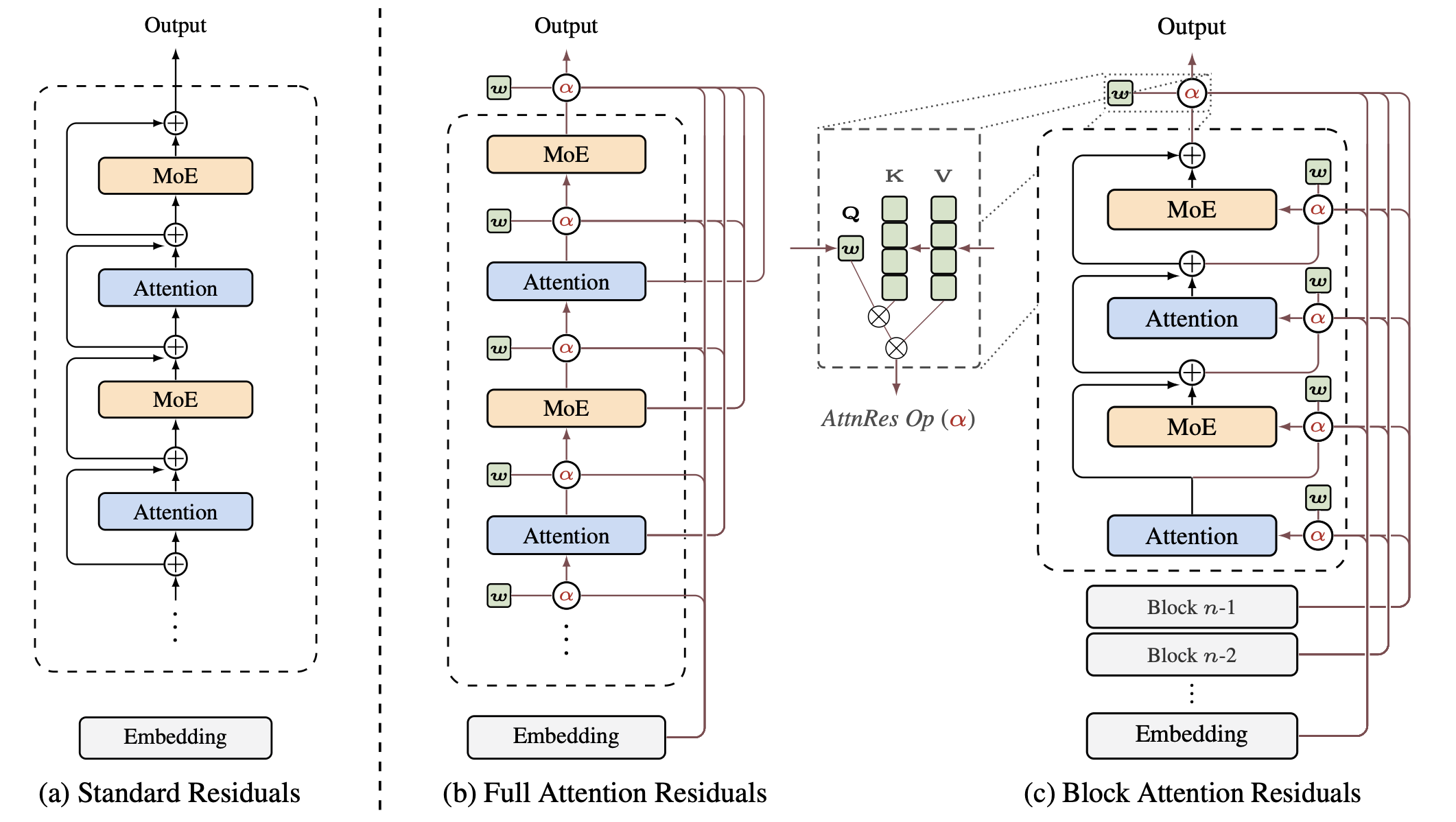
 AttnRes (Attention Residuals) — это встраиваемая замена стандартных residual-связей в Transformers: каждый слой вместо простого накопления суммой использует обучаемое, зависящее от входа внимание по выходам всех предыдущих слоёв.
AttnRes (Attention Residuals) — это встраиваемая замена стандартных residual-связей в Transformers: каждый слой вместо простого накопления суммой использует обучаемое, зависящее от входа внимание по выходам всех предыдущих слоёв.Это обученная модель, которую можно скачать, или техника, которую я реализую сам?Это архитектурная техника, описанная формулами и «псевдокодом в стиле PyTorch», а не предобученный чекпоинт; вы встраиваете её в residual-связи своего Transformer.
Это архитектурная техника, описанная формулами и «псевдокодом в стиле PyTorch», а не предобученный чекпоинт; вы встраиваете её в residual-связи своего Transformer.Как применить это в собственной модели?В README нет команды установки или запускаемого фрагмента кода — только формулы и отсылка к «псевдокоду в стиле PyTorch»; вы реализуете Full AttnRes или более дешёвый вариант Block AttnRes внутри своего Transformer по описанию из статьи.
В README нет команды установки или запускаемого фрагмента кода — только формулы и отсылка к «псевдокоду в стиле PyTorch»; вы реализуете Full AttnRes или более дешёвый вариант Block AttnRes внутри своего Transformer по описанию из статьи.Нужен ли какой-то конкретный фреймворк глубокого обучения?Да, эталонная реализация описана в терминах PyTorch, поэтому для её применения понадобится кодовая база Transformer на PyTorch.
Да, эталонная реализация описана в терминах PyTorch, поэтому для её применения понадобится кодовая база Transformer на PyTorch.Масштабируется ли Full AttnRes на большие модели без дополнительных издержек?Нет — Full AttnRes требует O(Ld) памяти по мере роста глубины, что при больших масштабах становится непрактичным; Block AttnRes решает это, группируя слои примерно в 8 блоков и выполняя внимание только по представлениям уровня блоков, немного жертвуя качеством ради памяти O(Nd).
Нет — Full AttnRes требует O(Ld) памяти по мере роста глубины, что при больших масштабах становится непрактичным; Block AttnRes решает это, группируя слои примерно в 8 блоков и выполняя внимание только по представлениям уровня блоков, немного жертвуя качеством ради памяти O(Nd).Кому это полезно?Она рассчитана на исследователей и инженеров, которые строят или обучают LLM на базе Transformer и хотят альтернативу стандартным residual-связям, а не на конечных пользователей готового приложения.
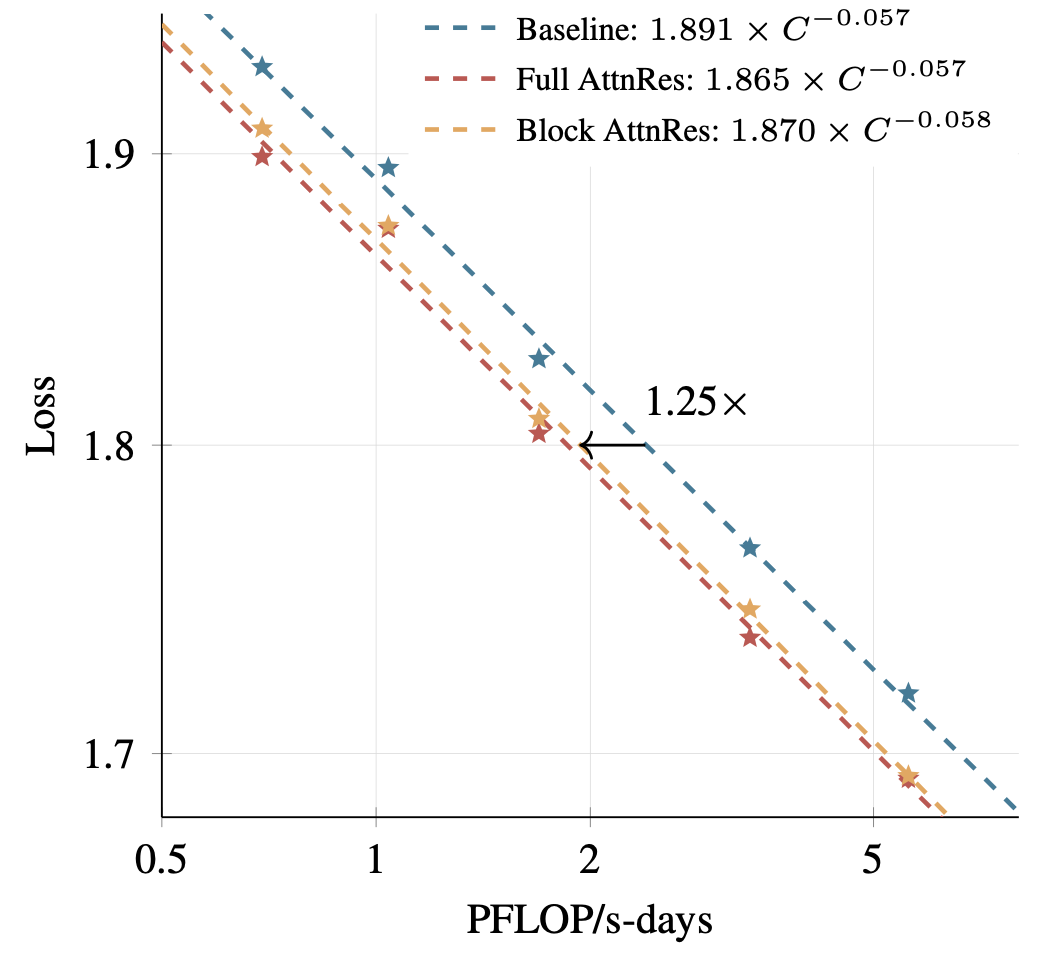
Она рассчитана на исследователей и инженеров, которые строят или обучают LLM на базе Transformer и хотят альтернативу стандартным residual-связям, а не на конечных пользователей готового приложения.Насколько AttnRes улучшает показатели по сравнению со стандартными residual-связями?В тестах законов масштабирования он стабильно снижает loss при любом бюджете вычислений, причём Block AttnRes догоняет базовую модель, обученную с 1.25-кратным объёмом вычислений; на модели Kimi Linear 48B он даёт до +7.5 балла на GPQA-Diamond и +3.1 на HumanEval.
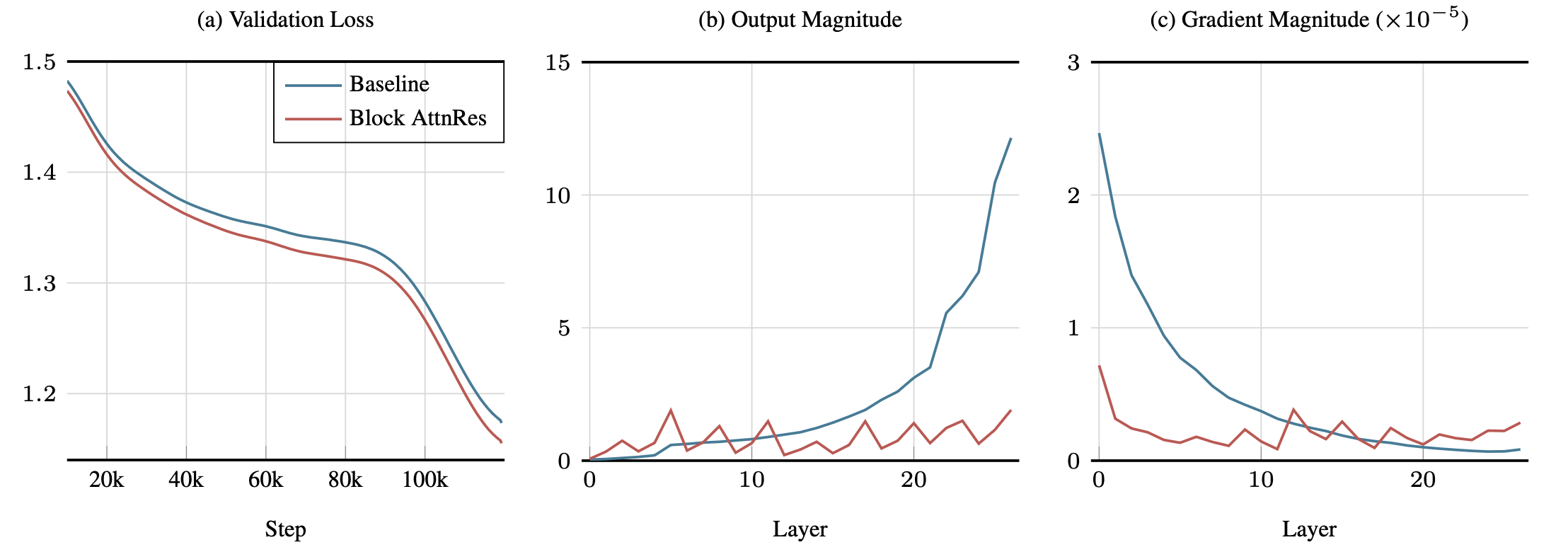
В тестах законов масштабирования он стабильно снижает loss при любом бюджете вычислений, причём Block AttnRes догоняет базовую модель, обученную с 1.25-кратным объёмом вычислений; на модели Kimi Linear 48B он даёт до +7.5 балла на GPQA-Diamond и +3.1 на HumanEval.Почему стандартные residual-связи становятся проблемой в глубоких Transformers?Стандартные residual-связи суммируют выходы всех слоёв с фиксированным единичным весом, из-за чего с ростом глубины вклад каждого слоя размывается, а величины скрытых состояний растут неограниченно — это известная проблема PreNorm, которую призван исправить AttnRes.
Стандартные residual-связи суммируют выходы всех слоёв с фиксированным единичным весом, из-за чего с ростом глубины вклад каждого слоя размывается, а величины скрытых состояний растут неограниченно — это известная проблема PreNorm, которую призван исправить AttnRes.Что такое Kimi Linear и почему на ней тестируют AttnRes?Kimi Linear — модель Moonshot AI с 48 млрд параметров (3 млрд активных), обученная на 1.4 трлн токенов; она служит испытательным стендом, чтобы показать выигрыши AttnRes по прикладным метрикам на бенчмарках вроде MMLU, Math, HumanEval и C-Eval.
Kimi Linear — модель Moonshot AI с 48 млрд параметров (3 млрд активных), обученная на 1.4 трлн токенов; она служит испытательным стендом, чтобы показать выигрыши AttnRes по прикладным метрикам на бенчмарках вроде MMLU, Math, HumanEval и C-Eval.What are similar projects?MSA, bdh, Engram, llama3-from-scratch, jeeves, train-llm-from-scratch, LittleBit, minGPT
MSA, bdh, Engram, llama3-from-scratch, jeeves, train-llm-from-scratch, LittleBit, minGPTWhich topics is it in?attention, model-training, deep-neural-networks, arxiv, foundation-models, reasoning, attention-mechanism, paper, transformers, architecture, neural-network, academic-research
attention, model-training, deep-neural-networks, arxiv, foundation-models, reasoning, attention-mechanism, paper, transformers, architecture, neural-network, academic-research