










963 ·GitHub
Что это?
 MiniMax Music 3 — модель генерации музыки, создающая полные песни длиной до пяти минут из текста песни и описания музыки; на выходе — стерео-WAV 32 кГц 16 бит со связной структурой и выразительным вокалом.
MiniMax Music 3 — модель генерации музыки, создающая полные песни длиной до пяти минут из текста песни и описания музыки; на выходе — стерео-WAV 32 кГц 16 бит со связной структурой и выразительным вокалом.Это готовое приложение или просто сырая модель?Это сырой чекпоинт модели, а не готовое приложение — вы скачиваете веса и запускаете их сами через поддерживаемый инференс-сервер.
Это сырой чекпоинт модели, а не готовое приложение — вы скачиваете веса и запускаете их сами через поддерживаемый инференс-сервер.Как на самом деле сгенерировать с её помощью песню?Скачайте модель, разверните её из корня репозитория SGLang-Omni, затем вызовите общий речевой API, подставив текст песни в поле input, а описание музыки — в instructions.
Скачайте модель, разверните её из корня репозитория SGLang-Omni, затем вызовите общий речевой API, подставив текст песни в поле input, а описание музыки — в instructions.Что нужно для запуска инференса помимо весов?Нужен серверный стек SGLang-Omni, так как сейчас это единственный поддерживаемый способ запуска этой модели.
Нужен серверный стек SGLang-Omni, так как сейчас это единственный поддерживаемый способ запуска этой модели.Какие главные ограничения стоит знать?Генерация только без стриминга, текстовые промпты ограничены 5 000 токенов, аудиовыход — 9 000 акустических кадров, а запрошенные темп, тональность, инструментарий или структура не всегда соблюдаются точно.
Генерация только без стриминга, текстовые промпты ограничены 5 000 токенов, аудиовыход — 9 000 акустических кадров, а запрошенные темп, тональность, инструментарий или структура не всегда соблюдаются точно.Сколько видеокарт нужно для инференса и чем они заняты?Нужны две CUDA-видеокарты: одна обрабатывает авторегрессионную генерацию на базе Qwen3 с восемью кодбуками RVQ, а другая выполняет Flow Matching и декодирование волновой формы.
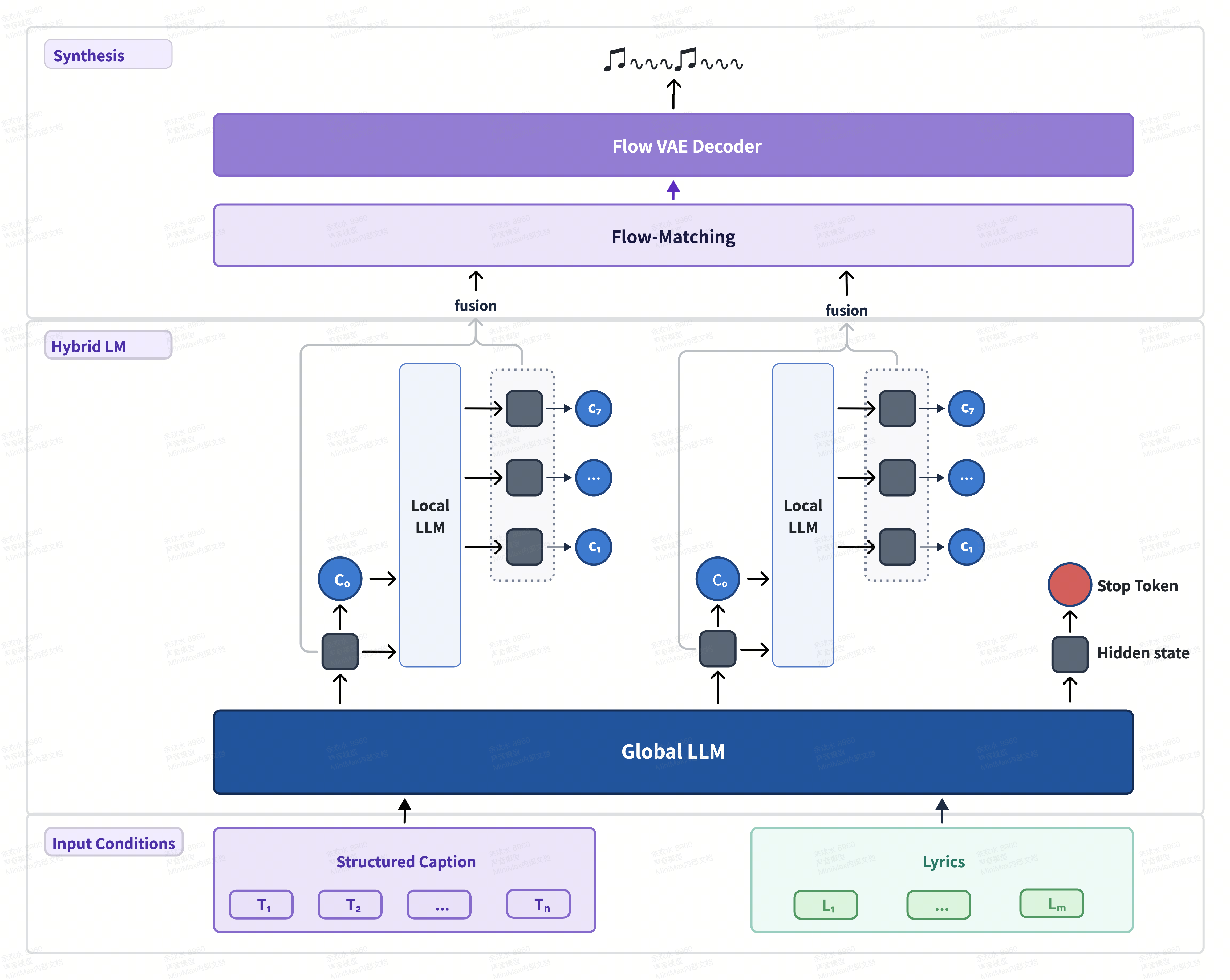
Нужны две CUDA-видеокарты: одна обрабатывает авторегрессионную генерацию на базе Qwen3 с восемью кодбуками RVQ, а другая выполняет Flow Matching и декодирование волновой формы.Что делает навык music-caption-rewriter?Это входящий в комплект агентный навык, который превращает краткое описание и опциональные размеченные тегами lyrics в детальную Music 3.0 Structured Caption с Global Metadata, Vocal Details и Arrangement, используя внутреннюю текстовую библиотеку без внешних API.
Это входящий в комплект агентный навык, который превращает краткое описание и опциональные размеченные тегами lyrics в детальную Music 3.0 Structured Caption с Global Metadata, Vocal Details и Arrangement, используя внутреннюю текстовую библиотеку без внешних API.Как управлять структурой песни, например куплетами и припевом?В lyrics можно включать теги секций вроде [Intro], [Verse], [Pre-Chorus], [Chorus], [Bridge], [Instrumental] и [Outro], а описание музыки отдельно управляет стилем, инструментовкой и аранжировкой этих секций.
В lyrics можно включать теги секций вроде [Intro], [Verse], [Pre-Chorus], [Chorus], [Bridge], [Instrumental] и [Outro], а описание музыки отдельно управляет стилем, инструментовкой и аранжировкой этих секций.Как модель сохраняет связность пятиминутной песни?Она использует иерархический Hybrid-LM: 8B Global LLM (инициализированная из Qwen3-8B) моделирует крупномасштабную музыкальную структуру, а 0.6B Local LLM заполняет акустические детали на уровне кадров; обе питают модуль синтеза Flow Matching/Flow-VAE для финального аудио.
Она использует иерархический Hybrid-LM: 8B Global LLM (инициализированная из Qwen3-8B) моделирует крупномасштабную музыкальную структуру, а 0.6B Local LLM заполняет акустические детали на уровне кадров; обе питают модуль синтеза Flow Matching/Flow-VAE для финального аудио.What are similar projects?jeeves, YuE, audiocraft, vllm-omni, DramaBox, Qwen3.8-Flash-Next, vllm, TypeLLM
jeeves, YuE, audiocraft, vllm-omni, DramaBox, Qwen3.8-Flash-Next, vllm, TypeLLMWhich topics is it in?generative-model, text-to-audio, music-generation, sglang, model, inference-engine, model-serving, audio-generation, audio-processing, music, qwen, multimodal
generative-model, text-to-audio, music-generation, sglang, model, inference-engine, model-serving, audio-generation, audio-processing, music, qwen, multimodal