

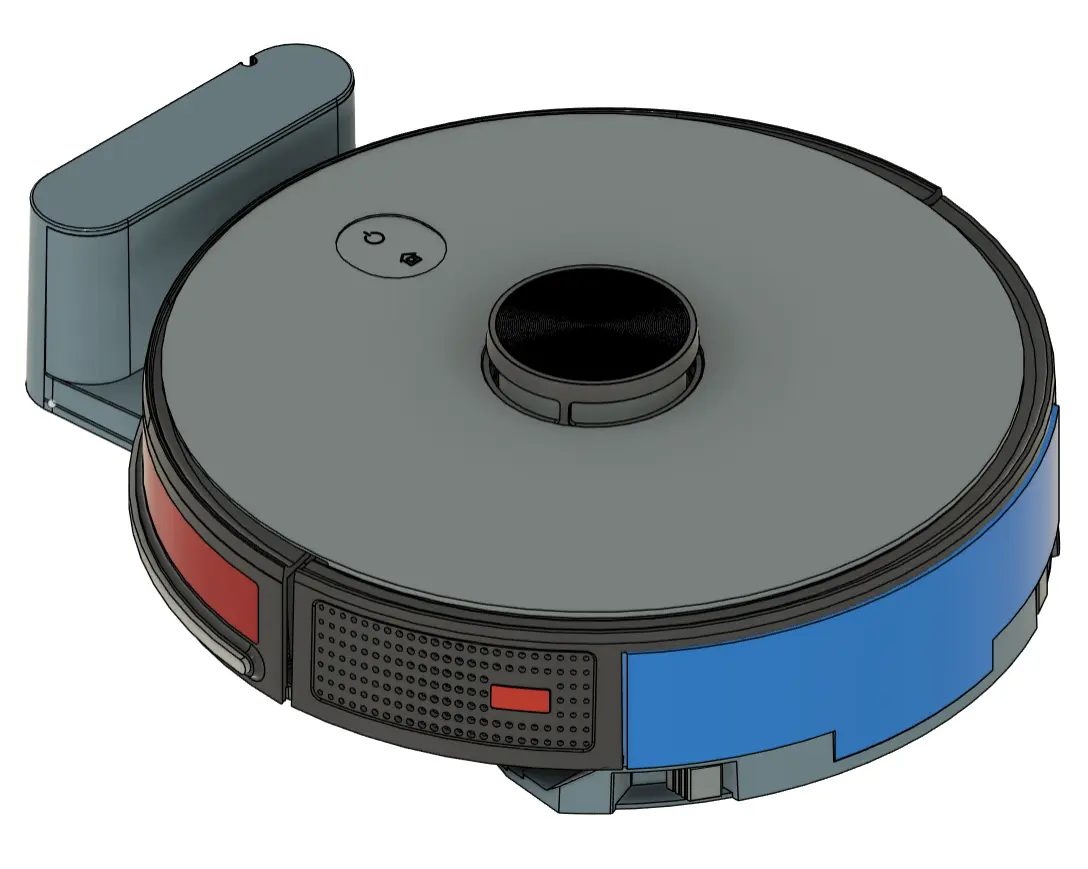
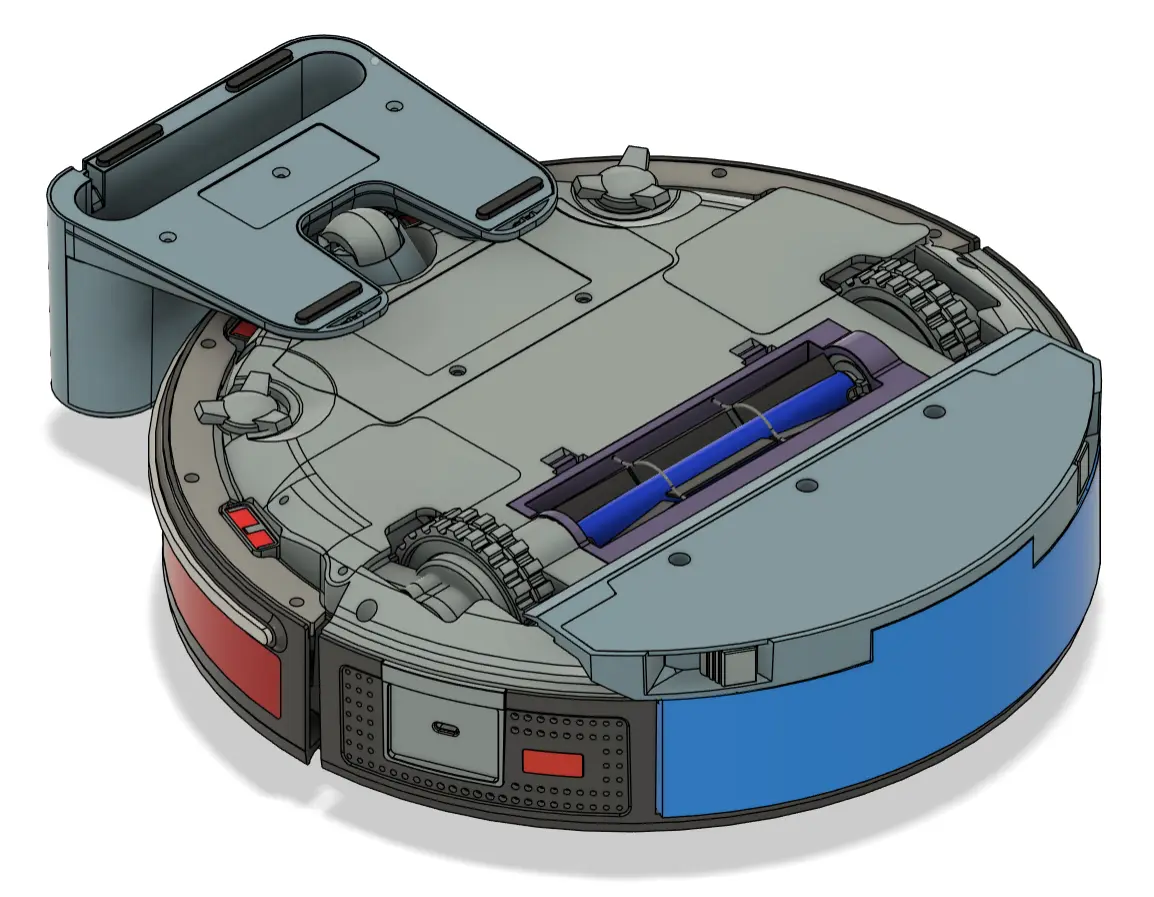


What is this?
 OOMWOO is an open-source home vacuum robot you build yourself, using a Raspberry Pi, 3D-printed parts, Home Assistant, Arduino and ROS2, navigating with an affordable 2D LiDAR.
OOMWOO is an open-source home vacuum robot you build yourself, using a Raspberry Pi, 3D-printed parts, Home Assistant, Arduino and ROS2, navigating with an affordable 2D LiDAR.Is this a finished vacuum I can buy, or a build-it-yourself project?It is a DIY build: you 3D-print the chassis, source the electronics yourself, and run ROS2 software on it. There is also an optional convenience parts kit planned from makerspet.com, but no ready-made product exists yet.
It is a DIY build: you 3D-print the chassis, source the electronics yourself, and run ROS2 software on it. There is also an optional convenience parts kit planned from makerspet.com, but no ready-made product exists yet.How do I start building one?Since OOMWOO's own hardware isn't finished yet, you build and test against the ROS2 Gazebo simulation (oomwoo-one) or a real placeholder robot (a Proscenic M6 Pro wired to ROS2), picking an open module from the RFC board to work on.
Since OOMWOO's own hardware isn't finished yet, you build and test against the ROS2 Gazebo simulation (oomwoo-one) or a real placeholder robot (a Proscenic M6 Pro wired to ROS2), picking an open module from the RFC board to work on.What hardware do I need to build it?A Raspberry Pi CM4/CM5 running ROS2, a 2D LiDAR for mapping, a 3D printer for the chassis, and STM32-based motor-driver/IO PCBs with ESP32/Arduino firmware for the electronics side.
A Raspberry Pi CM4/CM5 running ROS2, a 2D LiDAR for mapping, a 3D printer for the chassis, and STM32-based motor-driver/IO PCBs with ESP32/Arduino firmware for the electronics side.Is OOMWOO ready to build today?Not yet - most deliverables (3D-printable files, Raspberry Pi software, driver/sensor PCBs, firmware, build instructions) are still unchecked on the roadmap, and early build instructions are planned for Fall 2026.
Not yet - most deliverables (3D-printable files, Raspberry Pi software, driver/sensor PCBs, firmware, build instructions) are still unchecked on the roadmap, and early build instructions are planned for Fall 2026.Does it need an internet connection or cloud account to work?No - OOMWOO runs locally for its regular cleaning and mapping functionality with no cloud or vendor lock-in required; a cloud connection is only needed for optional extras like a future app store.
No - OOMWOO runs locally for its regular cleaning and mapping functionality with no cloud or vendor lock-in required; a cloud connection is only needed for optional extras like a future app store.Why is the project called OOMWOO?'OOMWOO' is a rotational ambigram - it reads the same when flipped 180 degrees, mirroring how the robot roams your floor in every direction.
'OOMWOO' is a rotational ambigram - it reads the same when flipped 180 degrees, mirroring how the robot roams your floor in every direction.Can I just buy a parts kit instead of sourcing everything myself?Yes, makerspet.com plans to sell an optional kit with motors, PCBs, brushes, gaskets and LiDAR, but it's only a convenience - every part can also be sourced independently since the whole design stays open.
Yes, makerspet.com plans to sell an optional kit with motors, PCBs, brushes, gaskets and LiDAR, but it's only a convenience - every part can also be sourced independently since the whole design stays open.What existing projects does OOMWOO build on or compare to?It references prior art like Valetudo (cloud-free firmware for commercial vacuums), the kaiaai/LDS LiDAR libraries, remakeai's ROS2 vacuum bridge, Dennis Giese's robot-vacuum teardown research, and the Open Mower outdoor-mower project for inspiration.
It references prior art like Valetudo (cloud-free firmware for commercial vacuums), the kaiaai/LDS LiDAR libraries, remakeai's ROS2 vacuum bridge, Dennis Giese's robot-vacuum teardown research, and the Open Mower outdoor-mower project for inspiration.What are similar projects?ardupilot, Marlin, muse-gadget-sdk, tiny-engineer, Tasmota, awesome-esp32, smartknob, tinygo
ardupilot, Marlin, muse-gadget-sdk, tiny-engineer, Tasmota, awesome-esp32, smartknob, tinygoWhich topics is it in?slam, ros2, stm32, sensors, navigation, arduino, 3d-printing, home-assistant, esp32, robotics, firmware, iot
slam, ros2, stm32, sensors, navigation, arduino, 3d-printing, home-assistant, esp32, robotics, firmware, iot