

这是什么?
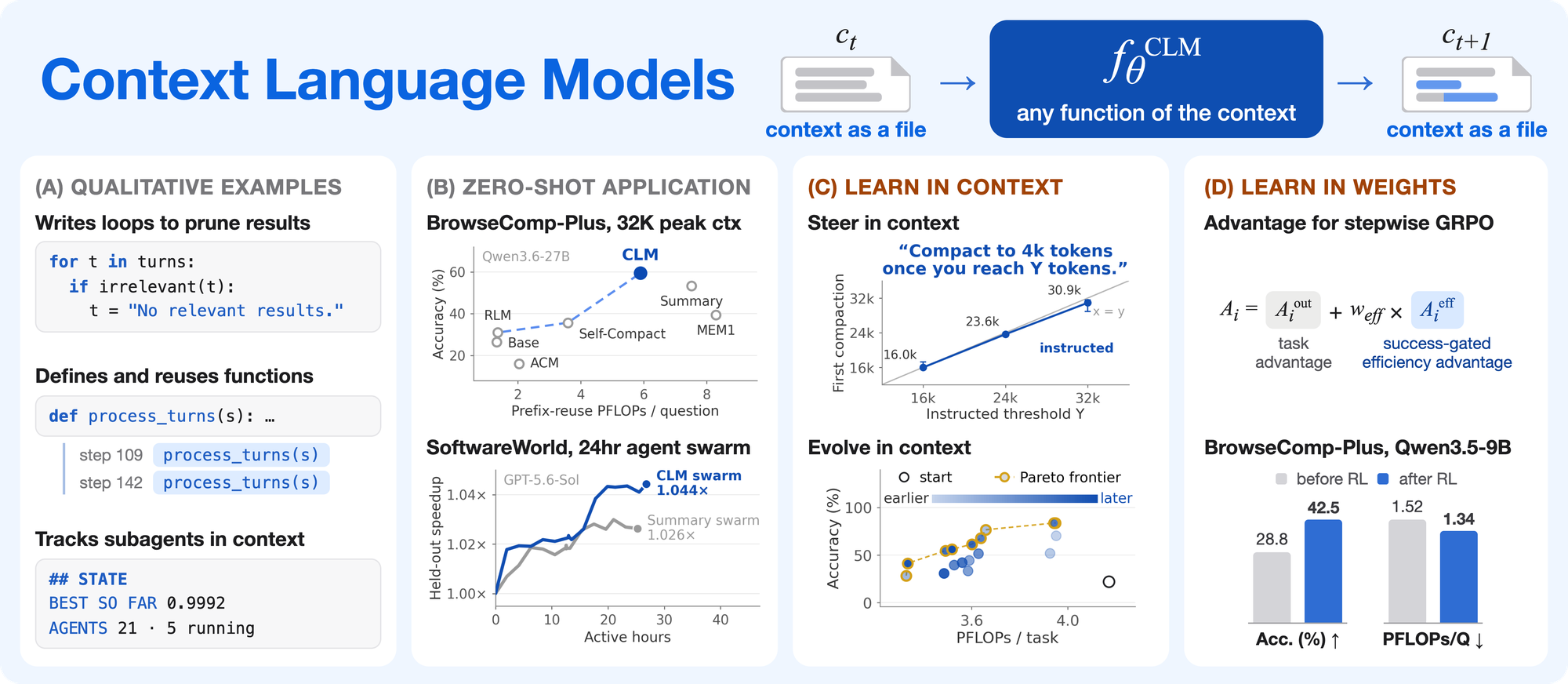
 这是“Context Language Models(CLM,上下文语言模型)”研究的官方代码发布,研究来自华盛顿大学、Meta Superintelligence Labs、MIT 和 Trillium Labs。CLM 是一种以原生方式管理自身上下文的语言模型——它把上下文当作一个可以自由编辑的文件,这种做法自然延伸到多智能体场景,每个智能体的上下文就是它自己的文件。
这是一个做好的工具,还是用于复现论文实验的研究代码?它是伴随 CLM 论文发布的研究代码,不是打磨好的产品:仓库包含基于 Harbor 的实现(clmharness、clmicl、clmrl)外加一个后缀缓存复用(suffix-cache-reuse)服务组件,用于运行和复现论文实验。
它是伴随 CLM 论文发布的研究代码,不是打磨好的产品:仓库包含基于 Harbor 的实现(clmharness、clmicl、clmrl)外加一个后缀缓存复用(suffix-cache-reuse)服务组件,用于运行和复现论文实验。怎么运行一个 CLM?使用 clm-harbor CLI 并带上“-a clm-minimal”标志,在任意 Harbor 任务上运行最小 CLM 智能体;配置和服务细节记录在 clm/clmharness 中。
使用 clm-harbor CLI 并带上“-a clm-minimal”标志,在任意 Harbor 任务上运行最小 CLM 智能体;配置和服务细节记录在 clm/clmharness 中。用这个需要 Harbor 框架吗?需要,CLM 构建在 Harbor 之上,要通过 clm-harbor CLI 调用,不能独立运行。
需要,CLM 构建在 Harbor 之上,要通过 clm-harbor CLI 调用,不能独立运行。论文里的东西这里都齐了吗?还不齐:用于评估 CLM 的基准测试 ContextBench 仍标注为“即将推出”,还没有包含在仓库里。
还不齐:用于评估 CLM 的基准测试 ContextBench 仍标注为“即将推出”,还没有包含在仓库里。可以商用吗?不可以,该项目以 CC BY-NC 4.0 发布,只允许研究和非商业用途。
不可以,该项目以 CC BY-NC 4.0 发布,只允许研究和非商业用途。CLM 比标准的上下文管理方法好多少?在零样本测试中,CLM 在 BrowseComp-Plus 上准确率高 11.4% 且 FLOPs 少 21.5%,在 12 小时的 EdgeBench 上得分高 5% 且 FLOPs 少 59%,在计算量相同的情况下,24 小时多仓库智能体集群任务的改进幅度高出 65%。
在零样本测试中,CLM 在 BrowseComp-Plus 上准确率高 11.4% 且 FLOPs 少 21.5%,在 12 小时的 EdgeBench 上得分高 5% 且 FLOPs 少 59%,在计算量相同的情况下,24 小时多仓库智能体集群任务的改进幅度高出 65%。能不重新训练模型就调整 CLM 的行为吗?能,clm/clmicl 表明 CLM 可以用经过技能优化循环演化出来的自然语言指令来引导,在一个上下文管理任务上把留出集准确率提升最多 35.9 个百分点,同时耗用更少的算力。
能,clm/clmicl 表明 CLM 可以用经过技能优化循环演化出来的自然语言指令来引导,在一个上下文管理任务上把留出集准确率提升最多 35.9 个百分点,同时耗用更少的算力。仓库里有针对 CLM 的强化学习方法吗?有,clm/clmrl 实现了一种在线强化学习方法,让 Qwen3.5-9B 在 BrowseComp-Plus 上的性能提升 47.6%,同时 FLOPs 减少 12%。
有,clm/clmrl 实现了一种在线强化学习方法,让 Qwen3.5-9B 在 BrowseComp-Plus 上的性能提升 47.6%,同时 FLOPs 减少 12%。suffixcachereuse 是干什么用的?它是一个通过复用后缀缓存来高效服务 CLM 的组件,目标是降低在生产环境中运行 CLM 的算力成本。
它是一个通过复用后缀缓存来高效服务 CLM 的组件,目标是降低在生产环境中运行 CLM 的算力成本。What are similar projects?MSA, Harness-RSI, Awesome-Graph-Engineering, Raven, awesome-rsi, Tiersense, GVS5H, jeeves
MSA, Harness-RSI, Awesome-Graph-Engineering, Raven, awesome-rsi, Tiersense, GVS5H, jeevesWhich topics is it in?arxiv, foundation-models, long-term-memory, llm-agents, multi-agent-systems, paper, training, natural-language-processing, context-engineering, academic, harness, agent-framework
arxiv, foundation-models, long-term-memory, llm-agents, multi-agent-systems, paper, training, natural-language-processing, context-engineering, academic, harness, agent-framework