Что это?
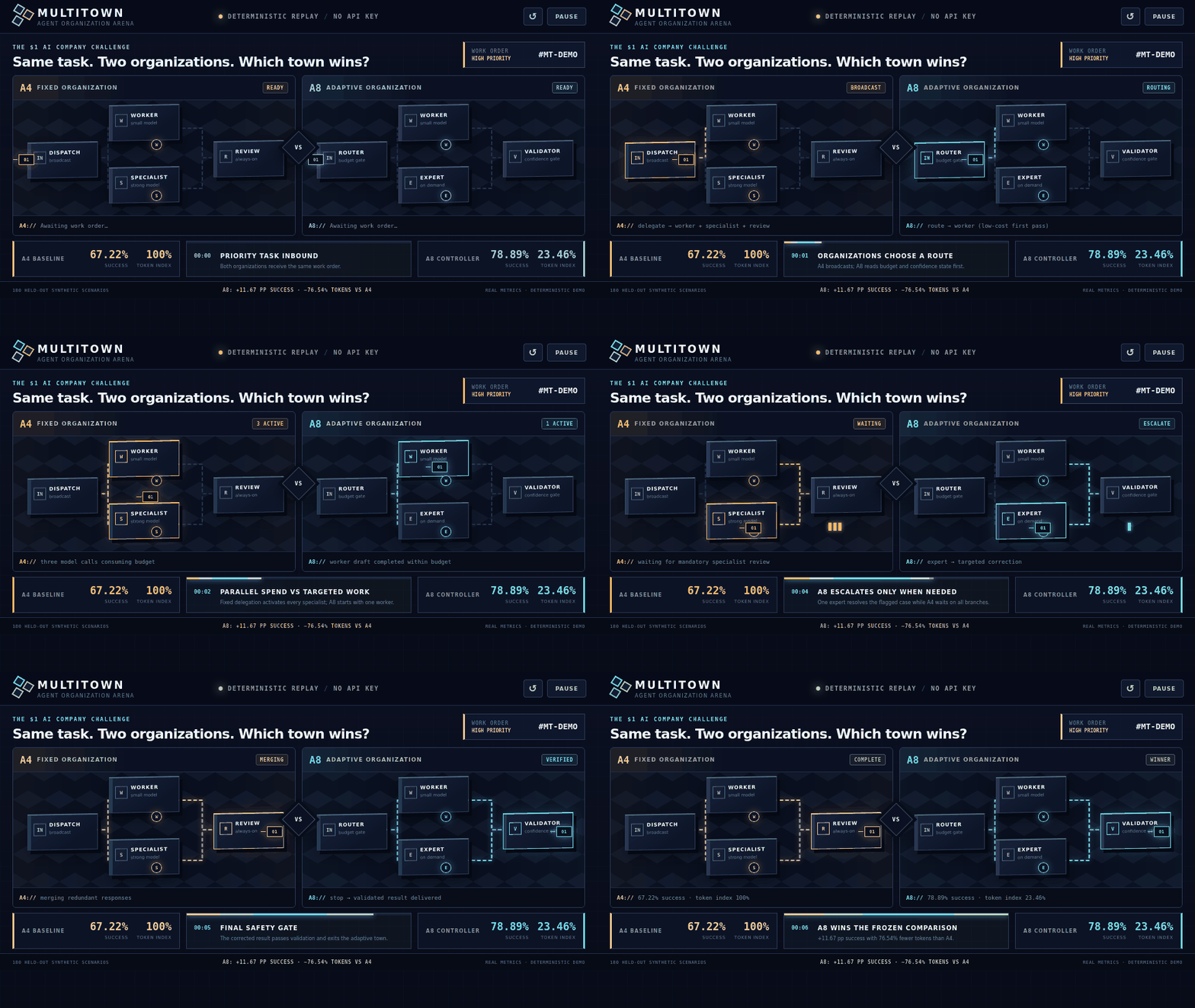
 MultiTown — инструментарий среды выполнения на чистом Python для мультиагентной организации и управления с учётом затрат, где агенты Planner, Worker, Specialist, Validator и Router становятся зданиями и жителями визуального «кибергорода», за которым можно наблюдать, сравнивать и им управлять.
MultiTown — инструментарий среды выполнения на чистом Python для мультиагентной организации и управления с учётом затрат, где агенты Planner, Worker, Specialist, Validator и Router становятся зданиями и жителями визуального «кибергорода», за которым можно наблюдать, сравнивать и им управлять.Это игра или исследовательский инструментарий?Это прежде всего библиотека среды выполнения на Python плюс браузерная Arena для детерминированного воспроизведения и бенчмаркинга стратегий мультиагентного управления, а пока не свободная игра; играбельной он становится на ветке agentic-rpg.
Это прежде всего библиотека среды выполнения на Python плюс браузерная Arena для детерминированного воспроизведения и бенчмаркинга стратегий мультиагентного управления, а пока не свободная игра; играбельной он становится на ветке agentic-rpg.Как запустить Arena?Входящее в комплект воспроизведение работает без модели, API-ключа, шага сборки и сетевых вызовов: вы просто открываете его в браузере; в папке demo/ есть команда для автоматической генерации GIF.
Входящее в комплект воспроизведение работает без модели, API-ключа, шага сборки и сетевых вызовов: вы просто открываете его в браузере; в папке demo/ есть команда для автоматической генерации GIF.Что нужно установить для запуска?Нужны Linux и Python 3.12 или новее; опциональные дополнения добавляют команды маршрутизации/A8 (.[reproduction]) или PPO (.[rl]), а командам с моделью требуется ваш собственный OpenAI-совместимый эндпоинт.
Нужны Linux и Python 3.12 или новее; опциональные дополнения добавляют команды маршрутизации/A8 (.[reproduction]) или PPO (.[rl]), а командам с моделью требуется ваш собственный OpenAI-совместимый эндпоинт.Насколько надёжны результаты бенчмарков?Заголовочные цифры — это локальные измерения Qwen/llama.cpp на замороженной синтетической совокупности задач, и они не доказывают общего превосходства мультиагентного подхода; у некоторых доверительных интервалов для публичных сравнений TeamBench ноль всё ещё внутри.
Заголовочные цифры — это локальные измерения Qwen/llama.cpp на замороженной синтетической совокупности задач, и они не доказывают общего превосходства мультиагентного подхода; у некоторых доверительных интервалов для публичных сравнений TeamBench ноль всё ещё внутри.Работает ли это и на Windows или macOS?Нет — в README прямо сказано, что требуется именно Linux; о поддержке Windows или macOS не упоминается.
Нет — в README прямо сказано, что требуется именно Linux; о поддержке Windows или macOS не упоминается.Что означают метки A4/A6/A7/A8?Это идентификаторы организационных экспериментов, а не версии моделей: A4 — фиксированная полная команда, A6 — статистический маршрутизатор перед задачей, A7 — обученный маршрутизатор перед задачей, а A8 — детерминированный контроллер времени исполнения, который эскалирует только тогда, когда того требуют данные валидации.
Это идентификаторы организационных экспериментов, а не версии моделей: A4 — фиксированная полная команда, A6 — статистический маршрутизатор перед задачей, A7 — обученный маршрутизатор перед задачей, а A8 — детерминированный контроллер времени исполнения, который эскалирует только тогда, когда того требуют данные валидации.Что такое TeamBench и почему это важно?TeamBench — публичный бенчмарк из 89 задач, используемый на ветке public-bench, чтобы проверить, переносится ли подход MultiTown к маршрутизации (MT-CapacityRoute) за пределы его собственных замороженных синтетических задач, при выровненных настройках модели, seed, контейнера и токенов.
TeamBench — публичный бенчмарк из 89 задач, используемый на ветке public-bench, чтобы проверить, переносится ли подход MultiTown к маршрутизации (MT-CapacityRoute) за пределы его собственных замороженных синтетических задач, при выровненных настройках модели, seed, контейнера и токенов.Почему у проекта так много веток?main содержит стабильную витрину и демоверсию Arena, public-bench проверяет перенос на внешние задачи, agentic-rl экспериментирует с обученными политиками управления, а agentic-rpg превращает абстракцию города в играбельный мультиагентный ролевой прототип.
main содержит стабильную витрину и демоверсию Arena, public-bench проверяет перенос на внешние задачи, agentic-rl экспериментирует с обученными политиками управления, а agentic-rpg превращает абстракцию города в играбельный мультиагентный ролевой прототип.Сделало ли обучение контроллера с подкреплением всё безопаснее?Контроллер masked-PPO (A9-v2) повысил успешность, но поднял долю небезопасных эпизодов примерно с 16% до 66%; последующее исправление с жёстким щитом (A9-v3) снизило небезопасные эпизоды до менее чем 6%, но уронило автономную успешность до 0% — прямой компромисс между безопасностью и полезностью.
Контроллер masked-PPO (A9-v2) повысил успешность, но поднял долю небезопасных эпизодов примерно с 16% до 66%; последующее исправление с жёстким щитом (A9-v3) снизило небезопасные эпизоды до менее чем 6%, но уронило автономную успешность до 0% — прямой компромисс между безопасностью и полезностью.What are similar projects?context-language-models, adk-python, ChatDev, hive, PocketFlow, Agentlas-OS, awesome-rsi, RSIGame
context-language-models, adk-python, ChatDev, hive, PocketFlow, Agentlas-OS, awesome-rsi, RSIGameWhich topics is it in?cost-tracking, ai-safety, multi-agent-systems, llm-agents, simulation, reinforcement-learning, visualization, evaluation, orchestration, agent-orchestration, agentic-ai, multi-agent
cost-tracking, ai-safety, multi-agent-systems, llm-agents, simulation, reinforcement-learning, visualization, evaluation, orchestration, agent-orchestration, agentic-ai, multi-agent