
What is this?
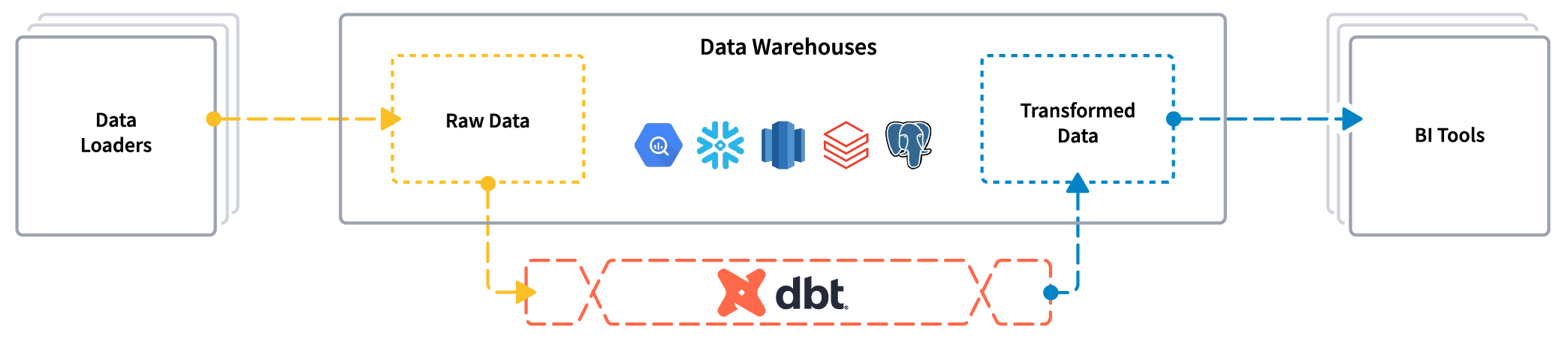
 dbt lets data analysts and engineers transform data in their warehouse by writing SQL select statements ('models'), applying the same practices — version control, testing, modularity — that software engineers use to build applications.
Is this a Python tool or something else now?dbt v2.0 is a ground-up rewrite of dbt in Rust, distributed as a single self-contained CLI binary instead of a Python package; the older v1 Python implementation still exists on a separate branch.
dbt v2.0 is a ground-up rewrite of dbt in Rust, distributed as a single self-contained CLI binary instead of a Python package; the older v1 Python implementation still exists on a separate branch.How do I get started with dbt?Install the dbt v2.0 binary for your OS/architecture, then write SQL select statements as 'models' inside a dbt project; dbt turns them into tables and views in your warehouse.
Install the dbt v2.0 binary for your OS/architecture, then write SQL select statements as 'models' inside a dbt project; dbt turns them into tables and views in your warehouse.Do I need Python to run dbt v2.0?No — unlike v1, v2.0 ships as a single self-contained binary and needs no Python runtime or dependency management.
No — unlike v1, v2.0 ships as a single self-contained binary and needs no Python runtime or dependency management.Is dbt v2.0 ready for production use?It's still in beta, so behavior, APIs, and on-disk formats may change before the stable release; Windows support is also limited to x86-64 (ARM isn't supported yet).
It's still in beta, so behavior, APIs, and on-disk formats may change before the stable release; Windows support is also limited to x86-64 (ARM isn't supported yet).Which operating systems and chips does it support?macOS and Linux are supported on both x86-64 and ARM; Windows is supported on x86-64 only, with ARM support marked as not yet available.
macOS and Linux are supported on both x86-64 and ARM; Windows is supported on x86-64 only, with ARM support marked as not yet available.What happened to the old Python version of dbt?dbt v1 development moved to the 1.latest branch; the main branch now holds the new Rust-based v2.0 rewrite.
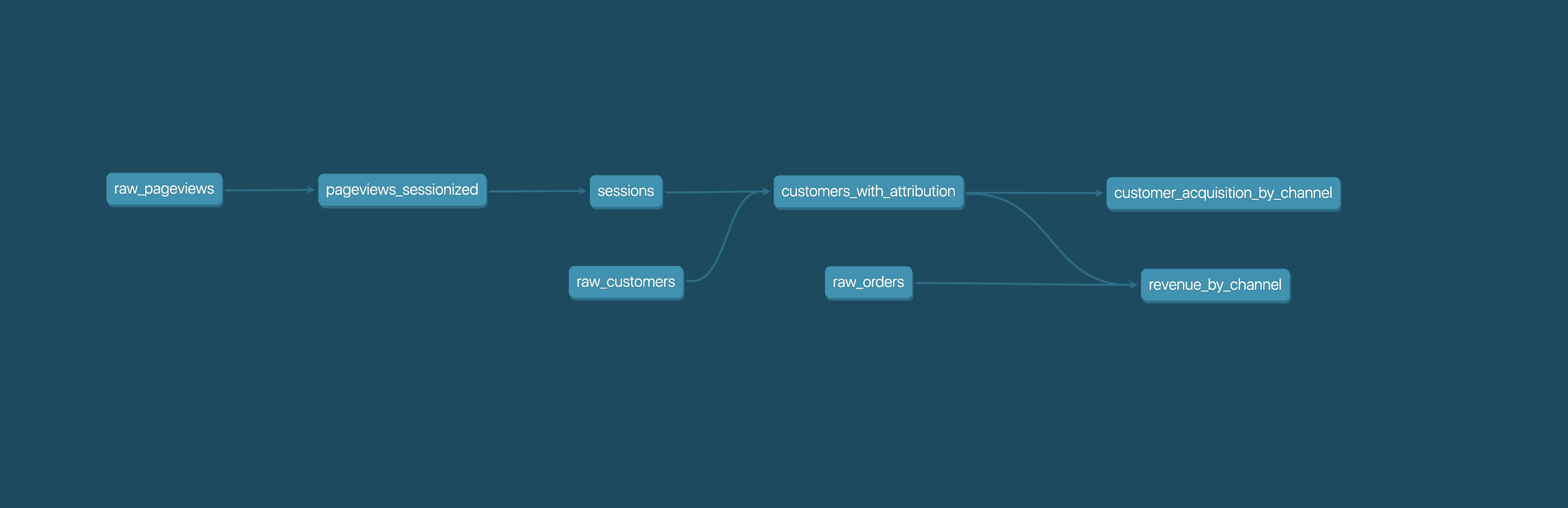
dbt v1 development moved to the 1.latest branch; the main branch now holds the new Rust-based v2.0 rewrite.What exactly is a 'model' in dbt?A model is just a SQL select statement that dbt compiles and materializes into a table or view in your data warehouse, with dbt managing dependencies between models.
A model is just a SQL select statement that dbt compiles and materializes into a table or view in your data warehouse, with dbt managing dependencies between models.Why did the dbt team rewrite it in Rust?For performance at scale — v2.0 parses, compiles, and runs projects in a fraction of the time compared to the v1 Python implementation, especially on large projects.
For performance at scale — v2.0 parses, compiles, and runs projects in a fraction of the time compared to the v1 Python implementation, especially on large projects.What's new about the artifacts dbt produces?v2.0 generates Parquet artifacts that can be easily queried and joined to analyze a project, while still producing the original JSON artifacts like manifest.json for backward compatibility.
v2.0 generates Parquet artifacts that can be easily queried and joined to analyze a project, while still producing the original JSON artifacts like manifest.json for backward compatibility.What are similar projects?walshadow, airbyte, hotdata-cli, cube, ClickHouse, pgterm, superset, trino
walshadow, airbyte, hotdata-cli, cube, ClickHouse, pgterm, superset, trinoWhich topics is it in?business-intelligence, data-pipeline, data-engineering, slack, analytics, sql, database, rust, command-line-tool, terminal, apache-2.0, cli
business-intelligence, data-pipeline, data-engineering, slack, analytics, sql, database, rust, command-line-tool, terminal, apache-2.0, cli