


Что это такое?
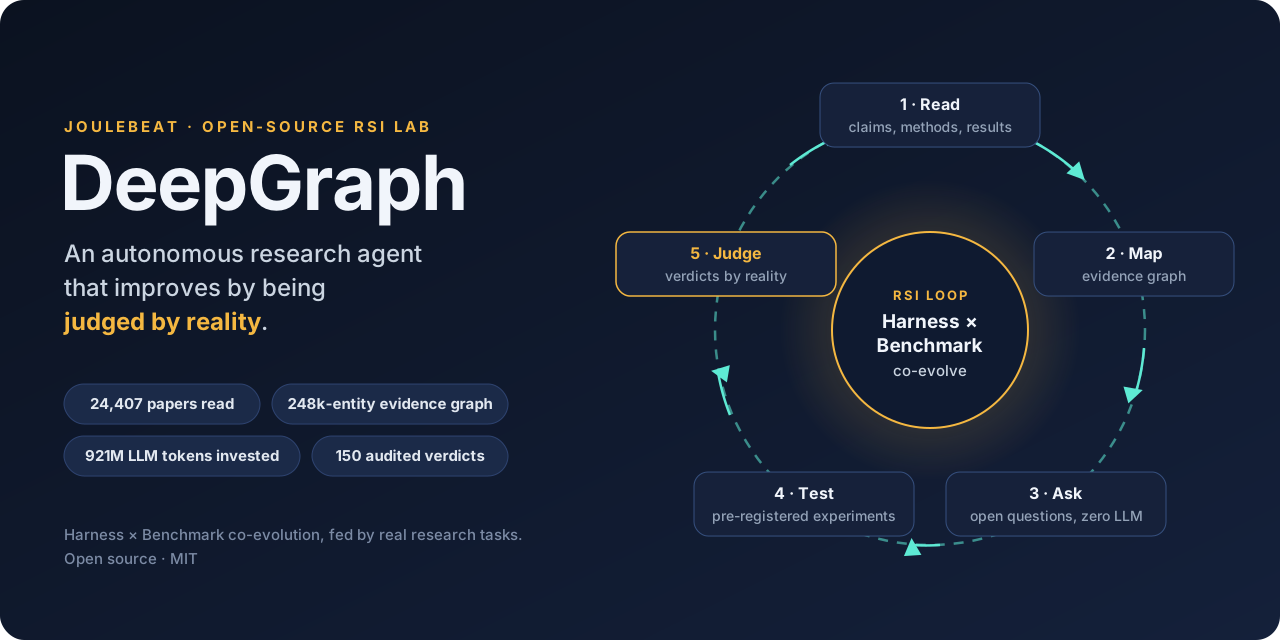
 DeepGraph — автономный исследовательский агент JouleBeat, open-source лаборатории самоулучшения AI (RSI). Он читает научную литературу, находит открытые вопросы, проводит настоящие эксперименты и позволяет результатам решать, что истинно.
DeepGraph — автономный исследовательский агент JouleBeat, open-source лаборатории самоулучшения AI (RSI). Он читает научную литературу, находит открытые вопросы, проводит настоящие эксперименты и позволяет результатам решать, что истинно.Это отдельное приложение или скорее конвейер?Это сквозной исследовательский конвейер: он собирает статьи с arXiv в граф знаний с доказательствами, находит открытые вопросы чистым SQL (без LLM) и превращает их в эксперименты с бюджетом, которые оцениваются по «лестнице доказательств».
Это сквозной исследовательский конвейер: он собирает статьи с arXiv в граф знаний с доказательствами, находит открытые вопросы чистым SQL (без LLM) и превращает их в эксперименты с бюджетом, которые оцениваются по «лестнице доказательств».Как его запустить?Quick start требует Python 3.12+ и API-ключ LLM; для полной управляющей плоскости с PostgreSQL, systemd и удалёнными GPU-бэкендами следуйте руководству по развёртыванию в docs/DEPLOY.md.
Quick start требует Python 3.12+ и API-ключ LLM; для полной управляющей плоскости с PostgreSQL, systemd и удалёнными GPU-бэкендами следуйте руководству по развёртыванию в docs/DEPLOY.md.Мне нужно сначала поднять базу данных, или она опциональна?PostgreSQL опционален для минимального quick start, но обязателен, чтобы открыть полную управляющую плоскость, развёртывание через systemd и удалённые GPU-бэкенды.
PostgreSQL опционален для минимального quick start, но обязателен, чтобы открыть полную управляющую плоскость, развёртывание через systemd и удалённые GPU-бэкенды.Каждому ли его выводу можно доверять?Система сама себя аудитирует, а не гарантирует корректность каждого запуска: в августе 2026 года она поймала и отозвала 11 собственных выводов, опиравшихся на пустые ответы модели.
Система сама себя аудитирует, а не гарантирует корректность каждого запуска: в августе 2026 года она поймала и отозвала 11 собственных выводов, опиравшихся на пустые ответы модели.Для кого это на самом деле?Оно создано для исследователей, которым нужны проверяемые вычислительные выводы, и заодно служит собственным R&D-циклом JouleBeat для эволюции агентских каркасов и бенчмарков.
Оно создано для исследователей, которым нужны проверяемые вычислительные выводы, и заодно служит собственным R&D-циклом JouleBeat для эволюции агентских каркасов и бенчмарков.Что такое Evolution Kernel?Это open-source движок, стоящий за стеком JouleBeat: он предлагает, оценивает, принимает или откатывает изменения каркасов и бенчмарков. Устанавливается отдельно через pip install evolution-kernel.
Это open-source движок, стоящий за стеком JouleBeat: он предлагает, оценивает, принимает или откатывает изменения каркасов и бенчмарков. Устанавливается отдельно через pip install evolution-kernel.Как он находит открытые исследовательские вопросы без LLM в цикле?Десять структурных детекторов запрашивают граф доказательств чистым SQL, чтобы выявить открытые вопросы, не допуская LLM на этом конкретном шаге — ради детерминированности и проверяемости.
Десять структурных детекторов запрашивают граф доказательств чистым SQL, чтобы выявить открытые вопросы, не допуская LLM на этом конкретном шаге — ради детерминированности и проверяемости.Что DeepGraph уже успел произвести?По его производственным данным на август 2026 года он собрал 24,407 статей (7,005 полностью обработано), построил граф из 248,441 сущностей и 735,913 связей и выдал 150 проаудированных экспериментальных вердиктов в рамках шести исследовательских программ.
По его производственным данным на август 2026 года он собрал 24,407 статей (7,005 полностью обработано), построил граф из 248,441 сущностей и 735,913 связей и выдал 150 проаудированных экспериментальных вердиктов в рамках шести исследовательских программ.Почему JouleBeat создал это вместо простого тестирования моделей напрямую?JouleBeat нужен постоянный поток настоящих проверяемых задач, по которым можно судить о новых агентских каркасах и бенчмарках; вычислительные исследования дают именно это, потому что выводы можно подтвердить или опровергнуть, перезапустив код или данные.
JouleBeat нужен постоянный поток настоящих проверяемых задач, по которым можно судить о новых агентских каркасах и бенчмарках; вычислительные исследования дают именно это, потому что выводы можно подтвердить или опровергнуть, перезапустив код или данные.What are similar projects?Raven, awesome-rsi, rrsi, Proteus, wikiskill, AI-Scientist, KISS-Knowledge-Infrastructure-for-Scientific-Simulation, EvoScientist
Raven, awesome-rsi, rrsi, Proteus, wikiskill, AI-Scientist, KISS-Knowledge-Infrastructure-for-Scientific-Simulation, EvoScientistWhich topics is it in?recursive-self-improvement, reproducible-research, self-evolving-agents, ai-research, deep-research, science, arxiv, scientific-computing, llm-agents, papers, knowledge-graph, harness
recursive-self-improvement, reproducible-research, self-evolving-agents, ai-research, deep-research, science, arxiv, scientific-computing, llm-agents, papers, knowledge-graph, harness