

What is this?
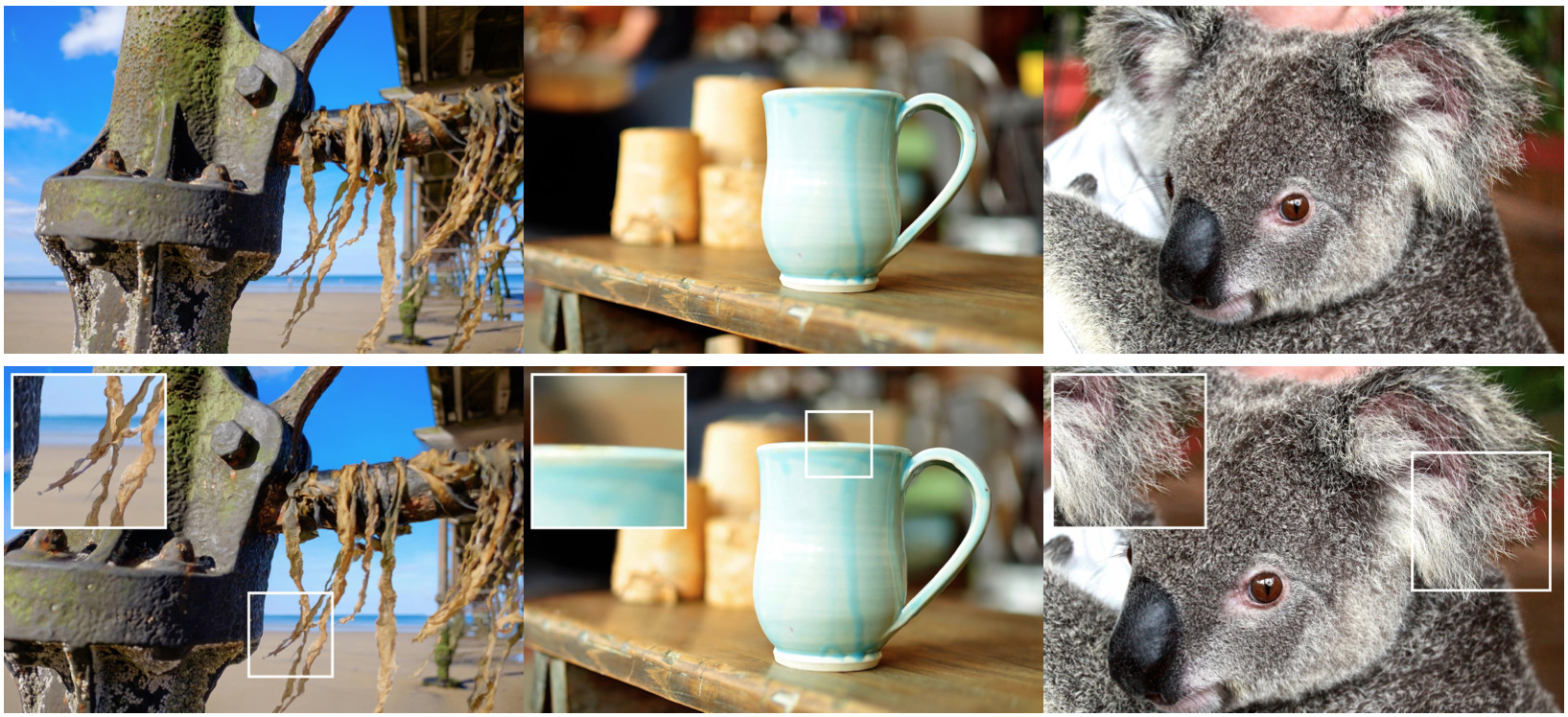
 SHARP (ml-sharp) is the research code for turning a single photograph into a photorealistic 3D scene: it regresses a 3D Gaussian Splatting representation of the scene in a single feedforward pass, in under a second on a standard GPU, and that representation can then be rendered in real time from nearby viewpoints.
SHARP (ml-sharp) is the research code for turning a single photograph into a photorealistic 3D scene: it regresses a 3D Gaussian Splatting representation of the scene in a single feedforward pass, in under a second on a standard GPU, and that representation can then be rendered in real time from nearby viewpoints.Is this a ready-made app or research code with a CLI?It's research code accompanying an academic paper, exposed as a command-line tool for running predictions, not a packaged end-user app.
It's research code accompanying an academic paper, exposed as a command-line tool for running predictions, not a packaged end-user app.How do I get it running?Create a Python environment, install the project, and run the included test to verify the setup; the pretrained model checkpoint is then downloaded automatically on first run and cached locally.
Create a Python environment, install the project, and run the included test to verify the setup; the pretrained model checkpoint is then downloaded automatically on first run and cached locally.Do I need a CUDA GPU to use this?Gaussian prediction from an image runs on CPU, CUDA, or Apple MPS, but rendering a camera-trajectory video with the --render option currently only works on a CUDA GPU.
Gaussian prediction from an image runs on CPU, CUDA, or Apple MPS, but rendering a camera-trajectory video with the --render option currently only works on a CUDA GPU.Any gotchas when using the --render video option?Besides being CUDA-only, the underlying gsplat renderer takes noticeably longer to initialize on its very first launch.
Besides being CUDA-only, the underlying gsplat renderer takes noticeably longer to initialize on its very first launch.Can I freely use the code and the released models?Code and models are covered by separate license files, so you should check both before using anything from the repo.
Code and models are covered by separate license files, so you should check both before using anything from the repo.How fast and accurate is SHARP compared to prior methods?SHARP sets a new state of the art, cutting LPIPS by 25-34% and DISTS by 21-43% versus the best prior model, while lowering synthesis time by three orders of magnitude.
SHARP sets a new state of the art, cutting LPIPS by 25-34% and DISTS by 21-43% versus the best prior model, while lowering synthesis time by three orders of magnitude.What format do I get the 3D scene in?Output is a 3D Gaussian Splatting .ply file saved to the output folder, compatible with common public 3DGS renderers and using the OpenCV camera coordinate convention.
Output is a 3D Gaussian Splatting .ply file saved to the output folder, compatible with common public 3DGS renderers and using the OpenCV camera coordinate convention.Is the generated scene at real-world scale?Yes, the 3D Gaussian representation is metric with absolute scale, so it supports real, metric camera movements rather than an arbitrary scale.
Yes, the 3D Gaussian representation is metric with absolute scale, so it supports real, metric camera movements rather than an arbitrary scale.What are similar projects?nerfstudio, vggt, instant-ngp, InsertAny3D, WorldSculpt, vggt-omega, gaussian-splatting, sam-3d-objects
nerfstudio, vggt, instant-ngp, InsertAny3D, WorldSculpt, vggt-omega, gaussian-splatting, sam-3d-objectsWhich topics is it in?real-time-rendering, gaussian-splatting, image-to-3d, neural-rendering, 3d-reconstruction, paper, 3d, academic-research, inference, nvidia, computer-vision, cuda
real-time-rendering, gaussian-splatting, image-to-3d, neural-rendering, 3d-reconstruction, paper, 3d, academic-research, inference, nvidia, computer-vision, cuda