Что это такое?
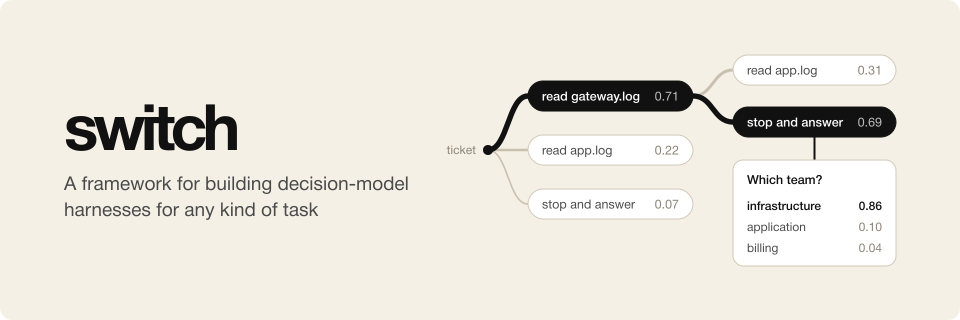
 switch — это фреймворк на TypeScript для создания обвязок вокруг моделей принятия решений (например, Jev), который даёт им цикл агента над коротким, конечным списком типизированных вариантов следующего шага, пока модель не выдаст итоговый ответ.
switch — это фреймворк, обычная библиотека или CLI-инструмент?Фактически это всё three сразу: основной npm-пакет (@osolmaz/switch) предоставляет как библиотеку цикл агента, доменные типы и вспомогательную функцию pick, а @osolmaz/switch/cli с функцией commandLine превращает любой домен в запускаемую программу с командами run и replay.
Фактически это всё three сразу: основной npm-пакет (@osolmaz/switch) предоставляет как библиотеку цикл агента, доменные типы и вспомогательную функцию pick, а @osolmaz/switch/cli с функцией commandLine превращает любой домен в запускаемую программу с командами run и replay.Как добавить это в мой проект?Установите @osolmaz/switch (а также @osolmaz/switch/models, /cli или /testing по необходимости) из npm, затем напишите «domain», который определяет функции initial, questions и transition для вашей задачи.
Установите @osolmaz/switch (а также @osolmaz/switch/models, /cli или /testing по необходимости) из npm, затем напишите «domain», который определяет функции initial, questions и transition для вашей задачи.Что нужно установить перед использованием?Node.js версии 22.18 или новее. Входящие в комплект примеры и просмотрщик не публикуются в npm, поэтому для их запуска нужно клонировать репозиторий и установить рабочее пространство pnpm.
Node.js версии 22.18 или новее. Входящие в комплект примеры и просмотрщик не публикуются в npm, поэтому для их запуска нужно клонировать репозиторий и установить рабочее пространство pnpm.Чего модель принятия решений не может делать внутри switch?Модель принятия решений отвечает только на типизированные вопросы вероятностями и не пишет свободный текст, поэтому, в отличие от текстовой обвязки агента для программирования, она сама не может генерировать произвольные вызовы инструментов — код switch должен формировать для неё конечный набор вариантов. Jev, первая такая модель, пока слаба в шахматах и ещё не достаточно хороша как судья, чтобы заменить сильнейшие чат-модели.
Модель принятия решений отвечает только на типизированные вопросы вероятностями и не пишет свободный текст, поэтому, в отличие от текстовой обвязки агента для программирования, она сама не может генерировать произвольные вызовы инструментов — код switch должен формировать для неё конечный набор вариантов. Jev, первая такая модель, пока слаба в шахматах и ещё не достаточно хороша как судья, чтобы заменить сильнейшие чат-модели.Зачем использовать судью на основе модели принятия решений, а не просто загружать все документы в контекст LLM?При обычном судье каждая страница каждого PDF, Word или Markdown-файла (плюс изображения для визуальных критериев) попадает в контекст, даже если важны лишь несколько страниц; с switch модель принятия решений проходит по документам пошагово и читает только то, что нужно, чтобы оценить каждый пункт рубрики.
При обычном судье каждая страница каждого PDF, Word или Markdown-файла (плюс изображения для визуальных критериев) попадает в контекст, даже если важны лишь несколько страниц; с switch модель принятия решений проходит по документам пошагово и читает только то, что нужно, чтобы оценить каждый пункт рубрики.Что такое Jev?Jev — модель принятия решений от TypeSafe, первая из того, что компания называет «моделями System One»: они отвечают на типизированные вопросы типа bool, choice или score вероятностями, а не пишут текст. llama.cpp может раздавать открытые модели принятия решений через тот же API, который использует switch.
Jev — модель принятия решений от TypeSafe, первая из того, что компания называет «моделями System One»: они отвечают на типизированные вопросы типа bool, choice или score вероятностями, а не пишут текст. llama.cpp может раздавать открытые модели принятия решений через тот же API, который использует switch.Какие примеры доменов входят в репозиторий?Там есть судья по рубрике, который оценивает сохранённые ответы на задачи по рубрике; шахматный домен, в котором игра идёт против случайных ходов, Stockfish или самой себя; и домен WikiRace, в котором нужно добраться от одной статьи Википедии до другой, переходя по ссылкам.
Там есть судья по рубрике, который оценивает сохранённые ответы на задачи по рубрике; шахматный домен, в котором игра идёт против случайных ходов, Stockfish или самой себя; и домен WikiRace, в котором нужно добраться от одной статьи Википедии до другой, переходя по ссылкам.Можно ли просмотреть или повторить запуск после его завершения?Каждый запуск записывает трассировку со всеми состояниями, вопросами и ответами; просмотрщик воспроизводит её пошагово в браузере, а команда replay перезапускает случай по его трассировке без обращения к модели и при необходимости может разветвить запуск на полпути с помощью --fork.
Каждый запуск записывает трассировку со всеми состояниями, вопросами и ответами; просмотрщик воспроизводит её пошагово в браузере, а команда replay перезапускает случай по его трассировке без обращения к модели и при необходимости может разветвить запуск на полпути с помощью --fork.В каких он темах?harness-framework, state-machine, evaluation-framework, jev-model, system-one, evals, typed-decisions, decision-making, pi-coding-agent, llm-evaluation, agent-harness, harness
harness-framework, state-machine, evaluation-framework, jev-model, system-one, evals, typed-decisions, decision-making, pi-coding-agent, llm-evaluation, agent-harness, harness