


Что это?
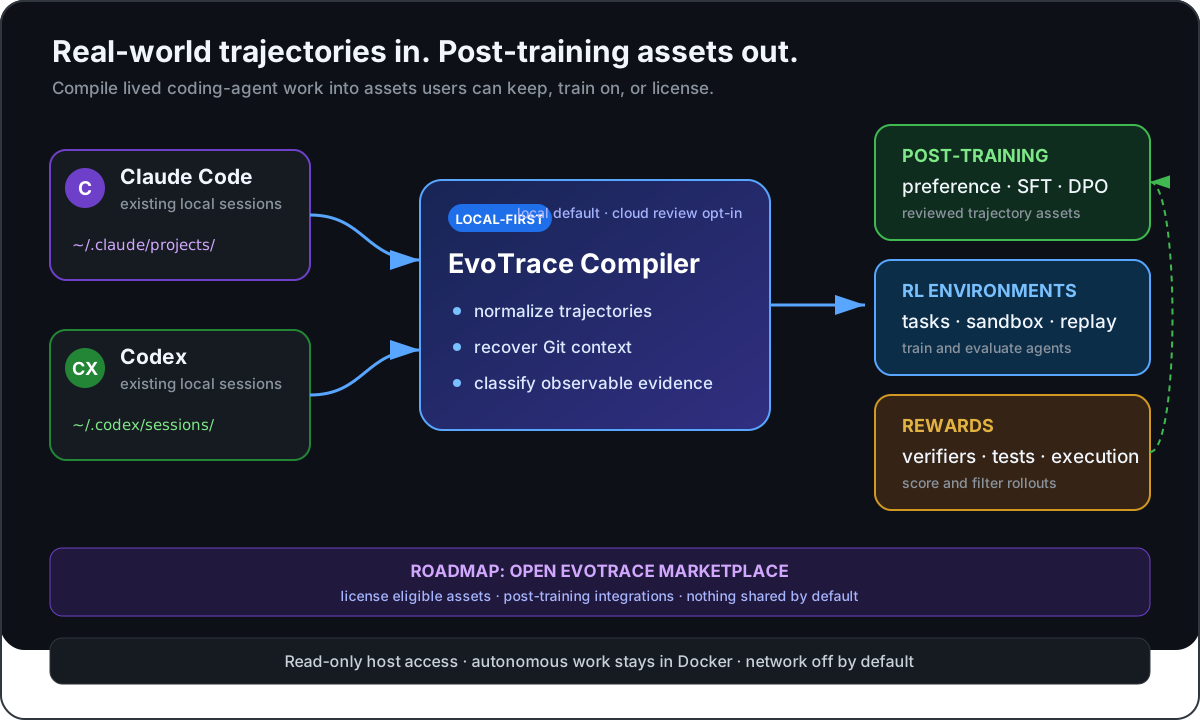
 EvoTrace добывает сессии кодинг-агентов Claude Code и Codex, уже лежащие на вашей машине, отбирает те, что стоят сохранения, и превращает их в проверенные, переиспользуемые ассеты для посттренинга: данные предпочтений, воспроизводимые задачи по кодированию, RL-среды и кандидатов для наград за исполнение.
EvoTrace добывает сессии кодинг-агентов Claude Code и Codex, уже лежащие на вашей машине, отбирает те, что стоят сохранения, и превращает их в проверенные, переиспользуемые ассеты для посттренинга: данные предпочтений, воспроизводимые задачи по кодированию, RL-среды и кандидатов для наград за исполнение.Сам EvoTrace — это кодинг-агент, с которым я решаю задачи?Нет — это компилятор траекторий с локальным приоритетом, построенный поверх DeepSeek Harness. Он не заменяет Claude Code или Codex, а лишь читает историю сессий, которую они уже оставили, и превращает её в ассеты для обучения и оценки.
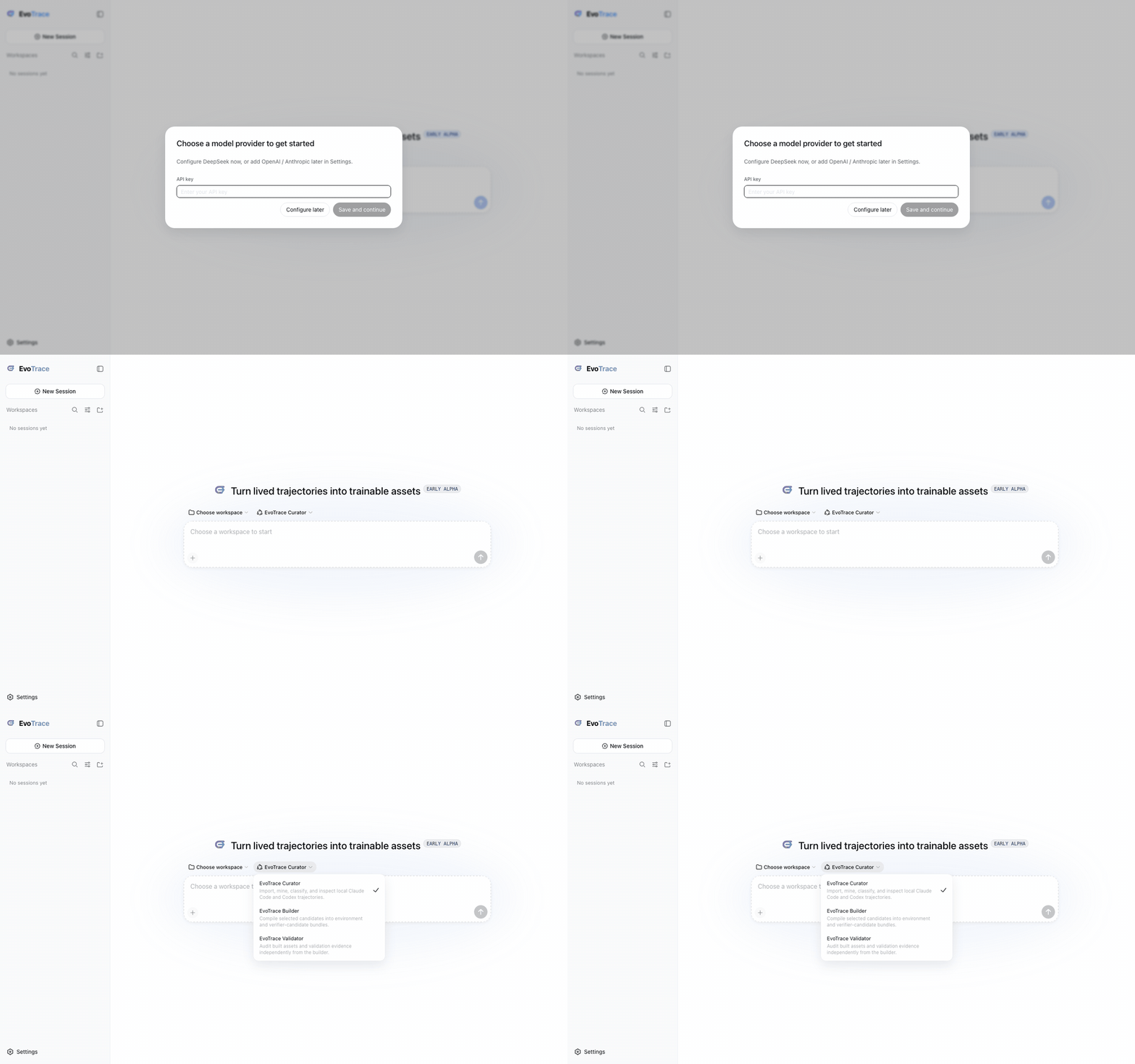
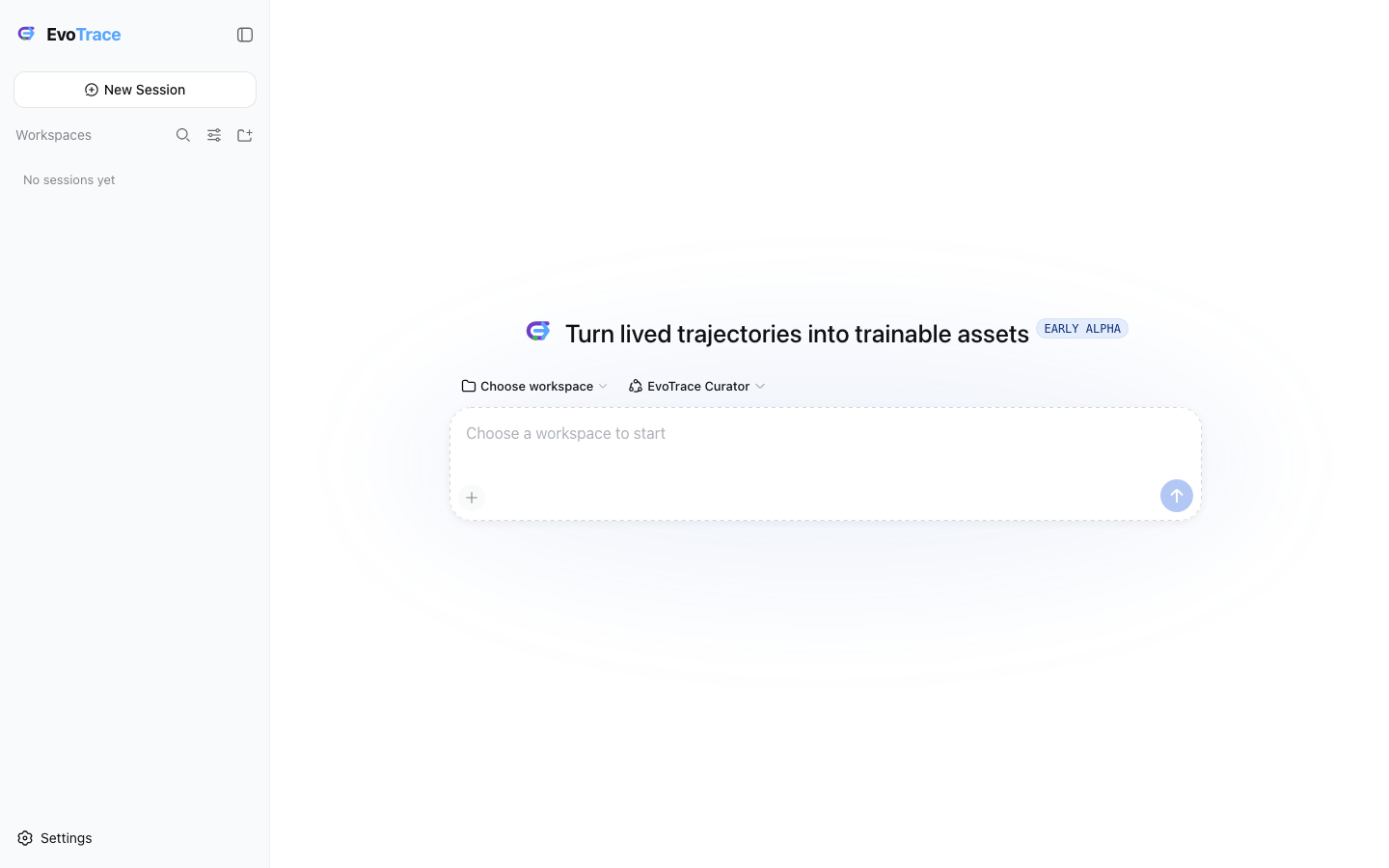
Нет — это компилятор траекторий с локальным приоритетом, построенный поверх DeepSeek Harness. Он не заменяет Claude Code или Codex, а лишь читает историю сессий, которую они уже оставили, и превращает её в ассеты для обучения и оценки.Как запустить EvoTrace?Установите его (команда shell для macOS/Linux/WSL или команда для Windows PowerShell из README), затем запустите — откроется веб-приложение DeepSeek Harness. Там выберите провайдера моделей в Settings и выполняйте слэш-команды: /init для импорта сессий и /candidates, /review, /build, /validate для компиляции ассетов.
Установите его (команда shell для macOS/Linux/WSL или команда для Windows PowerShell из README), затем запустите — откроется веб-приложение DeepSeek Harness. Там выберите провайдера моделей в Settings и выполняйте слэш-команды: /init для импорта сессий и /candidates, /review, /build, /validate для компиляции ассетов.Что нужно установить, чтобы им пользоваться?Требуются Git, Node.js 22.19+ или 24+ и Python 3.9+; Docker необязателен и нужен только когда вы собираете или валидируете исполнимые пакеты задач. Ключ провайдера моделей (DeepSeek, OpenAI или Anthropic) нужен для шагов агентской проверки, харденинга, калибровки и эволюции, но не для локального импорта и детерминированного майнинга.
Требуются Git, Node.js 22.19+ или 24+ и Python 3.9+; Docker необязателен и нужен только когда вы собираете или валидируете исполнимые пакеты задач. Ключ провайдера моделей (DeepSeek, OpenAI или Anthropic) нужен для шагов агентской проверки, харденинга, калибровки и эволюции, но не для локального импорта и детерминированного майнинга.Готовы ли сгенерированные задачи и верификаторы к использованию сразу?Не автоматически — проект в ранней альфе, а сам DeepSeek Harness является developer preview, поэтому сгенерированные задачи и верификаторы остаются «кандидатами», пока не пройдут задокументированные проверки доказательств и Docker-валидацию двух состояний. Ужесточение усиленной задачи тоже должно добавлять реальное проверяемое поведение, а не просто более длинный патч.
Не автоматически — проект в ранней альфе, а сам DeepSeek Harness является developer preview, поэтому сгенерированные задачи и верификаторы остаются «кандидатами», пока не пройдут задокументированные проверки доказательств и Docker-валидацию двух состояний. Ужесточение усиленной задачи тоже должно добавлять реальное проверяемое поведение, а не просто более длинный патч.Отправляет ли он мою историю Claude Code или Codex куда-либо?Импорт и майнинг происходят локально по вашей истории Claude Code/Codex и Git-доказательствам, без изменения исходных репозиториев; отправка данных модели происходит только в необязательных шагах агентской проверки, харденинга, калибровки и эволюции, а сама валидация выполняется в одноразовых Docker-песочницах без учётных данных хоста и bind-монтирования исходников.
Импорт и майнинг происходят локально по вашей истории Claude Code/Codex и Git-доказательствам, без изменения исходных репозиториев; отправка данных модели происходит только в необязательных шагах агентской проверки, харденинга, калибровки и эволюции, а сама валидация выполняется в одноразовых Docker-песочницах без учётных данных хоста и bind-монтирования исходников.Что на самом деле означает статус задачи «Verified»?Это значит, что корректный Docker-запуск отклонил немодифицированное состояние базового репозитория, принял референсный патч как заведомо рабочее состояние, и этот результат был зафиксирован для точного дайджеста бандла — а не просто то, что существует скрипт-верификатор.
Это значит, что корректный Docker-запуск отклонил немодифицированное состояние базового репозитория, принял референсный патч как заведомо рабочее состояние, и этот результат был зафиксирован для точного дайджеста бандла — а не просто то, что существует скрипт-верификатор.Что такое DeepSeek Harness и является ли EvoTrace его форком?DeepSeek Harness — это базовое приложение, дающее веб-интерфейс, сессии, настройки провайдеров и рантайм плагинов. EvoTrace — специализированная его дистрибуция, добавляющая компилятор траекторий и оркестратор с четырьмя ролями (Episode Miner, Candidate Gate, Task Builder/Hardener, Verifier Critic).
DeepSeek Harness — это базовое приложение, дающее веб-интерфейс, сессии, настройки провайдеров и рантайм плагинов. EvoTrace — специализированная его дистрибуция, добавляющая компилятор траекторий и оркестратор с четырьмя ролями (Episode Miner, Candidate Gate, Task Builder/Hardener, Verifier Critic).Что такое EvoTrace Marketplace?Это запланированная опциональная функция из роадмапа, которая позволила бы пользователям лицензировать свои проверенные обучающие ассеты на собственных условиях, плюс интеграции для файнтюнинга. В текущий локальный open-source-релиз она не входит.
Это запланированная опциональная функция из роадмапа, которая позволила бы пользователям лицензировать свои проверенные обучающие ассеты на собственных условиях, плюс интеграции для файнтюнинга. В текущий локальный open-source-релиз она не входит.Что происходит, когда я запускаю /evolve для задачи?Он проверяет, переносится ли опыт исполнения, сжатый из одной исследованной задачи, на независимо построенную отложенную задачу из того же репозитория, сравнивая базовые и обусловленные попытки решателя с помощью Docker-наград — запуск без реального отложенного ассета является лишь smoke-тестом, а не корректным измерением переноса.
Он проверяет, переносится ли опыт исполнения, сжатый из одной исследованной задачи, на независимо построенную отложенную задачу из того же репозитория, сравнивая базовые и обусловленные попытки решателя с помощью Docker-наград — запуск без реального отложенного ассета является лишь smoke-тестом, а не корректным измерением переноса.What are similar projects?Proteus, openrig, Raven, SkillCorpus, maka, casbin-gateway, ParseBench, open-r1
Proteus, openrig, Raven, SkillCorpus, maka, casbin-gateway, ParseBench, open-r1Which topics is it in?sft, rlhf, wsl, llm-evaluation, codex-cli, agent-harness, dataset, dsh, harness, coding-agents, reinforcement-learning, evaluation
sft, rlhf, wsl, llm-evaluation, codex-cli, agent-harness, dataset, dsh, harness, coding-agents, reinforcement-learning, evaluation