


What is this?
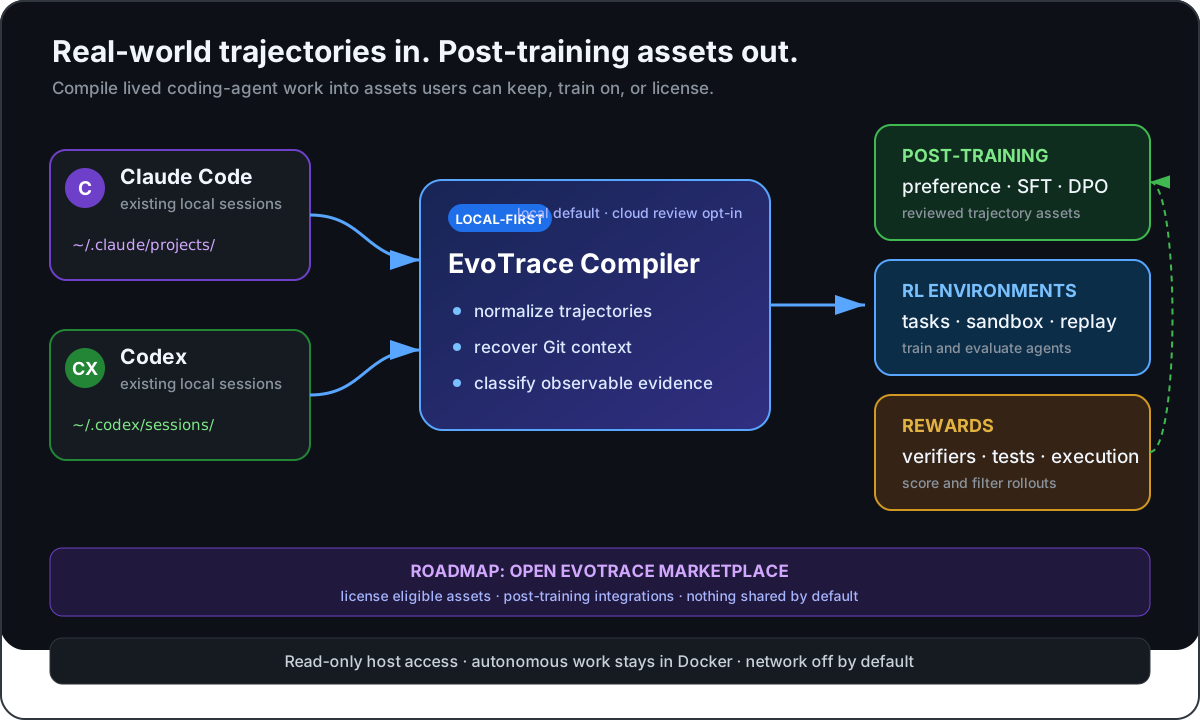
 EvoTrace mines the Claude Code and Codex coding-agent sessions already on your machine, finds the ones worth keeping, and compiles them into verified, reusable post-training assets: preference data, replayable coding tasks, RL environments, and execution-reward candidates.
EvoTrace mines the Claude Code and Codex coding-agent sessions already on your machine, finds the ones worth keeping, and compiles them into verified, reusable post-training assets: preference data, replayable coding tasks, RL environments, and execution-reward candidates.Is EvoTrace itself a coding agent I run tasks with?No — it is a local-first trajectory compiler built on top of DeepSeek Harness. It doesn't replace Claude Code or Codex, it just reads the session history they already left behind and turns it into training/eval assets.
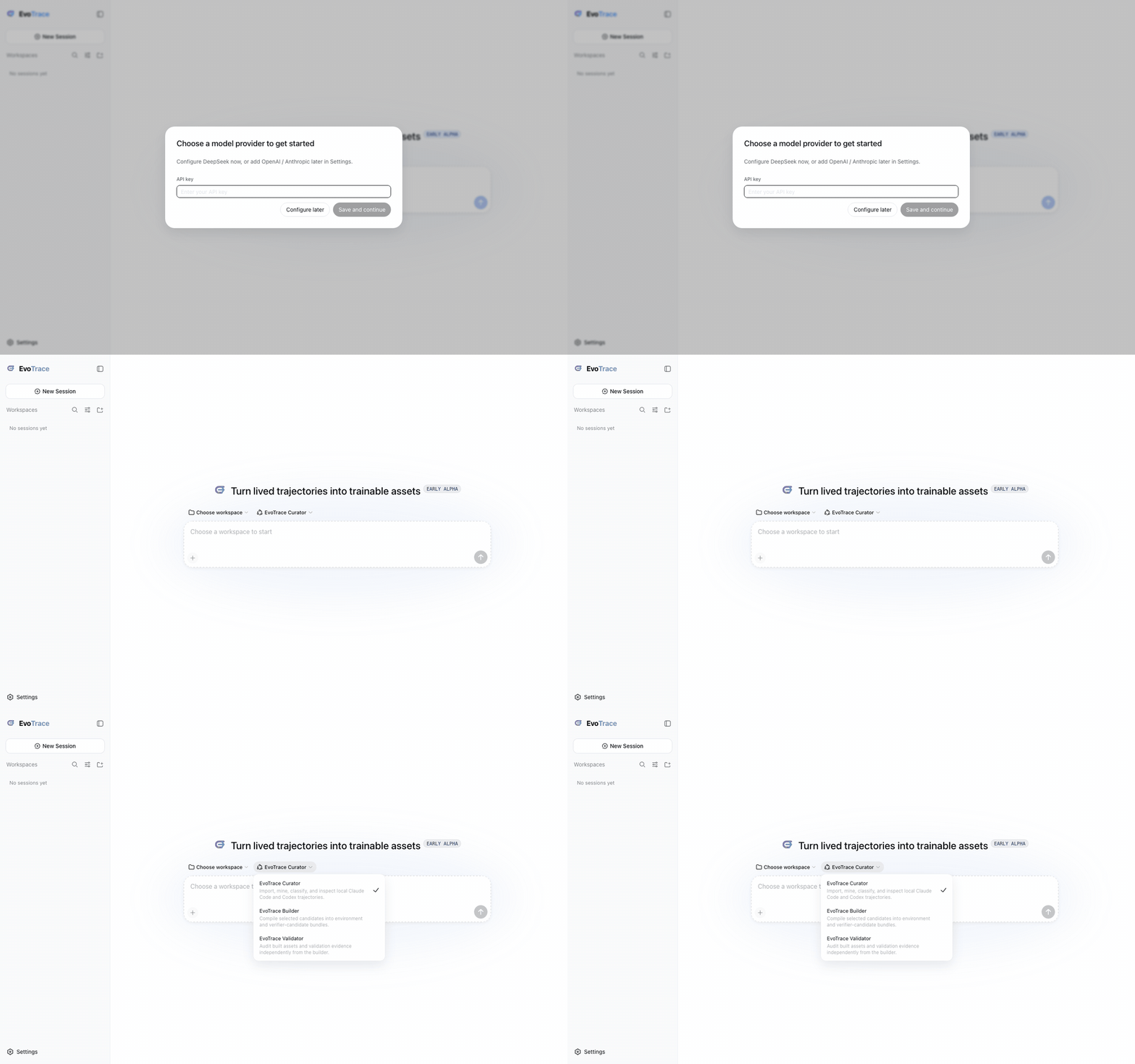
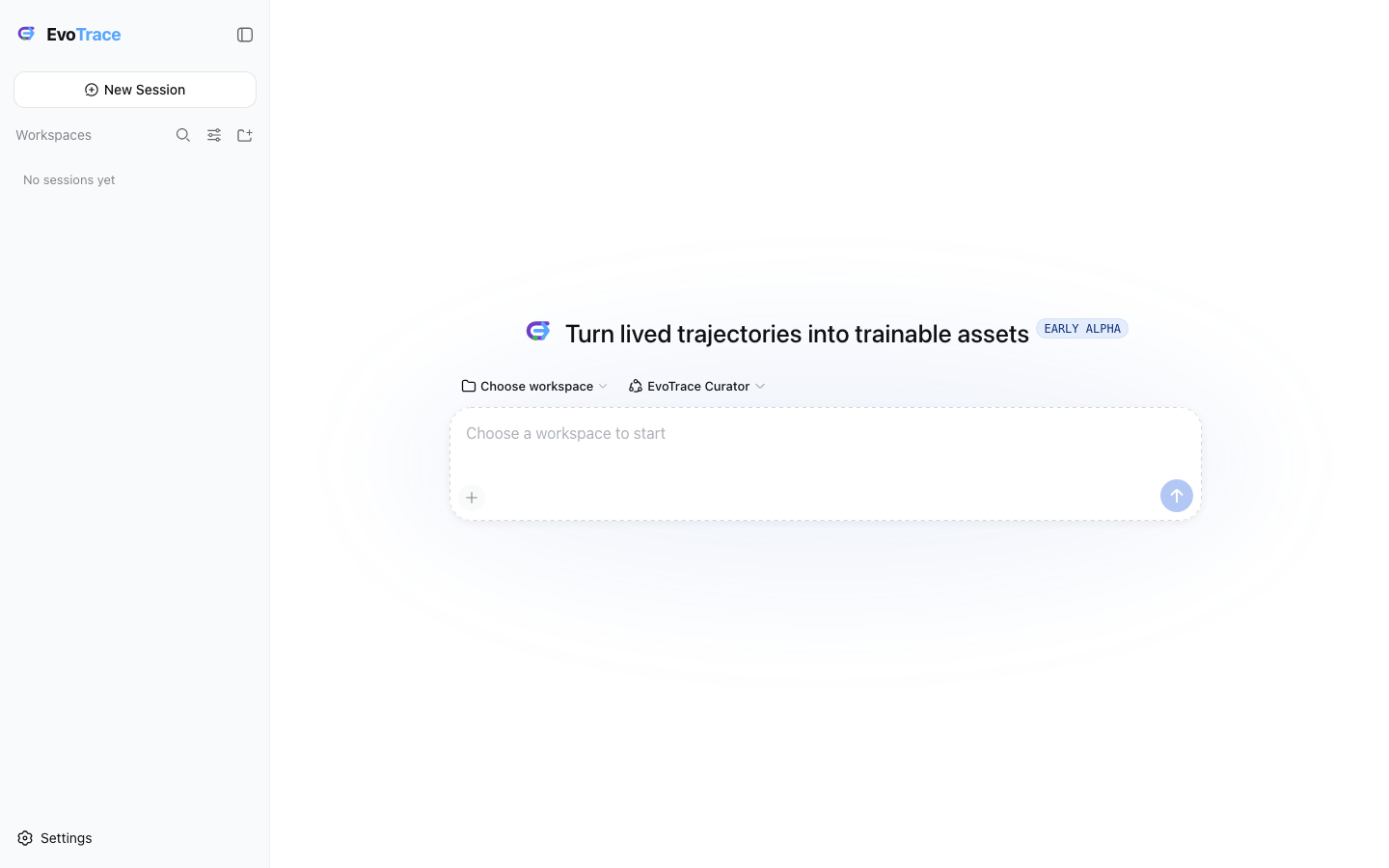
No — it is a local-first trajectory compiler built on top of DeepSeek Harness. It doesn't replace Claude Code or Codex, it just reads the session history they already left behind and turns it into training/eval assets.How do I get EvoTrace running?Install it (macOS/Linux/WSL shell command or Windows PowerShell command from the README), then launch it, which opens the DeepSeek Harness Web app. From there you pick a model provider in Settings and run slash commands like /init to import sessions and /candidates, /review, /build, /validate to compile assets.
Install it (macOS/Linux/WSL shell command or Windows PowerShell command from the README), then launch it, which opens the DeepSeek Harness Web app. From there you pick a model provider in Settings and run slash commands like /init to import sessions and /candidates, /review, /build, /validate to compile assets.What do I need installed before I can use it?Git, Node.js 22.19+ or 24+, and Python 3.9+ are required; Docker is optional and only needed when you build or validate executable task bundles. A model provider key (DeepSeek, OpenAI, or Anthropic) is needed for agent review, hardening, calibration, and evolution steps, but not for local import and deterministic mining.
Git, Node.js 22.19+ or 24+, and Python 3.9+ are required; Docker is optional and only needed when you build or validate executable task bundles. A model provider key (DeepSeek, OpenAI, or Anthropic) is needed for agent review, hardening, calibration, and evolution steps, but not for local import and deterministic mining.Are the tasks and verifiers it generates ready to use right away?Not automatically — the project is early alpha and DeepSeek Harness itself is a developer preview, so generated tasks and verifiers stay 'candidates' until they pass the documented evidence checks and Docker two-state validation. Making a hardened task harder also has to add real testable behavior, not just a longer patch.
Not automatically — the project is early alpha and DeepSeek Harness itself is a developer preview, so generated tasks and verifiers stay 'candidates' until they pass the documented evidence checks and Docker two-state validation. Making a hardened task harder also has to add real testable behavior, not just a longer patch.Does it send my Claude Code or Codex history anywhere?Import and mining happen locally against your Claude Code/Codex history and Git evidence without modifying your source repos; sending data to a model only happens for the optional agent-review, hardening, calibration, and evolution steps, and validation itself runs in disposable Docker sandboxes with no host credentials or source bind mounts.
Import and mining happen locally against your Claude Code/Codex history and Git evidence without modifying your source repos; sending data to a model only happens for the optional agent-review, hardening, calibration, and evolution steps, and validation itself runs in disposable Docker sandboxes with no host credentials or source bind mounts.What does a task status of 'Verified' actually mean?It means a conforming Docker run rejected the unmodified base repository state, accepted the reference patch as a known-good state, and that result was recorded against the exact bundle digest — not just that a verifier script exists.
It means a conforming Docker run rejected the unmodified base repository state, accepted the reference patch as a known-good state, and that result was recorded against the exact bundle digest — not just that a verifier script exists.What is DeepSeek Harness, and is EvoTrace a fork of it?DeepSeek Harness is the underlying app providing the Web UI, sessions, provider settings, and plugin runtime. EvoTrace is a specialized distribution of it that adds the trajectory compiler and a four-role orchestrator (Episode Miner, Candidate Gate, Task Builder/Hardener, Verifier Critic).
DeepSeek Harness is the underlying app providing the Web UI, sessions, provider settings, and plugin runtime. EvoTrace is a specialized distribution of it that adds the trajectory compiler and a four-role orchestrator (Episode Miner, Candidate Gate, Task Builder/Hardener, Verifier Critic).What is the EvoTrace Marketplace?It's a planned, opt-in roadmap feature that would let users license their reviewed training assets on their own terms, along with fine-tuning integrations. It is not part of the current local, open-source release.
It's a planned, opt-in roadmap feature that would let users license their reviewed training assets on their own terms, along with fine-tuning integrations. It is not part of the current local, open-source release.What happens when I run /evolve on a task?It tests whether execution experience compressed from one explored task transfers to an independently built held-out task from the same repository, comparing baseline and conditioned solver attempts using Docker rewards — running it without a real held-out asset is only a smoke test, not a valid transfer measurement.
It tests whether execution experience compressed from one explored task transfers to an independently built held-out task from the same repository, comparing baseline and conditioned solver attempts using Docker rewards — running it without a real held-out asset is only a smoke test, not a valid transfer measurement.What are similar projects?Proteus, openrig, Raven, SkillCorpus, maka, casbin-gateway, ParseBench, open-r1
Proteus, openrig, Raven, SkillCorpus, maka, casbin-gateway, ParseBench, open-r1Which topics is it in?sft, rlhf, wsl, llm-evaluation, codex-cli, agent-harness, dataset, dsh, harness, coding-agents, reinforcement-learning, evaluation
sft, rlhf, wsl, llm-evaluation, codex-cli, agent-harness, dataset, dsh, harness, coding-agents, reinforcement-learning, evaluation