


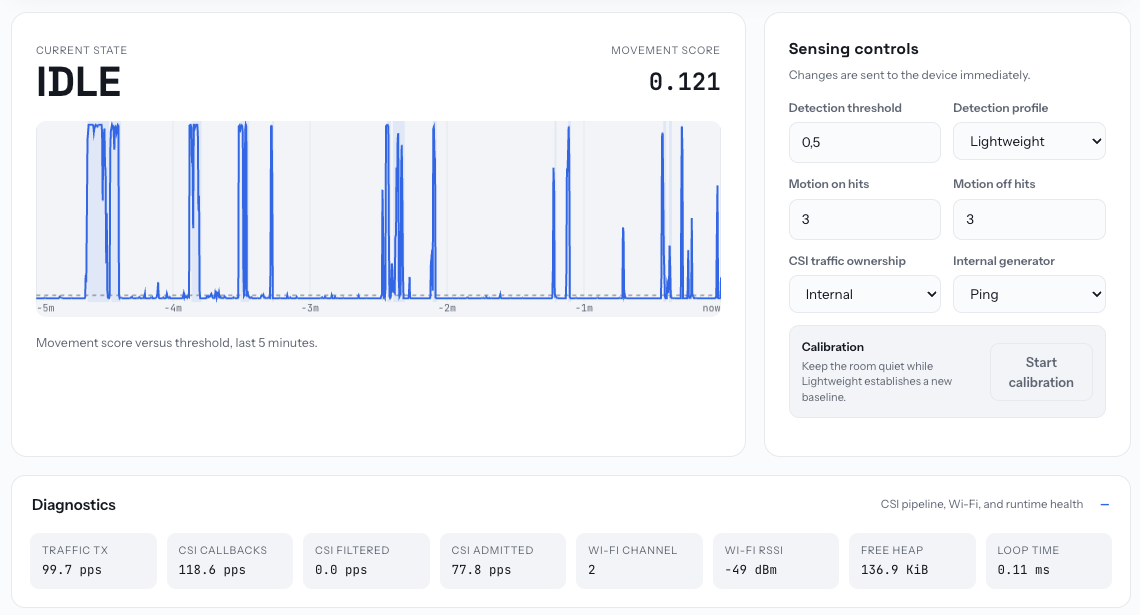
Что это такое?
 ESPectre превращает поддерживаемую плату ESP32 в приватный локальный датчик движения по Wi-Fi: он считывает, как движение меняет Wi-Fi-сигналы в комнате, и сообщает о движении в реальном времени — без камеры, микрофона, носимых устройств или отдельного радарного оборудования.
ESPectre превращает поддерживаемую плату ESP32 в приватный локальный датчик движения по Wi-Fi: он считывает, как движение меняет Wi-Fi-сигналы в комнате, и сообщает о движении в реальном времени — без камеры, микрофона, носимых устройств или отдельного радарного оборудования.Как он определяет движение без камеры и радара?Он считывает Wi-Fi CSI (Channel State Information): когда кто-то движется по комнате, он меняет распространение Wi-Fi-сигналов, детектор обрабатывает эти изменения прямо на ESP32 и выдаёт состояние движения и оценку активности.
Он считывает Wi-Fi CSI (Channel State Information): когда кто-то движется по комнате, он меняет распространение Wi-Fi-сигналов, детектор обрабатывает эти изменения прямо на ESP32 и выдаёт состояние движения и оценку активности.Как настроить первый датчик?Прошейте его из браузера: откройте Flash в настольном Chrome 151+, подключите поддерживаемую ESP32 по USB, выберите прошивку и канал выпуска, затем завершите настройку Wi-Fi на экране. Локальные сборки и работа через командную строку описаны в файле SETUP.md.
Прошейте его из браузера: откройте Flash в настольном Chrome 151+, подключите поддерживаемую ESP32 по USB, выберите прошивку и канал выпуска, затем завершите настройку Wi-Fi на экране. Локальные сборки и работа через командную строку описаны в файле SETUP.md.Какое железо и какая сеть нужны?Поддерживаемая плата ESP32 (C6, C5, C3, S3, S2 или классическая) и обычная сеть Wi-Fi 4 (802.11n) на частоте 2,4 ГГц. Для работы через браузер нужен настольный Chrome 151+; прошить можно и в Edge, но разделы Device settings и Monitor там гарантированно не работают.
Поддерживаемая плата ESP32 (C6, C5, C3, S3, S2 или классическая) и обычная сеть Wi-Fi 4 (802.11n) на частоте 2,4 ГГц. Для работы через браузер нужен настольный Chrome 151+; прошить можно и в Edge, но разделы Device settings и Monitor там гарантированно не работают.Какие у него ограничения?Одна плата покрывает одну зону наблюдения, поэтому для покрытия уровня комнаты обычно нужна одна плата на комнату. Он реагирует только на изменения радиосреды: не может опознать или пересчитать людей, доказать, что комната пуста, или заменить сертифицированные охранные, медицинские и экстренные системы.
Одна плата покрывает одну зону наблюдения, поэтому для покрытия уровня комнаты обычно нужна одна плата на комнату. Он реагирует только на изменения радиосреды: не может опознать или пересчитать людей, доказать, что комната пуста, или заменить сертифицированные охранные, медицинские и экстренные системы.Куда уходят данные о движении?По умолчанию никуда вовне: CSI обрабатывается на самом устройстве, определение движения происходит локально, и облако не требуется. Запись сырых данных CSI — необязательная опция, предназначенная для исследований и отладки.
По умолчанию никуда вовне: CSI обрабатывается на самом устройстве, определение движения происходит локально, и облако не требуется. Запись сырых данных CSI — необязательная опция, предназначенная для исследований и отладки.Можно ли использовать его в закрытой прошивке?Собственный код проекта распространяется по GPLv3. Чтобы встроить ESPectre в проприетарную прошивку с закрытым исходным кодом без обязанности раскрывать исходники, есть отдельная коммерческая лицензия (см. LICENSING.md); учтите, что C++-фронтенд ESPHome остаётся доступным только под GPLv3.
Собственный код проекта распространяется по GPLv3. Чтобы встроить ESPectre в проприетарную прошивку с закрытым исходным кодом без обязанности раскрывать исходники, есть отдельная коммерческая лицензия (см. LICENSING.md); учтите, что C++-фронтенд ESPHome остаётся доступным только под GPLv3.Работает ли он с Home Assistant?Да — через ESPHome для нативных сущностей Home Assistant или по MQTT с поддержкой Home Assistant MQTT Discovery. Он также предоставляет стандартный датчик присутствия Matter (проверка контроллерами ещё ограничена) и локальный простой HTTP API для своих интеграций.
Да — через ESPHome для нативных сущностей Home Assistant или по MQTT с поддержкой Home Assistant MQTT Discovery. Он также предоставляет стандартный датчик присутствия Matter (проверка контроллерами ещё ограничена) и локальный простой HTTP API для своих интеграций.Какие варианты прошивки можно выбрать?Четыре: Native — для автономных датчиков и интеграций по MQTT, ESPHome — для пользователей Home Assistant, которым нужны нативные сущности, Matter — для контроллеров Matter, и Micro-ESPectre — облегчённая сборка на MicroPython с локальным HTTP-мониторингом только для чтения.
Четыре: Native — для автономных датчиков и интеграций по MQTT, ESPHome — для пользователей Home Assistant, которым нужны нативные сущности, Matter — для контроллеров Matter, и Micro-ESPectre — облегчённая сборка на MicroPython с локальным HTTP-мониторингом только для чтения.Что входит в проект, кроме прошивки?Встраиваемый C++ SDK, утилита командной строки с полным жизненным циклом устройства, браузерные инструменты (Flash, Device settings, Monitor), открытый набор данных CSI с записями пустых комнат, неподвижного присутствия и движения, а также обученные веса моделей и полный процесс обучения и проверки.
Встраиваемый C++ SDK, утилита командной строки с полным жизненным циклом устройства, браузерные инструменты (Flash, Device settings, Monitor), открытый набор данных CSI с записями пустых комнат, неподвижного присутствия и движения, а также обученные веса моделей и полный процесс обучения и проверки.Что реально можно автоматизировать с его помощью?Всё, что зависит от движения: включать экран или свет, когда в комнате кто-то появляется, регулировать отопление и охлаждение по активности в комнате или включать сигнализацию и уведомления там, где движения быть не должно — через Home Assistant, Matter, MQTT или HTTP API.
Всё, что зависит от движения: включать экран или свет, когда в комнате кто-то появляется, регулировать отопление и охлаждение по активности в комнате или включать сигнализацию и уведомления там, где движения быть не должно — через Home Assistant, Matter, MQTT или HTTP API.What are similar projects?Tasmota, WLED, muse-gadget-sdk, EchoMuse, esp-sdr, ESP32Marauder, neonplan3d, Arduino
Tasmota, WLED, muse-gadget-sdk, EchoMuse, esp-sdr, ESP32Marauder, neonplan3d, ArduinoWhich topics is it in?sensors, smart-home, home-assistant, wifi, home-automation, microcontroller, firmware, iot, dataset, embedded, cpp, sdk
sensors, smart-home, home-assistant, wifi, home-automation, microcontroller, firmware, iot, dataset, embedded, cpp, sdk