







Что это такое?
 OpenNHP — это лёгкий опенсорсный набор инструментов Zero Trust, построенный на криптографии: он скрывает порты серверов, IP-адреса и доменные имена, так что ваша инфраструктура остаётся невидимой, пока клиент не пройдёт криптографическую авторизацию.
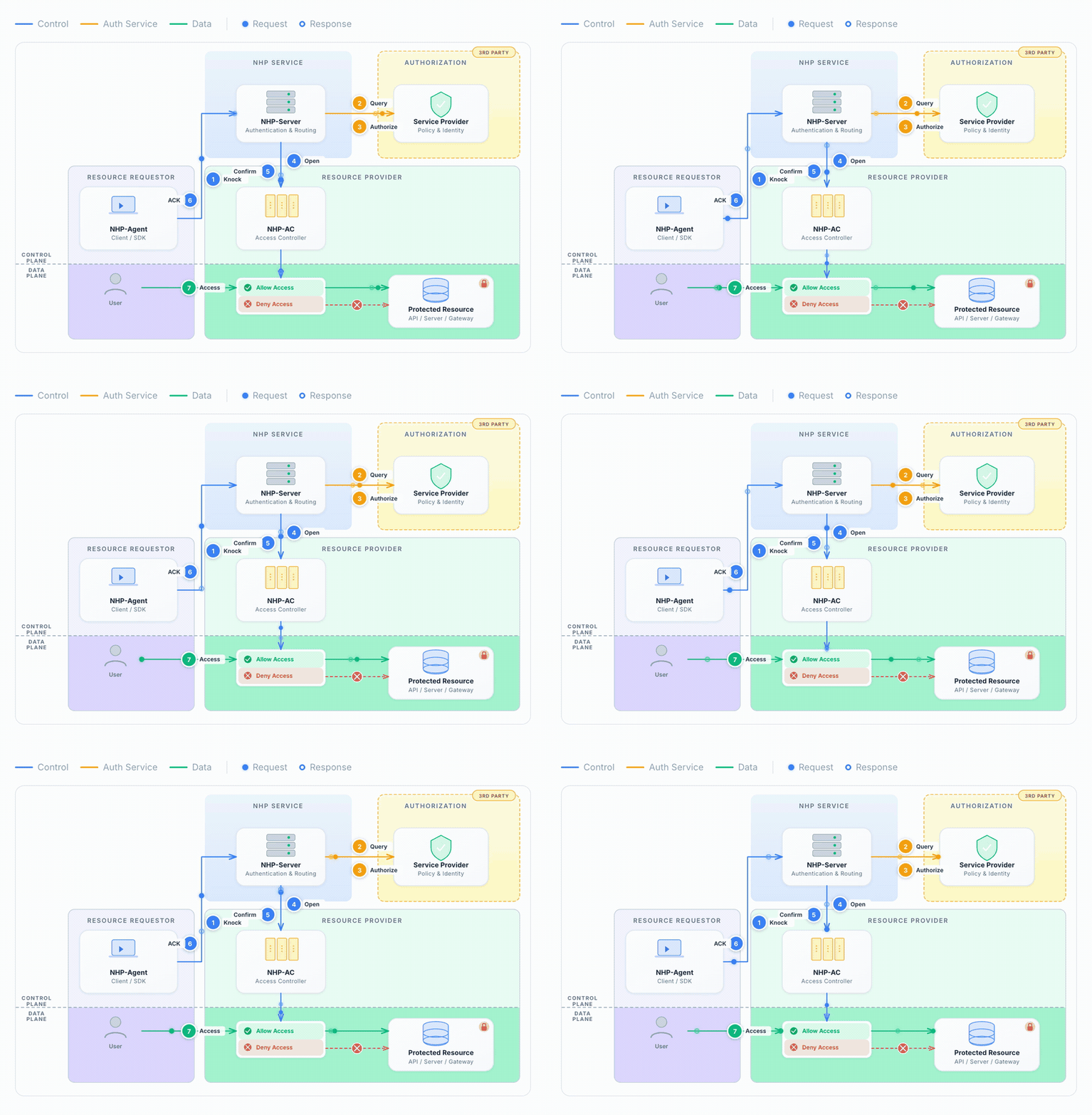
Это одна программа или несколько компонентов, которые я разворачиваю вместе?Это набор взаимодействующих компонентов, а не одно приложение: NHP-Agent (клиент), NHP-Server (проверяет knock-запросы и работает отдельно от защищаемого хоста) и NHP-AC (управляет правилами файрвола на защищённом сервере).
Это набор взаимодействующих компонентов, а не одно приложение: NHP-Agent (клиент), NHP-Server (проверяет knock-запросы и работает отдельно от защищаемого хоста) и NHP-AC (управляет правилами файрвола на защищённом сервере).Как его запустить?Нужны Go 1.26+ и make для сборки, а также Docker и Docker Compose для демо. Tutorial Quick Start моделирует весь процесс аутентификации в Docker-окружении.
Нужны Go 1.26+ и make для сборки, а также Docker и Docker Compose для демо. Tutorial Quick Start моделирует весь процесс аутентификации в Docker-окружении.Клиентам нужно специальное ПО для подключения — подойдёт обычный браузер?Клиенты должны говорить на протоколе NHP knock: обычный браузер не может напрямую отправить UDP knock. Для браузерных агентов есть NHP-Relay — HTTP-to-UDP мост, который отправляет knock-запросы по HTTPS.
Клиенты должны говорить на протоколе NHP knock: обычный браузер не может напрямую отправить UDP knock. Для браузерных агентов есть NHP-Relay — HTTP-to-UDP мост, который отправляет knock-запросы по HTTPS.Где это вообще работает?Компоненты, собранные на Go, разворачиваются на ваших собственных серверах (обычно Linux), а Quick Start поднимает весь стек в Docker Compose.
Компоненты, собранные на Go, разворачиваются на ваших собственных серверах (обычно Linux), а Quick Start поднимает весь стек в Docker Compose.Он защищает сами данные, а не только сеть?Да — за это отвечает второй протокол: DHP использует шифрование и confidential computing, так что данные остаются «доступными для обработки, но невидимыми» даже во время обработки.
Да — за это отвечает второй протокол: DHP использует шифрование и confidential computing, так что данные остаются «доступными для обработки, но невидимыми» даже во время обработки.Чем NHP отличается от DHP?NHP работает на сетевом уровне: порты, IP-адреса и доменные имена остаются скрытыми, пока авторизованный knock их не откроет. DHP работает на уровне данных: шифрование и confidential computing сохраняют данные «доступными для обработки, но невидимыми» даже там, где они обрабатываются.
NHP работает на сетевом уровне: порты, IP-адреса и доменные имена остаются скрытыми, пока авторизованный knock их не откроет. DHP работает на уровне данных: шифрование и confidential computing сохраняют данные «доступными для обработки, но невидимыми» даже там, где они обрабатываются.Чем NHP отличается от старых подходов с port knocking?Он позиционируется как третье поколение. Port knocking отправлял последовательности в открытом виде и был уязвим к replay-атакам; Single Packet Authorization добавил криптографию, но использовал общие секреты, работал в одну сторону и обычно скрывал только порты. NHP предлагает современную криптографию на базе фреймворка Noise, двунаправленный обмен статусами, скрывает домены вместе с IP и портами и не хранит состояние, поэтому масштабируется горизонтально — и всё это на Go с безопасной работой с памятью.
Он позиционируется как третье поколение. Port knocking отправлял последовательности в открытом виде и был уязвим к replay-атакам; Single Packet Authorization добавил криптографию, но использовал общие секреты, работал в одну сторону и обычно скрывал только порты. NHP предлагает современную криптографию на базе фреймворка Noise, двунаправленный обмен статусами, скрывает домены вместе с IP и портами и не хранит состояние, поэтому масштабируется горизонтально — и всё это на Go с безопасной работой с памятью.Зачем скрывать серверы, если существуют сканеры на базе ИИ?Потому что, по словам авторов, в эпоху ИИ видимость равна уязвимости: атакующие с помощью LLM снимают отпечатки и эксплуатируют открытые сервисы со скоростью машины. Ответ OpenNHP — принцип default-deny: нельзя атаковать то, что невозможно обнаружить.
Потому что, по словам авторов, в эпоху ИИ видимость равна уязвимости: атакующие с помощью LLM снимают отпечатки и эксплуатируют открытые сервисы со скоростью машины. Ответ OpenNHP — принцип default-deny: нельзя атаковать то, что невозможно обнаружить.Для чего нужен NHP-KGC?Это Key Generation Center для Identity-Based Cryptography — необязательный режим, где ключи привязаны к идентичностям и выпускаются KGC, вместо того чтобы заранее распространять сертификаты между каждым агентом и сервером.
Это Key Generation Center для Identity-Based Cryptography — необязательный режим, где ключи привязаны к идентичностям и выпускаются KGC, вместо того чтобы заранее распространять сертификаты между каждым агентом и сервером.What are similar projects?flowsint, pangolin, cloudflared, scuttle, trufflehog, nebula, netbird, gun
flowsint, pangolin, cloudflared, scuttle, trufflehog, nebula, netbird, gunWhich topics is it in?zero-trust, cryptography, infrastructure, authentication, cybersecurity, encryption, security-tools, docker-compose, networking, go, privacy, security
zero-trust, cryptography, infrastructure, authentication, cybersecurity, encryption, security-tools, docker-compose, networking, go, privacy, security