



What is this?
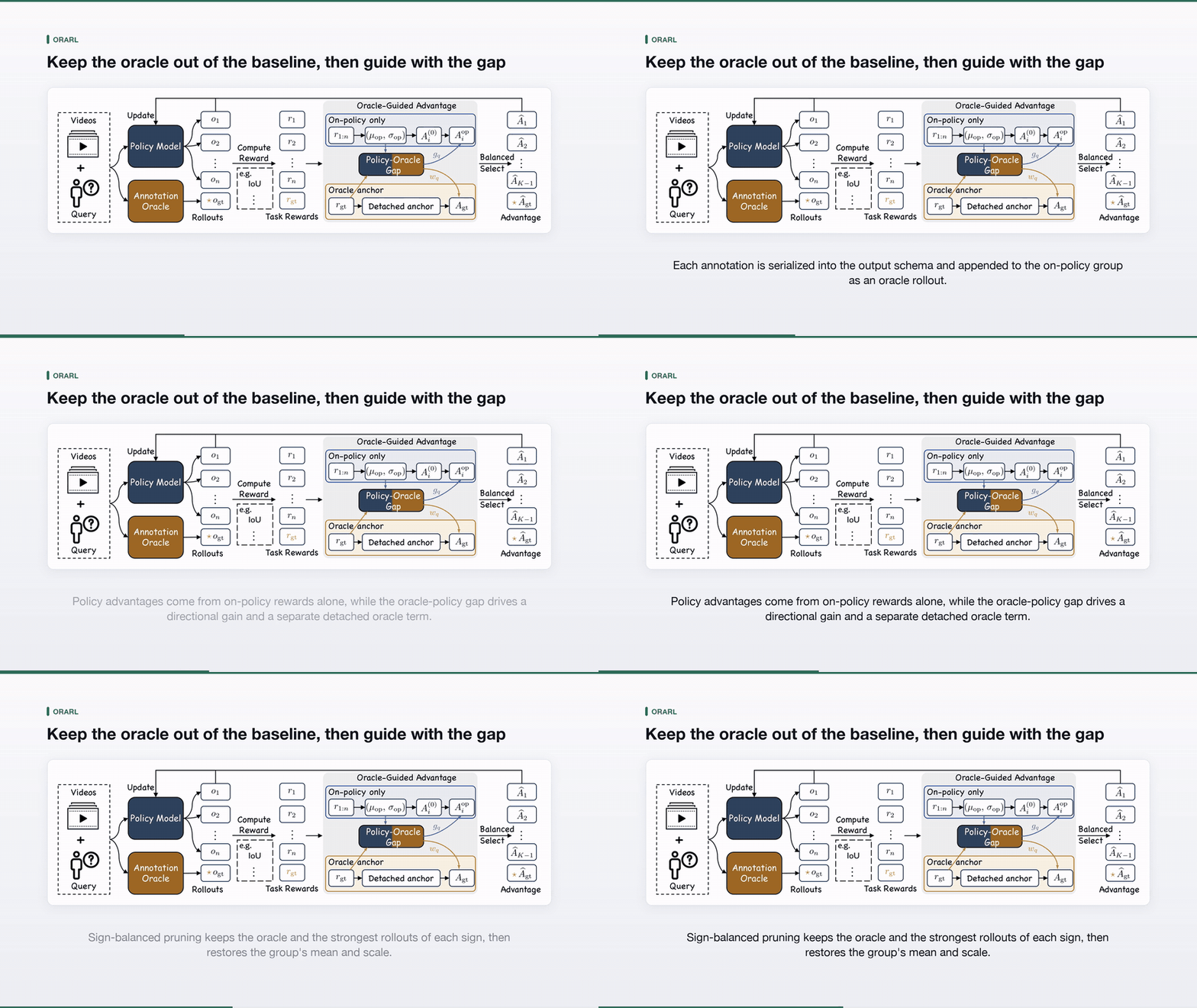
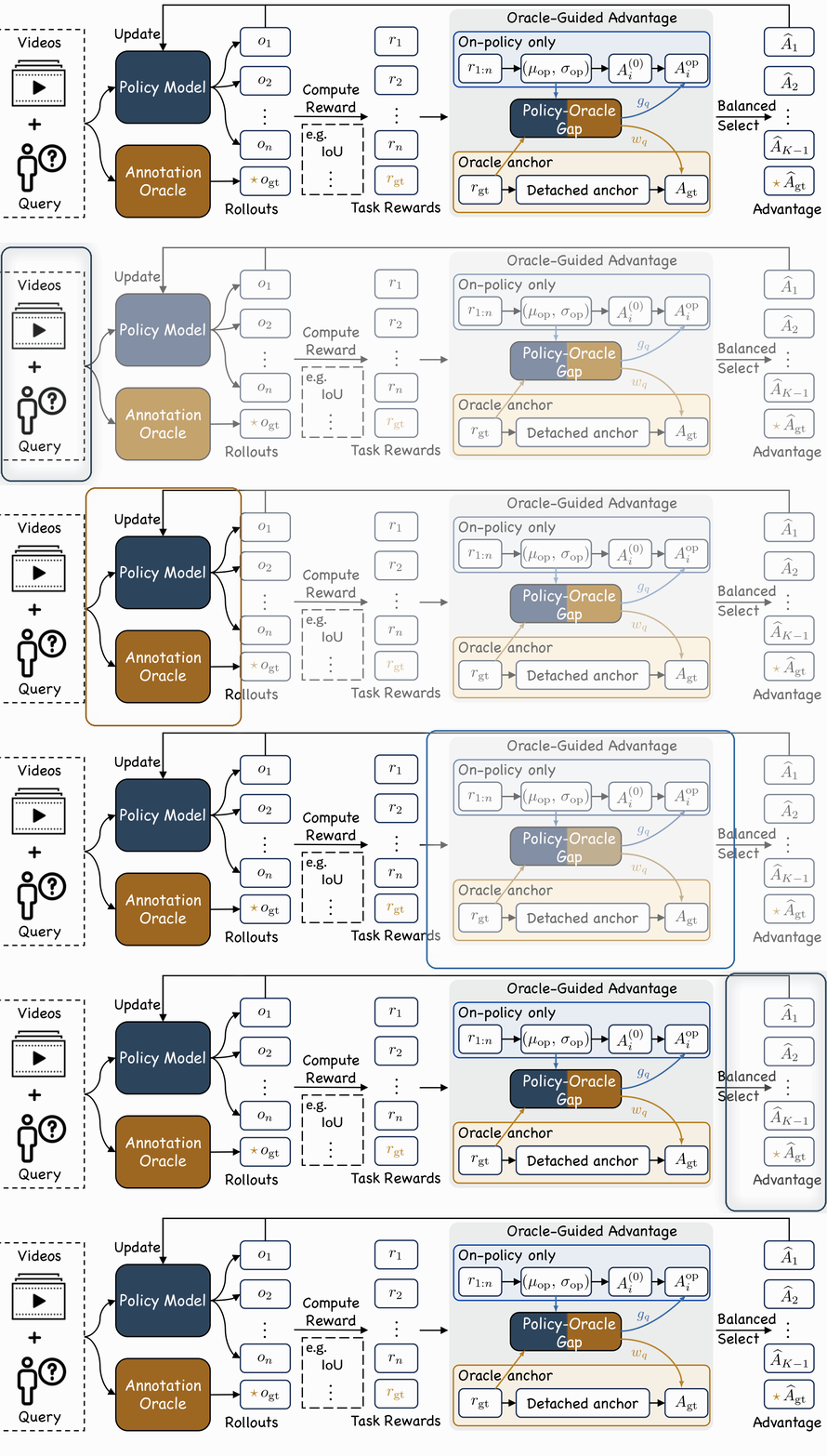
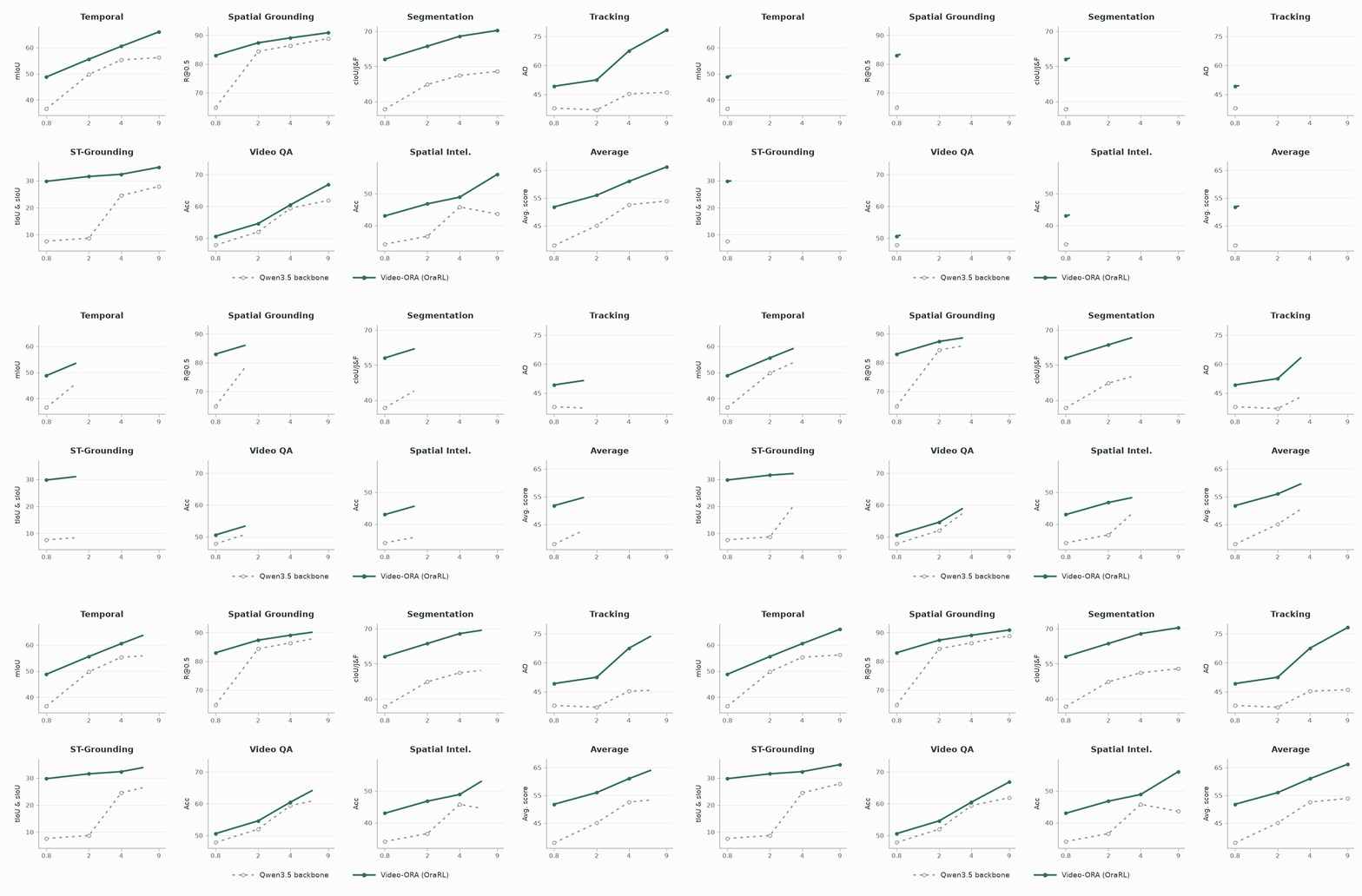
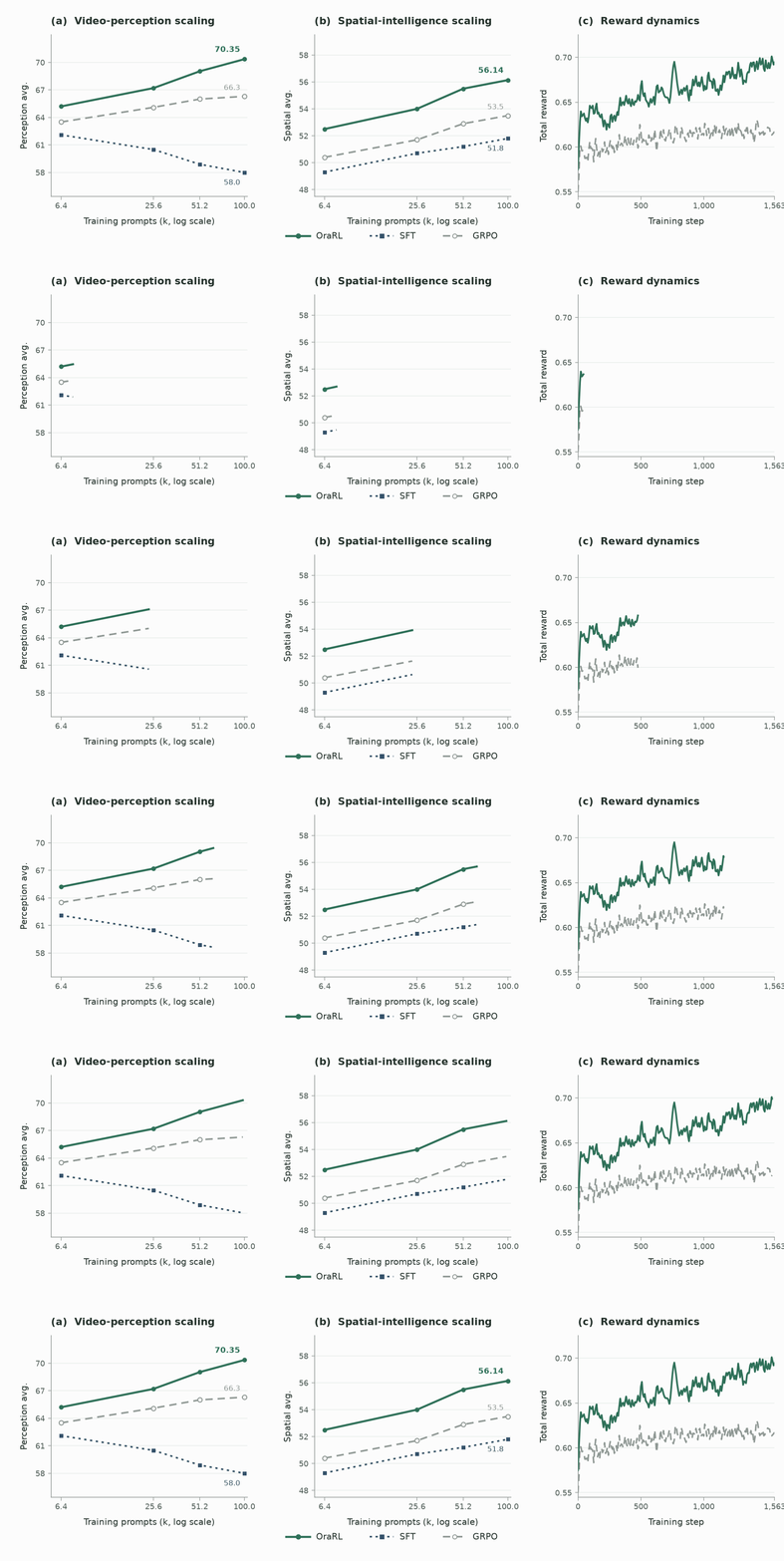
 OraRL is a reinforcement learning framework that treats annotations as rollouts to efficiently train unified video multimodal LLMs (MLLMs) across seven video task families.
OraRL is a reinforcement learning framework that treats annotations as rollouts to efficiently train unified video multimodal LLMs (MLLMs) across seven video task families.Is this a ready-to-use app or a research training framework?It is a research codebase built on veRL, bundling the training recipe, evaluators, and released Video-ORA checkpoints rather than a plug-and-play app.
It is a research codebase built on veRL, bundling the training recipe, evaluators, and released Video-ORA checkpoints rather than a plug-and-play app.How do I get OraRL running?Follow three workflows: install the pinned CUDA stack for the Environment, prepare licensed local training data and launch GRPO or OraRL on one or multiple nodes, then download Video-ORA and OraRL-Data to run evaluation.
Follow three workflows: install the pinned CUDA stack for the Environment, prepare licensed local training data and launch GRPO or OraRL on one or multiple nodes, then download Video-ORA and OraRL-Data to run evaluation.What do I need to serve the released models?You need CUDA GPUs and vLLM 0.19.1 to load the Video-ORA-4B/9B checkpoints (Qwen3.5 backbones) for OpenAI-compatible inference, adjusting tensor-parallel-size and max-model-len to your hardware.
You need CUDA GPUs and vLLM 0.19.1 to load the Video-ORA-4B/9B checkpoints (Qwen3.5 backbones) for OpenAI-compatible inference, adjusting tensor-parallel-size and max-model-len to your hardware.Any gotchas before I start training or evaluating?Training and evaluation commands are dry runs by default, so you must inspect the resolved command and add --run to actually execute, and you need to license and prepare your own local training data first.
Training and evaluation commands are dry runs by default, so you must inspect the resolved command and add --run to actually execute, and you need to license and prepare your own local training data first.What does annotation-as-rollout actually do?It appends one serialized annotation as a reliable positive rollout to the policy-generated samples for the same prompt, keeping the RL baseline purely on-policy while still using the annotation-policy reward gap to guide and select updates.
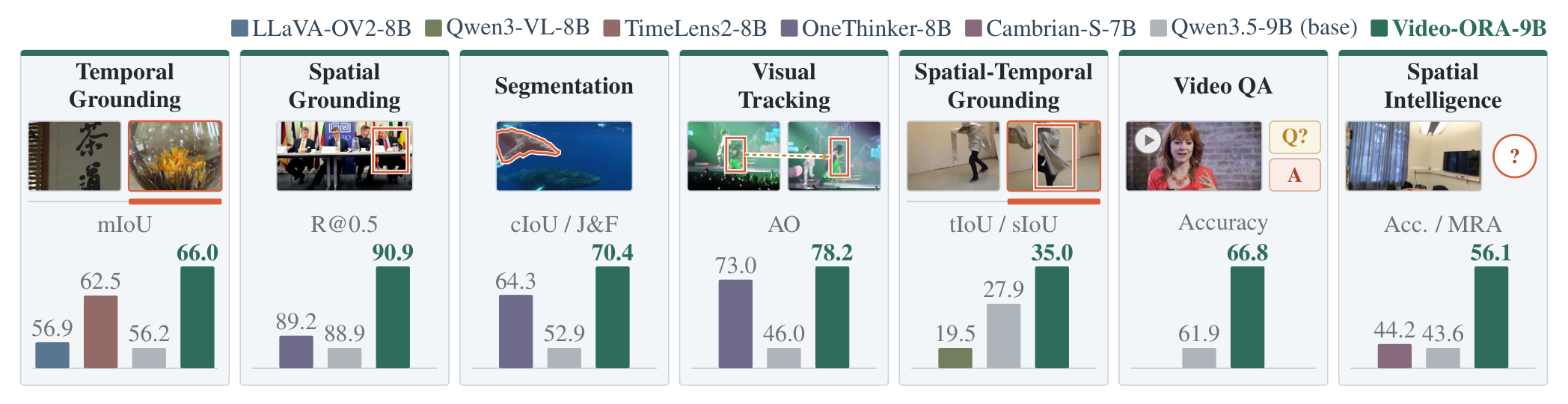
It appends one serialized annotation as a reliable positive rollout to the policy-generated samples for the same prompt, keeping the RL baseline purely on-policy while still using the annotation-policy reward gap to guide and select updates.Which video tasks can one OraRL update handle?A single update rule covers seven task families: temporal grounding, spatial grounding, segmentation, tracking, spatial-temporal grounding, video QA, and spatial intelligence.
A single update rule covers seven task families: temporal grounding, spatial grounding, segmentation, tracking, spatial-temporal grounding, video QA, and spatial intelligence.How much does the efficient training mode speed things up?Sign-balanced pruning on the 4B model gives 1.48x faster updates (92.5 to 62.4 s/step) and cuts peak per-GPU memory from 62.4 GB to 50.9 GB.
Sign-balanced pruning on the 4B model gives 1.48x faster updates (92.5 to 62.4 s/step) and cuts peak per-GPU memory from 62.4 GB to 50.9 GB.What model sizes are available?Two Video-ORA checkpoints are released, 4B and 9B, both built on Qwen3.5 backbones and hosted on Hugging Face.
Two Video-ORA checkpoints are released, 4B and 9B, both built on Qwen3.5 backbones and hosted on Hugging Face.What are similar projects?ZDTaichu5.0-9B, Code-as-World, UniVR, Qwen3-VL, damo-radar, verl, jeeves, MiniGPT-4
ZDTaichu5.0-9B, Code-as-World, UniVR, Qwen3-VL, damo-radar, verl, jeeves, MiniGPT-4Which topics is it in?video-understanding, vision-language-model, paper, vllm, video-processing, reinforcement-learning, qwen, multimodal, academic-research, transformer, large-language-models, nvidia
video-understanding, vision-language-model, paper, vllm, video-processing, reinforcement-learning, qwen, multimodal, academic-research, transformer, large-language-models, nvidia