





467 ·GitHub
Что это такое?
 anyCreature превращает описание обычным языком вроде 'a menacing mountain giant' в готового для игры 3D-персонажа — файл GLB со скелетом, анимацией и вершинными цветами плюс офлайн-просмотрщик — и всё это создаётся за одну сессию ИИ-агента.
Это отдельное приложение или то, что мой кодинг-агент запускает для меня?Это CLI-конвейер (движок плюс набор пошаговых «карт» и харнесс), рассчитанный на управление ИИ-кодинг-агентом вроде Claude Code или Cursor — GUI нет, только `node engine/cli.js spec.json out.glb`.
Это CLI-конвейер (движок плюс набор пошаговых «карт» и харнесс), рассчитанный на управление ИИ-кодинг-агентом вроде Claude Code или Cursor — GUI нет, только `node engine/cli.js spec.json out.glb`.Как начать генерировать существо?Выполняйте `bash setup.sh` (или `setup.ps1` на Windows), пока он не выведет 'calibrate OK', затем укажите своему агенту на MANUAL.md и поручите ему следовать конвейеру карт для описанного вами существа.
Выполняйте `bash setup.sh` (или `setup.ps1` на Windows), пока он не выведет 'calibrate OK', затем укажите своему агенту на MANUAL.md и поручите ему следовать конвейеру карт для описанного вами существа.Что нужно установить перед запуском?Node 18+ и Python 3.9+. setup.sh дополнительно устанавливает инструменты three.js, playwright, numpy, pillow и scipy для рендеринга и обмеров — самому движку нужен только Node.
Node 18+ и Python 3.9+. setup.sh дополнительно устанавливает инструменты three.js, playwright, numpy, pillow и scipy для рендеринга и обмеров — самому движку нужен только Node.Есть ли известные режимы сбоев, за которыми стоит следить?Слепое чтение отдельных частей может неверно распознать некоторые головы, показанные отдельно (слоны/птицы), спецификации, написанные до версии движка 1.2.0, теперь могут не пройти новые проверки, а запуск отдельных короткоживущих субагентов на каждый этап конвейера медленнее и дороже, чем один агент, ведущий работу от начала до конца.
Слепое чтение отдельных частей может неверно распознать некоторые головы, показанные отдельно (слоны/птицы), спецификации, написанные до версии движка 1.2.0, теперь могут не пройти новые проверки, а запуск отдельных короткоживущих субагентов на каждый этап конвейера медленнее и дороже, чем один агент, ведущий работу от начала до конца.Это работает на Windows или только на Mac/Linux?На всех трёх — Windows поддерживается через setup.ps1 в PowerShell (или setup.sh под Git Bash/WSL) наравне с нативной поддержкой macOS и Linux.
На всех трёх — Windows поддерживается через setup.ps1 в PowerShell (или setup.sh под Git Bash/WSL) наравне с нативной поддержкой macOS и Linux.Обращается ли что-то из этого к удалённому серверу?Инструменты рендеринга и обмеров поднимают только короткоживущие локальные серверы, привязанные к 127.0.0.1; единственное внешнее действие — опциональный явный шаг публикации готового существа на стену сообщества Gobkit.
Инструменты рендеринга и обмеров поднимают только короткоживущие локальные серверы, привязанные к 127.0.0.1; единственное внешнее действие — опциональный явный шаг публикации готового существа на стену сообщества Gobkit.Что такое Gobkit?Gobkit — AI-нативная инфраструктура/API 3D-ассетов автора для потоковой доставки game-ready моделей агентам и «вайб-кодерам». anyCreature — открытый движок за ним, а готовые существа при желании можно публиковать на его стену сообщества.
Gobkit — AI-нативная инфраструктура/API 3D-ассетов автора для потоковой доставки game-ready моделей агентам и «вайб-кодерам». anyCreature — открытый движок за ним, а готовые существа при желании можно публиковать на его стену сообщества.Что фактически даёт опция embedspec?Она заставляет экспортируемый GLB нести внутри файла собственную авторскую JSON-спецификацию и манифест частей, так что любой агент впоследствии может извлечь, отредактировать, перекомпилировать или пересадить части между существами.
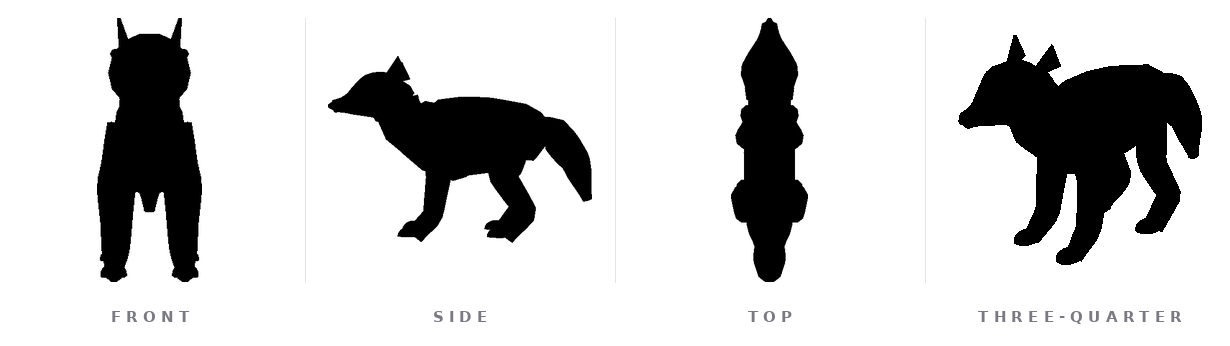
Она заставляет экспортируемый GLB нести внутри файла собственную авторскую JSON-спецификацию и манифест частей, так что любой агент впоследствии может извлечь, отредактировать, перекомпилировать или пересадить части между существами.Почему два отдельных шлюза качества вместо одного?Сессия, спроектировавшая существо, хуже всех судит о его собственном силуэте. Шлюз 1 (RECOGNISED) проверяет, сможет ли читающий агент без контекста опознать существо по четырём видам; шлюз 2 (PUNCHIER) блокирует любую правку, делающую силуэт менее выразительным, чем в предыдущем раунде, даже если она более «правильная».
Сессия, спроектировавшая существо, хуже всех судит о его собственном силуэте. Шлюз 1 (RECOGNISED) проверяет, сможет ли читающий агент без контекста опознать существо по четырём видам; шлюз 2 (PUNCHIER) блокирует любую правку, делающую силуэт менее выразительным, чем в предыдущем раунде, даже если она более «правильная».Что именно показывает входящий в комплект пример волка?example/wolf.json — четвероногое с 2 211 вершинами и 31 суставом, используемое чисто как справочник по синтаксису — оно содержит только анимации idle и move, без attack, а движок активно блокирует сборки, которые являются просто этим волком с едва изменёнными числами.
example/wolf.json — четвероногое с 2 211 вершинами и 31 суставом, используемое чисто как справочник по синтаксису — оно содержит только анимации idle и move, без attack, а движок активно блокирует сборки, которые являются просто этим волком с едва изменёнными числами.What are similar projects?img2threejs, procedural-film, genex-desktop, Procedura, mcp-for-blender, flutter_scene, blender-production-skills, image-to-3dlab
img2threejs, procedural-film, genex-desktop, Procedura, mcp-for-blender, flutter_scene, blender-production-skills, image-to-3dlabWhich topics is it in?gltf, 3d-modeling, 3d-generation, procedural-generation, computer-graphics, game-development, 3d, cursor, animation, generative-ai, agent, claude-code
gltf, 3d-modeling, 3d-generation, procedural-generation, computer-graphics, game-development, 3d, cursor, animation, generative-ai, agent, claude-code