











What is this?
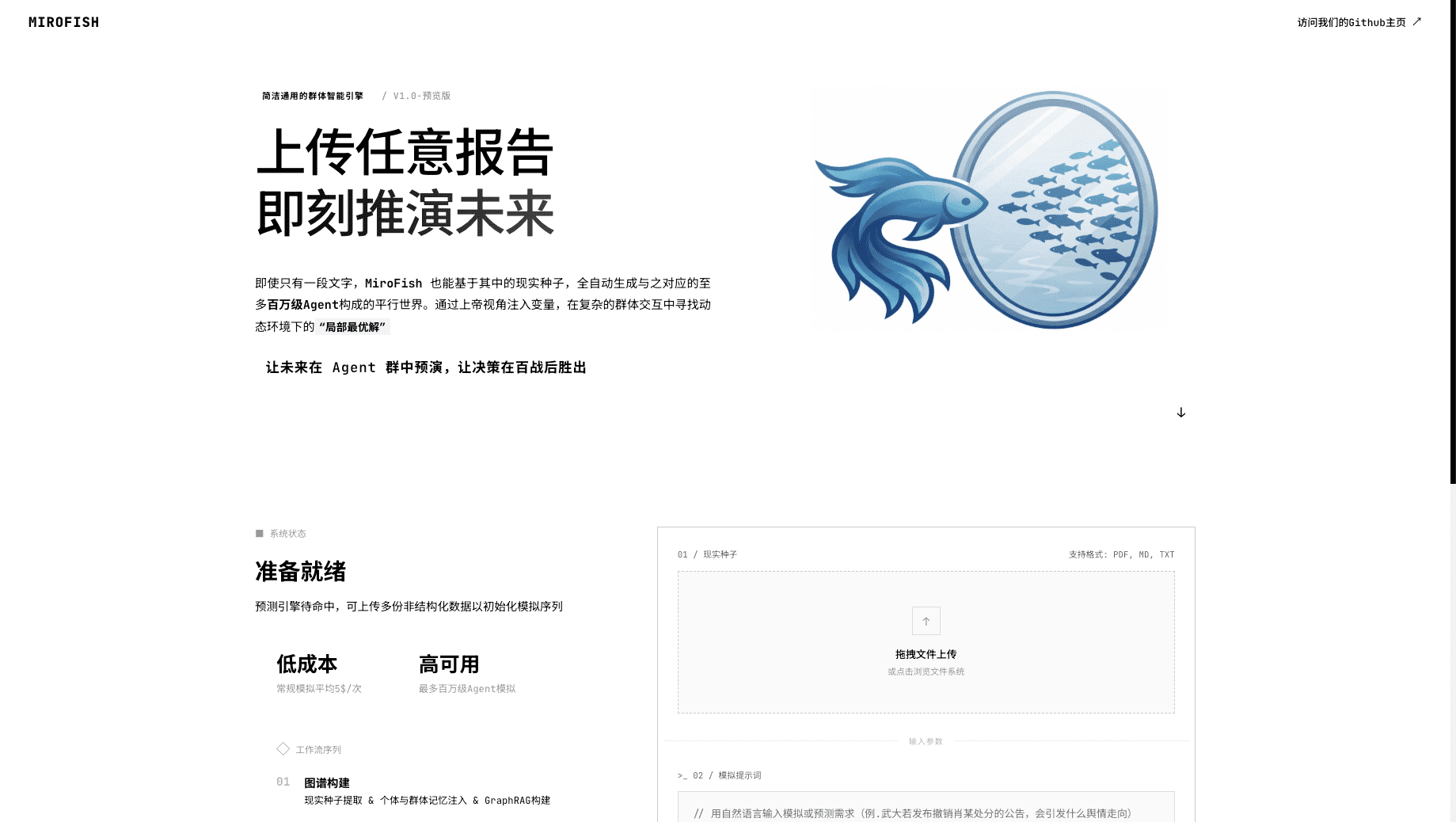
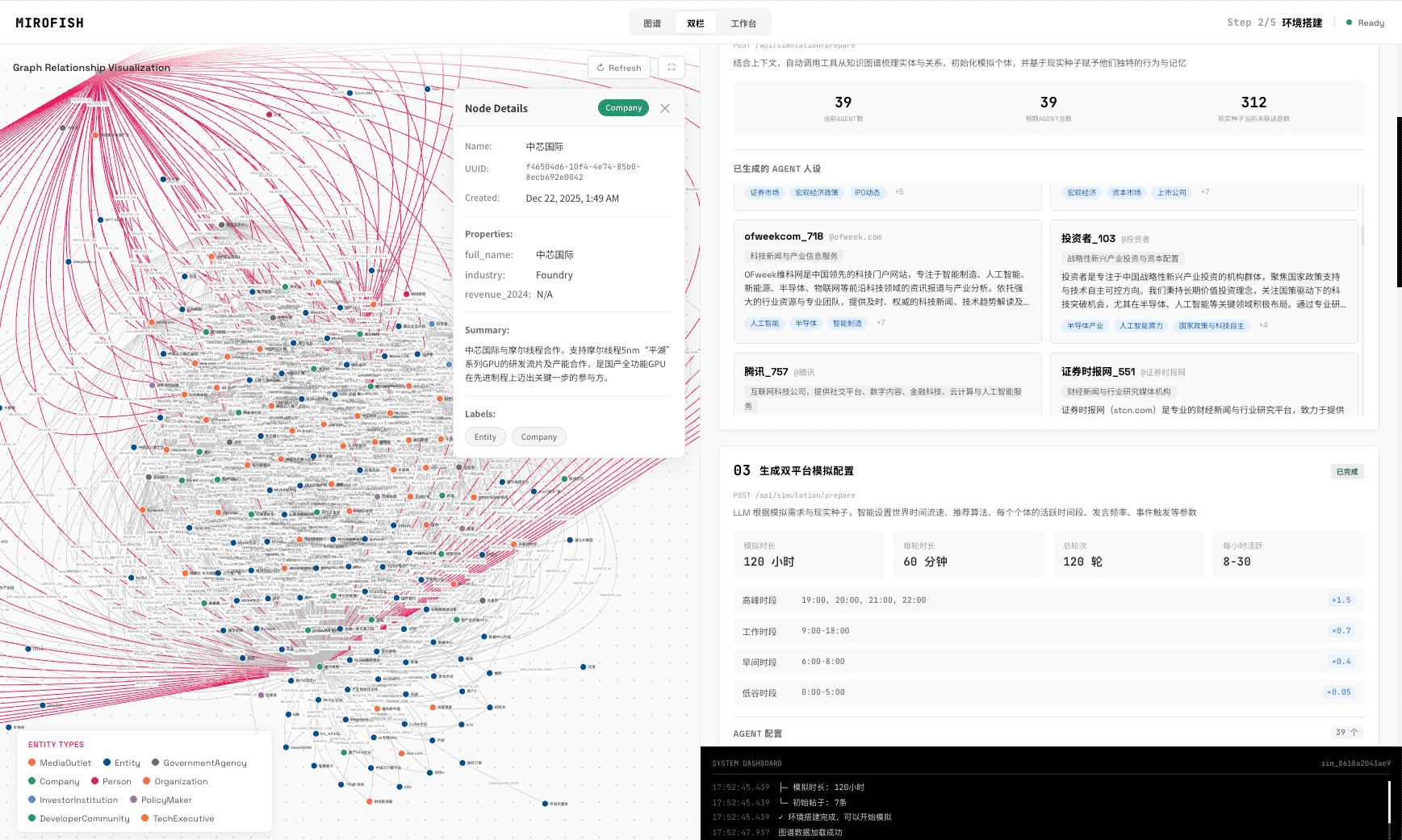
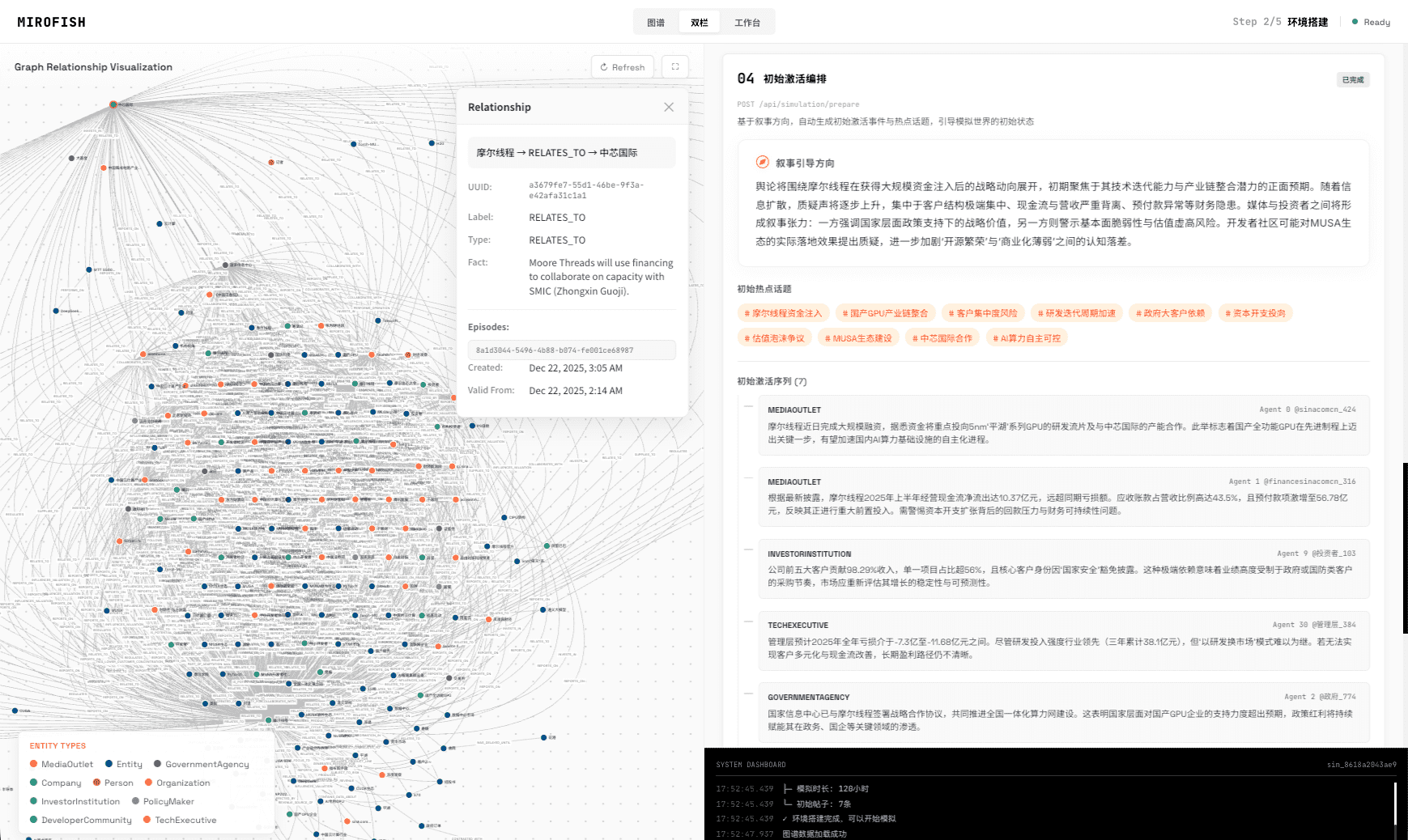
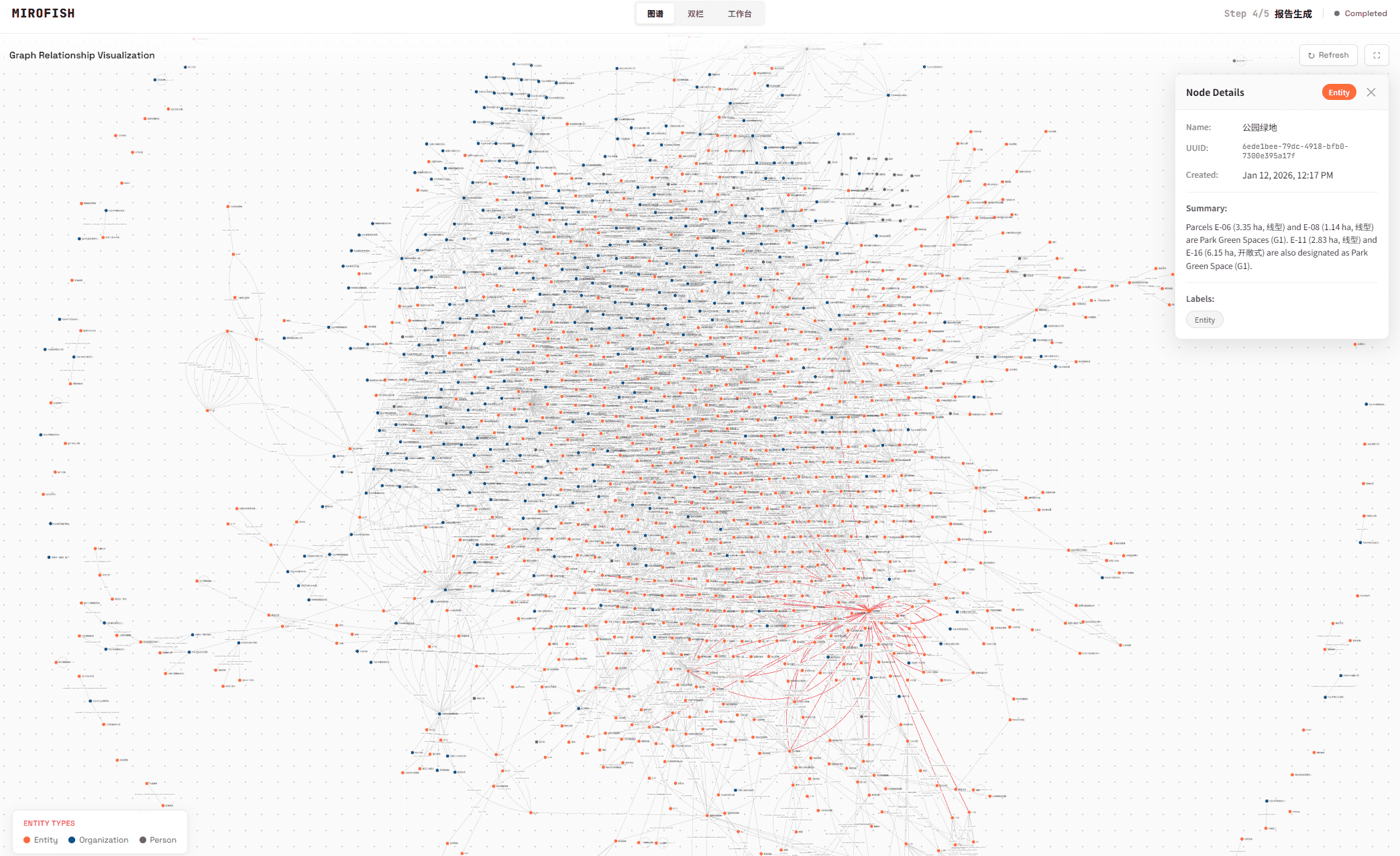
 MiroFish is an AI-powered multi-agent simulation engine that builds a high-fidelity digital parallel world from real-world seed data (breaking news, policy drafts, financial signals) and lets thousands of independent agents interact to forecast future outcomes.
MiroFish is an AI-powered multi-agent simulation engine that builds a high-fidelity digital parallel world from real-world seed data (breaking news, policy drafts, financial signals) and lets thousands of independent agents interact to forecast future outcomes.Is this a chatbot or a full simulation platform?It is a full-stack web application (Node.js frontend plus a Python backend) that runs a multi-agent social simulation and produces a prediction report at the end, not a simple chat interface.
It is a full-stack web application (Node.js frontend plus a Python backend) that runs a multi-agent social simulation and produces a prediction report at the end, not a simple chat interface.How do I get it running?Clone the repo, configure the required environment variables, then install with `npm install && cd frontend && npm install` plus `uv sync` for the backend and start the services with the provided npm scripts, or skip local setup entirely and use the included Docker Compose file.
Clone the repo, configure the required environment variables, then install with `npm install && cd frontend && npm install` plus `uv sync` for the backend and start the services with the provided npm scripts, or skip local setup entirely and use the included Docker Compose file.What tools do I need before running it?You need Node.js 18+ (includes npm), Python between 3.11 and 3.12, and the uv Python package manager for the backend; Docker is an alternative if you don't want to install these locally.
You need Node.js 18+ (includes npm), Python between 3.11 and 3.12, and the uv Python package manager for the backend; Docker is an alternative if you don't want to install these locally.Any setup gotchas I should know?The backend specifically requires Python 3.11 or 3.12 — newer versions aren't supported — and you must configure your own environment variables (including LLM access) before the agents can run any simulation.
The backend specifically requires Python 3.11 or 3.12 — newer versions aren't supported — and you must configure your own environment variables (including LLM access) before the agents can run any simulation.Do I need to self-host this, or is there a demo?There's a hosted live demo (mirofish-live-demo) where you can try a prepared public-opinion simulation without installing anything; running your own predictions requires self-hosting via source or Docker.
There's a hosted live demo (mirofish-live-demo) where you can try a prepared public-opinion simulation without installing anything; running your own predictions requires self-hosting via source or Docker.What inspired the 'Dream of the Red Chamber' demo?MiroFish simulated the lost ending of the classic novel 'Dream of the Red Chamber' using hundreds of thousands of words from its first 80 chapters, showing how the engine can deduce narrative outcomes as well as real-world events.
MiroFish simulated the lost ending of the classic novel 'Dream of the Red Chamber' using hundreds of thousands of words from its first 80 chapters, showing how the engine can deduce narrative outcomes as well as real-world events.What powers the underlying simulation engine?MiroFish's simulation engine is built on OASIS (Open Agent Social Interaction Simulations), developed with the CAMEL-AI team, which drives the realistic social behavior of the simulated agents.
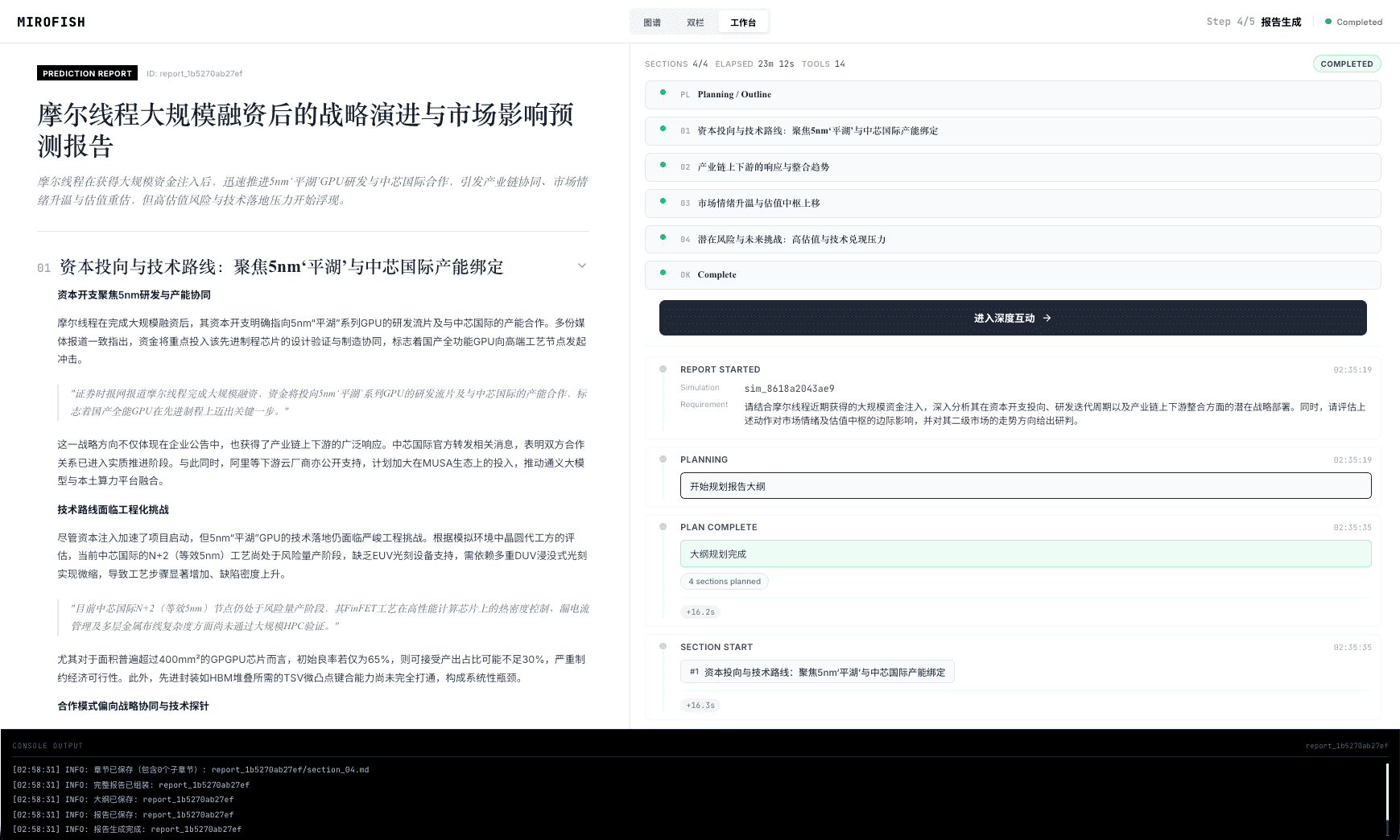
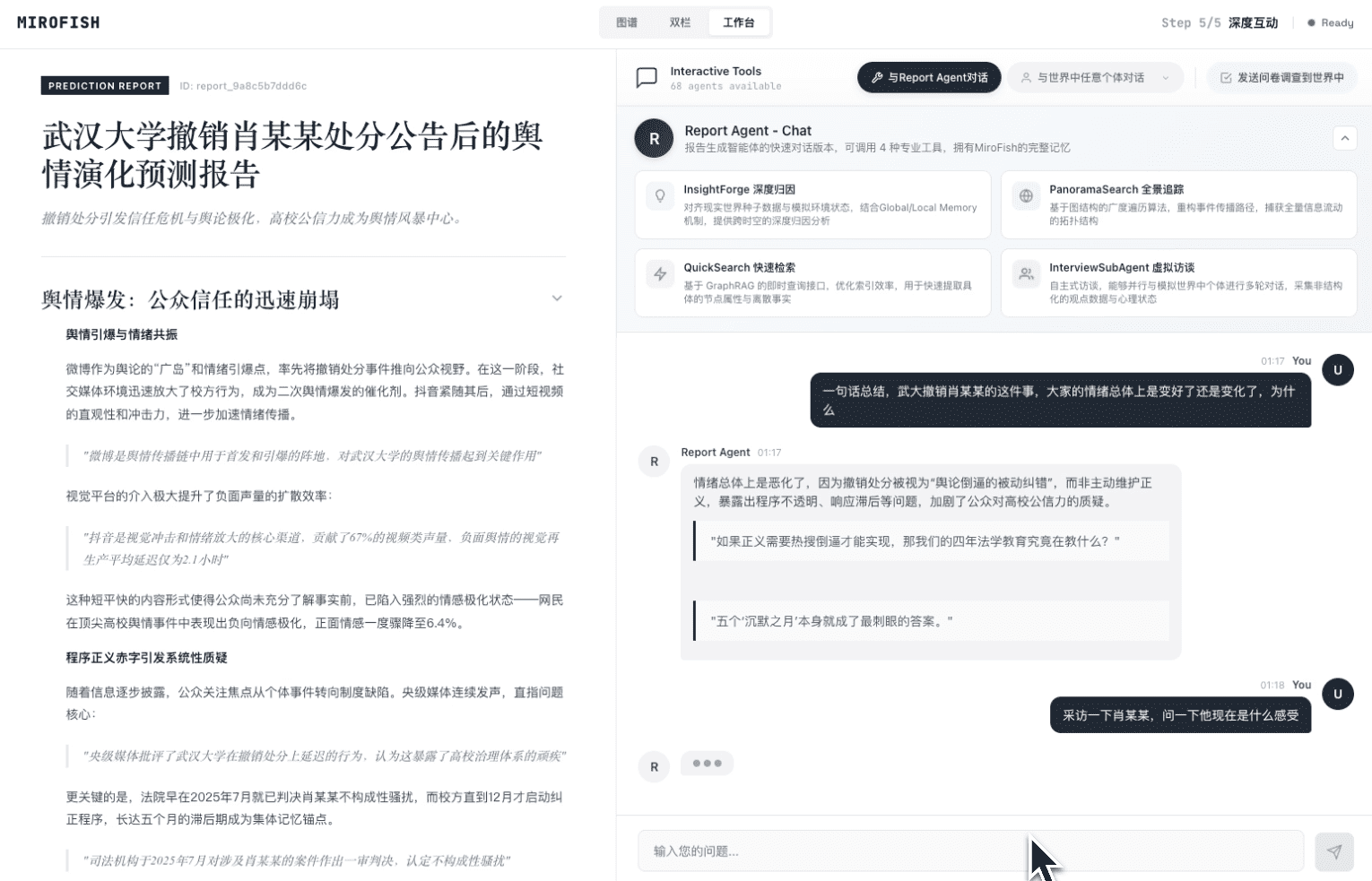
MiroFish's simulation engine is built on OASIS (Open Agent Social Interaction Simulations), developed with the CAMEL-AI team, which drives the realistic social behavior of the simulated agents.What happens after the simulation finishes?A ReportAgent with a rich toolset digs into the post-simulation environment to generate a detailed prediction report, and you can then chat directly with any simulated agent or with the ReportAgent itself.
A ReportAgent with a rich toolset digs into the post-simulation environment to generate a detailed prediction report, and you can then chat directly with any simulated agent or with the ReportAgent itself.Who is building MiroFish?MiroFish is incubated with strategic support from Shanda Group, and the team is currently hiring full-time and internship roles for multi-agent simulation and LLM application work.
MiroFish is incubated with strategic support from Shanda Group, and the team is currently hiring full-time and internship roles for multi-agent simulation and LLM application work.What are similar projects?ruflo, BettaFish, MemoryBear, utopia, jarviscore-framework, open-swe, FalkorDB, Athena-Public
ruflo, BettaFish, MemoryBear, utopia, jarviscore-framework, open-swe, FalkorDB, Athena-PublicWhich topics is it in?swarm-intelligence, multiagent, forecasting, graphrag, llms, multi-agent-systems, python3, simulation, knowledge-graph, agent-memory, agpl, docker-compose
swarm-intelligence, multiagent, forecasting, graphrag, llms, multi-agent-systems, python3, simulation, knowledge-graph, agent-memory, agpl, docker-compose