









What is this?
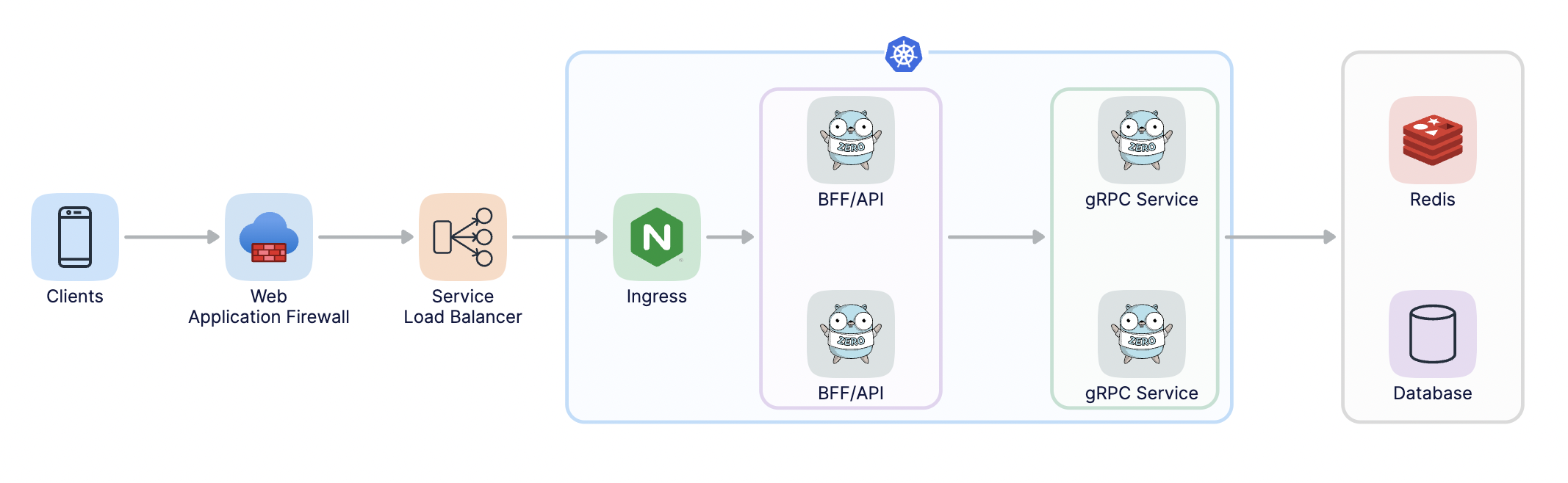
 go-zero is a cloud-native Go framework for building web and RPC microservices, packed with built-in engineering practices. It has been serving sites with tens of millions of users for years and is listed in the CNCF Landscape.
go-zero is a cloud-native Go framework for building web and RPC microservices, packed with built-in engineering practices. It has been serving sites with tens of millions of users for years and is listed in the CNCF Landscape.Is it a framework or a separate command-line tool?Both: the core is a web and RPC framework for Go, and it ships with goctl, a CLI that turns simple .api description files into generated code.
Both: the core is a web and RPC framework for Go, and it ships with goctl, a CLI that turns simple .api description files into generated code.How do I get a service running?Describe your service in go-zero's simple .api syntax and run goctl — one command generates the service code, and you build your logic on top of the framework.
Describe your service in go-zero's simple .api syntax and run goctl — one command generates the service code, and you build your logic on top of the framework.Does it force me off the standard Go HTTP stack?No — its simple API keeps interfaces fully compatible with net/http, and the built-in middlewares can also be integrated into your own frameworks.
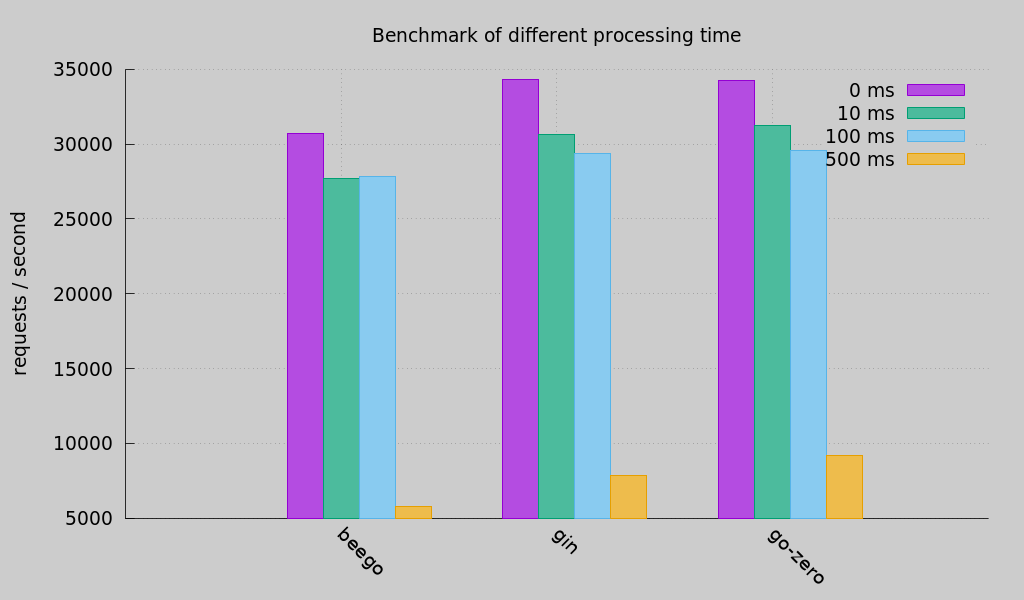
No — its simple API keeps interfaces fully compatible with net/http, and the built-in middlewares can also be integrated into your own frameworks.Is this aimed at big production systems or hobby projects?It targets busy production services: go-zero is designed for stability under high concurrency and cites services with tens of millions of daily active users.
It targets busy production services: go-zero is designed for stability under high concurrency and cites services with tens of millions of daily active users.Which languages can goctl generate besides Go?From the same .api files it can generate Go, iOS, Android, Kotlin, Dart, TypeScript and JavaScript, so web and mobile clients get SDKs straight from the service definition.
From the same .api files it can generate Go, iOS, Android, Kotlin, Dart, TypeScript and JavaScript, so web and mobile clients get SDKs straight from the service definition.Why did the team build their own framework instead of using an existing one?In early 2018 they migrated a Java+MongoDB monolith to microservices: they chose Go for performance and low resource consumption, and a self-designed framework for better problem isolation and faster issue resolution.
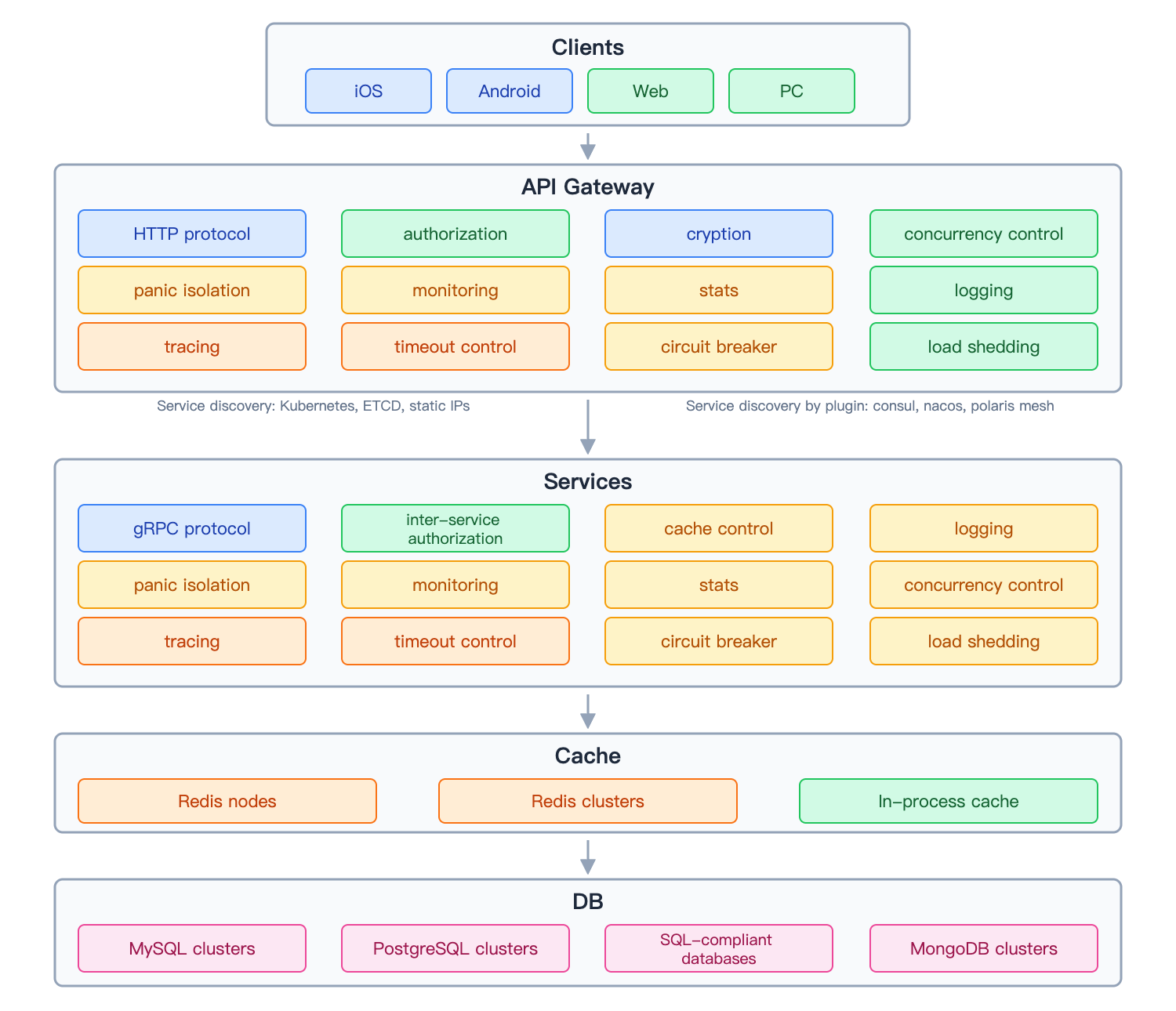
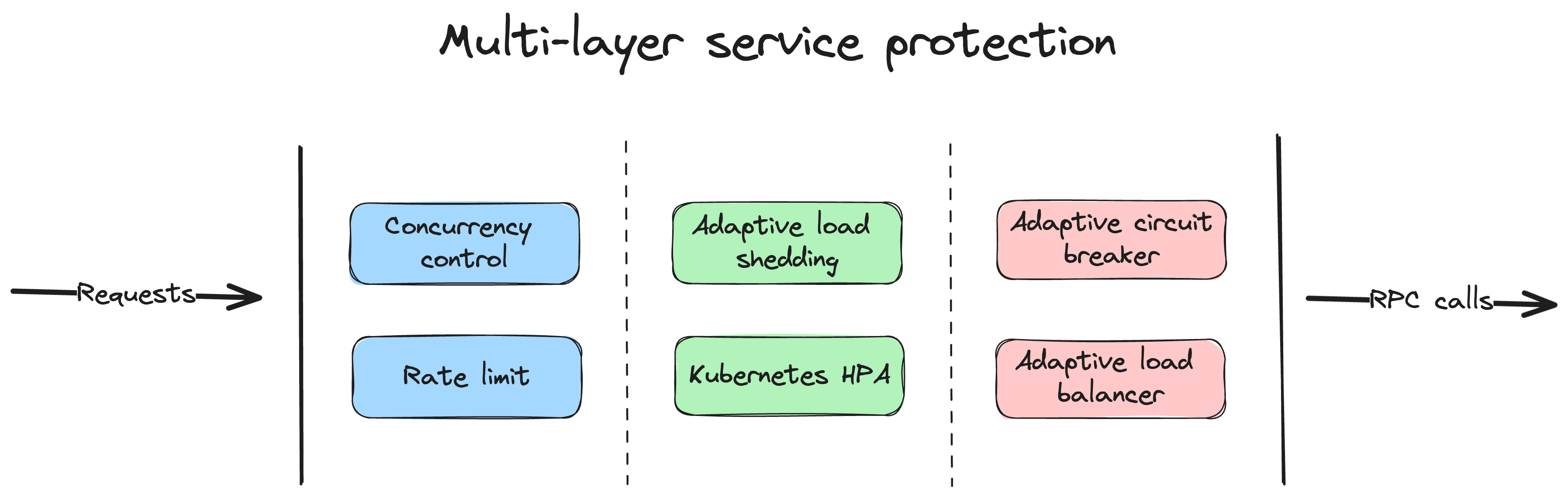
In early 2018 they migrated a Java+MongoDB monolith to microservices: they chose Go for performance and low resource consumption, and a self-designed framework for better problem isolation and faster issue resolution.What do I get out of the box without writing resilience code myself?Chained timeout control, concurrency control, rate limiting, adaptive circuit breaker and adaptive load shedding are built in, typically with zero configuration; service discovery, load balancing and call tracing are included too.
Chained timeout control, concurrency control, rate limiting, adaptive circuit breaker and adaptive load shedding are built in, typically with zero configuration; service discovery, load balancing and call tracing are included too.Does it validate incoming requests for me?Yes — client request parameters are validated automatically, one of the built-in developer tools alongside cache management and metrics and monitoring.
Yes — client request parameters are validated automatically, one of the built-in developer tools alongside cache management and metrics and monitoring.What are similar projects?kratos, gofr, spring-cloud-alibaba, fiber, grpc-gateway, echo, resty, chi
kratos, gofr, spring-cloud-alibaba, fiber, grpc-gateway, echo, resty, chiWhich topics is it in?restful-api, restful, circuit-breaker, microservices-architecture, service-discovery, spec-driven-development, microservice, rate-limiting, tracing, gateway, load-balancer, rpc
restful-api, restful, circuit-breaker, microservices-architecture, service-discovery, spec-driven-development, microservice, rate-limiting, tracing, gateway, load-balancer, rpc