



Что это такое?
 Vanna — это open-source фреймворк на Python для общения с вашей SQL-базой: пользователь задаёт вопрос обычным языком и получает SQL, таблицы, графики и ответ на естественном языке, причём разграничение прав для каждого пользователя встроено изначально.
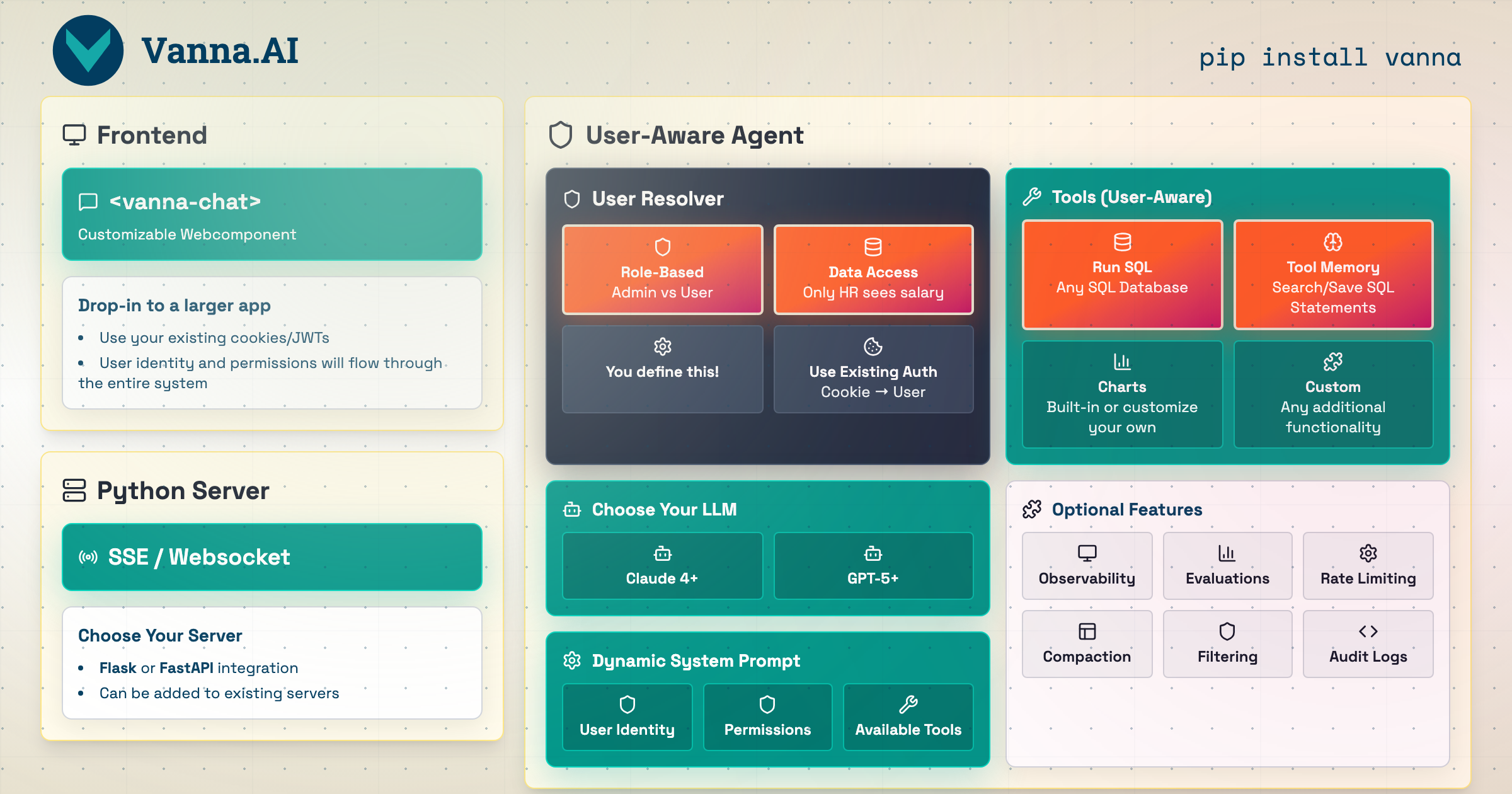
Vanna — это open-source фреймворк на Python для общения с вашей SQL-базой: пользователь задаёт вопрос обычным языком и получает SQL, таблицы, графики и ответ на естественном языке, причём разграничение прав для каждого пользователя встроено изначально.Это Python-библиотека, готовое приложение или и то и другое?И то и другое: бэкенд на Python, который вы встраиваете в FastAPI или Flask, плюс готовый фронтенд-компонент для веба, который вставляется на любую страницу (React, Vue или обычный HTML) и отображает чат, таблицы и графики.
И то и другое: бэкенд на Python, который вы встраиваете в FastAPI или Flask, плюс готовый фронтенд-компонент для веба, который вставляется на любую страницу (React, Vue или обычный HTML) и отображает чат, таблицы и графики.Как его запустить?Начните с Quickstart, чтобы попробовать на тестовых данных, затем выполните Configure для своей базы данных и LLM. Для продакшена есть подробный пример встраивания Vanna в уже существующее приложение на FastAPI со своей авторизацией.
Начните с Quickstart, чтобы попробовать на тестовых данных, затем выполните Configure для своей базы данных и LLM. Для продакшена есть подробный пример встраивания Vanna в уже существующее приложение на FastAPI со своей авторизацией.Какие LLM и базы данных можно подключить?Проект не привязан к конкретным провайдерам: для LLM — OpenAI, Anthropic, Ollama, Azure, Gemini, AWS Bedrock, Mistral и другие; для баз данных — PostgreSQL, MySQL, Snowflake, BigQuery, Redshift, SQLite, Oracle, SQL Server, DuckDB, ClickHouse и не только.
Проект не привязан к конкретным провайдерам: для LLM — OpenAI, Anthropic, Ollama, Azure, Gemini, AWS Bedrock, Mistral и другие; для баз данных — PostgreSQL, MySQL, Snowflake, BigQuery, Redshift, SQLite, Oracle, SQL Server, DuckDB, ClickHouse и не только.Проект до сих пор активно развивается?Стоит знать до того, как браться: репозиторий на GitHub заархивирован, то есть доступен только для чтения и изменения больше не принимаются. В README по-прежнему предлагается корпоративная поддержка через [email protected], но сначала проверьте актуальный статус.
Стоит знать до того, как браться: репозиторий на GitHub заархивирован, то есть доступен только для чтения и изменения больше не принимаются. В README по-прежнему предлагается корпоративная поддержка через [email protected], но сначала проверьте актуальный статус.Можно ли запустить его на своей инфраструктуре с локальной моделью?Да — он работает внутри вашего приложения на FastAPI или Flask, а если хотите, чтобы LLM была полностью локальной, поддерживается Ollama. Про политику хранения данных в README ничего не сказано.
Да — он работает внутри вашего приложения на FastAPI или Flask, а если хотите, чтобы LLM была полностью локальной, поддерживается Ollama. Про политику хранения данных в README ничего не сказано.Что на самом деле видит пользователь, когда задаёт вопрос?Пять вещей в режиме реального времени: обновления о ходе выполнения, блок с SQL-кодом (по умолчанию скрыт от пользователей без прав администратора), интерактивная таблица с данными, графики Plotly и итоговый ответ на естественном языке.
Пять вещей в режиме реального времени: обновления о ходе выполнения, блок с SQL-кодом (по умолчанию скрыт от пользователей без прав администратора), интерактивная таблица с данными, графики Plotly и итоговый ответ на естественном языке.Для кого сделан Vanna?Для команд, которые строят аналитические приложения с интерфейсом на естественном языке, для multi-tenant SaaS-продуктов, где нужны права для каждого пользователя, и для компаний с требованиями аудита — то есть для всех, кому нужен готовый чат-интерфейс с бэкендом, а не свой с нуля.
Для команд, которые строят аналитические приложения с интерфейсом на естественном языке, для multi-tenant SaaS-продуктов, где нужны права для каждого пользователя, и для компаний с требованиями аудита — то есть для всех, кому нужен готовый чат-интерфейс с бэкендом, а не свой с нуля.Как устроена фильтрация по пользователю внутри?Ваш User Resolver берёт данные о пользователе из запроса (куки, JWT, OAuth-токены); они проходят через системные промпты, выполнение инструментов и фильтрацию SQL, а каждый запрос фиксируется в журналах аудита с привязкой к пользователю.
Ваш User Resolver берёт данные о пользователе из запроса (куки, JWT, OAuth-токены); они проходят через системные промпты, выполнение инструментов и фильтрацию SQL, а каждый запрос фиксируется в журналах аудита с привязкой к пользователю.What are similar projects?DB-GPT, pandas-ai, superset, dataease, data-formulator, apowerb, redash, DocsGPT
DB-GPT, pandas-ai, superset, dataease, data-formulator, apowerb, redash, DocsGPTWhich topics is it in?text-to-sql, flask, charts, fastapi, analytics, enterprise, data-visualization, sql, rag, vue, anthropic, database
text-to-sql, flask, charts, fastapi, analytics, enterprise, data-visualization, sql, rag, vue, anthropic, database