useAgent gives Claude Code, Codex, OpenCode, and Pi a shared workspace with
repositories, a terminal, a browser, and your team's tools and context. Ask for
research, a website, a spreadsheet, or a code change. Follow the work in the
thread, step in when needed, and open the files it produces.
Alpha software. useAgent is under active development: expect rough edges,
and APIs/schemas may change between releases. It already runs real daily
workloads, but pin a tag if you need stability.
Features
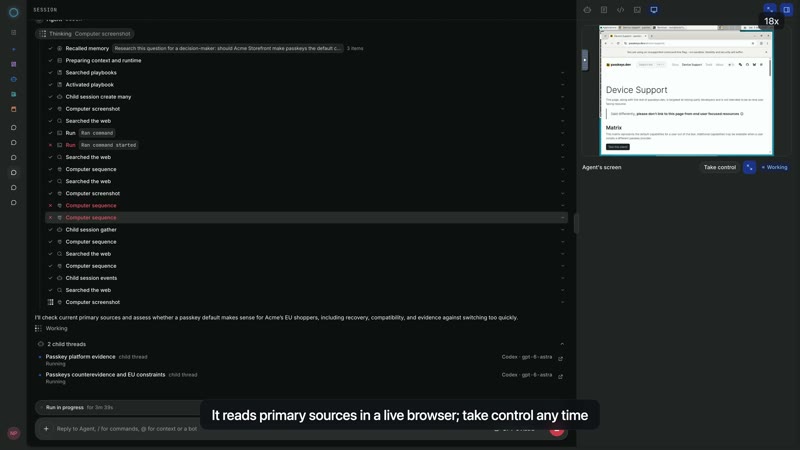
A computer for every thread
Watch an agent research in a real browser, run commands, and work with your
repositories. Open its desktop or terminal and take control when you need to.
Daytona and CubeSandbox provide isolated Linux workstations with screen recording.
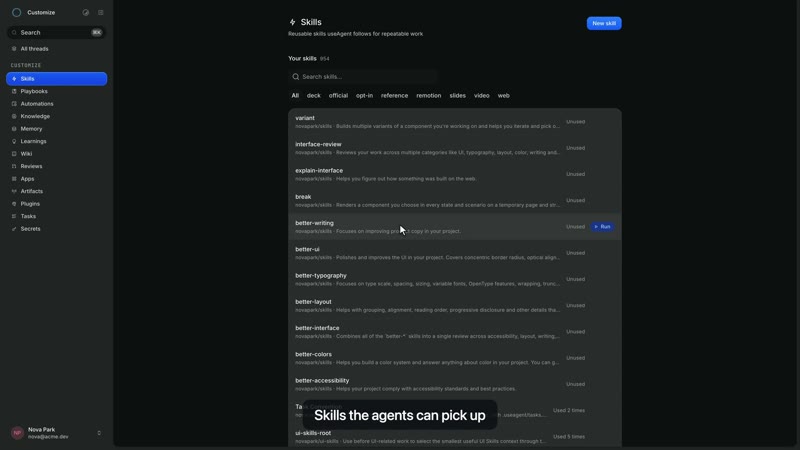
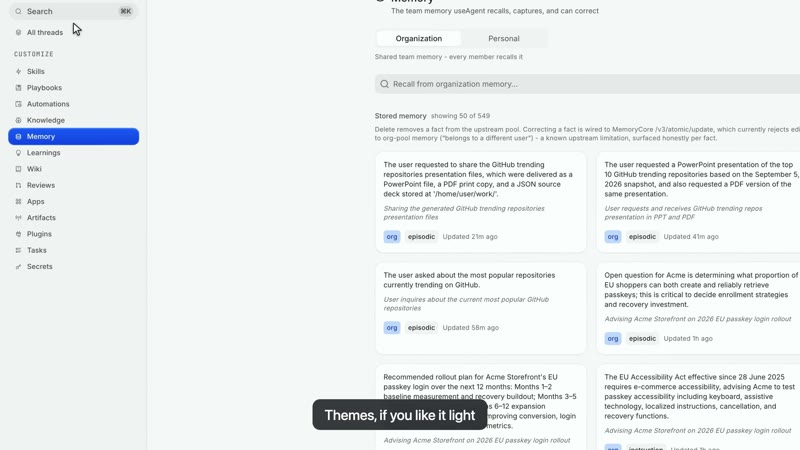
Keep knowledge, wiki pages, and optional team memory beside the work. Inspect
recalled facts, correct them, and keep personal and organization memory separate.
Files you can use - documents,
spreadsheets, presentations, PDFs, images, and videos. Supported workpieces
have revisioned edits and native exports.
Work from Slack - mention an
agent, send attachments, and receive artifacts in the thread.
Recurring work - schedule
tasks, inspect their history, or run one immediately.
Approval controls -
gated tools pause for a decision and resume with a one-shot, argument-bound capability.
Durable sessions -
Postgres stores the event timeline; recovery re-probes live sessions after a restart.
Supported agents
Claude CodeCodexOpenCodePi
One session UI and event contract across engines. Connect a supported provider
account or API key; available models, login methods, and tools depend on the
adapter and your self-hosted configuration. See the engine guide.
Integrations
Work arrives from anywhere and tools stay behind the gateway:
Surface
What's connected
Channels in
Web app, Slack, REST API, schedules - every channel enters through the same run door
for workspace in \
  packages/agent-harness packages/artifact-workspace \
  packages/agent-client packages/artifact-formats packages/sandbox-contract \
  packages/conformance packages/cli \
  backend frontend; do
  (cd "$workspace" && bun install --frozen-lockfile)
done

bun run dev:backend    # API + orchestration on :3201
bun run dev:frontend   # UI on :3400 (proxies /api/* to the backend)
bun run typecheck covers every package.
The database example is for local development. See the
setup guide for provider
credentials and sandbox configuration before running a real agent task.
Self-hosting
useAgent runs on any Linux host - AWS, Google Cloud, Azure, Hetzner, or
bare metal. See infra/self-host/ for the full
guide, including the one-command Hetzner reference host (Terraform) and the
provider-agnostic deploy-app.sh:
Sandboxes are pluggable: Daytona (managed service - pairs with a host on
any cloud, easiest start) or CubeSandbox (self-hosted runtime on your own
hardware - full data locality). Production deploy lanes are documented in
infra/self-host/; the provisioning is provider-agnostic
and addresses the host over SSH.
Architecture
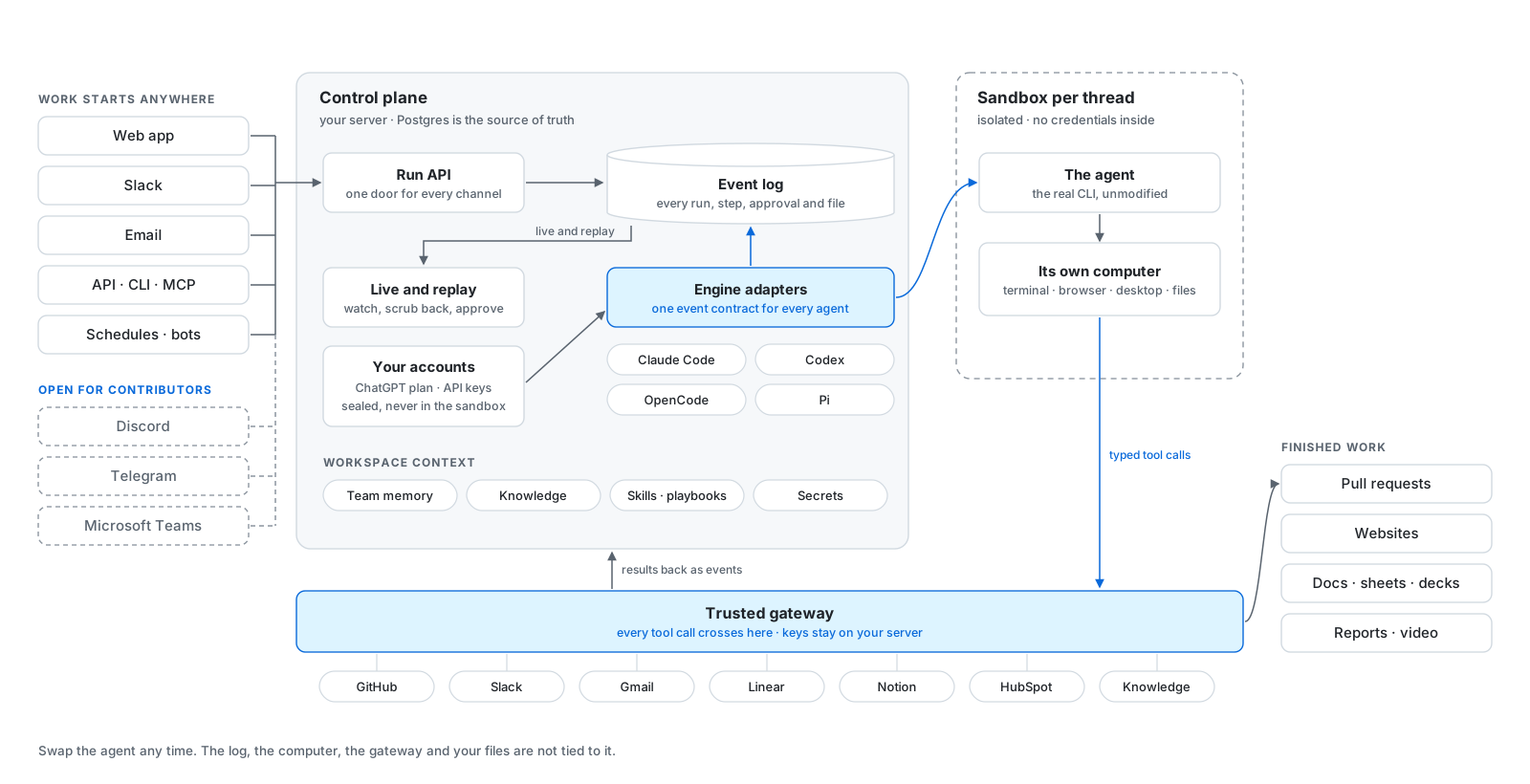
Three properties do the heavy lifting:
The engine is a plug. Claude Code, Codex, OpenCode, and Pi all speak one
canonical event contract through the engine adapters - swap engines and your
threads, artifacts, and memory stay.
Every run is an event log. Postgres is the source of truth: runs survive
backend restarts, replay exactly, and stay inspectable after the fact.
Credentials never enter the sandbox. The agent's computer is isolated;
every integration call crosses the trusted gateway as a typed tool, and the
keys live only on your control plane.
Start with the repository map
and the frontend or backend README when contributing.
License
useAgent is free and open-source software under the
GNU AGPL v3.0 (AGPL-3.0-only). You may use, modify, and
self-host useAgent under the AGPL.
If you want to embed useAgent into proprietary software, distribute it
without AGPL obligations, build an OEM or white-label product, or obtain
different terms, a commercial license is
available.
Contributions are accepted under the CLA. The useAgent name and
logo are covered by the trademark policy, not the code
license. Third-party components are listed in NOTICE; vendored
and ported files carry per-file attribution headers.
useagent (useagenthq/useagent)
Choose a tag and it will appear here. With no tags selected, all catalog projects are shown.
Searching Database…
Choose a tag and it will appear here. With no tags selected, all catalog projects are shown.
 useAgent




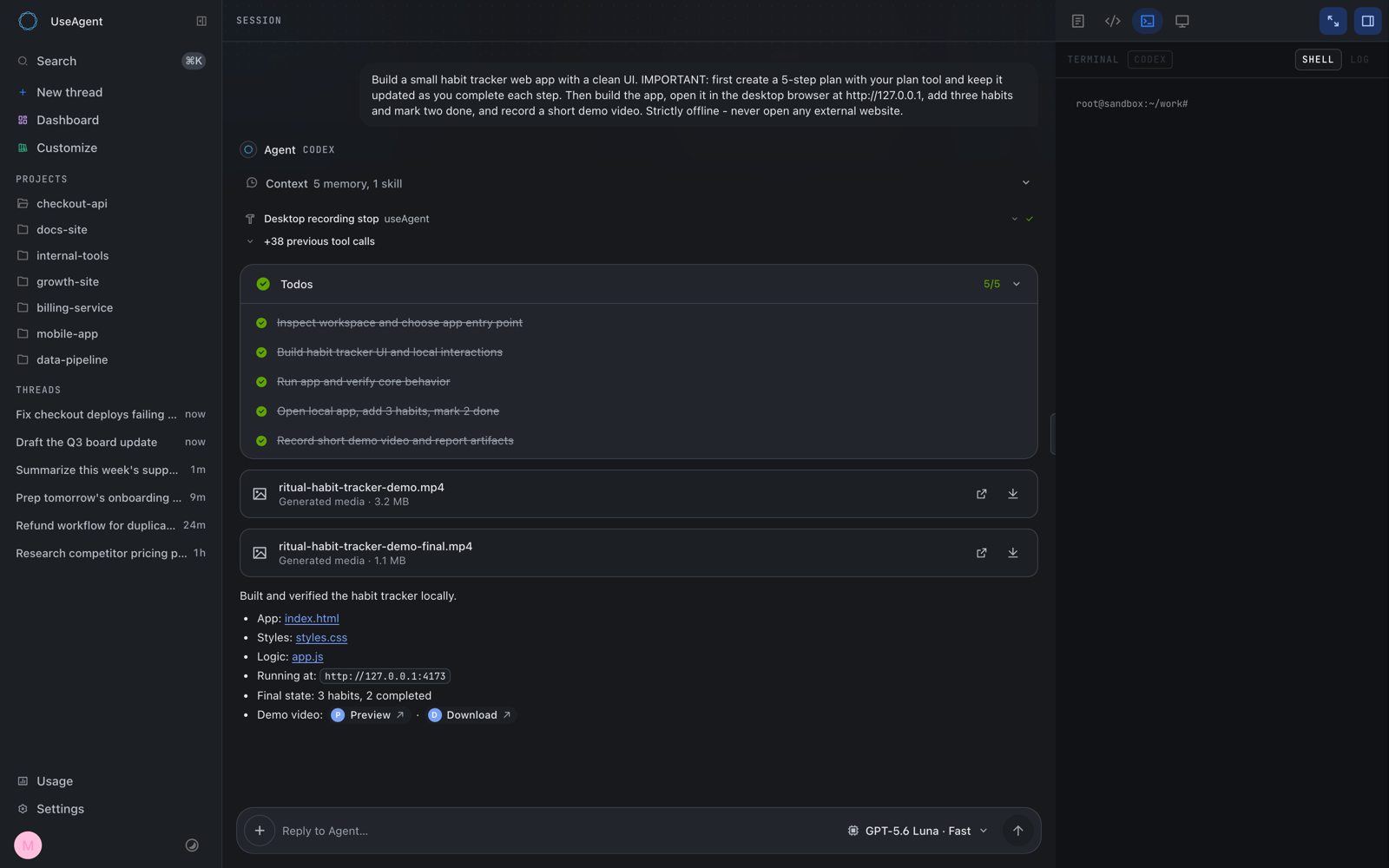

 useAgent 是 Devin 的开源替代品:它为 Claude Code、Codex、OpenCode 和 Pi 这类编程 agent 提供一个带终端、浏览器和团队工具的共享云工作区,让它们能做调研、改代码、写文档这类实际工作。