1.1K ·GitHub
What is this?
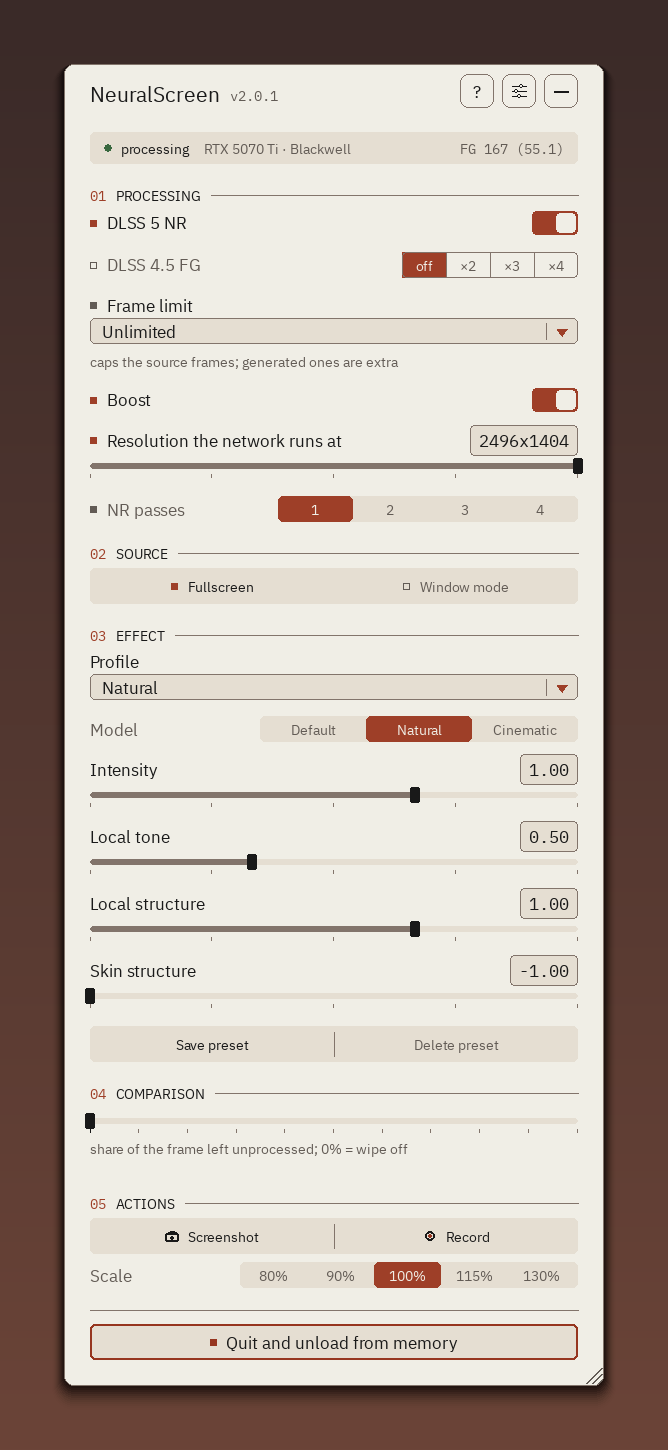
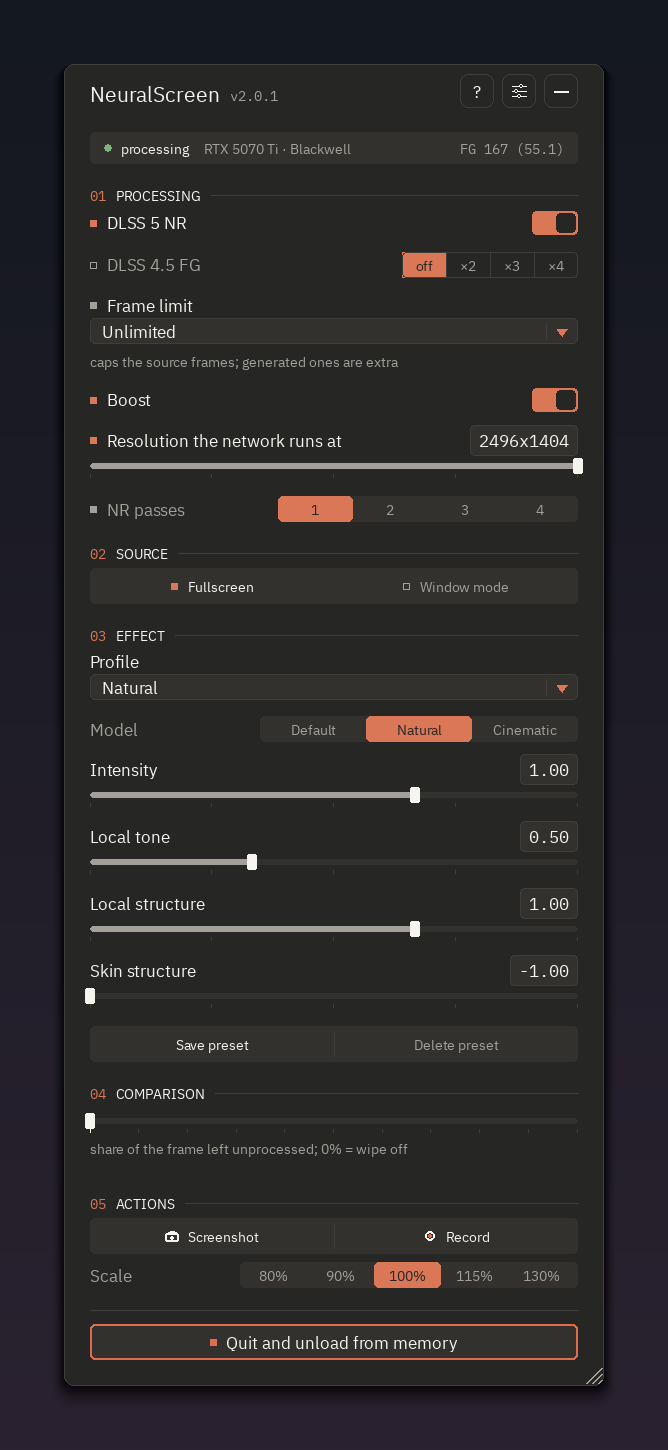
 NeuralScreen applies NVIDIA's DLSS 5 neural renderer to your entire Windows desktop in real time, so games, video and photos all get sharpened by the same network DLSS 5 games use, not just upscaled in one app.
NeuralScreen applies NVIDIA's DLSS 5 neural renderer to your entire Windows desktop in real time, so games, video and photos all get sharpened by the same network DLSS 5 games use, not just upscaled in one app.Is this a Python script I run, or a packaged app?It is a packaged standalone .exe that sits in the tray and draws an overlay; even though it is written in Python, the release archive ships its own Python runtime so nothing needs to be installed separately.
It is a packaged standalone .exe that sits in the tray and draws an overlay; even though it is written in Python, the release archive ships its own Python runtime so nothing needs to be installed separately.How do I get it running?Download the archive from the Releases page, unpack it anywhere, and run NeuralScreen.exe (or the included .vbs launcher). There is no installer and nothing is written outside the folder, so removing it is just deleting the folder.
Download the archive from the Releases page, unpack it anywhere, and run NeuralScreen.exe (or the included .vbs launcher). There is no installer and nothing is written outside the folder, so removing it is just deleting the folder.What hardware do I need - any RTX card, or specific generation?You need Windows 11 and an NVIDIA RTX card. RTX 50 and 40 work natively, RTX 30 works via a restored universal runtime, but RTX 20 (Turing) cannot run the neural pass at all - it is below the minimum supported architecture.
You need Windows 11 and an NVIDIA RTX card. RTX 50 and 40 work natively, RTX 30 works via a restored universal runtime, but RTX 20 (Turing) cannot run the neural pass at all - it is below the minimum supported architecture.Does it work over fullscreen games?No - true fullscreen games can't have anything drawn over them due to a Windows restriction, so you need borderless or windowed fullscreen mode. HDR displays also aren't supported, and processing resolution is capped at 2560x1440 even on 4K screens.
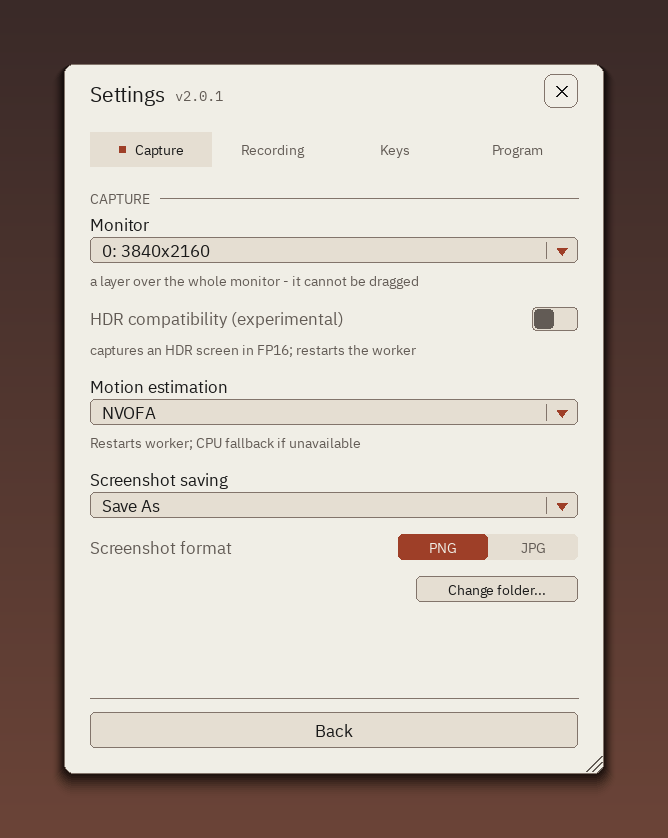
No - true fullscreen games can't have anything drawn over them due to a Windows restriction, so you need borderless or windowed fullscreen mode. HDR displays also aren't supported, and processing resolution is capped at 2560x1440 even on 4K screens.What's the deal with the license?NeuralScreen's own code is MIT, but it bundles NVIDIA's nvngxdlssnr.dll, which is a leaked runtime included as-is with no guarantees, for research purposes only.
NeuralScreen's own code is MIT, but it bundles NVIDIA's nvngxdlssnr.dll, which is a leaked runtime included as-is with no guarantees, for research purposes only.Is it safe to use this in online multiplayer games?No - the README explicitly warns not to, since a process named nvngx.dll plus a fullscreen-style overlay is exactly what anti-cheat systems look for.
No - the README explicitly warns not to, since a process named nvngx.dll plus a fullscreen-style overlay is exactly what anti-cheat systems look for.Can I record the enhanced picture for streaming?Yes, launch with the NSSPOUT=1 environment variable to publish the processed output as a Spout2 shared texture and capture it in OBS with the free Spout2 plugin, which also works in full-screen mode.
Yes, launch with the NSSPOUT=1 environment variable to publish the processed output as a Spout2 shared texture and capture it in OBS with the free Spout2 plugin, which also works in full-screen mode.How many languages does the overlay support?Twelve: English, Russian, French, German, Spanish, Italian, Portuguese, Polish, Ukrainian, Chinese, Japanese and Korean, selectable from the settings menu.
Twelve: English, Russian, French, German, Spanish, Italian, Portuguese, Polish, Ukrainian, Chinese, Japanese and Korean, selectable from the settings menu.Can I toggle it on one window instead of the whole screen?Yes, point at a window and press Num5 (or pick Select window in the menu) to have the overlay follow just that window; press Num5 again to go back to full-screen processing.
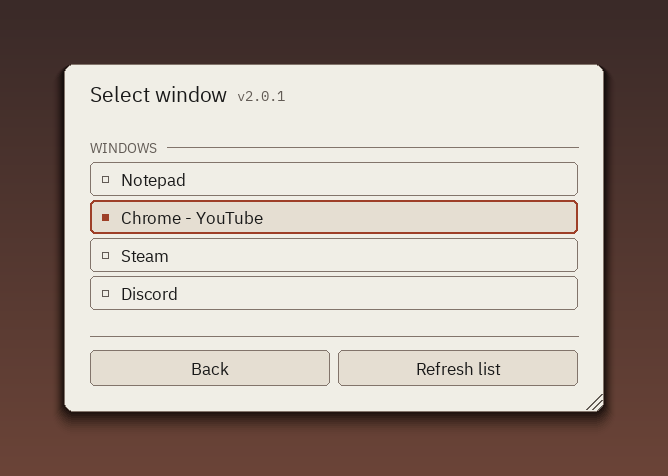
Yes, point at a window and press Num5 (or pick Select window in the menu) to have the overlay follow just that window; press Num5 again to go back to full-screen processing.What are similar projects?dlss5-visual-enhancer, DLSS5-Autopilot, video2dlssnr, DLSS5oneclick, OptiScaler-DLSSNR-PreSR-Multipass, DLSS-5-MANAGER, 1-Click-DLSS5, dlss5-bridge
dlss5-visual-enhancer, DLSS5-Autopilot, video2dlssnr, DLSS5oneclick, OptiScaler-DLSSNR-PreSR-Multipass, DLSS-5-MANAGER, 1-Click-DLSS5, dlss5-bridgeWhich topics is it in?dlss5, overlay, image-upscaling, frame-generation, dlss, rtx, recording, neural-rendering, screen-recording, screen-capture, upscaling, localization
dlss5, overlay, image-upscaling, frame-generation, dlss, rtx, recording, neural-rendering, screen-recording, screen-capture, upscaling, localization