Pokémon Fulldex
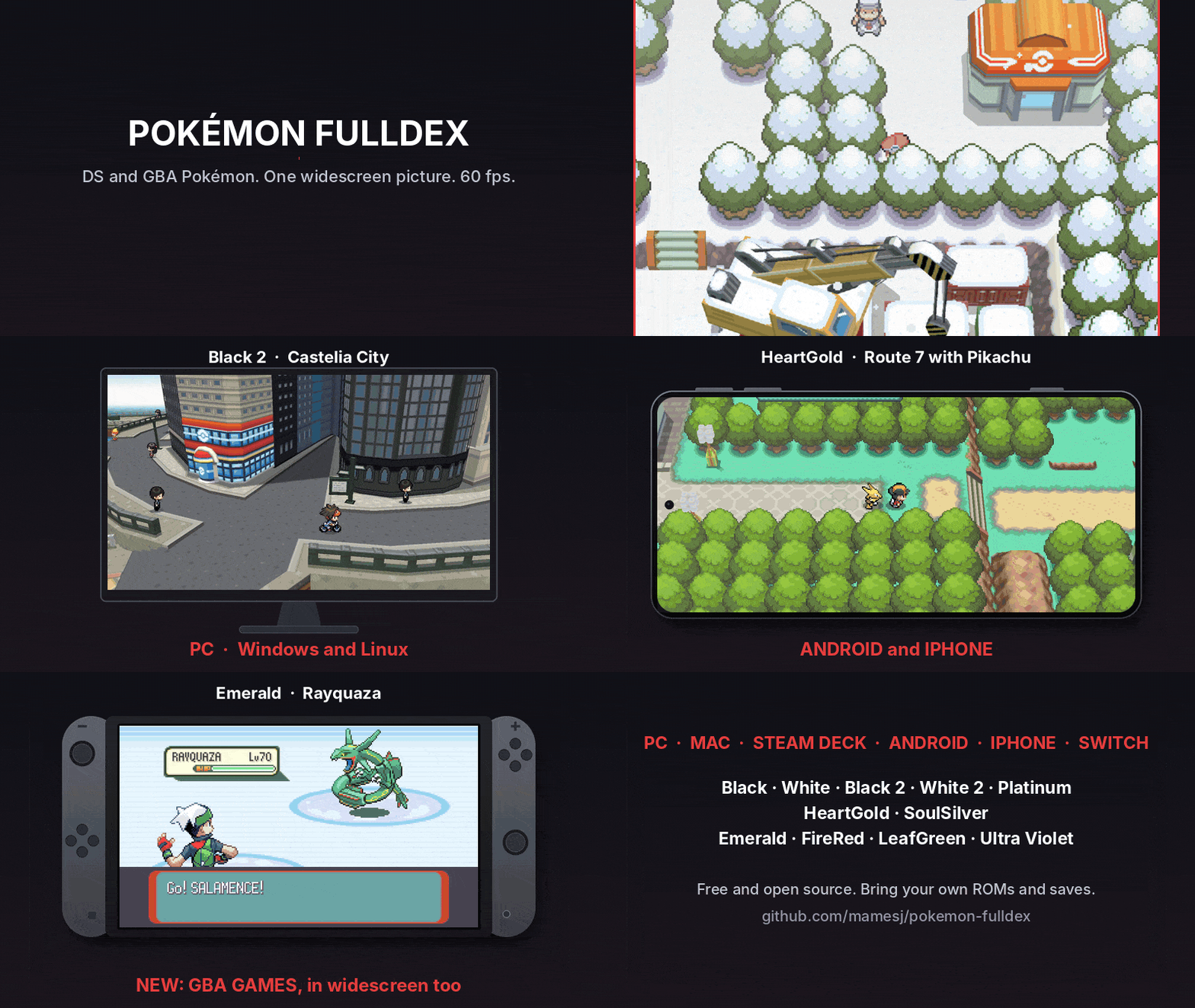
All your favourite Pokémon games on a PC (Windows and Linux), a Mac, a Steam
Deck or other handheld PC, an Android phone, an iPhone or iPad, or a modded Nintendo Switch: one screen,
widescreen, 60 fps, up to 4K on a PC and 720p on the Switch. No more squinting at two tiny stacked DS screens.
DS: Black 2, White 2, Black, White, HeartGold, SoulSilver, Platinum, Diamond and Pearl.
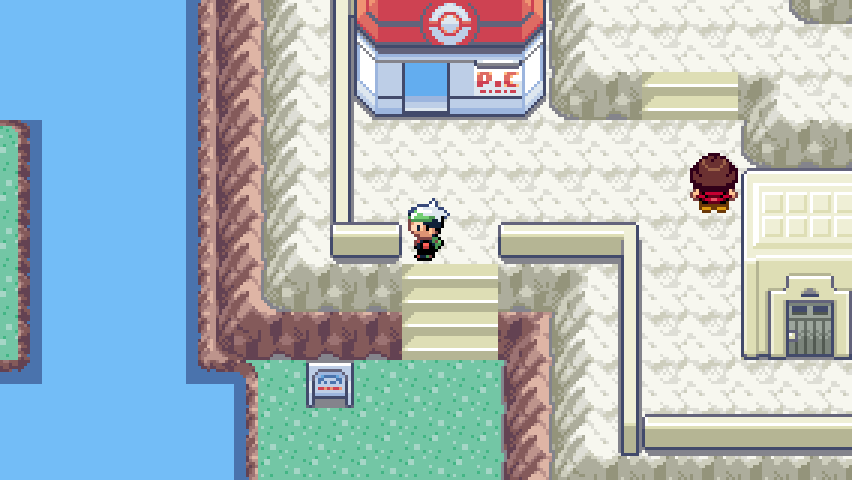
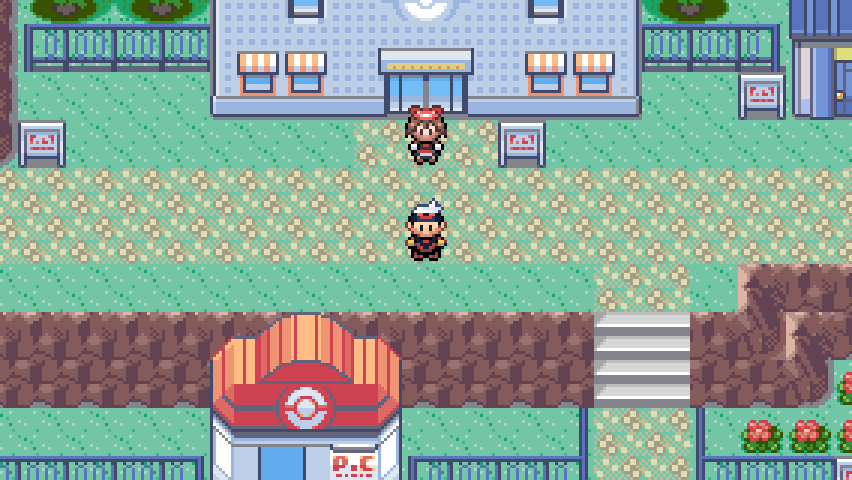
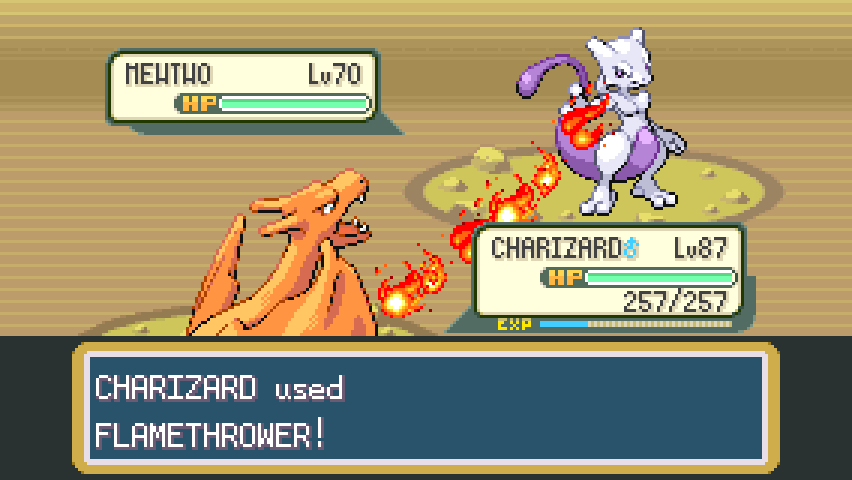
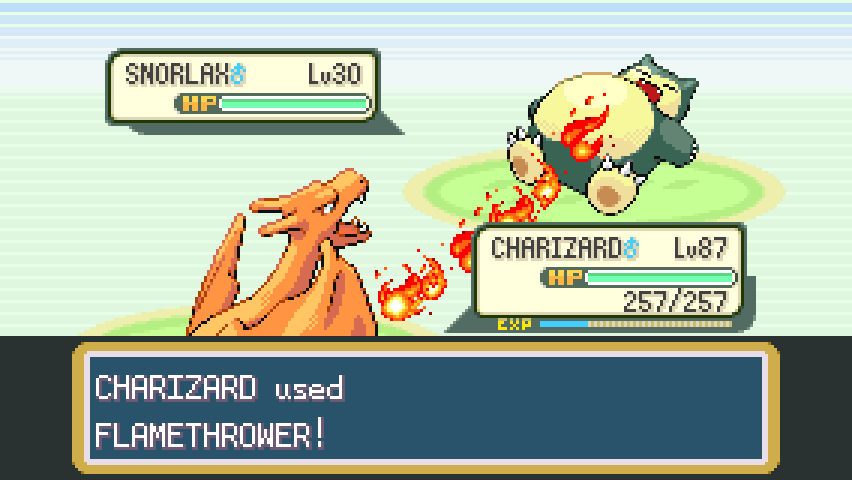
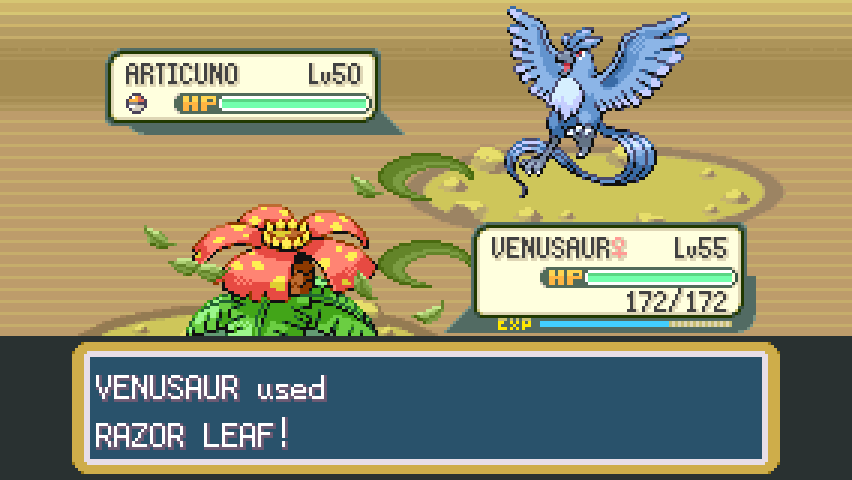
GBA: Emerald, Ruby, Sapphire, FireRed, LeafGreen and Ultra Violet.
3DS (beta): Omega Ruby and Alpha Sapphire on Windows, Android and Switch; X, Y, Ultra Sun and Ultra Moon coming soon.
Which languages: Supported games.
Downloads
One program per platform: start it and pick the game from the list. You bring your own ROMs:
the downloads hold none of the games. What's new in each update: Releases.
What is it?
A program for your PC or your Switch (as homebrew) that runs the game on the
melonDS emulator core (built in: there is nothing else to install), plus a
layer that knows what the game is doing (which screen, which menu, which
battle) and rearranges it into one proper widescreen picture. It is not a
native port (those are the dream, see What's next); it's the
DS game, presented the way it should look on a modern screen.
|
melonDS |
this |
| Screens |
two 256×192 DS screens, stacked or side by side |
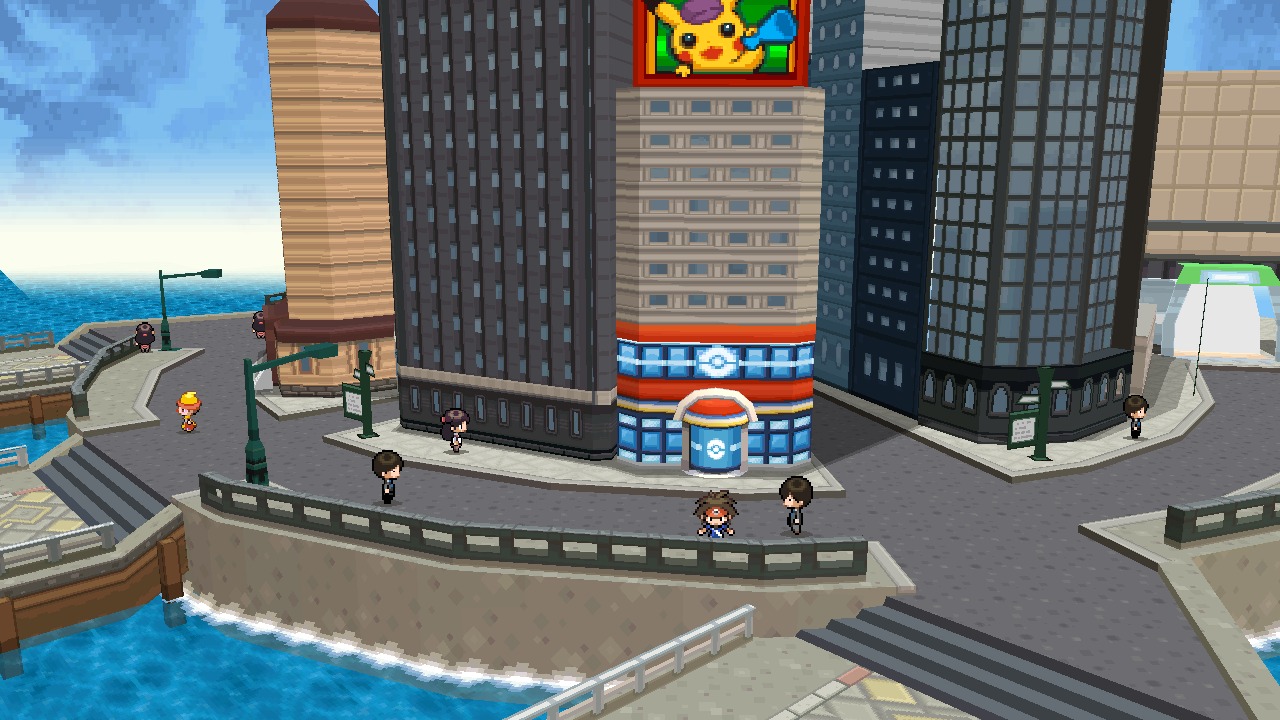
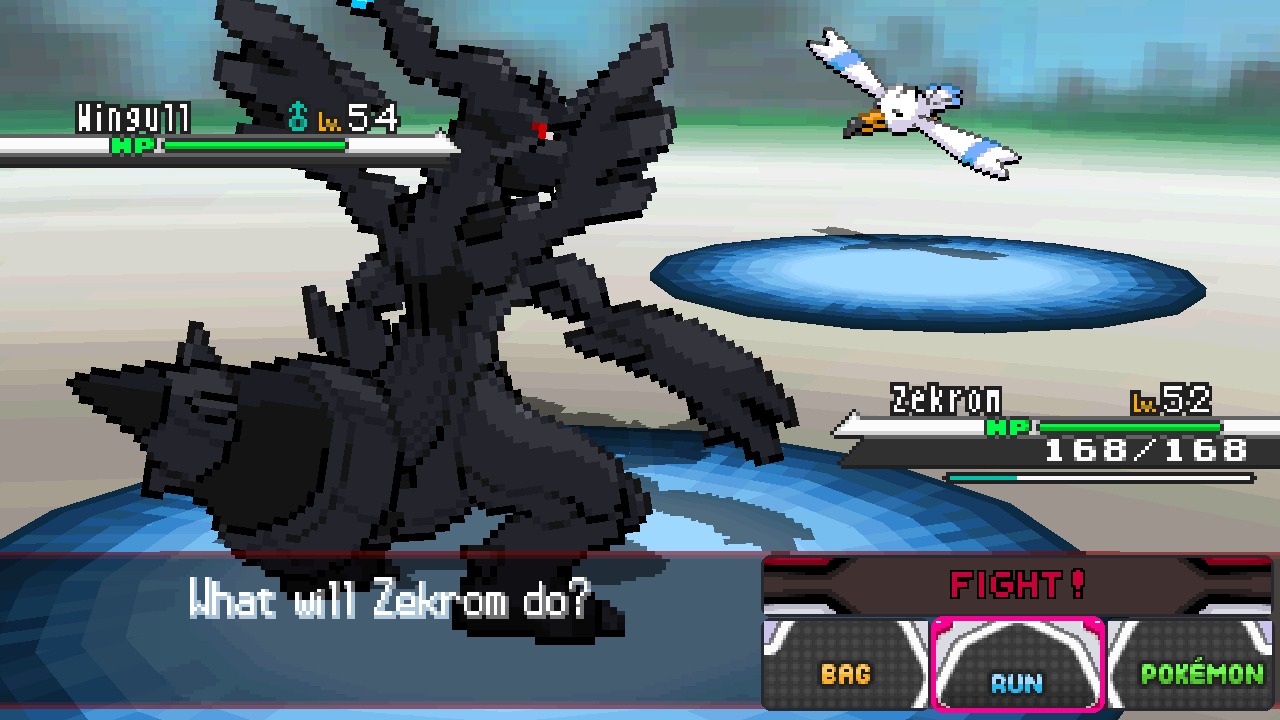
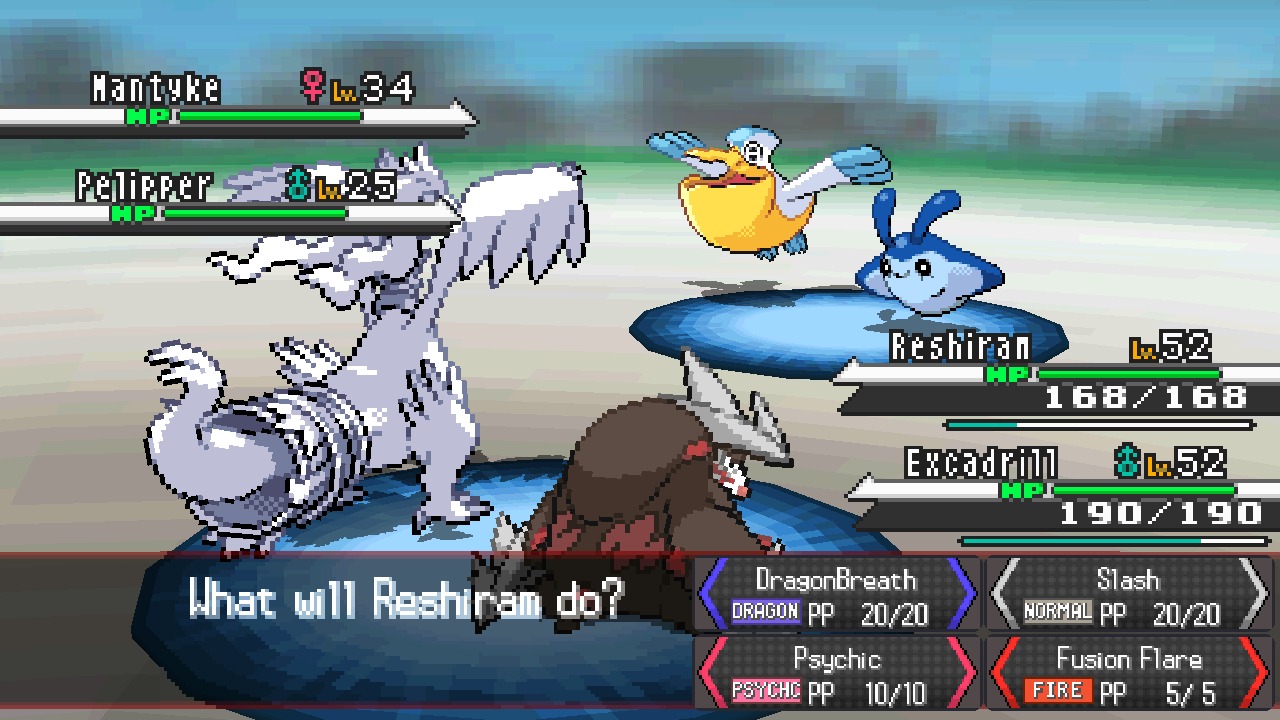
one 16:9 picture, the touch screen's buttons tucked beside the action |
| 3D world |
4:3 at DS resolution |
16:9, skies and scenery carried to the edges: up to 4K on a PC (your graphics card), 720p on the Switch (its graphics chip) |
| Frame rate |
the game's own 30 fps 3D |
60 fps, with in-between frames |
Supported games
| Game |
Languages |
Notes |
| Black 2 / White 2 |
English, French, Spanish |
German, Italian, Japanese and Korean in beta |
| Black / White |
English, French, Spanish |
German, Italian, Japanese and Korean in beta |
| SoulSilver / HeartGold |
English, French, Spanish (and Italian HeartGold) |
German, Italian, Japanese and Korean in beta |
| Platinum |
English, French, Spanish |
German, Italian, Japanese and Korean in beta |
| Diamond / Pearl |
Diamond: English, Spanish, German, Italian. Pearl: English, French, Spanish, German, Korean |
Experimental |
| Emerald (GBA) |
English |
|
| Ruby / Sapphire (GBA) |
English (1.0, 1.1, 1.2), German, French, Spanish, Italian, Japanese |
|
| FireRed / LeafGreen (GBA) |
English (1.0, 1.1) |
|
| Ultra Violet (GBA, a FireRed hack) |
1.22 |
as its .gba, or its .ips patch beside a FireRed 1.0 ROM |
| Omega Ruby / Alpha Sapphire (3DS) |
Every language on the cartridge |
Beta: Windows, Android and Switch (how); Mac, iPhone and iPad coming soon |
| X / Y, Ultra Sun / Ultra Moon (3DS) |
|
Coming soon |
- Beta languages work with the exact ROM copies they were checked against, and complete
playthroughs haven't been verified yet. Other GBA games play too, without widescreen.
- Each language keeps its own save (
heartgold-fr.sav, black2-es.sav, pearl-fr.sav ...).
- The menus speak English, Spanish, Italian, French, German, Japanese and Korean
(DISPLAY > LANGUAGE; AUTO follows your system), whatever the game's own language. More in
regional games and touch controls.
Install
On a PC, Mac, Steam Deck or handheld (Windows, macOS and Linux)
Show the guide
- Download
pokemon-ds-wide-pc-windows-x86_64.zip
(Windows) or pokemon-ds-wide-pc-linux-x86_64.tar.gz (Linux).
On Linux there is also an AppImage, the program as one file: add it to Gear Lever (or
another AppImage manager) and it updates itself. Its ROMs, saves and settings go in
~/.local/share/pokemon-ds-wide (O in the game list opens its roms folder).
- Unpack it anywhere (not inside Program Files) and put your ROMs in its
roms folder (any names).
- Start
Pokemon Fulldex.exe (Linux: pokemon-ds-wide) and pick a game.
Windows may warn about an unknown publisher the first time: choose
"More info", then "Run anyway".
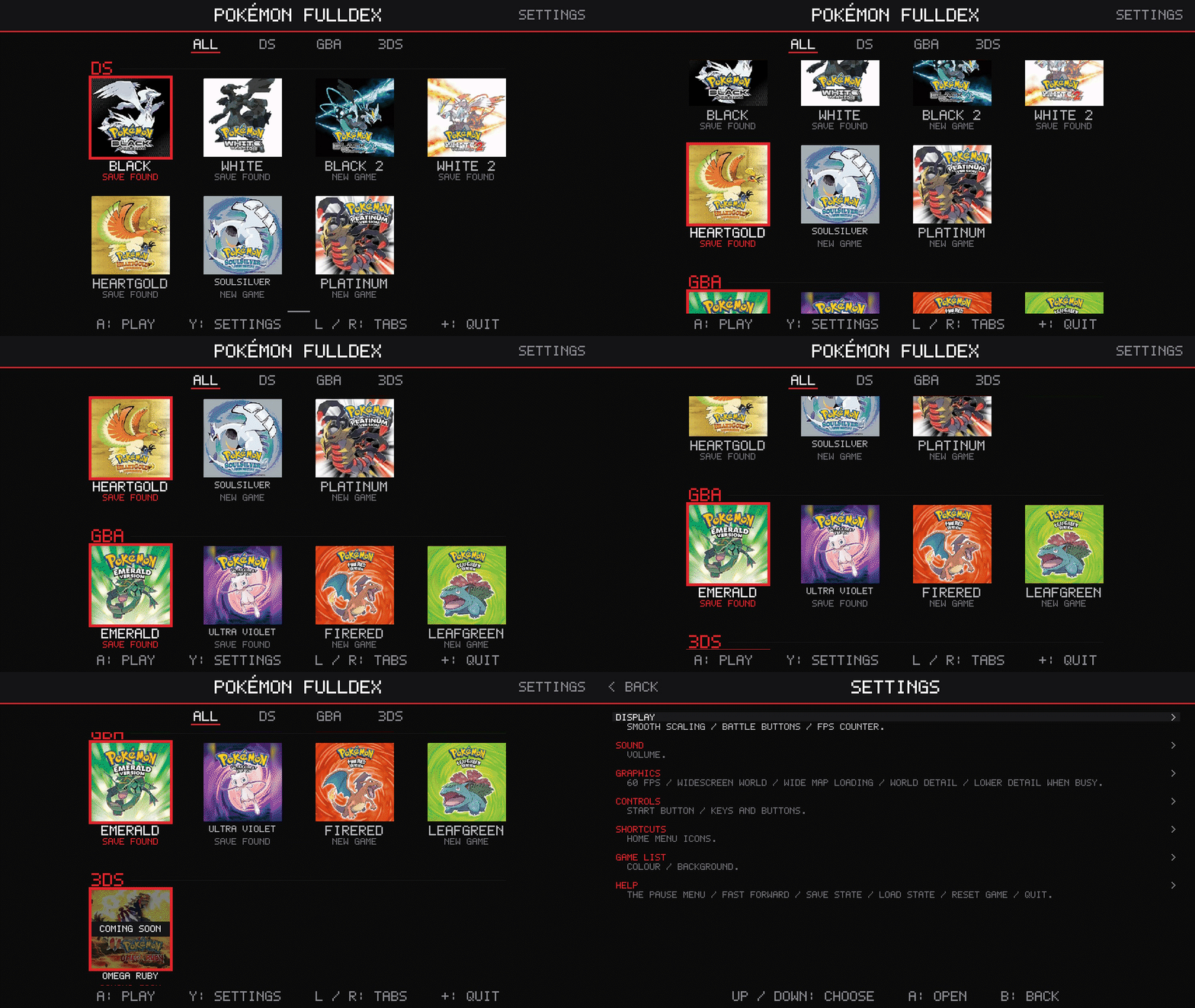
It starts in borderless fullscreen at 1080p with 60 fps; F11 switches to a
window. In the game list, arrow keys or a controller choose, Enter or A
plays, H (or a controller's Y) opens the settings and O opens the
roms folder. While playing, Esc (or a controller's Start or Guide button)
opens the pause menu; QUIT there goes back to the list.
Controls: any controller (Xbox, PlayStation, Switch Pro and others) plays
as a DS; hold its right trigger to fast forward. On the keyboard: arrow keys,
X/Z for A/B, S/A for X/Y, Q/W for L/R, Enter for START, Backspace for SELECT,
the mouse for the touch screen, Left Shift to fast forward, F5 to save a state and F8 to load it.
The README.txt inside has the full list. CONTROLS > KEYS AND BUTTONS in the pause menu (or on
the game list's settings page) changes any of them, including fast forward, swapping the screens,
save state and load state, on the keyboard and on a controller (the game list follows the ones you change).
Steam Deck trackpad: when launching through Steam, set the right trackpad to Mouse
and its click to Left Mouse Click in the game's Steam Input layout. Keep the game buttons
mapped as gamepad buttons. The pointer can touch the DS screen and click launcher, pause and
GBA menus. In DS fullscreen it appears while used and hides after a short idle period.
Layouts that also send keyboard shortcuts for the same gamepad buttons can produce duplicate
input; the launcher combines matching actions received together. Direct trackpad behaviour
outside Steam still depends on the controller driver and needs device verification.
Saves go in the saves folder, one per game (black2.sav, soulsilver.sav,
platinum.sav, ...). To carry on from another emulator, put its .sav there
under that name. Pictures: the list shows each game's box art; for your own,
put a JPEG or PNG in an icons folder beside the program, named after the game's
code (IREO.jpg for Black 2, see the README.txt).
You can also open a game's menu and choose Change Picture > Import A Picture.
On Linux and Steam Deck, use the folder browser to select a PNG or JPEG; on Windows,
the system file picker opens. The chosen image is copied into the save folder, leaving
your original picture alone. Games with the same filename can keep different pictures.
Launcher Settings > Display also lets you choose the DS Screen Filter or GBA LCD Effect before starting a game. GBA AUTO keeps its existing in-game choice; selecting ON or OFF overrides it. Changes in the in-game display menus are remembered by the launcher.
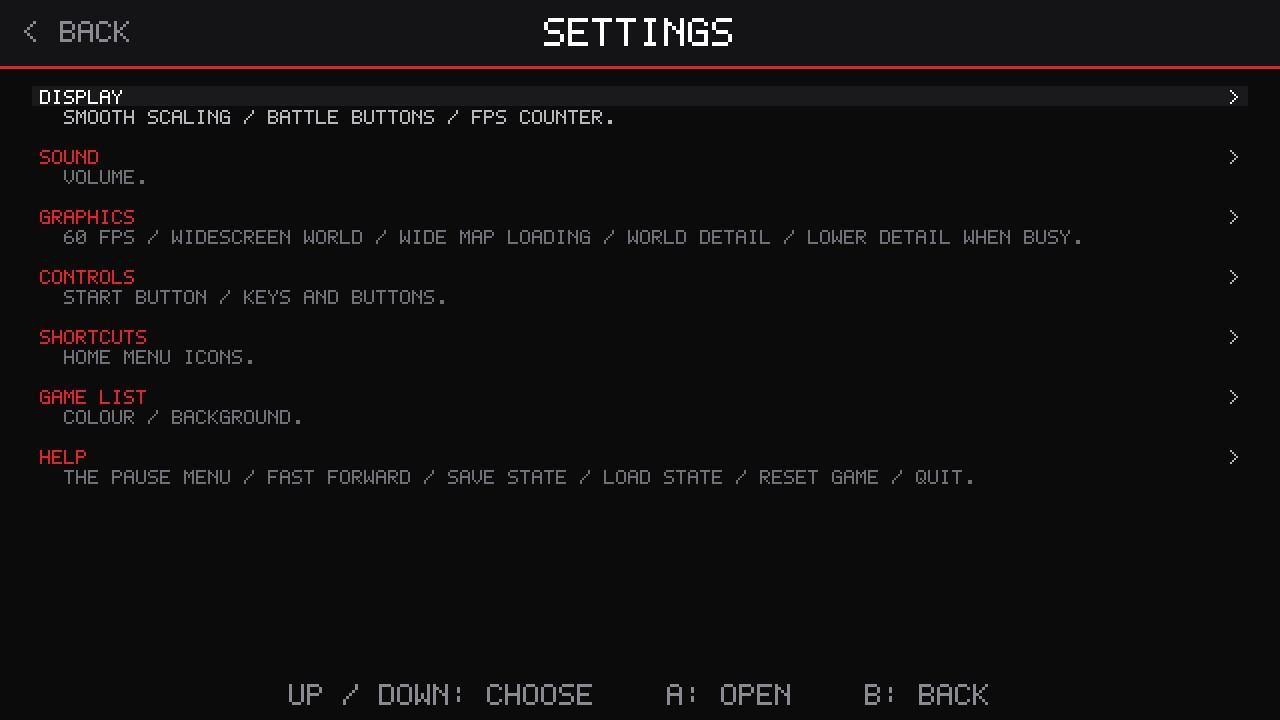
Settings (all of them: Settings). The ones that matter most on a PC:
| Setting |
Starts at |
What it does |
| 3D RESOLUTION |
1080P |
how sharp the 3D world is: 720P, 1080P, 1440P (2K) or 2160P (4K) |
| LOWER RES WHEN BUSY |
OFF |
ON: a lower resolution for a moment instead of slowing down |
| FAST FORWARD LOW RES |
OFF |
ON: 360P while fast forwarding, for more FPS on a slower PC |
| WORLD ON GPU |
ON |
the world drawn by your graphics card; turn it off if it looks wrong |
| BORDERLESS FULLSCREEN |
ON |
fills your screen; F11 does the same |
| SCREEN LAYOUT |
MERGED |
the one widescreen picture, or the two DS screens laid out as on other emulators |
Desktop shortcuts: DESKTOP SHORTCUTS on the settings page puts a shortcut for each
game on your desktop (on Linux also in your apps menu, and so in the Steam Deck's "Add a
Non-Steam Game" list), with its box art; each starts its game straight away.
Steam Deck direct launches: In Desktop Mode, use FullDex Settings > DESKTOP SHORTCUTS, then open Steam > Add a Game > Add a Non-Steam Game and select the generated game entries. They appear in Gaming Mode under Non-Steam and start the selected ROM directly, including hacks. Recreate shortcuts after moving a ROM. The desktop icon is included; Steam library cover artwork can be assigned separately in Steam. New Deck setups use Start for the pause menu; saved START BUTTON choices are respected.
What it needs: Windows 10 or 11 (64-bit), or 64-bit Linux from late 2023 on
(Ubuntu 24.04, Fedora 39, SteamOS 3.5 or newer); nothing else to install. For WORLD
ON GPU, a graphics card with OpenGL 4.3, which nearly any from 2012 on has with
up-to-date drivers; without it, the processor draws the world (that wants a
much faster processor).
Steam Deck: in Desktop Mode, unpack the Linux download and put your ROMs in
its roms folder; in Steam, Games > Add a Non-Steam Game to My Library,
browse to pokemon-ds-wide (file type: All Files); then start it from your
library in Gaming Mode with a gamepad controller layout. Set 3D RESOLUTION to
720P for the Deck's 1280x800 screen.
Mac (macOS 11 or newer):
- Download the one for your Mac. Apple menu > About This Mac: if it says Chip: Apple M1
(or M2, M3, M4, ...), take
pokemon-ds-wide-pc-macos-arm64.zip; if it says Processor:
Intel, take pokemon-ds-wide-pc-macos-x86_64.zip.
- Unzip it (double-click it in Downloads; Safari may have done it already) and drag
Pokémon Fulldex into Applications.
- Open it once. macOS says it can't check the app (it isn't notarised by Apple): click
Done. Then go to System Settings > Privacy & Security, scroll down to the line about
Pokémon Fulldex and click Open Anyway, then Open. You only do this once.
Or, in Terminal:
xattr -dr com.apple.quarantine "/Applications/Pokemon Fulldex.app",
then open it as any app.
- Add your ROMs: press O in the game list. The Finder opens its
roms folder
(~/Library/Application Support/Pokemon DS Widescreen/roms): put your DS and GBA ROMs in
it and they appear in the list. Your own saves go in the saves folder next to it.
The keys and a controller work as on a PC; Ctrl+Cmd+F (or F11) switches between fullscreen
and a window. A Mac's OpenGL stops short of what WORLD ON GPU needs, so the processor draws the
widescreen world, at 720P to start: a MacBook Air M1 holds 60 FPS at 1080P.
How fast a PC? Not measured on a range of PCs yet, so these are estimates.
The Switch runs all seven games at 60 fps, and one core of any PC from the last
eight years or so is several times as fast as one of the Switch's. What grows
with your screen is the 3D resolution, drawn by the graphics card:
- Minimum: a 4-core processor (Intel Core i5 6th generation or Ryzen 1000 on),
graphics built into the processor (Intel HD 520 or Radeon Vega 8 class) at
720p to 1080p, 4 GB of memory.
- Recommended: a recent 6-core processor and a graphics card such as a GTX
1060 or RX 580 for 1440p; 4K wants an RTX 2070 or better.
Tell us how yours runs, with its game.log.
On the Nintendo Switch
Show the guide
All seven games in one program (pokemon-ds-wide-all-switch.zip):
- Unzip it to the root of the SD card. It makes
/switch/pokemon-ds-wide/
with an empty roms folder inside.
- Copy your ROMs into
/switch/pokemon-ds-wide/roms/ (any names).
- Hold R while starting any game, pick Pokémon Fulldex, then the
game (started from the album there is not enough memory).
In the list the D-pad or a stick moves between games, A plays, Y opens
the settings (the pause menu's options, each explained) and + goes back to
the Homebrew Menu. It opens on the game you played last. While playing, +
opens the pause menu (START BUTTON in the settings can make + the DS's START
again, with + and − together for the menu); QUIT there saves and comes back to
the list (also when started from its HOME Menu icon). With only one game found
there is no list: it starts straight away. Touch screen: tap it in handheld
mode; docked, the right stick moves a cursor and ZL touches. Pressing the
right stick in shows the other screen.
Coming from the older one-game downloads? Their folders keep working: the
list also shows the games in them (/switch/pokemon-black2-wide/ and so on) and
plays each with the save already there. Those downloads are no longer updated,
so the all-in-one is the one to use.
Saves: each game keeps its save under its own name (black2.sav,
white2.sav, black.sav, white.sav, soulsilver.sav, heartgold.sav,
platinum.sav), with the GBA games' (emerald.sav...): in the saves folder of
/switch/pokemon-ds-wide/ for a ROM in its roms folder, or of an older one-game
download's folder for a ROM there. Saves an earlier version left beside the ROMs are
moved into saves the first time the list opens (that older download no longer finds
them). To carry on from an emulator or a flash cart, copy your save in under that name.
Pictures: each game shows its box art. For your own, put a square JPEG
or PNG in /switch/pokemon-ds-wide/icons/ named after the game's code: IRBO
Black, IRAO White, IREO Black 2, IRDO White 2, IPKE HeartGold, IPGE
SoulSilver, CPUE Platinum (e.g. icons/IREO.jpg).
Recommended: start each game from the HOME Menu. In the all-in-one's
settings (Y in the list), HOME MENU ICONS puts an icon for each game in
the list on the Switch's HOME Menu, with its box art, which starts that game
straight away with no holding R. It is made on your console (no PC or keys
file). Like any forwarder, the icons need sigpatches to start. Keep
/switch/pokemon-ds-wide/ where it is, as the icons start the program in it;
choose HOME MENU ICONS again after adding games. Each game then has its own
entry, so sys-clk (below) can have its own settings for it. To remove one:
Options on its icon, Data Management, Delete Software.
sys-clk (recommended for full speed), handheld. With a forwarder, start the
game, open sys-clk's overlay and set these for that game's own profile: they
then apply whenever you play it, and only then. Without one, set them for the
game you start the Homebrew Menu from, or as the global profile.
|
|
| CPU |
1785 MHz (1581 is enough for most places) |
| GPU |
460 MHz (the highest of the console's own handheld speeds; no need to go higher) |
| Memory |
1600 MHz |
Without sys-clk the games run at the console's normal speeds and drop frames
in busy places.
Settings (all of them: Settings). Recommended on the Switch:
| Setting |
Recommended |
What it does |
| 60 FPS |
ON |
in-between frames: the games draw their 3D at 30 fps |
| BATTLE BUTTONS |
PANEL |
Black 2, White 2, Black and White: the game's own FIGHT, BAG, RUN and POKÉMON panel beside the battle (Black and White also have STRIP: large buttons in the message box) |
| WORLD DETAIL |
720 |
lines the wide world is drawn with (540 if you want headroom) |
| LOWER DETAIL WHEN BUSY |
OFF |
ON: fewer lines for a moment instead of slowing down |
The world is always drawn by the Switch's graphics chip, and each frame is
shown at an even time, a frame after it is made (smoother in busy towns and
battles). The games run on melonDS's FAST JIT. If a start ever fails with it,
the next one falls back by itself (hold L while starting for the interpreter).
On Android
Show the guide
- Download
pokemon-ds-wide-android.apk on
your phone and open it. Android asks to allow installing apps from your
browser or Files app the first time: allow it, then install.
- Put your ROMs in a folder on the phone (any names), for example
ROMs in
its internal storage.
- Start Pokemon DS, tap the screen, allow access to files, and pick that
folder. Tap a game twice (or press A on a controller) to play.
Controls: on-screen buttons (D-pad, A, B, X, Y, L, R, START, SELECT and
MENU at the top) while you play by touch; hold >> beside R to fast forward; tap the
picture itself to touch the DS's touch screen. A controller (Bluetooth or USB: Xbox, PlayStation, Backbone,
Razer Kishi and others) plays as a DS and hides the on-screen buttons; its
Start opens the pause menu and its right trigger fast forwards. CONTROLS > KEYS
AND BUTTONS in the pause menu (and on the game list) changes which button does what,
including fast forward, swapping the screens, save state and load state.
Saves go in a saves folder inside your ROMs folder (made for you). The
settings and game.log are in Android/data/io.github.mamesj.pokemonds/files.
What it needs: Android 7.0 or newer on a 64-bit phone. The 3D world is drawn
by the processor at 720P to start (3D RESOLUTION in the settings: Y in the list,
or SETTINGS at the top right). Tested on a Pixel 9 Pro XL, where it runs at full
speed; please tell us how yours runs (see Reporting a bug).
Android also has a layout editor in the pause menu for moving and resizing the on-screen buttons.
On an iPhone or iPad
Show the guide
Apple only lets apps from its App Store install on their own, so this one is sideloaded:
a sideloading tool signs it with your own Apple ID (a free one works) and puts it on your
iPhone. From a Windows PC or a Mac:
- Install a sideloading tool: Sideloadly or
AltStore (on Windows, also Apple's Apple Devices app or iTunes).
- Download
pokemon-ds-wide-ios.ipa, plug in your iPhone
(tap Trust on it), and give the IPA to the tool with your Apple ID.
- On the iPhone: turn on Settings > Privacy & Security > Developer Mode (it restarts),
then trust your Apple ID in Settings > General > VPN & Device Management.
- Put your ROMs in the Files app: On My iPhone > Pokémon Fulldex > roms (AirDrop,
iCloud Drive, or from a PC: the Apple Devices app's Files tab, or the Finder on a Mac).
DS and GBA ROMs go in that same
roms folder. A .gba opened from the Files app is
taken in too. FOLDER at the top of the game list opens that folder. Tap a game twice to play.
With a free Apple ID, iOS stops opening sideloaded apps after 7 days: sideload it again (your
saves stay). AltStore and SideStore can do that for you.
Controls: as on Android: on-screen buttons while you play by touch (MENU at the top for
the pause menu), or a controller (Xbox, PlayStation, Backbone and others), which hides them.
The game list is upright. Starting a game turns an iPhone or an iPad sideways.
Saves, settings, cheats and game.log are all in that Pokémon Fulldex folder in the
Files app.
What to expect: iOS lets no app make code as it runs, so the faster way the other
versions run the DS (melonDS's JIT) is left out, and a recent iPhone (an iPhone 13 or newer)
is the most likely to keep up. The 3D world is drawn by the processor at 720P to start (3D
RESOLUTION in the settings; 540P or LOWER RES WHEN BUSY if yours slows down). QUIT in the
pause menu may close the app rather than go back to the list (open it again to pick a game).
Please tell us how it runs on yours, with your model (see Reporting a bug).
Omega Ruby and Alpha Sapphire (3DS, beta)
Played natively from your own game dump (a .3ds file; none is included), with widescreen or one
screen, sharp 3D up to 4K, fast forward and the FullDex menus. They are in the 3DS Beta tab.
The game's code is built once from your dump for the best speed; until then it can still play.
- Windows: put your
.3ds in the roms folder and pick the game. The first time, FullDex
builds it (5 to 15 minutes, the list shows how it goes); then it plays.
- Android (64-bit phones): put your
.3ds in your ROMs folder and pick the game. It is copied
into FullDex once (about 2 GB) and starts. In the game's menu, Build For Best Speed builds it
on the phone (about 25 minutes, keep it plugged in), or Use Game Code From PC takes the file
the FullDex Builder makes.
- Switch: the Switch cannot build it itself. Use the
FullDex Builder on a
Windows PC to make the game's folder from your dump, copy it into
/switch/ with your
game.3ds, and FullDex lists it.
It is a beta: back up your saves, and please report anything that goes wrong.
Features
Settings
The same on every platform: on the game list's settings page (H, or Y / △ on a
controller, or SETTINGS at the top), or in the pause menu while you play (Esc, or
START / Options / +). Each option is explained on the settings page.
| Group |
Settings |
| DISPLAY |
LANGUAGE, SCREEN LAYOUT (MERGED: the one widescreen picture), LARGE SCREEN, BORDERLESS FULLSCREEN, SMOOTH SCALING, DS SCREEN FILTER (OFF / SCANLINES / LCD GRID), GBA LCD EFFECT, BATTLE BUTTONS, FPS COUNTER |
| SOUND |
VOLUME (a slider: OFF, then 10% to 100%) |
| GRAPHICS |
60 FPS, WIDESCREEN WORLD, WIDE MAP LOADING, 3D RESOLUTION (WORLD DETAIL on the Switch), LOWER RES WHEN BUSY, WORLD ON GPU, FAST FORWARD LOW RES |
| CONTROLS |
KEYS AND BUTTONS (give any DS button, the pause menu, fast forward, swapping the screens, save state or load state another key or controller button), START BUTTON, BUTTONS, STICK TOUCH CURSOR |
| SHORTCUTS |
DESKTOP SHORTCUTS (PC), HOME MENU ICONS (Switch): a shortcut for each game |
The pause menu also has RESUME, SAVE STATE, LOAD STATE, FAST FORWARD, CHEATS
(below), RETROACHIEVEMENTS (below), RESET GAME and QUIT
(back to the game list). LOAD STATE takes you back to where the state was made but leaves your
in-game save as it is; saving in the game afterwards writes over it as usual. Not every platform has
every setting: a phone and the Switch are always full screen, for one.
RetroAchievements
Earn RetroAchievements as you play, on every platform: in the
pause menu, RETROACHIEVEMENTS, turn it ON and LOG IN with your RetroAchievements
account (a free one from their website). Your password goes to RetroAchievements once and is
not kept: the program keeps only the sign-in they send back. Unlocks pop up as you play. On a
PC, a phone, a Mac or an iPhone you can also do this before playing, in the game list's
SETTINGS > RETROACHIEVEMENTS.
- ACHIEVEMENTS on that page lists the game's achievements: unlocked ones first, then the
rest with their points; what each asks for is shown under the list.
- Casual mode only: save states, fast forward and cheats still work.
- Achievements are paused while a cheat or OTHER VERSION POKEMON is on, and come back when
they are off.
- With it on, WIDE MAP LOADING (Black, White, Black 2, White 2) stays off, so achievements
read the game's memory as on a DS.
Use your own save
Carry on from your own save: from another emulator, a flash cart or your real
cartridge. Copy it in under the game's name, in this folder:
| Where you play |
Folder |
| PC (Windows, Linux, Steam Deck) |
the saves folder beside the program |
| Linux AppImage |
~/.local/share/pokemon-ds-wide/saves |
| Mac |
~/Library/Application Support/Pokemon DS Widescreen/saves |
| Android |
the saves folder inside the folder you chose for your ROMs |
| iPhone and iPad |
Files app: On My iPhone (or iPad) > Pokémon Fulldex > saves |
| Nintendo Switch |
/switch/pokemon-ds-wide/saves/ on the SD card |
| Game |
Save name |
| Black 2 / White 2 |
black2.sav / white2.sav |
| Black / White |
black.sav / white.sav |
| SoulSilver / HeartGold |
soulsilver.sav / heartgold.sav |
| Platinum |
platinum.sav |
| Diamond / Pearl |
diamond.sav / pearl.sav |
| GBA games |
emerald.sav, ruby.sav, sapphire.sav ... |
Other languages add theirs to the name (heartgold-it.sav, black2-es.sav ...).
- Which files work: a plain
.sav, as melonDS, DeSmuME (Export Backup
Memory), flash carts (TWiLight Menu++, R4 and the like) and cartridge dump
tools (Checkpoint, JKSM, GodMode9) make it. A DraStic or DeSmuME .dsv, or an
Action Replay save (.duc), first goes through
tools/bw2/convert_save.py.
- Check it worked: the game list shows SAVE FOUND under the game (NEW GAME: not found).
- Back up first: a save copied in replaces the one there under that name.
- Older copies: a
backups folder beside your saves keeps the last 8 versions of each
(made as a game starts and every half hour of play, named by date and time). To go back to
one, quit the game and copy it over your save with the save's own name.
- SAVE BACKUPS in a DS game's pause menu restores one of those for you: choose a dated
backup and RESTORE AND RESTART. The save it replaces is kept beside it with
.before-restore.sav added to its name.
Updates
The game list checks for updates when it opens: choose INSTALL or LATER (CHECK FOR UPDATES in
SETTINGS > HELP any time). Downloads are checked against the release's SHA256SUMS.txt before
anything is replaced, and the previous program is kept; your ROMs, saves and settings stay
where they are. Android uses its own installer; on a Mac, iPhone or iPad it opens the download page.
Using an existing ROM library
On PC and Android, open ROMs → Choose ROMs Folder in the launcher. Choose the folder
where you already keep your games, including a library shared with another emulator.
Fulldex scans its subfolders too. The games stay where they are, and changing the ROM folder
does not move your saves. On Android, allow file access when the system asks.
Cheats
Action Replay codes, turned on and off as you play: CHEATS in the pause menu. They go
in a cheats folder (make it if it isn't there):
| Where you play |
Folder |
| PC (Windows, Linux, Steam Deck) |
cheats beside the program (next to saves) |
| Linux AppImage |
~/.local/share/pokemon-ds-wide/cheats |
| Mac |
~/Library/Application Support/Pokemon DS Widescreen/cheats |
| Android |
cheats inside the folder you chose for your ROMs |
| iPhone and iPad |
Files app: On My iPhone (or iPad) > Pokémon Fulldex > cheats |
| Nintendo Switch |
/switch/pokemon-ds-wide/cheats/ on the SD card |
Built in: every DS game comes with 15 popular codes in the POPULAR CHEATS folder,
nothing to download: walk through walls, max money, all medicines (Rare Candy) and all
Poké Balls (Master Ball), wild shiny encounters, always catch, infinite HP and PP in
battle, double EXP, no wild encounters, fast egg hatching, all badges, all TMs, a complete
Pokédex and fly anywhere (or faster walking, in the versions with no fly code). Every
one is off until you turn it on, for your version of the game (US,
Europe, Spain, Germany, France or Italy); the note under a code says which buttons it uses.
GBA games: CHEATS in the GBA game's pause menu has 15 built in for Emerald, FireRed,
LeafGreen (1.0 and 1.1) and Ultra Violet: walk through walls (hold B), max money, 99 Rare
Candies, 99 Master Balls, wild shiny encounters, always catch, infinite HP and PP in battle,
double EXP, no wild encounters, fast egg hatch, all badges, all TMs and HMs, a complete
Pokédex and fly anywhere. Every one is off until you turn it on. They work on the game's
own memory (by pret's decompilations), not as codes, so nothing needs downloading.
A cheat database: usrcheat.dat holds codes for every game. CHEATS opens this
game's folders (a folder with any on shows how many, or the one that is on). Open a
folder for its codes. The database's note on the chosen code shows under the menu.
ON NOW, at the top, lists every code that is on. Codes of your own are listed
above the folders. The one most people use is DeadSkullzJr's: download it from
his GBAtemp thread
and put usrcheat.dat in the cheats folder.
Codes of your own: a text file named after the game's code: IREO.txt (Black 2),
IRDO.txt (White 2), IRBO.txt (Black), IRAO.txt (White), IPKE.txt (HeartGold),
IPGE.txt (SoulSilver), CPUE.txt (Platinum). The cheat's name on a line, its code
under it; as many cheats as you like, one after another:
60 FPS battles
92247612 00002801
A2000E28 00000000
12000E28 00000000
D2000000 00000000
melonDS's own cheat files (IPKE.mch and so on) work too.
Codes for one ROM: name the text or melonDS cheat file after the ROM, without .nds:
My Hack.txt for My Hack.nds. If either ROM-specific file exists, those files take
priority over the game-code files. ROM hacks keep their enabled cheats separately,
so turning a code on for one hack does not turn it on for another or the original game.
The codes must be for your version of the game (US or Europe). A cheat changes the game's
memory while it runs: save first, and turn it off if the game misbehaves.
CHEATS also has SEARCH (names, folders and descriptions): type on the keyboard, or use the
letter chooser with a controller or touch.
The game list's look
SETTINGS > GAME LIST in the game list:
- COLOUR: its lines, the frame round the chosen game and the tabs, and the pause menu's
colours in the games: red, blue, green, purple, gold, pink or teal.
- BACKGROUND: PLAIN, or YOUR PICTURE: a picture of yours behind the games, darkened so the
names stay readable. Name it
background.jpg or background.png and put it beside your
saves folder (on the Switch: in /switch/pokemon-ds-wide/, with the saves; on Android: in
the folder with your ROMs). Best at 1920 x 1080 (16:9; 1280 x 720 is plenty on the
Switch). Any size works: it is scaled to fill the screen, its edges cut if its shape differs.
Pictures over 2048 pixels on a side are read at a fraction of their size.
The games
Pokémon Black 2 and White 2
- ROMs: any English copy (US or Europe), trimmed or not, including the
"NDSi Enhanced" one; other languages as in Supported games.
- Saves:
black2.sav and white2.sav (tools/bw2/convert_save.py turns
.dsv and Action Replay saves into the raw 512 KB save).
- No version exclusives: OTHER VERSION POKEMON in the pause menu (off to
start): wherever one version has an exclusive (Gothita, Cottonee, Vullaby,
Heracross, Magby...), each encounter there is as likely to be the other
version's in the same spot (Solosis, Petilil, Rufflet, Pinsir, Elekid...), at
its rates and levels. Legendary Pokémon stay with their own version, as do the
Hidden Grottos. RetroAchievements are paused while it is on.
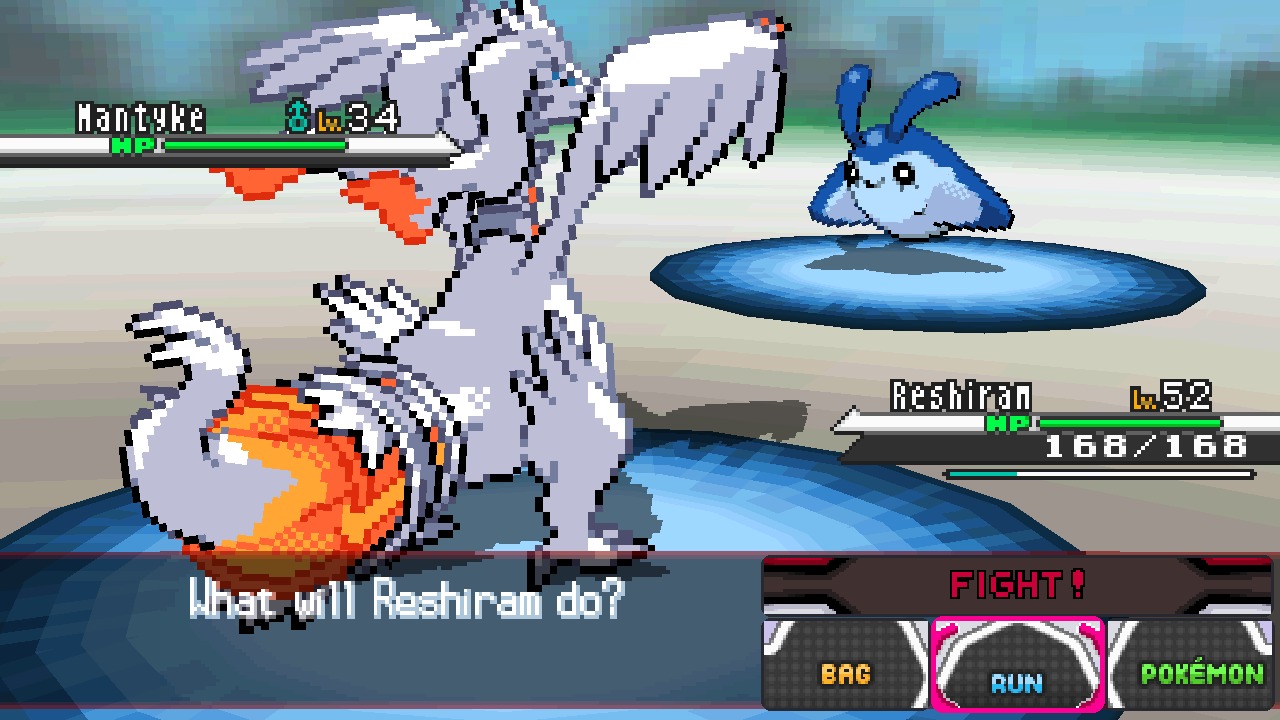
- What you get: battles (single, double, triple, rotation) with the HP boxes
at the edges of the wide view and the battle buttons beside them; menus, the
bag and the save screen laid out for one screen; and more of the map loaded
around you, so the wide view never runs out of land.
Pokémon SoulSilver and HeartGold
- ROMs: the languages in Supported games.
- Saves:
soulsilver.sav and heartgold.sav (the same format, so either
game reads the other's).
- No version exclusives: OTHER VERSION POKEMON in the pause menu (off to
start). Where the two versions have different wild Pokémon (Phanpy or
Teddiursa, Growlithe or Vulpix, Caterpie or Weedle...), each encounter can be
either, as often as each other, at that place's own rates and levels. Both
versions' tables are already in every SoulSilver and HeartGold ROM: nothing is
added. Legendary Pokémon stay with their own version. RetroAchievements are
paused while it is on, as with cheats.
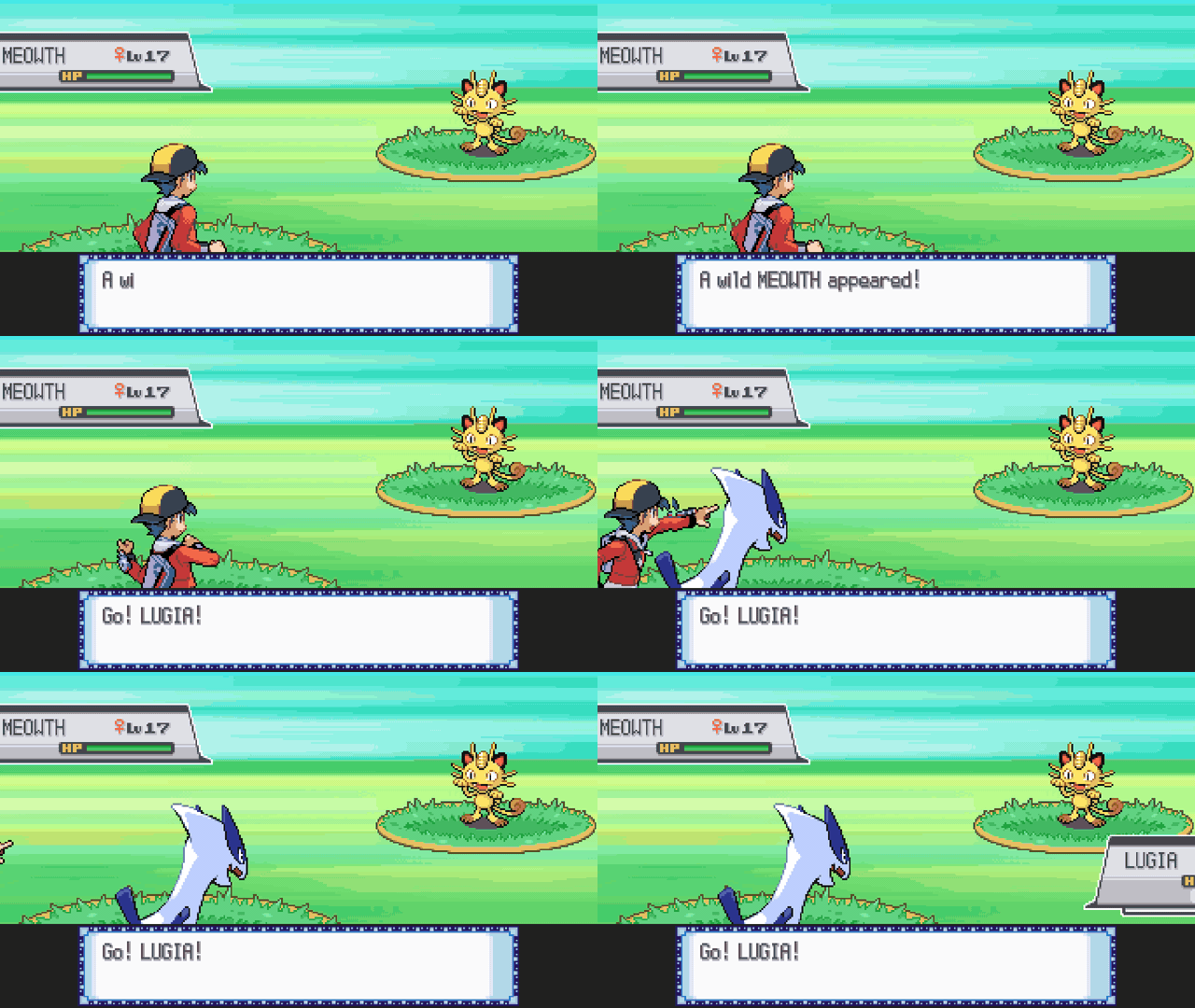
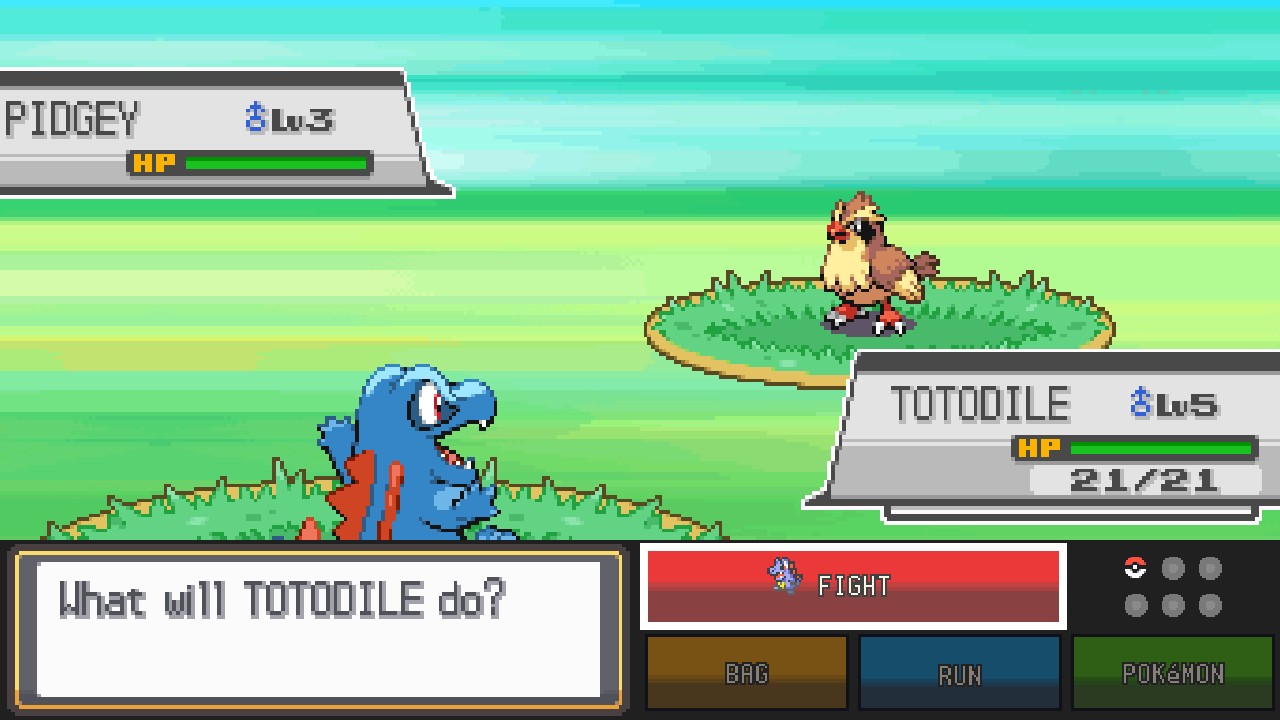
- What you get: Johto and Kanto in widescreen, with your partner Pokémon
walking behind you; battles with their buttons beside the action; menus laid
out for one screen. Where this project started: the original ssrecomp was
SoulSilver on the PC.
Pokémon Black and White
- ROMs: any English copy (US or Europe), trimmed or not; other languages as in Supported games.
- Saves:
black.sav and white.sav (the same format, so either game reads
the other's; tools/bw2/convert_save.py turns .dsv and Action Replay saves
into the raw 512 KB save).
- No version exclusives: OTHER VERSION POKEMON in the pause menu (off to
start), as in Black 2 and White 2: Gothita or Solosis, Cottonee or Petilil,
Vullaby or Rufflet, Murkrow or Misdreavus, and the rest, each encounter as
likely to be either. Legendary Pokémon stay with their own version.
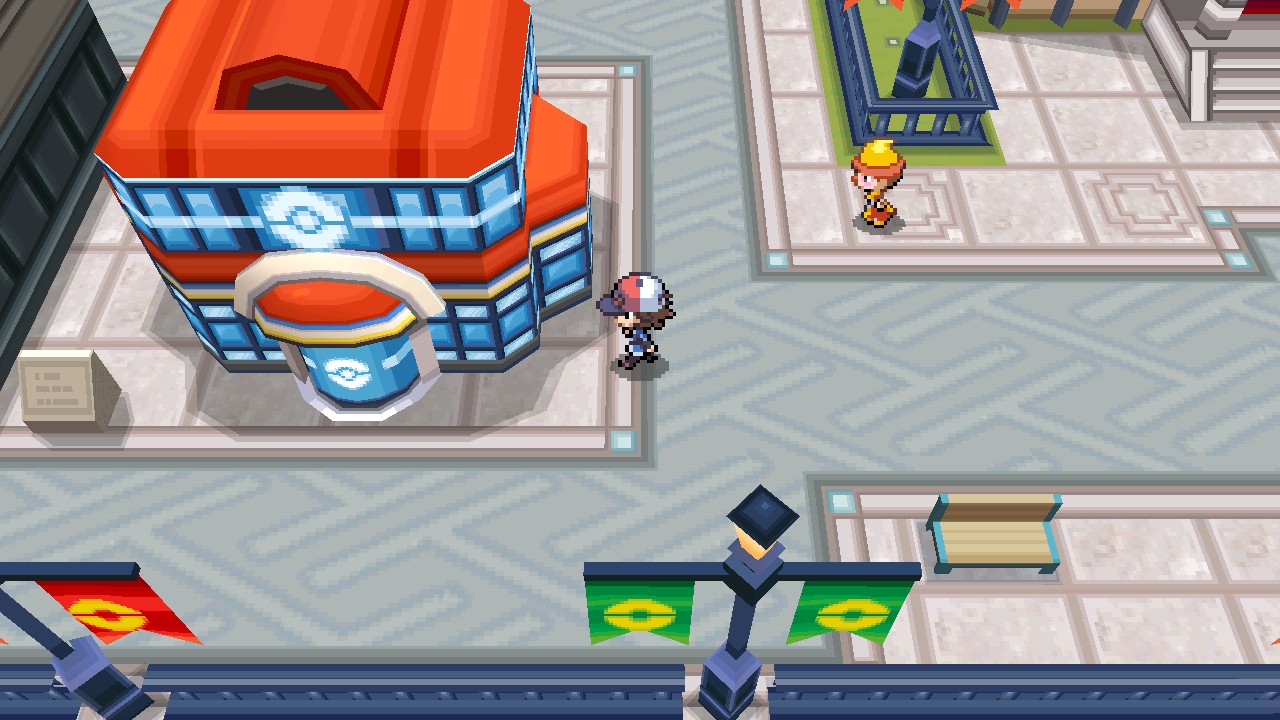
- What you get: Unova's first adventure with the same treatment as Black 2:
battles (single, double, triple, rotation) with the HP boxes at the edges of
the wide view and the battle buttons beside them; its own layouts for the
start menu, the X menu, the save screen, the Badge Case and the Pokédex; and
the C-Gear's question at the start answered for you.
Pokémon Platinum
- ROM: the English version, US or Europe (both game code
CPUE), or the
Spanish (CPUS) or French revision 0 (CPUF) versions, trimmed or not.
- Save:
platinum.sav.
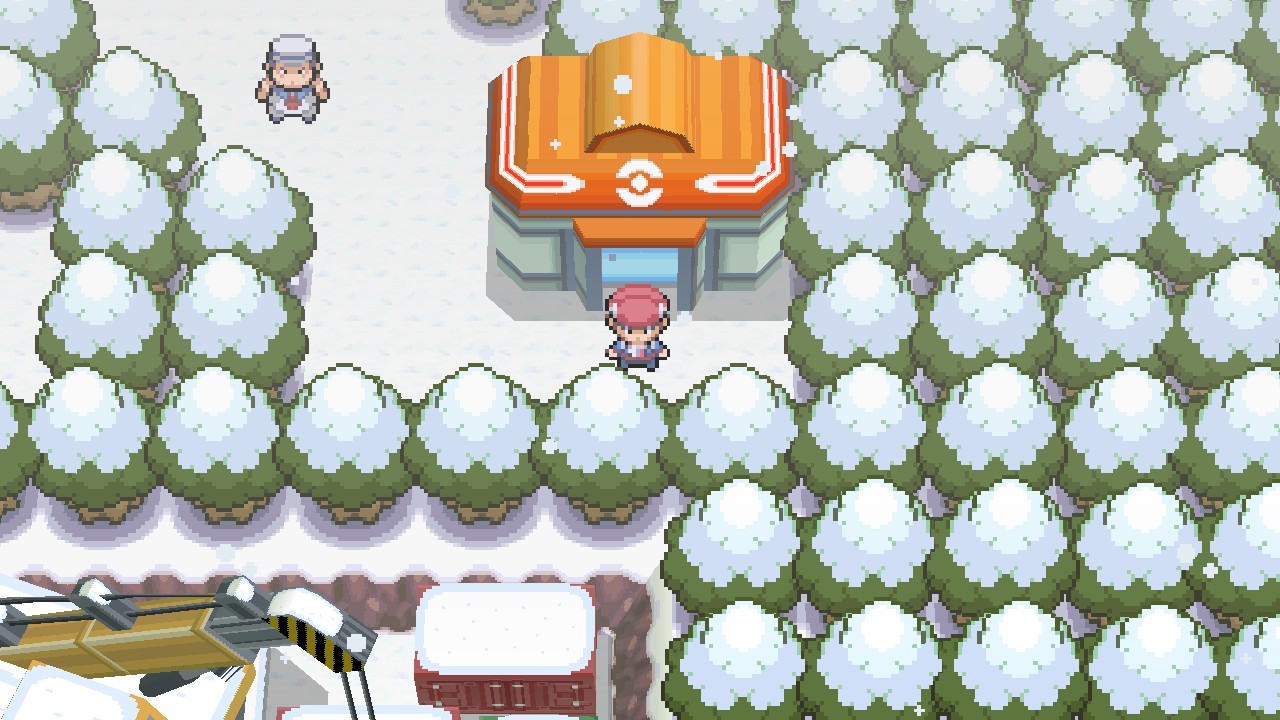
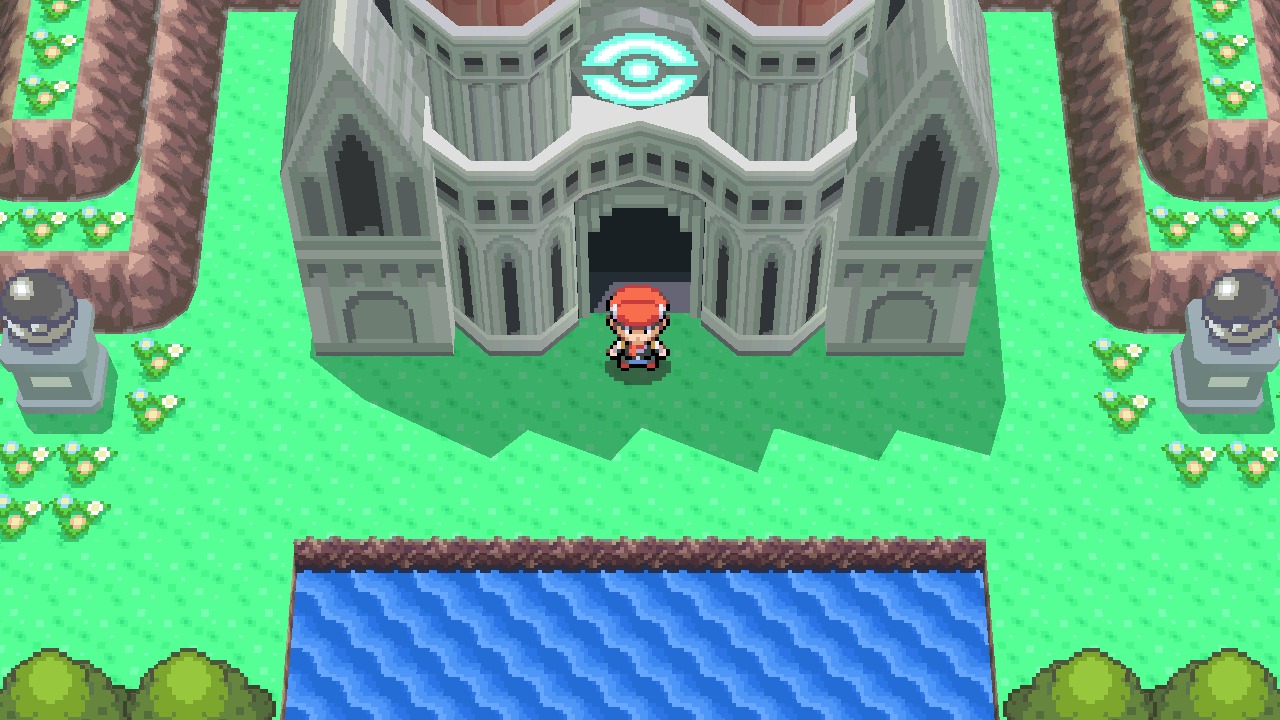
- What you get: Sinnoh in widescreen, the snow and rain reaching the edges
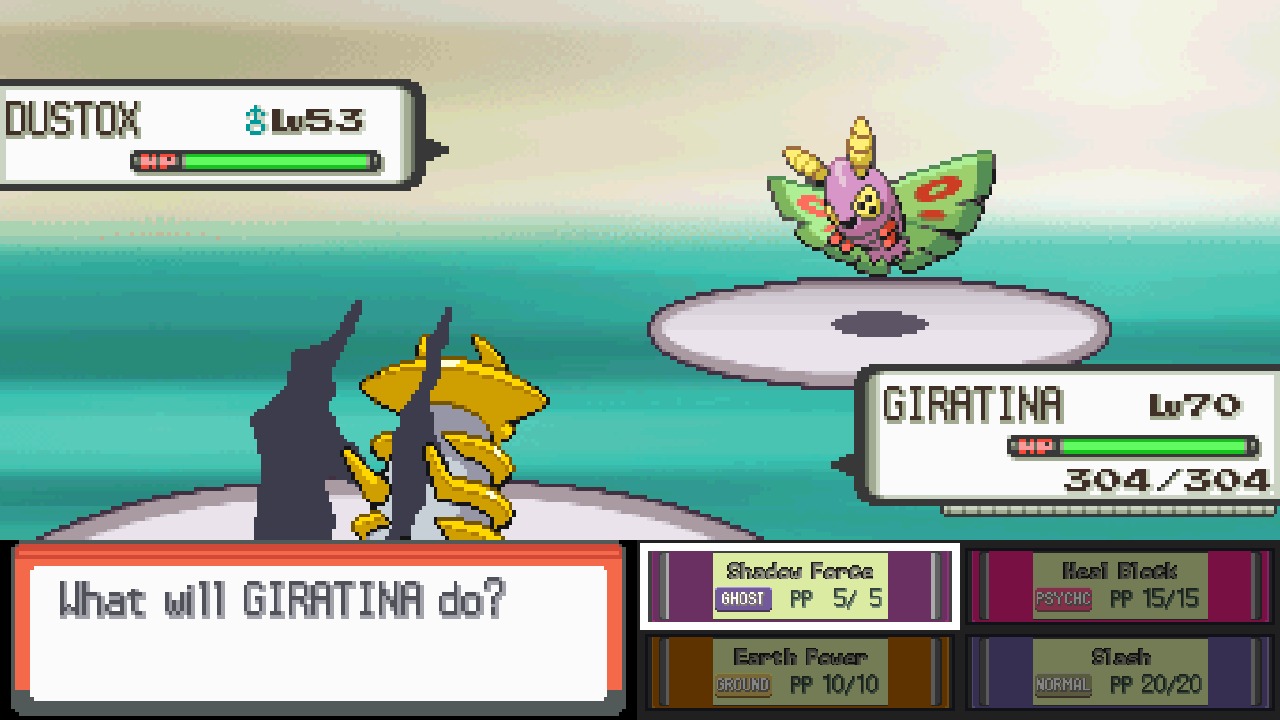
of the view; battles with their buttons and moves beside the action; the X
menu at the right edge of the view, and the Bag, party, Pokédex, map and
other menus laid out for one screen.
Pokémon Diamond and Pearl
- ROM: Diamond (
ADAE) or Pearl (APAE), US or Europe; Diamond also in
Spanish (ADAS), German (ADAD) and Italian (ADAI); Pearl also in French
(APAF), Spanish (APAS), German (APAD) and Korean (APAK). Japanese
Diamond and Pearl are not supported yet.
- Save:
diamond.sav or pearl.sav (other languages have their own, such as
pearl-fr.sav).
- What you get: Platinum's widescreen layouts on Sinnoh's first adventure:
battles with their buttons and moves beside the action, and the Bag, party,
Pokédex, Trainer Card and other menus laid out for one screen. Still
experimental.
The GBA games
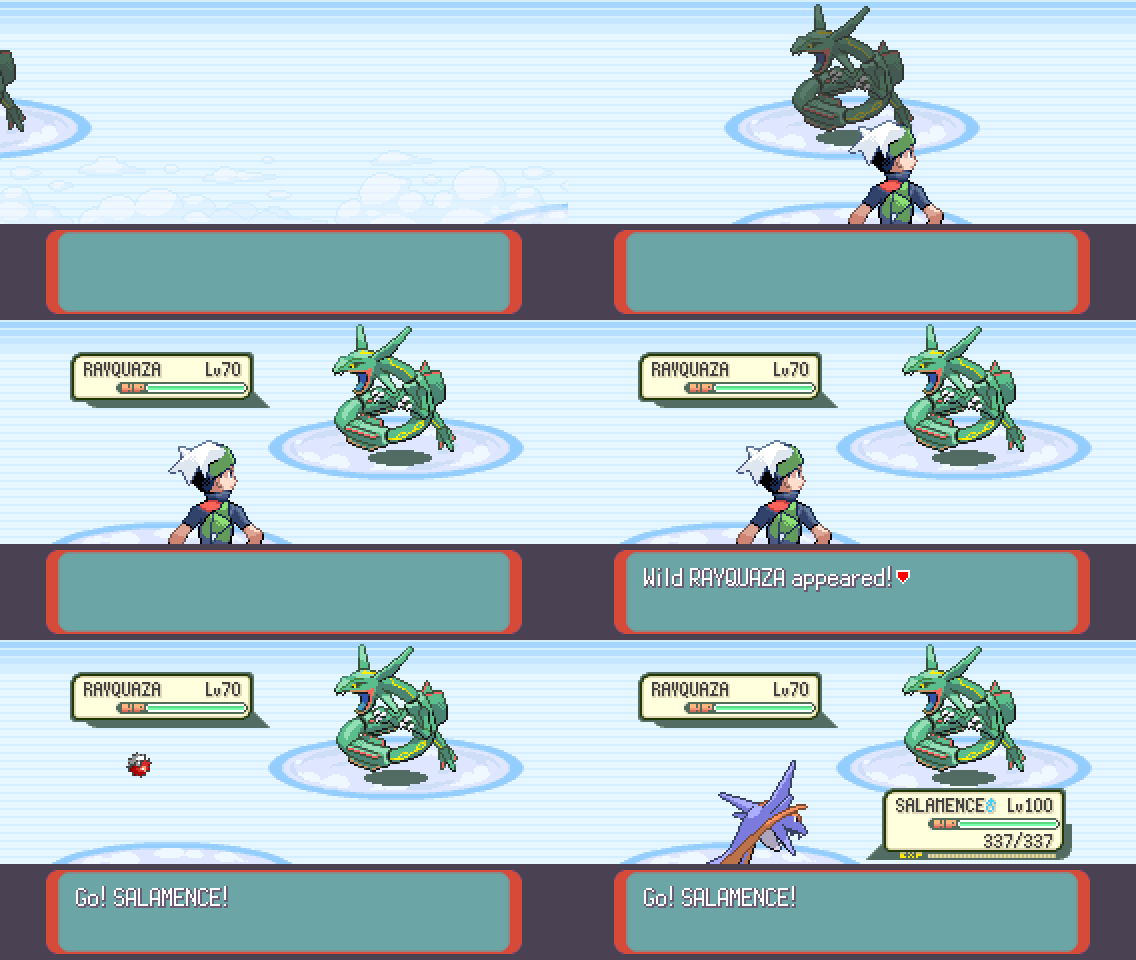
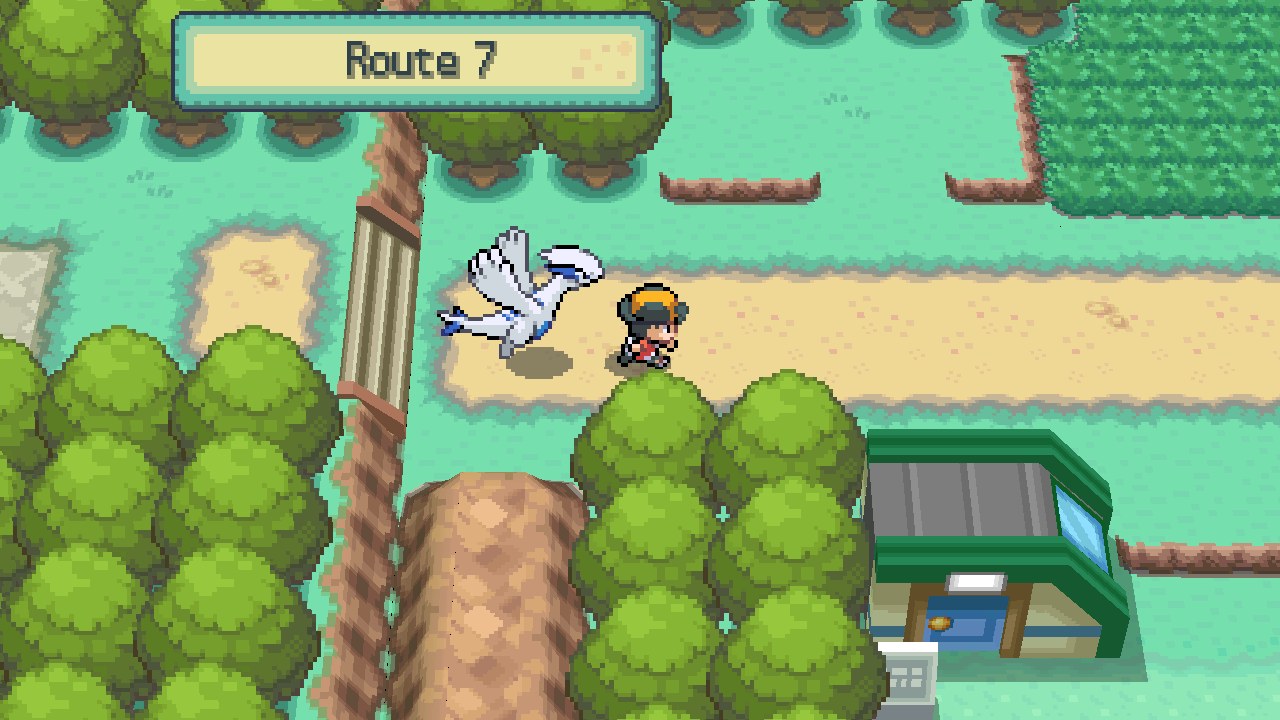
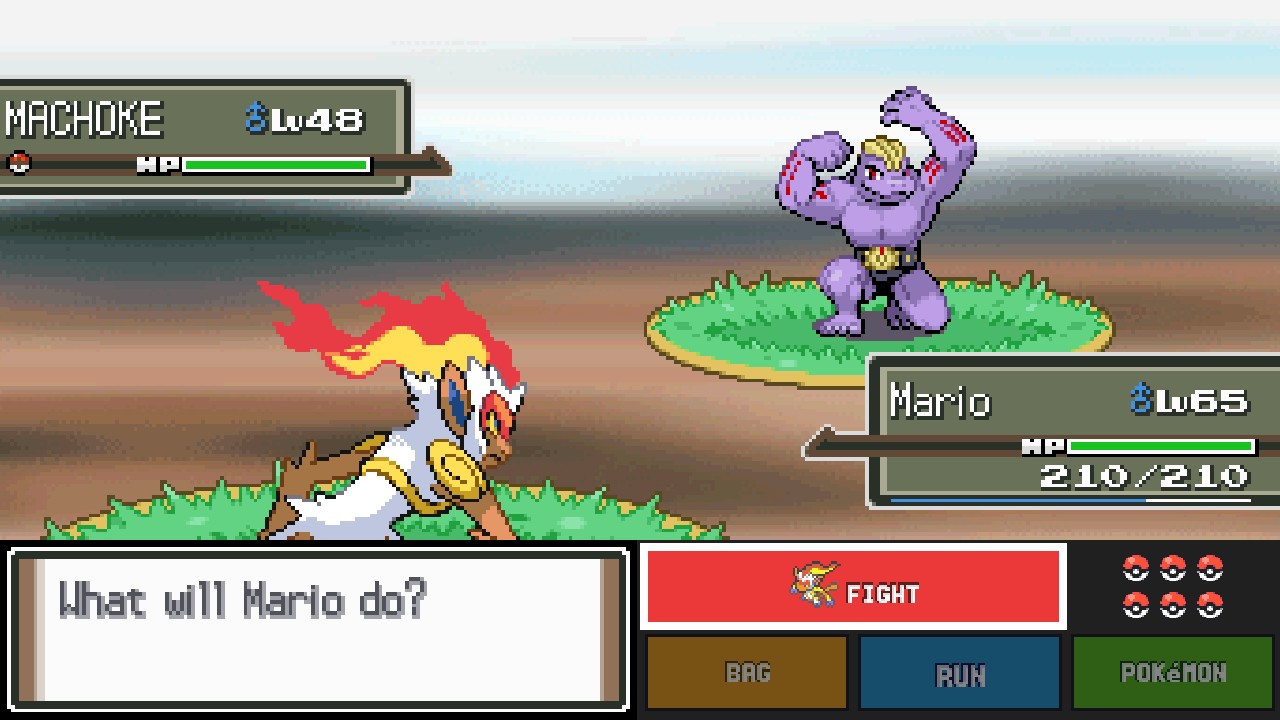
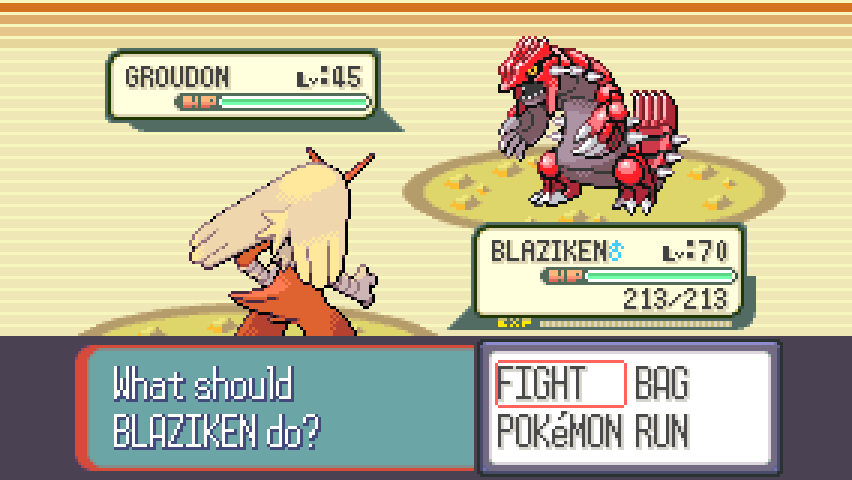
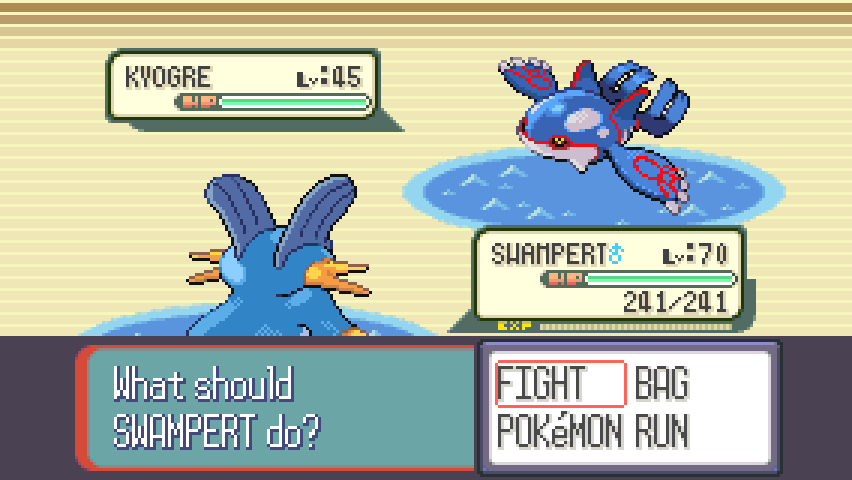
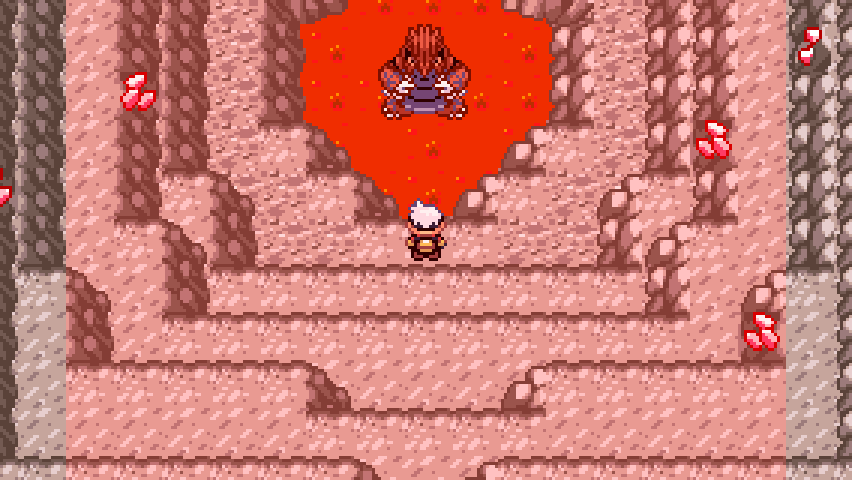
Pokémon Emerald, Ruby, Sapphire, FireRed, LeafGreen and Ultra Violet (a FireRed hack) in widescreen at 60 fps,
from Pokémon GBA Widescreen, built in on Windows, Linux, Mac, Android,
iPhone, iPad and the Switch.
- ROMs: put them in the same
roms folder as the DS games: Emerald, Ruby and Sapphire (1.0, 1.1
or 1.2 in English; German, French, Spanish, Italian and Japanese too), FireRed and LeafGreen
(version 1.0 or 1.1), and Ultra Violet as its .gba or as its .ips patch with a FireRed
1.0 ROM beside it. A GBA folder inside roms works too.
- Saves: with the others (
emerald.sav ...), or in that GBA folder's own saves.
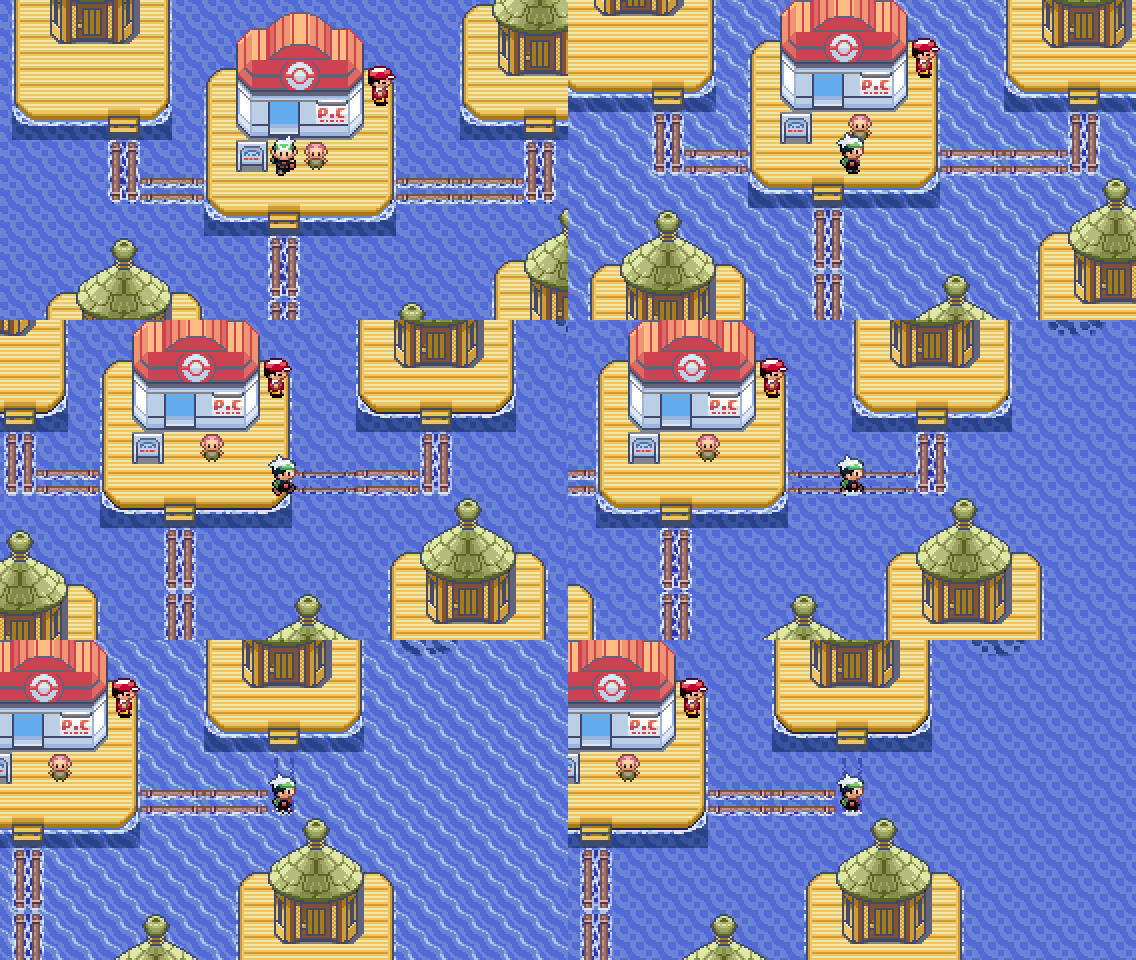
- What you get: the overworld drawn wider, with the people and Pokémon around you kept in
view out to the edges; battles with their backgrounds carried across the whole width; the
weather (rain, sandstorm, fog, snow) reaching both sides. The DS games' settings (SMOOTH
SCALING, FPS COUNTER, VOLUME, BUTTONS) carry over to them.
- Other GBA games play too, without widescreen. QUIT GAME in a GBA game's pause menu comes
back to the game list.
Under the hood
The widescreen world is drawn by a graphics chip: your graphics card with
OpenGL on a PC, the Switch's own with deko3D. On the Switch, Black 2 runs at
(or a whisker under) 60 fps at 720p in towns and battles, measured on a Switch
OLED in handheld mode; a PC has room to spare, and draws the same picture up to
4K. The full list of changes is in CHANGELOG.md.
Known limits
- Beta languages and Diamond and Pearl: see Supported games.
- Platinum: the Pokétch (the watch on the touch screen) isn't shown during
normal play; its apps are one press of the screen-swap button away.
- SoulSilver and HeartGold: at map borders (Route 29 and New Bark Town, Celadon
City and Route 16), parts of the neighbouring map pop in and out at the sides
of the wide view. Loading more of the map, as Black 2 and White 2 do, should
fix it.
- PC: speeds on a range of PCs are estimates so far (see above).
- Mac: tested on one Mac so far (a MacBook Air M1).
- Android: tested on one phone so far (a Pixel 9 Pro XL).
- Found a bug? See Reporting a bug.
What's next
- The 3DS games: Omega Ruby, Alpha Sapphire, X, Y, Ultra Sun and Ultra Moon, in the works.
- Native ports: the dream, hopefully for all of them. Optimistic, but we're
aiming for it.
Reporting a bug
Open a bug report
(you need to be signed in to GitHub). The form asks for the game, your ROM's
version and the game.log file, which says what the program did:
- Find it: on a PC,
game.log is in the folder you unpacked the download
to. On the Switch it is in the game's folder on the SD card:
/switch/pokemon-ds-wide/ for the all-in-one, otherwise the game's own
folder (e.g. /switch/pokemon-black2-wide/). On an iPhone or iPad it is in the
Files app: On My iPhone > Pokémon Fulldex (share it from there). It is
written again each time the game starts, so copy it straight after the problem.
- Switch: get it onto a computer. Put the SD card in a card reader; or,
leaving it in the Switch, use Hekate's Tools > USB Tools > SD Card (or
DBI's MTP mode) to see the card on the computer over USB; or an FTP app such
as ftpd over Wi-Fi.
- Add it to the form: drag the file into the
game.log box.
A screenshot or short video helps too. Please never attach your ROM. A white or A white or black screen when a game starts usually means the ROM isn't one in
Supported games, or has been changed (patches, translations, randomizers
or trimming).
Support
Tips are welcome but never expected:
buy me a coffee or
PayPal.
Credits and licence
A fork of ClickingMaster/ssrecomp
(Pokémon SoulSilver recompiled for single-screen devices), which gave this its
single-screen and widescreen view; its README
covers that project. Function names come from the
pokebw2 and
aletheia decompilations (only their
symbol files), Platinum's from a build of
pret/pokeplatinum; SoulSilver's and HeartGold's
addresses come from ssrecomp's own SoulSilver layout. The DS is emulated by melonDS.
The built-in DS cheats come from DeadSkullzJr's cheat database, as carried in
libretro-database.
The Switch's HOME MENU ICONS are made the way sphaira
makes its forwarders, with its homebrew loader (tools/switch/forwarder, GPL-3.0, based on
nx-hbloader). The GBA games are played by Pokémon GBA Widescreen, built on
mGBA (MPL-2.0: LICENSE-mGBA.txt in the downloads that have the GBA games).
GPL-3.0-or-later (see LICENSE), as required by melonDS. Not affiliated with
or endorsed by Nintendo, Game Freak, The Pokémon Company or the melonDS
project; Pokémon is a trademark of its owners. The box art in the PC game list belongs to
Nintendo, Creatures, GAME FREAK and The Pokémon Company and is shown only to tell the games
apart; it is not part of this repository's code. If you hold the rights and want it removed,
open an issue and it will be taken out.
Built with AI assistance.
Custom touch controls and regional profiles
Android players can move and resize on-screen controls in the paused layout editor.
The launcher and Fulldex menus offer AUTO, English, Spanish, Italian, French, German, Japanese and Korean interface languages. Embedded GBA menus follow the launcher language too. See controls, regional games and build notes.
Companion additions: Based on PokeDaisy by Lidor Itzhari - https://github.com/lidor30/pokedaisy
Open a DS game from an Android frontend
A frontend or file manager can send an Android VIEW intent for an .nds ROM to FullDex. A readable file opens directly. Document-provider links are copied into FullDex storage before launch, so they also work when the provider exposes no ordinary file path; the original file is unchanged. Existing save-folder settings and save checks are retained. While FullDex is already showing its library, a new link starts the selected game. Quit an active game before opening another link. This integration still needs testing with individual frontends and devices.
Android folders without ordinary file access
Granting all-files access lets FullDex use a shared ROM folder directly. If that permission is declined, or a document provider exposes no filesystem path, choosing a folder imports its .nds and .gba files into FullDex storage instead. The app shows when it is importing and how many ROMs were found. Nested folders are supported; choose a smaller folder if a traversal/size limit is reached. Original files remain untouched. These are separate ROM copies: changes made by another emulator are not automatically synchronised, and source saves are not imported automatically. Existing FullDex save locations are retained and must remain accessible. This fallback needs testing on affected GrapheneOS devices.
ROM imports reuse identical files and refuse to overwrite a different ROM with the same filename. Rename the incoming ROM or choose its existing ROM folder instead. An explicitly imported save still gets a safety backup before replacement.
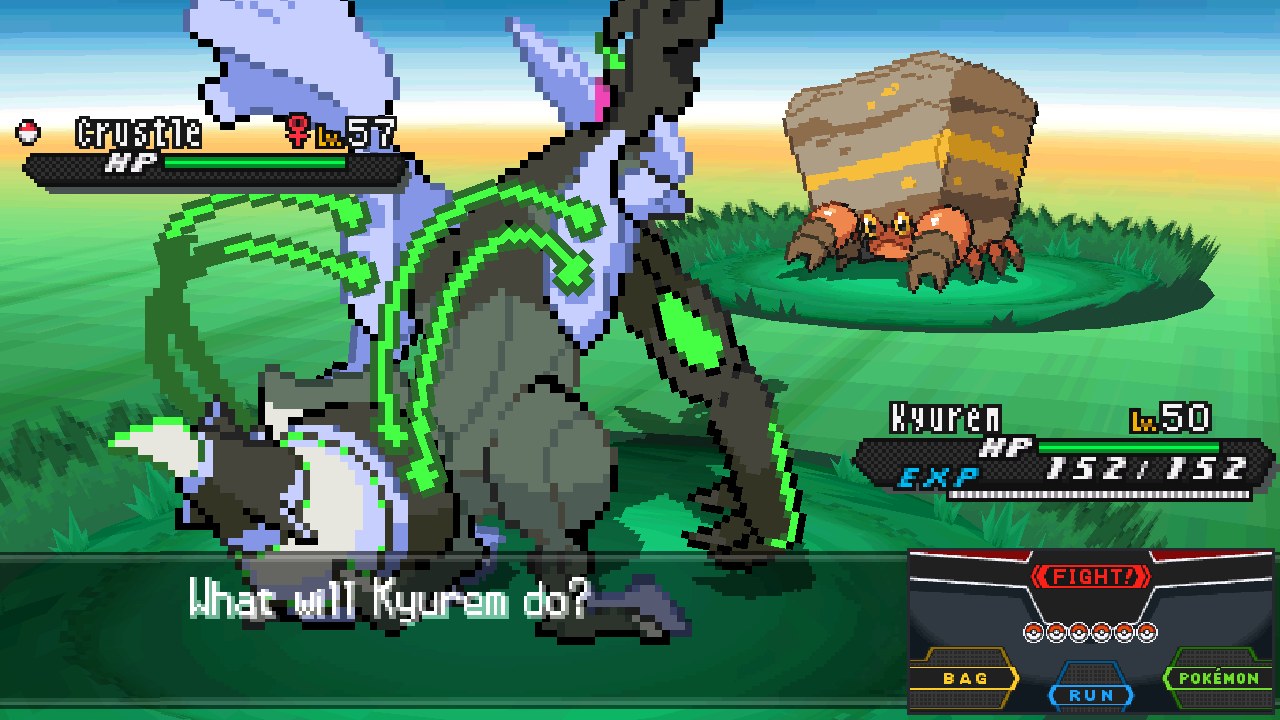
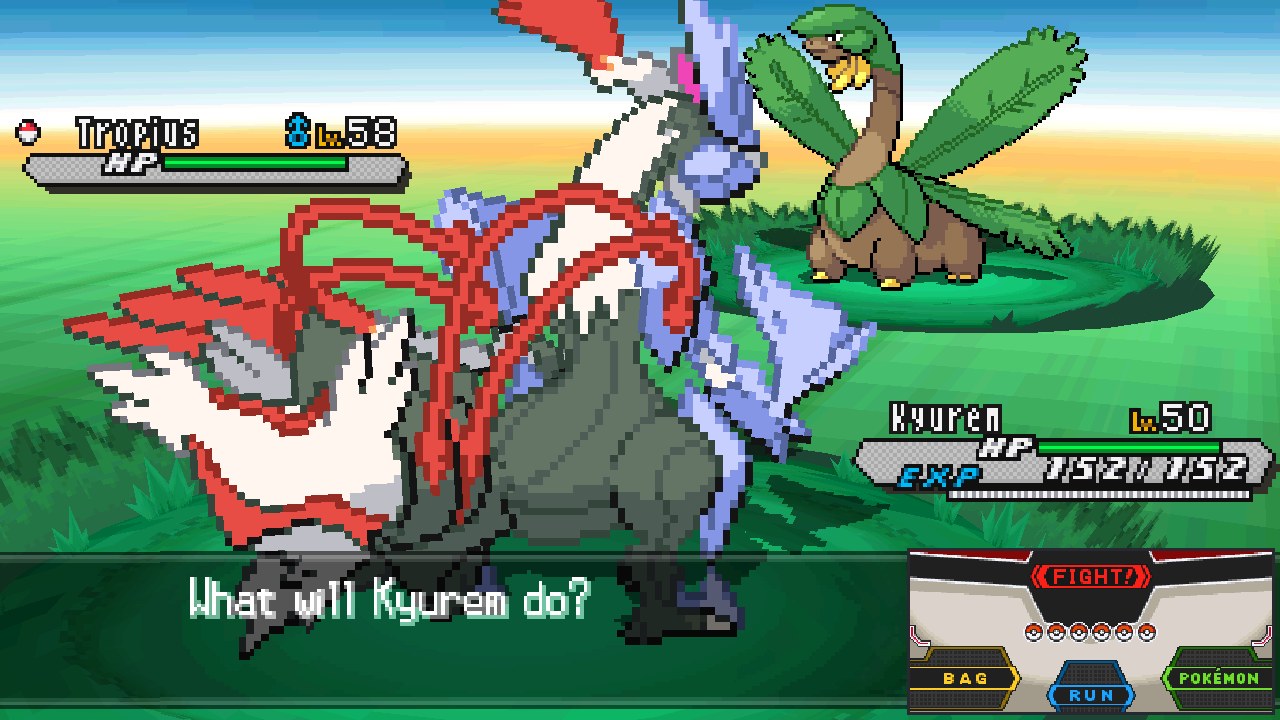
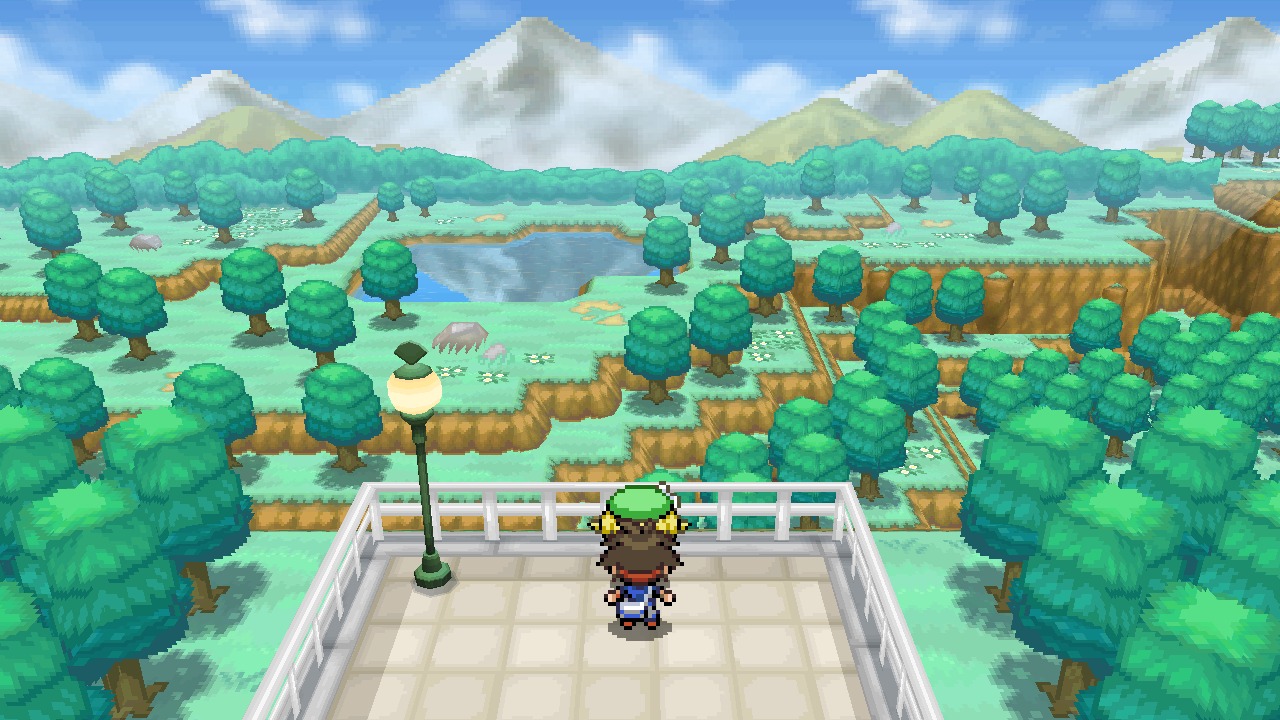
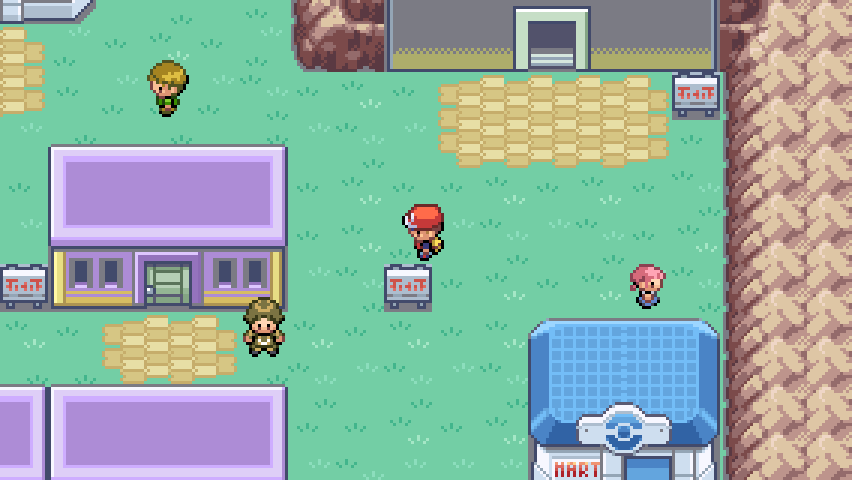

 Pokemon Fulldex 是一个宽屏、60fps 的播放器,可运行全部七款 DS Pokemon 游戏(Black 2、White 2、Black、White、SoulSilver、HeartGold、Platinum)以及四款 GBA 游戏,支持 PC、Mac、Steam Deck、Android、iPhone 和改装过的 Switch。你需要自备 ROM;程序会把两块小小的 DS 屏幕合并成一个大的 16:9 画面。