







Что это такое?
 KiviDB — это быстрая многопоточная альтернатива Redis и Valkey, написанная на Rust. Она поддерживает протокол Redis (RESP2/RESP3), поэтому существующие Redis-клиенты работают без изменений, а полнотекстовый и векторный поиск встроены прямо в неё.
Это полная замена, или нужен особый клиент?Это полная замена: KiviDB реализует сетевой протокол Redis, поэтому redis-cli и любая существующая клиентская библиотека для Redis работают с ней без изменений, только порт по умолчанию другой — 6380 вместо 6379.
Это полная замена: KiviDB реализует сетевой протокол Redis, поэтому redis-cli и любая существующая клиентская библиотека для Redis работают с ней без изменений, только порт по умолчанию другой — 6380 вместо 6379.Как это запустить?Запустите опубликованный Docker-образ, скачайте бинарный файл релиза для Linux (x86_64/aarch64) или macOS (Apple Silicon/Intel) со страницы GitHub Releases либо соберите из исходников с помощью Cargo. По умолчанию сервер слушает порт 6380, так что направьте на него любой Redis-клиент.
Запустите опубликованный Docker-образ, скачайте бинарный файл релиза для Linux (x86_64/aarch64) или macOS (Apple Silicon/Intel) со страницы GitHub Releases либо соберите из исходников с помощью Cargo. По умолчанию сервер слушает порт 6380, так что направьте на него любой Redis-клиент.Какие подводные камни учесть, прежде чем направлять на неё реальный трафик?По умолчанию она принимает только подключения с локального адреса, пока вы не задали пароль или адрес привязки (защищённый режим), поэтому публичный доступ без пароля оставит её открытой для интернета. Кроме того, io_uring часто блокируется стандартным профилем seccomp в Docker, и тогда он молча переключается на Tokio, а команды скриптов Lua выдают ошибку, если не собрать сервер с функцией lua.
По умолчанию она принимает только подключения с локального адреса, пока вы не задали пароль или адрес привязки (защищённый режим), поэтому публичный доступ без пароля оставит её открытой для интернета. Кроме того, io_uring часто блокируется стандартным профилем seccomp в Docker, и тогда он молча переключается на Tokio, а команды скриптов Lua выдают ошибку, если не собрать сервер с функцией lua.В чём подвох с лицензией AGPL?KiviDB распространяется под лицензией AGPL-3.0-only, но в README прямо сказано, что использование KiviDB в качестве клиента не распространяет действие AGPL на ваше собственное приложение.
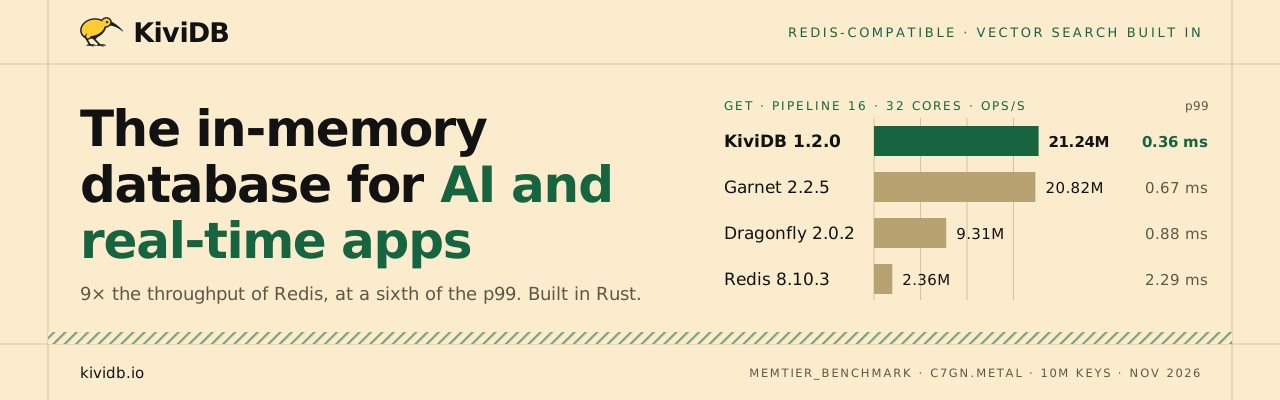
KiviDB распространяется под лицензией AGPL-3.0-only, но в README прямо сказано, что использование KiviDB в качестве клиента не распространяет действие AGPL на ваше собственное приложение.Насколько она быстрее Redis на практике?В собственном бенчмарке проекта за октябрь 2026 года на AWS Graviton3 KiviDB обработала около 21 миллиона GET-запросов в секунду с конвейеризацией против 2,4 млн у Redis 8 и 9,1 млн у Dragonfly, при этом её задержка p99 была меньше половины задержки Dragonfly. В README предупреждается, что это результат одного контролируемого замера, а не гарантия для вашей нагрузки.
В собственном бенчмарке проекта за октябрь 2026 года на AWS Graviton3 KiviDB обработала около 21 миллиона GET-запросов в секунду с конвейеризацией против 2,4 млн у Redis 8 и 9,1 млн у Dragonfly, при этом её задержка p99 была меньше половины задержки Dragonfly. В README предупреждается, что это результат одного контролируемого замера, а не гарантия для вашей нагрузки.Можно ли запускать векторный и полнотекстовый поиск, как в Redis Stack?Да, KiviDB реализует команды FT.* в стиле Redis Stack (FT.CREATE, FT.SEARCH, FT.HYBRID) для полнотекстового поиска BM25, фильтров по тегам и числам, а также приближённого векторного поиска (ANN) с индексами FLAT или HNSW по полям хэшей, так что существующие руководства и бинарные векторные данные в основном работают без изменений.
Да, KiviDB реализует команды FT.* в стиле Redis Stack (FT.CREATE, FT.SEARCH, FT.HYBRID) для полнотекстового поиска BM25, фильтров по тегам и числам, а также приближённого векторного поиска (ANN) с индексами FLAT или HNSW по полям хэшей, так что существующие руководства и бинарные векторные данные в основном работают без изменений.Что происходит с моими данными при перезапуске?KiviDB сохраняет данные в собственные снимки (dump.kdb), которые включают каждый векторный граф HNSW, а также необязательный журнал только для добавления (AOF), который воспроизводится при запуске. Поэтому при использовании --aof авария потеряет не более примерно одной секунды записей.
KiviDB сохраняет данные в собственные снимки (dump.kdb), которые включают каждый векторный граф HNSW, а также необязательный журнал только для добавления (AOF), который воспроизводится при запуске. Поэтому при использовании --aof авария потеряет не более примерно одной секунды записей.Почему сервер слушает порт 6380, а не 6379, как у Redis?Чтобы экземпляр KiviDB мог работать рядом с настоящим экземпляром Redis или Valkey на той же машине без конфликта портов; если хотите изменить порт, передайте --port 6379.
Чтобы экземпляр KiviDB мог работать рядом с настоящим экземпляром Redis или Valkey на той же машине без конфликта портов; если хотите изменить порт, передайте --port 6379.В каких он темах?valkey, key-value-store, in-memory, cache, full-text-search, nosql, vector-search, concurrency, caching, async, arm64, vector-database
valkey, key-value-store, in-memory, cache, full-text-search, nosql, vector-search, concurrency, caching, async, arm64, vector-database- Автор
- kividbio
- Размер
- 108.9 MB
- Звёзды
- 1.2K
- Обновлён
- КоммитNov 18Релизv1.2.2Nov 12
- Возраст
- 1 мес
- Коммиты · 90 дней