
What is this?
 MartyPC is a cycle-accurate emulator of early IBM PCs and compatibles, written in Rust. It recreates the original IBM PC, XT, PCjr and Tandy 1000 down to individual CPU cycles.
MartyPC is a cycle-accurate emulator of early IBM PCs and compatibles, written in Rust. It recreates the original IBM PC, XT, PCjr and Tandy 1000 down to individual CPU cycles.Which machines can it emulate?Five systems: the IBM Model 5150 (PC), the Model 5160 (XT), generic Turbo XT clones, the IBM PCjr and the Tandy 1000 — with device-level emulation of their CPUs, video, sound and storage chips.
Five systems: the IBM Model 5150 (PC), the Model 5160 (XT), generic Turbo XT clones, the IBM PCjr and the Tandy 1000 — with device-level emulation of their CPUs, video, sound and storage chips.How do I get it running?Download a build from the periodic GitHub releases (newer automatic builds sit under the Actions tab as artifacts) or try it right in your web browser. On non-Windows systems, or for the bleeding edge, you build from source using the wiki guide.
Download a build from the periodic GitHub releases (newer automatic builds sit under the Actions tab as artifacts) or try it right in your web browser. On non-Windows systems, or for the bleeding edge, you build from source using the wiki guide.Will it run on an average computer, or does emulation eat CPU?Usually not, but emulating the Adlib music card's OPL2 chip is CPU heavy, so you'll want a fast computer if you enable that sound card.
Usually not, but emulating the Adlib music card's OPL2 chip is CPU heavy, so you'll want a fast computer if you enable that sound card.Is it easy to set up, or will I be wrestling with config files?Expect to edit configuration files: the author admits it is not as user-friendly to set up as other emulators, though base machine profiles plus optional 'overlay' extensions (think expansion cards) keep it manageable.
Expect to edit configuration files: the author admits it is not as user-friendly to set up as other emulators, though base machine profiles plus optional 'overlay' extensions (think expansion cards) keep it manageable.Is it meant for playing old DOS games, or is it more of a developer tool?Both work, but its intended niche is an aide for retro PC development — it is packed with debugging and logging tools, and programmers writing 8088 software can measure exact cycle-by-cycle execution of their code.
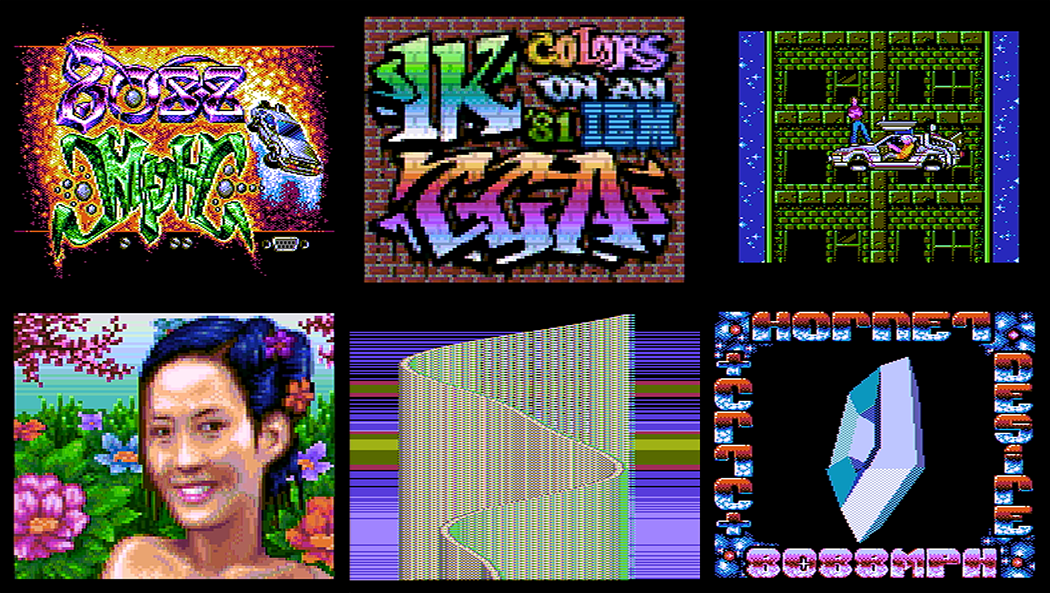
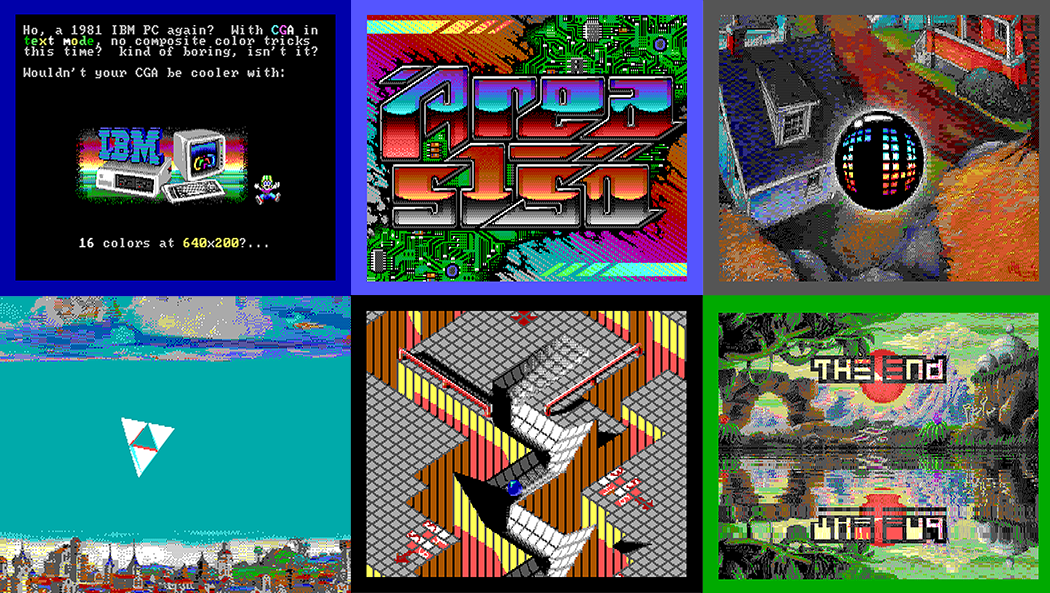
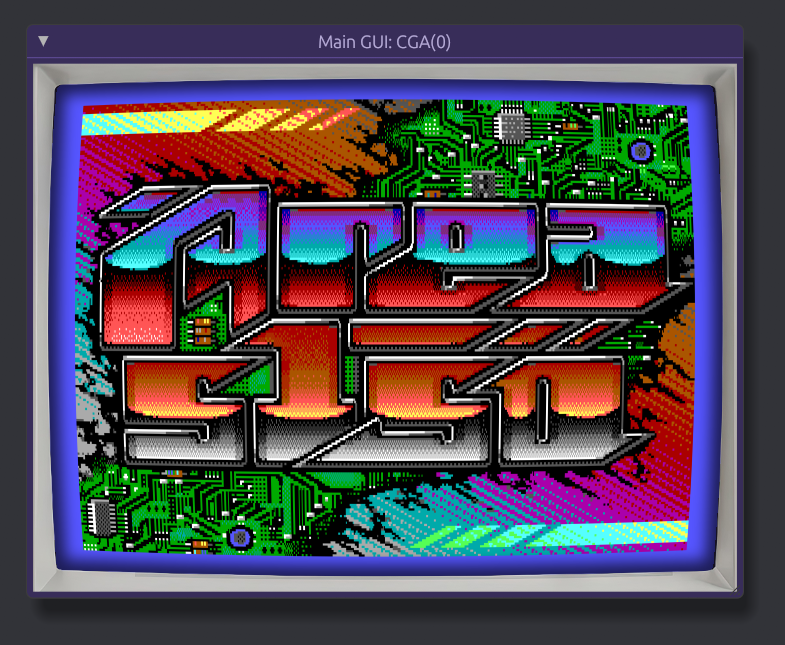
Both work, but its intended niche is an aide for retro PC development — it is packed with debugging and logging tools, and programmers writing 8088 software can measure exact cycle-by-cycle execution of their code.What does cycle-accurate actually mean in practice?The 8088 CPU emulation was validated against a real 8088 wired to an Arduino, comparing results cycle-by-cycle. MartyPC passes the 8088 V2 test suite at 99.9997% cycle-accuracy and can run demanding demos like 8088 MPH and Area 5150 — in May 2023 it became the first PC emulator to render every effect in the latter.
The 8088 CPU emulation was validated against a real 8088 wired to an Arduino, comparing results cycle-by-cycle. MartyPC passes the 8088 V2 test suite at 99.9997% cycle-accuracy and can run demanding demos like 8088 MPH and Area 5150 — in May 2023 it became the first PC emulator to render every effect in the latter.Can it actually boot DOS and run old software?Yes — the floppy controller is robust enough to boot DOS and Minix, and via the fluxfox disk image library it handles many formats, including some copy-protected titles. Hard disks work through the IBM/Xebec 20MB controller (VHD) or XT-IDE, and PCjr cartridge ROMs load from .JRC files.
Yes — the floppy controller is robust enough to boot DOS and Minix, and via the fluxfox disk image library it handles many formats, including some copy-protected titles. Hard disks work through the IBM/Xebec 20MB controller (VHD) or XT-IDE, and PCjr cartridge ROMs load from .JRC files.Which video and sound cards does it emulate?Video: CGA (with composite output and monitor simulation), MDA, Hercules, EGA with redefinable fonts and smooth scrolling, PCjr/Tandy TGA, and VGA where Mode 13h and Mode X already work. Sound: PC speaker, Adlib OPL2, the Tandy/PCjr SN76489 and the Disney Sound Source. Dual video cards are supported, even as two viewports in one window.
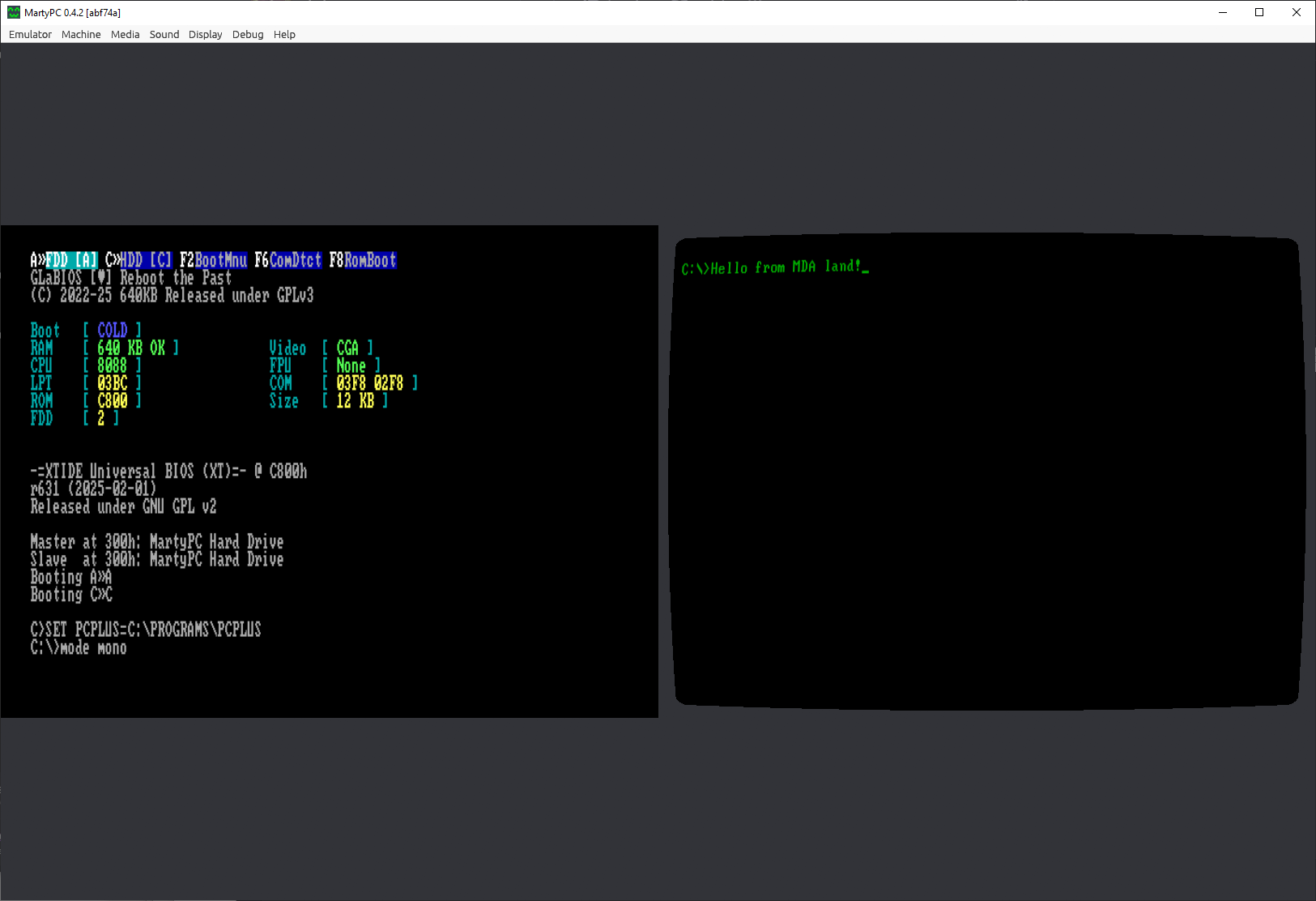
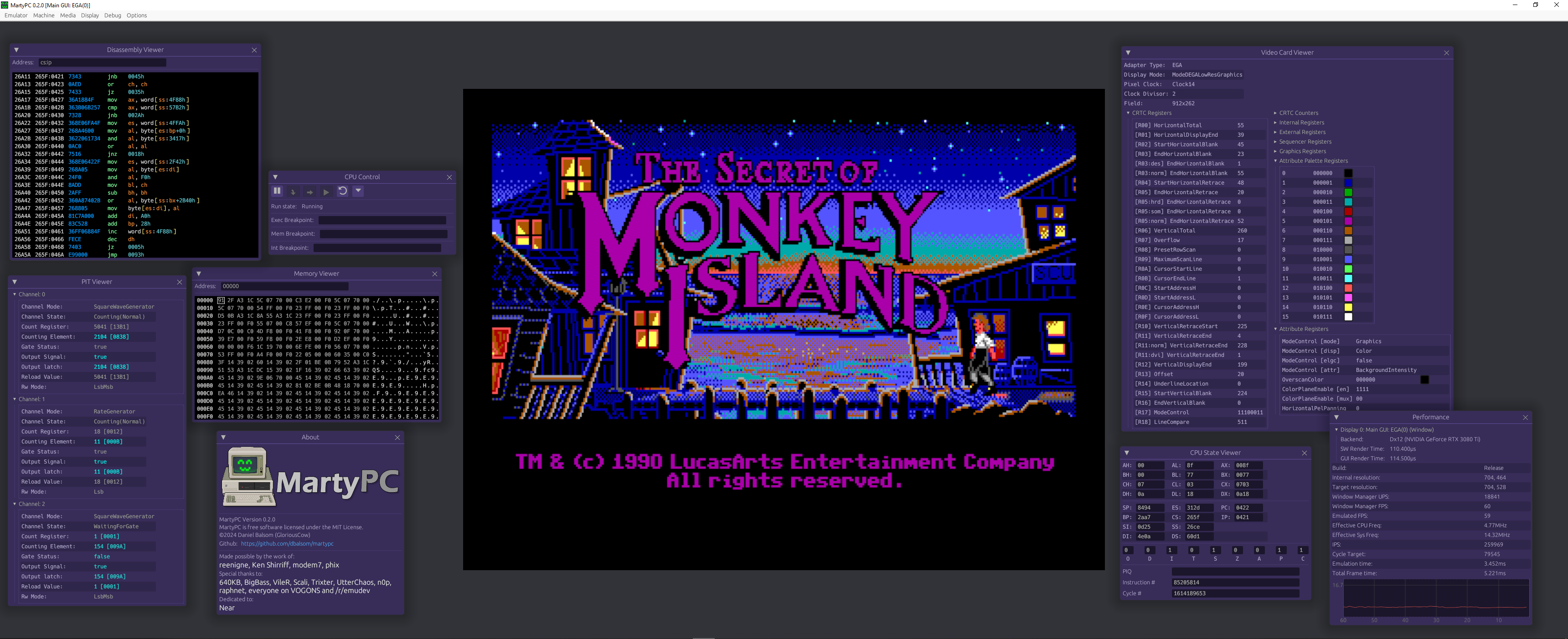
Video: CGA (with composite output and monitor simulation), MDA, Hercules, EGA with redefinable fonts and smooth scrolling, PCjr/Tandy TGA, and VGA where Mode 13h and Mode X already work. Sound: PC speaker, Adlib OPL2, the Tandy/PCjr SN76489 and the Disney Sound Source. Dual video cards are supported, even as two viewports in one window.What debugging tools are built in?A debugging GUI with instruction disassembly, CPU state, memory viewer and peripheral state displays, plus code and memory breakpoints and instruction- and cycle-based logging — enough to watch 8088 code execute one cycle at a time.
A debugging GUI with instruction disassembly, CPU state, memory viewer and peripheral state displays, plus code and memory breakpoints and instruction- and cycle-based logging — enough to watch 8088 code execute one cycle at a time.