








Что это такое?
 Dagster — это cloud-native оркестратор дата-пайплайнов, который охватывает весь цикл разработки: он собирает, запускает и наблюдает за данными-ассетами вроде таблиц, датасетов, ML-моделей и отчётов, со встроенными lineage и observability.
Dagster — это cloud-native оркестратор дата-пайплайнов, который охватывает весь цикл разработки: он собирает, запускает и наблюдает за данными-ассетами вроде таблиц, датасетов, ML-моделей и отчётов, со встроенными lineage и observability.Это код-фреймворк или сервис, который я запускаю?И то и другое: вы объявляете данные-ассеты как обычные Python-функции, Dagster запускает их в нужный момент, поддерживает в актуальном состоянии и показывает граф ассетов в веб-интерфейсе.
И то и другое: вы объявляете данные-ассеты как обычные Python-функции, Dagster запускает их в нужный момент, поддерживает в актуальном состоянии и показывает граф ассетов в веб-интерфейсе.Как его запустить?Установите его с PyPI командой pip install dagster; официально поддерживаются Python 3.9–3.14, а в документации есть быстрый старт (quickstart) и практический туториал.
Установите его с PyPI командой pip install dagster; официально поддерживаются Python 3.9–3.14, а в документации есть быстрый старт (quickstart) и практический туториал.Он подойдёт к дата-инструментам, которыми я уже пользуюсь?Да — Dagster поставляется с растущей библиотекой интеграций для популярных дата-инструментов, а разворачивать его можно на собственной инфраструктуре.
Да — Dagster поставляется с растущей библиотекой интеграций для популярных дата-инструментов, а разворачивать его можно на собственной инфраструктуре.Он готов для продакшена или больше для локальных экспериментов?Он создан для всего жизненного цикла — локальная разработка, юнит-тесты, интеграционные тесты, стейджинг-окружения и вплоть до продакшена.
Он создан для всего жизненного цикла — локальная разработка, юнит-тесты, интеграционные тесты, стейджинг-окружения и вплоть до продакшена.Для какой работы с данными он предназначен?Для разработки и поддержки данных-ассетов — таблиц, датасетов, моделей машинного обучения и отчётов, то есть для дата-инжиниринга, аналитики и MLOps.
Для разработки и поддержки данных-ассетов — таблиц, датасетов, моделей машинного обучения и отчётов, то есть для дата-инжиниринга, аналитики и MLOps.За него нужно платить?Нет — Dagster — проект с открытым исходным кодом под лицензией Apache 2.0.
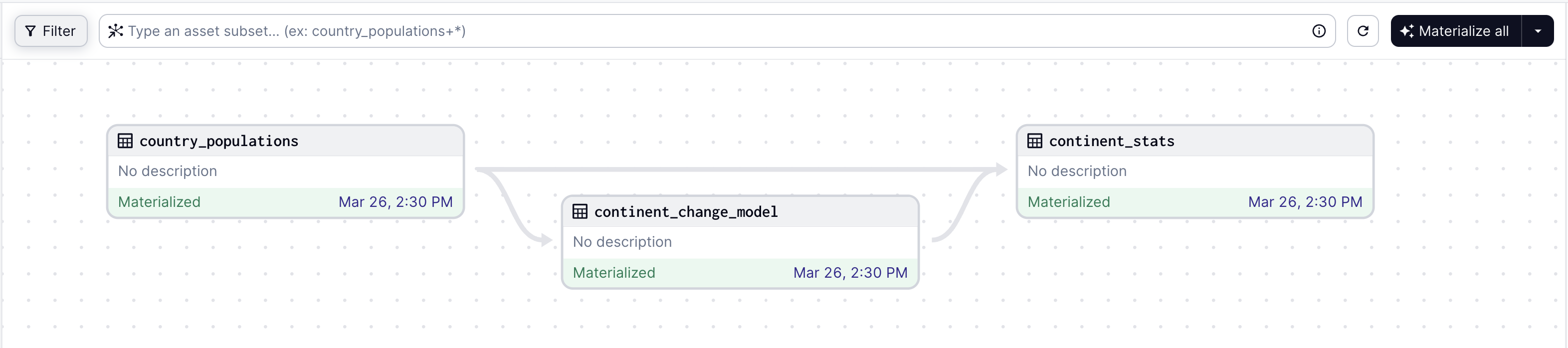
Нет — Dagster — проект с открытым исходным кодом под лицензией Apache 2.0.Как выглядит код?Вы описываете данные-ассеты как обычные Python-функции; в README показан граф из трёх ассетов, определённых на Python, и этот же граф загружается прямо в веб-интерфейс Dagster для визуализации.
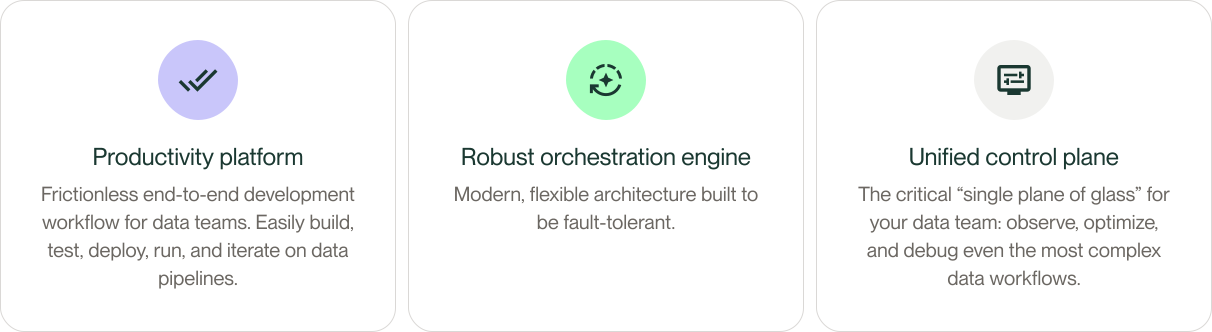
Вы описываете данные-ассеты как обычные Python-функции; в README показан граф из трёх ассетов, определённых на Python, и этот же граф загружается прямо в веб-интерфейс Dagster для визуализации.Как следить за состоянием пайплайнов?Dagster работает как единый control plane: метаданные собраны в одном инструменте со встроенными observability, диагностикой, каталогизацией и lineage, так что по мере роста сложности вы можете находить проблемы и возможности для оптимизации производительности.
Dagster работает как единый control plane: метаданные собраны в одном инструменте со встроенными observability, диагностикой, каталогизацией и lineage, так что по мере роста сложности вы можете находить проблемы и возможности для оптимизации производительности.Он масштабируется дальше личных скриптов одного человека?Да — движок оркестрации мультиарендный и работает с разными инструментами, он рассчитан на рост как технический, так и организационный, с переиспользуемыми компонентами и практиками CI/CD, которые поощряются с самого начала.
Да — движок оркестрации мультиарендный и работает с разными инструментами, он рассчитан на рост как технический, так и организационный, с переиспользуемыми компонентами и практиками CI/CD, которые поощряются с самого начала.С чего начать новичку?В README указаны документация и практический туториал; гайд по быстрому старту (quickstart) — самый быстрый путь к первому запущенному пайплайну.
В README указаны документация и практический туториал; гайд по быстрому старту (quickstart) — самый быстрый путь к первому запущенному пайплайну.What are similar projects?airflow, kestra, taipy, prefect, dolphinscheduler, full-stack-data-engineering, kedro, OpenMetadata
airflow, kestra, taipy, prefect, dolphinscheduler, full-stack-data-engineering, kedro, OpenMetadataWhich topics is it in?data-integration, data-pipelines, etl, metadata, mlops, scheduler, data-engineering, cloud-native, analytics, workflow, workflow-automation, orchestration
data-integration, data-pipelines, etl, metadata, mlops, scheduler, data-engineering, cloud-native, analytics, workflow, workflow-automation, orchestration