What is this?
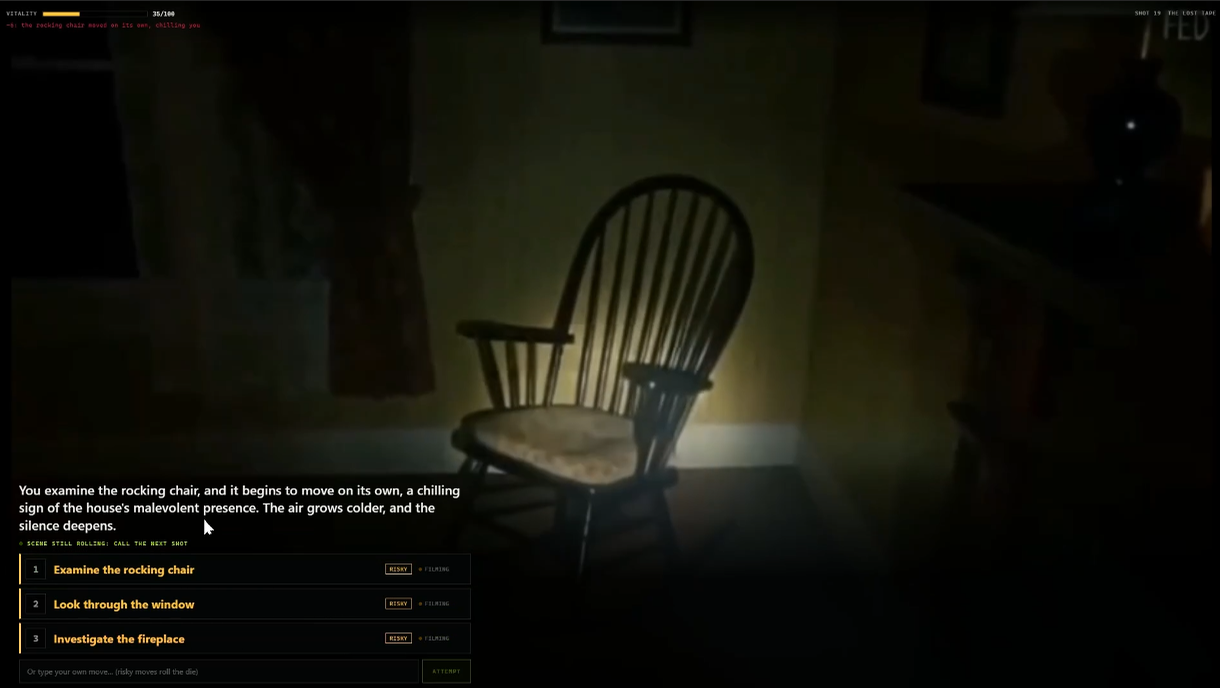
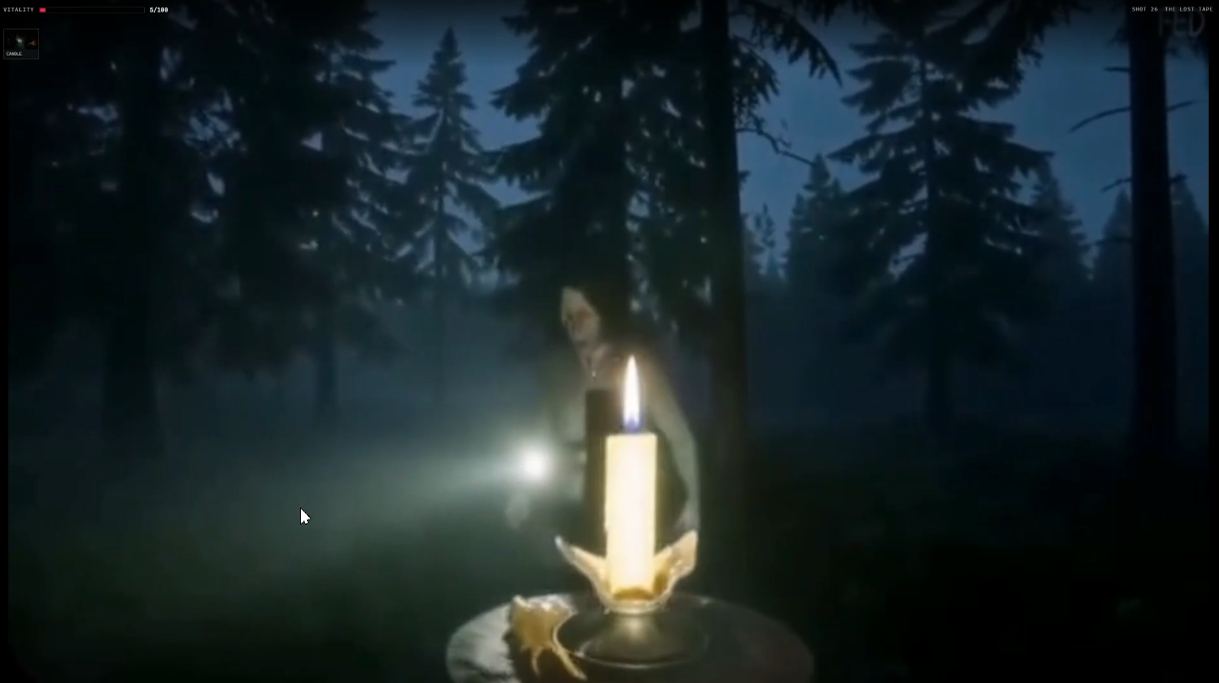
 It's LAST FRAME: a game that plays like a film generated in realtime. A video model renders every shot as you watch, and the model is the dice — if the frame shows your hero dangling from the ledge instead of making the leap, that's what happened.
It's LAST FRAME: a game that plays like a film generated in realtime. A video model renders every shot as you watch, and the model is the dice — if the frame shows your hero dangling from the ledge instead of making the leap, that's what happened.Is this a website I open in a browser, or something I download and install?Nothing to install: it's a browser web app built with Next.js and React. All video generation runs server-side through fal, and your FALKEY never reaches the client.
Nothing to install: it's a browser web app built with Next.js and React. All video generation runs server-side through fal, and your FALKEY never reaches the client.How do I start playing?Get a fal.ai API key at fal.ai/dashboard/keys, open the app and pick a world. To run it yourself it's a standard Next.js app: npm run dev for development, npm run build and npm start for production.
Get a fal.ai API key at fal.ai/dashboard/keys, open the app and pick a world. To run it yourself it's a standard Next.js app: npm run dev for development, npm run build and npm start for production.Do I need my own AI service account for this to work?One fal.ai key covers everything: MiniMax H3 Max films the shots faster than realtime, and the Adjudicator referee is Gemini Flash Lite called through fal's vision router. Live worlds use the alpha line of @fal-ai/client.
One fal.ai key covers everything: MiniMax H3 Max films the shots faster than realtime, and the Adjudicator referee is Gemini Flash Lite called through fal's vision router. Live worlds use the alpha line of @fal-ai/client.What's the catch — how much does playing cost?It runs on your fal credits. A shot-engine run films about 3 branch clips per choice at 480P/10s each; live horror bills per second of stream with a 60-second minimum, so budget a couple of dollars per two-minute tape — and dying is the cheapest way to stop.
It runs on your fal credits. A shot-engine run films about 3 branch clips per choice at 480P/10s each; live horror bills per second of stream with a 60-second minimum, so budget a couple of dollars per two-minute tape — and dying is the cheapest way to stop.How does a round actually play out?Each beat plays a clip with three choices overlaid: press 1, 2 or 3, click, or type your own action. All three branches film in parallel behind the clip, so a pick rolls with no gap. Risky typed moves roll a visible d20; dither until the clip ends and the world takes its own shot, never in your favor.
Each beat plays a clip with three choices overlaid: press 1, 2 or 3, click, or type your own action. All three branches film in parallel behind the clip, so a pick rolls with no gap. Risky typed moves roll a visible d20; dither until the clip ends and the world takes its own shot, never in your favor.What's the difference between the shot worlds and the live horror ones?Shot worlds (EVERYDOOR, THE LOST TAPE) chain discrete 10-second clips with three branches pre-filmed per beat, plus quest goals the Adjudicator must see accomplished. Live horror is one continuous Director stream over WebRTC — no clips, no cuts — across five worlds: THE LOST TAPE: LIVE, BLACKOUT, MIRRORS, MILE MARKER and FOGBOUND.
Shot worlds (EVERYDOOR, THE LOST TAPE) chain discrete 10-second clips with three branches pre-filmed per beat, plus quest goals the Adjudicator must see accomplished. Live horror is one continuous Director stream over WebRTC — no clips, no cuts — across five worlds: THE LOST TAPE: LIVE, BLACKOUT, MIRRORS, MILE MARKER and FOGBOUND.Can I actually die, and what decides it?You have 100 vitality and one life. The Adjudicator, a vision LLM, watches every shot's frames and charges HP for what it sees, with an evidence still attached to each change. Death earns a final generated cinematic and a shot-by-shot timeline of your run; open worlds have no goal, just see how far you get.
You have 100 vitality and one life. The Adjudicator, a vision LLM, watches every shot's frames and charges HP for what it sees, with an evidence still attached to each change. Death earns a final generated cinematic and a shot-by-shot timeline of your run; open worlds have no goal, just see how far you get.Do items my hero picks up actually do anything?Yes. Anything your hero visibly grabs becomes an inventory card with the frame it came from, and an item is a stored prompt fragment: arm it and it's written into your next shot, guaranteed.
Yes. Anything your hero visibly grabs becomes an inventory card with the frame it came from, and an item is a stored prompt fragment: arm it and it's written into your next shot, guaranteed.What are similar projects?unreel, OpenReels, storycast, printfilm, huobao-drama, infinite-livestream, FreeVideo, ComfyUI-ALLinONE-MinimaxH3
unreel, OpenReels, storycast, printfilm, huobao-drama, infinite-livestream, FreeVideo, ComfyUI-ALLinONE-MinimaxH3Which topics is it in?minimax-h3, ai-video, webrtc, realtime, text-to-video, interactive, game, video-generation, nextjs, gemini, generative-ai, web-app
minimax-h3, ai-video, webrtc, realtime, text-to-video, interactive, game, video-generation, nextjs, gemini, generative-ai, web-app