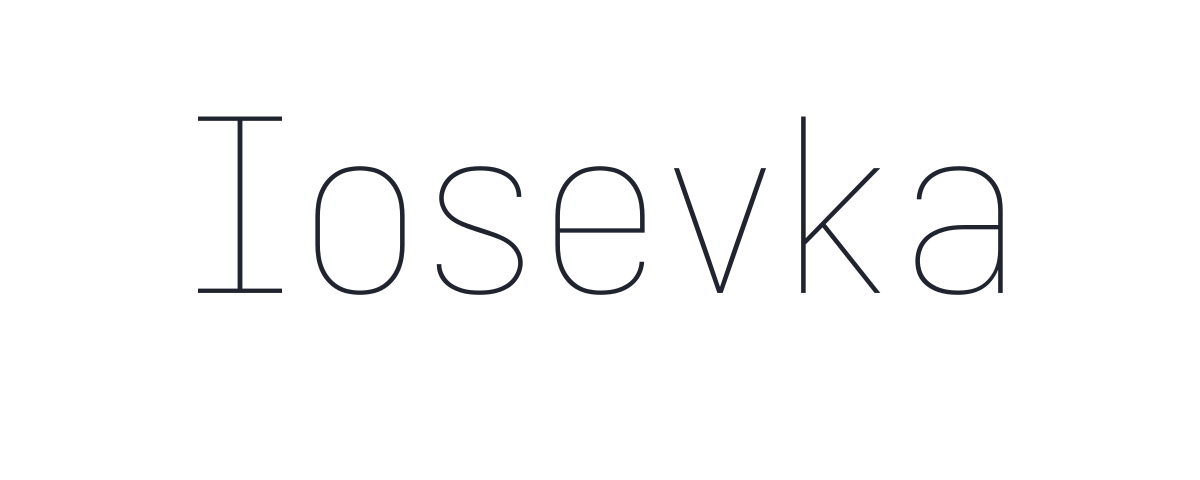

Iosevka [ˌjɔˈseβ.kʰa] is an open-source, sans-serif + slab-serif, monospace + quasi‑proportional typeface family, designed for writing code, using in terminals, and preparing technical documents.
Installation
Installing from GitHub Releases
- Download your font package from releases.
- Quit all your editors / programs.
- Unarchive the font package and you will see the font files.
- Take actions depending on your OS:
- Windows: Select the font files and drag into font settings / font control panel page.
- On Windows 10 1809 or newer, the default font installation is per-user, and it may cause compatibility issues for some applications, mostly written in Java. To cope with this, right click and select “Install for all users” instead. Ref.
- macOS: Follow instructions here.
- Linux : Copy the font files to your fonts directory then run
sudo fc-cache.
Installing via Package Managers
Disclaimer: This repository does not maintain any package manager distribution. The packages listed below may not always be up-to-date.
- macOS
- Linux
- Arch Linux: Install one of the ttc-iosevka packages.
- Ubuntu Linux: Install one of the fonts-iosevka packages.
- Void Linux: Install the font with
xbps-install font-iosevka.
- Fedora: Install the font(s) from the COPR here. Run
dnf search iosevka to discover available fonts and dnf install to install the chosen one(s).
- openSUSE Tumbleweed: iosevka-fonts package produces many variants, run
zypper se 'iosevka*fonts' to discover available fonts, and zypper in to install the chosen one(s).
- FreeBSD: The font can be installed with
pkg install iosevka.
- OpenBSD: Run
pkg_info -Q iosevka to see which Iosevka packages are available. Use pkg_add to install the chosen package(s).
Features
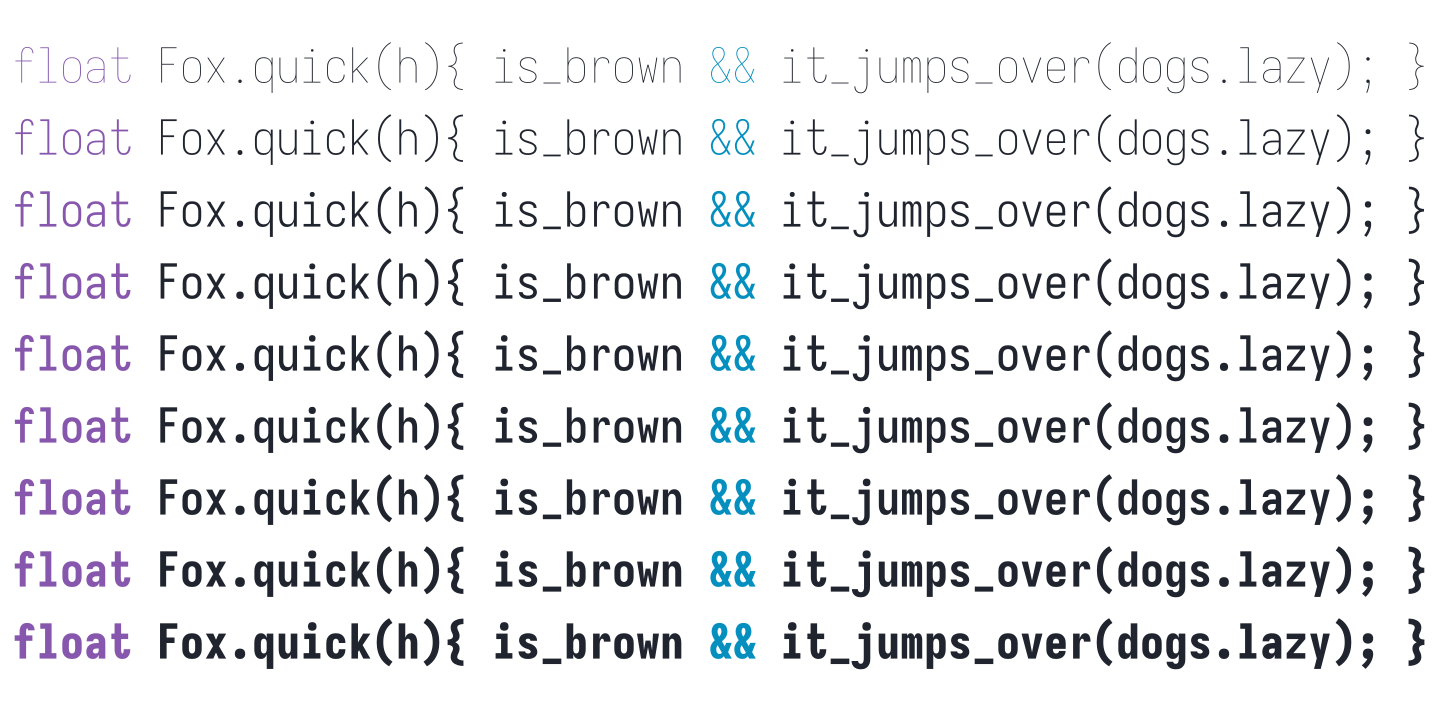
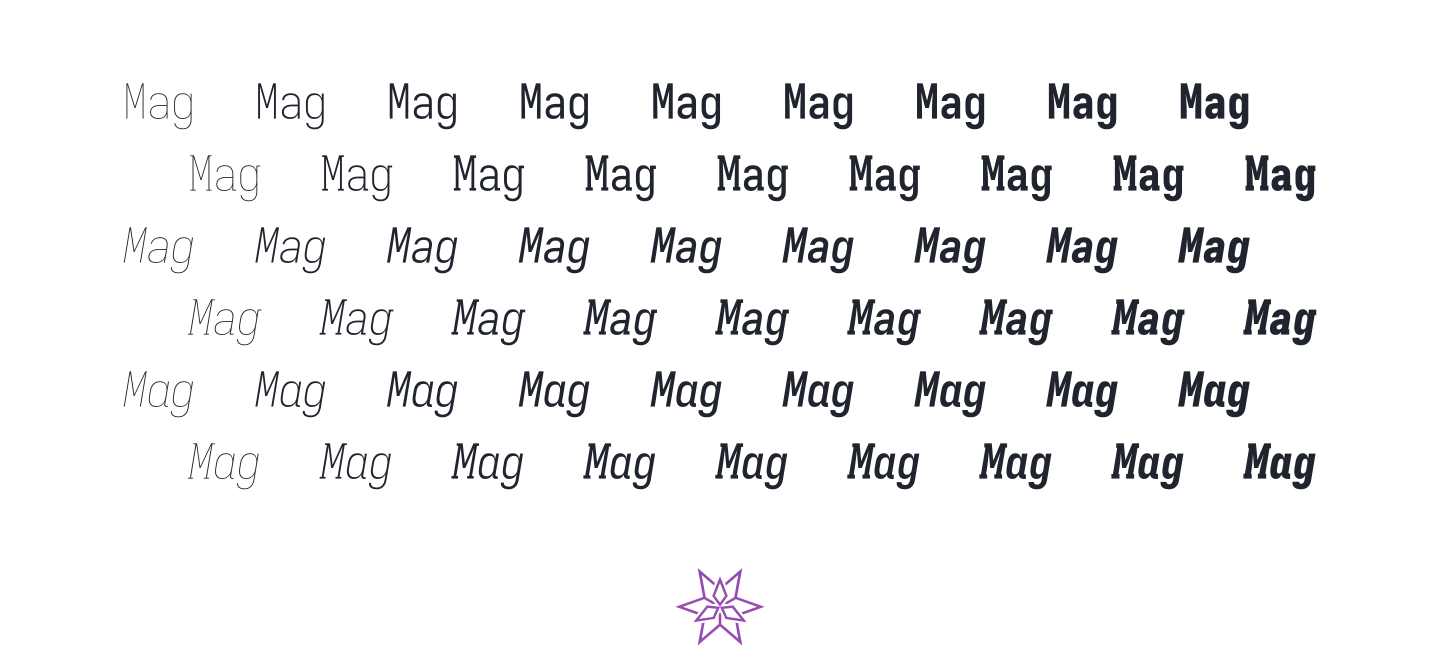
In the official package, Iosevka provides 6 monospace subfamilies (sans-serif and slab-serif, each in the 3 spacings Default, Term and Fixed) and 2 quasi-proportional subfamilies (Aile (sans-serif) and Etoile (slab-serif)). In all the monospace subfamilies, 9 weights (Thin to Heavy), 2 widths (Normal and Extended), and 3 slopes (Upright, Italic and Oblique) are included. In the quasi-proportional subfamilies, the quantity of widths is reduced to 1.
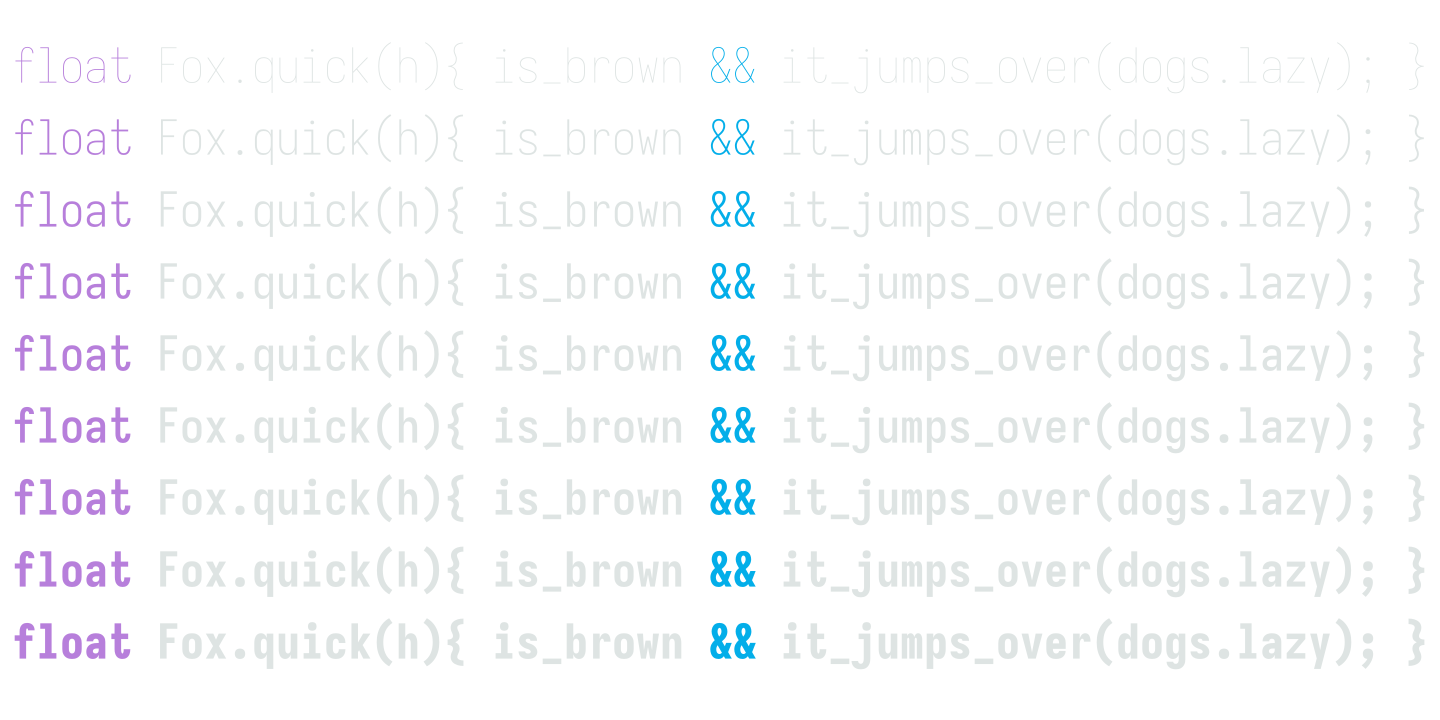
All versions include the same ranges of characters: Latin letters, Greek letters (including Polytonic), some Cyrillic letters, IPA symbols and common punctuations and some symbols. You can check out the full list here.
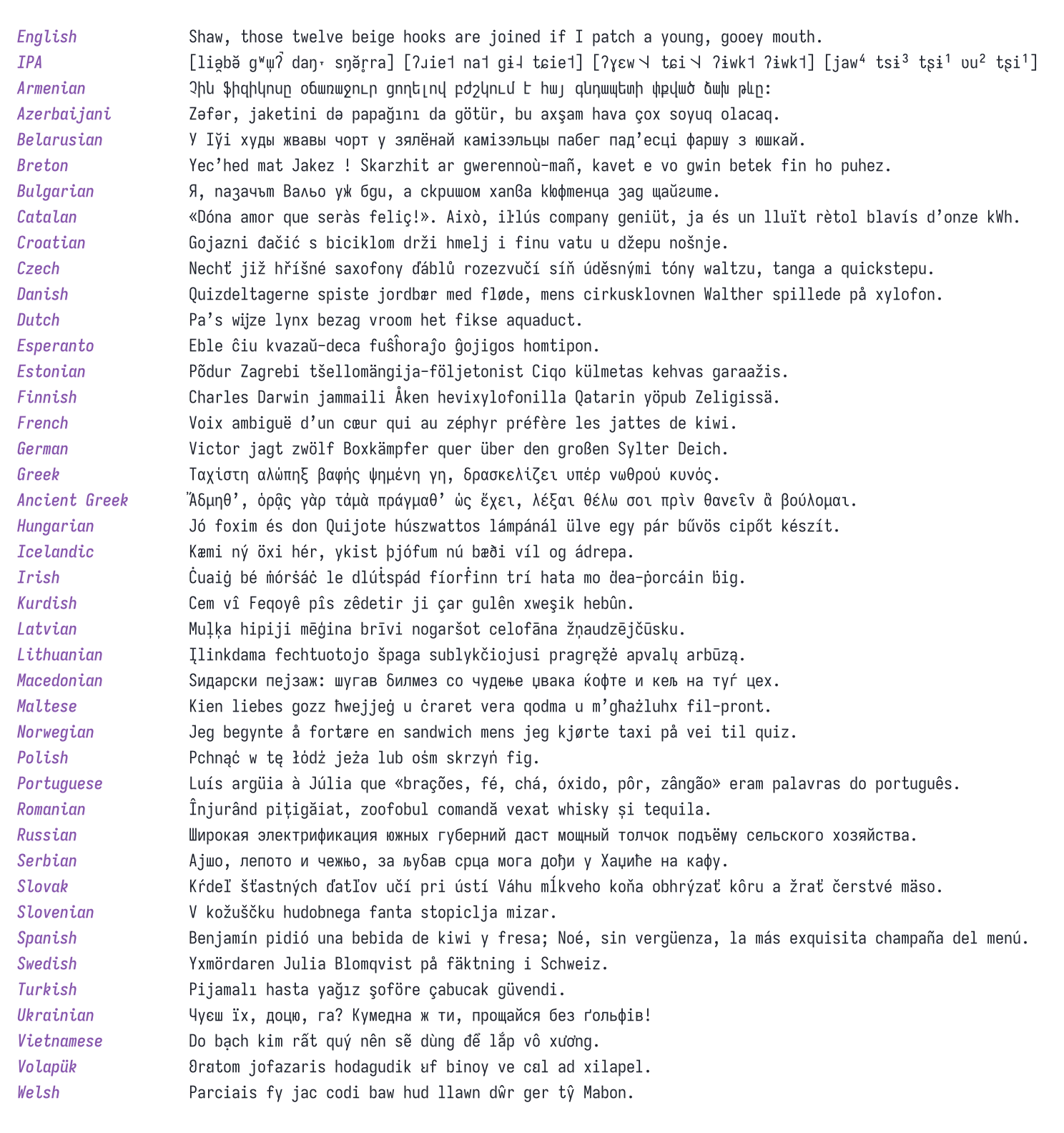
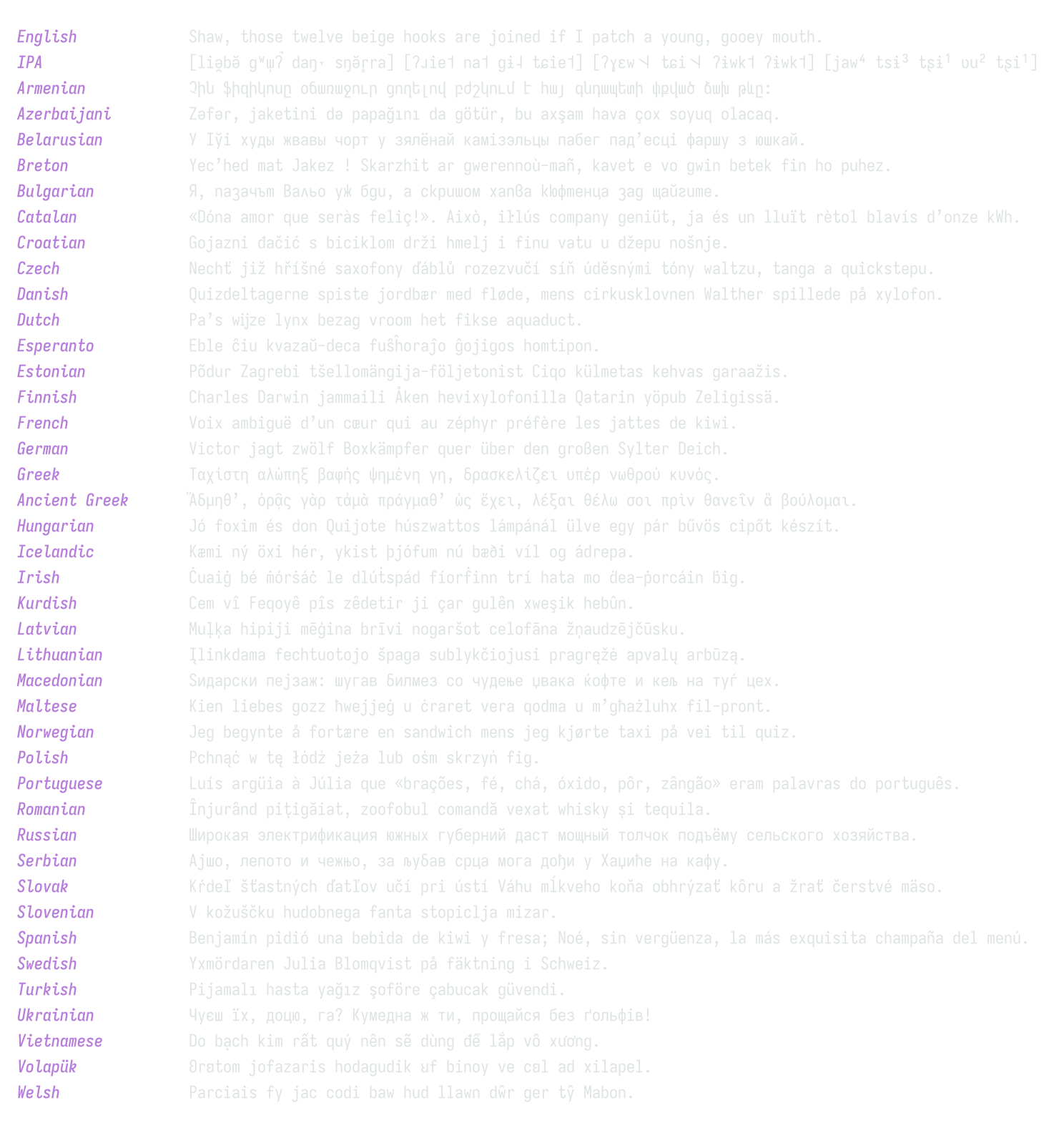
248 Supported Languages:
Abkhazian, Afar, Afrikaans, Aghem, Akan, Akoose, Albanian, Anii, Aragonese, Armenian, Asturian, Asu, Atsam, Azerbaijani, Bafia, Baluchi (bal_latn), Bambara, Basaa, Bashkir, Basque, Belarusian, Bemba, Bena, Betawi, Bosnian, Breton, Bulgarian, Buriat, Caddo, Catalan, Cebuano, Central Atlas Tamazight, Chechen, Chickasaw, Chiga, Chinese (zh_latn), Choctaw, Church Slavic, Chuvash, Colognian, Cornish, Corsican, Croatian, Czech, Danish, Duala, Dutch, Embu, English, Erzya, Esperanto, Estonian, Ewe, Ewondo, Faroese, Filipino, Finnish, French, Friulian, Fula, Ga, Galician, Ganda, German, Greek, Guarani, Gusii, Haitian Creole, Hausa, Hawaiian, Hindi (Latin), Hungarian, Icelandic, Ido, Igbo, Inari Sami, Indonesian, Interlingua, Interlingue, Inuktitut (iu_latn), Irish, Italian, Javanese, Jju, Jola-Fonyi, Kabuverdianu, Kabyle, Kaingang, Kako, Kalaallisut, Kalenjin, Kamba, Kara-Kalpak, Kazakh, Kenyang, Kikuyu, Kinyarwanda, Konkani (kok_latn), Koyra Chiini, Koyraboro Senni, Kpelle, Kurdish, Kuvi, Kwasio, Kyrgyz, Kʼicheʼ, Lakota, Langi, Latgalian, Latin, Latvian, Laz, Ligurian, Lingala, Lithuanian, Lojban, Lombard, Low German, Lower Sorbian, Luba-Katanga, Lule Sami, Luo, Luxembourgish, Luyia, Macedonian, Machame, Makhuwa, Makhuwa-Meetto, Makonde, Malagasy, Malay, Maltese, Manx, Mapuche, Masai, Meru, Metaʼ, Mi'kmaw, Mohawk, Moksha, Mongolian, Morisyen, Mundang, Muscogee, Māori, Nama, Navajo, Ngiemboon, Ngomba, Nheengatu, Nigerian Pidgin, North Ndebele, Northern Frisian, Northern Sami, Northern Sotho, Norwegian, Norwegian Bokmål, Norwegian Nynorsk, Nuer, Nyanja, Nyankole, Obolo, Occitan, Okanagan, Oromo, Ossetic, Pali, Papiamento, Piedmontese, Pijin, Polish, Portuguese, Prussian, Quechua, Qʼeqchiʼ, Riffian, Romanian, Romansh, Rombo, Rundi, Russian, Rwa, Saho, Samburu, Samogitian, Sango, Sangu, Sardinian, Scottish Gaelic, Sena, Serbian, Shambala, Shona, Sicilian, Sidamo, Silesian, Skolt Sami, Slovak, Slovenian, Soga, Somali, South Ndebele, Southern Sami, Southern Sotho, Spanish, Sundanese, Swahili, Swati, Swedish, Swiss German, Tachelhit (shi_latn), Taita, Tajik, Taroko, Tasawaq, Tatar, Teso, Tok Pisin, Toki Pona, Tongan, Tsonga, Tswana, Turkish, Turkmen, Tuvinian, Tyap, Ukrainian, Upper Sorbian, Uzbek, Vai (vai_latn), Venda, Venetian, Vietnamese, Volapük, Vunjo, Walloon, Walser, Warlpiri, Welsh, Western Frisian, Wolof, Xhosa, Yakut, Yangben, Yoruba, Zarma, Zhuang, Zulu
Stylistic Sets
Monospace Iosevka contains various stylistic sets to change the shape of certain characters. Enabling corresponded OpenType feature to enable.
Character Variants
Alongside stylistic sets, Monospace Iosevka can also be configured to cherry-pick variants for each character using OpenType. The variants are shown below. To enable, assign the feature tag to the variant index. For example, setting cv26 to 6 will enable single-storey a.
Caution : Certain software may limit the quantity of OpenType features and drop some of them if the feature list is too long. Please validate your feature configuration to ensure that it worked in your software.
Ligations
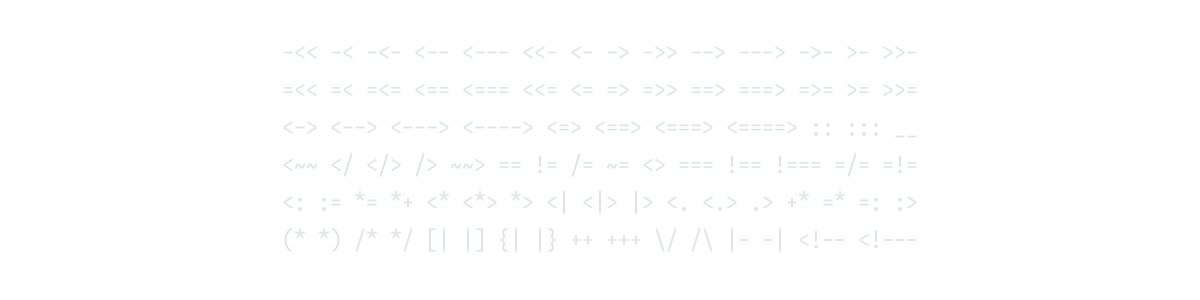
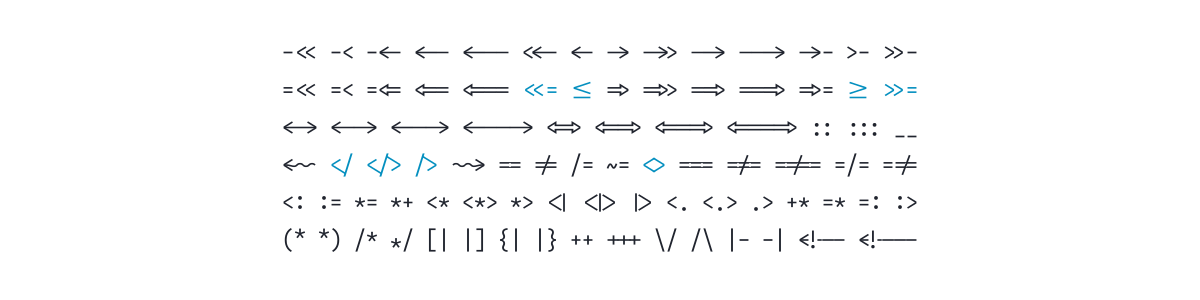
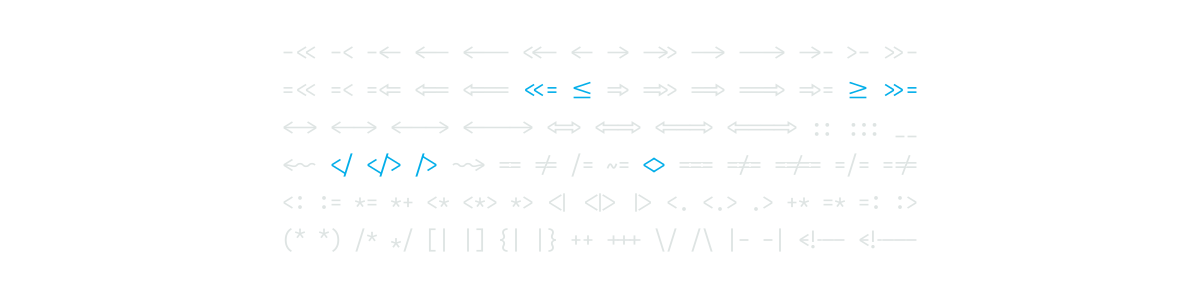
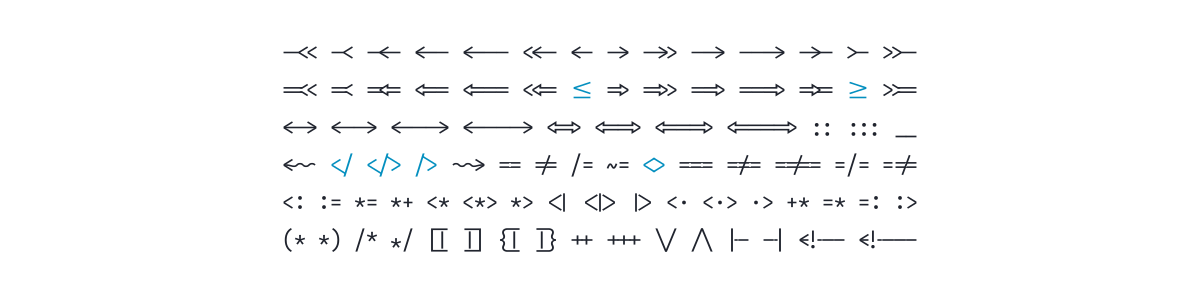
Monospace subfamilies support ligations. Iosevka’s default ligation set is assigned to calt feature, though not all of them are enabled by default.
calt off |
Ligation Off |
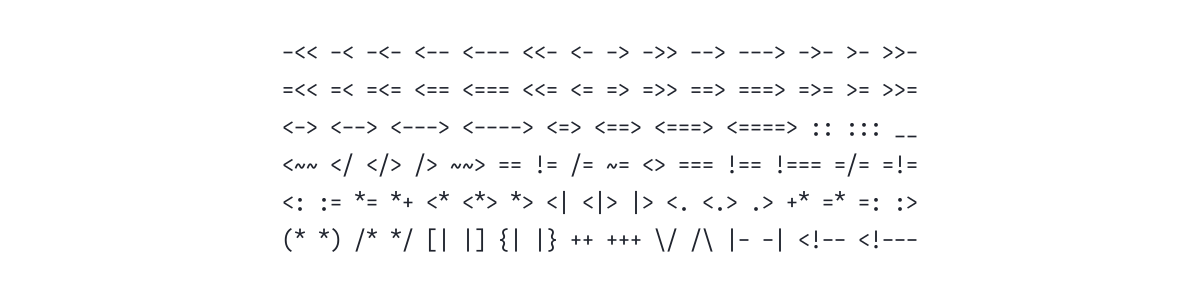  |
calt |
Default setting in text editors |
  |
dlig |
Discretionary ligatures |
 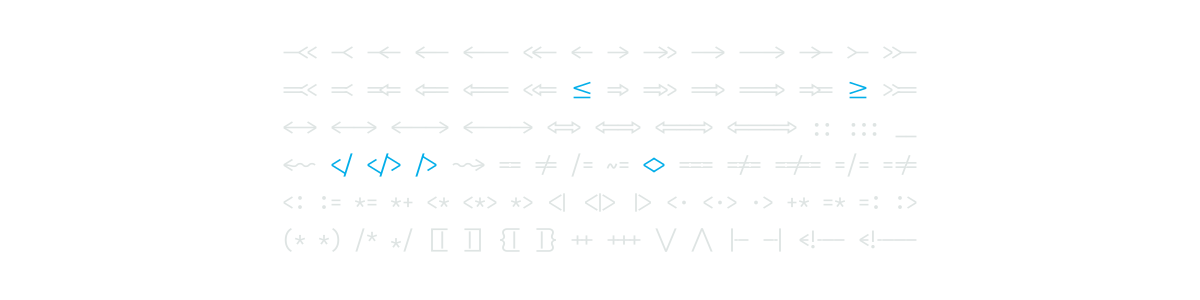 |
Iosevka supports Language-Specific Ligations, which is the ligation set enabled only under certain languages. These ligation sets are assigned to custom feature tags. To use them, you need to turn off calt and enable the corresponded feature. The feature list is:
Please note that, due to the complex interactions when forming ligations, cherry-picking ligation groups will require a custom Iosevka build. The instructions could be seen below.
Building from Source
For Chinese, Japanese and Korean (CJK) users...
→ Sarasa Gothic.
Mirrors

 Iosevka 是一个开源字体家族,专为写代码、在终端中使用以及排版技术文档而设计。它有无衬线和 slab 衬线两种形态,同时提供等宽和准等比例版本。