












Что это?
 Apache Airflow — платформа для программного создания, планирования и мониторинга рабочих процессов, которые описываются как код на Python.
Apache Airflow — платформа для программного создания, планирования и мониторинга рабочих процессов, которые описываются как код на Python.Это библиотека или самостоятельное приложение?И то, и другое: Airflow распространяется как пакет Python (apache-airflow на PyPI), но работает как полноценное приложение с планировщиком, исполнителями, базой данных и веб-интерфейсом, которые вы разворачиваете и запускаете.
И то, и другое: Airflow распространяется как пакет Python (apache-airflow на PyPI), но работает как полноценное приложение с планировщиком, исполнителями, базой данных и веб-интерфейсом, которые вы разворачиваете и запускаете.Как это запустить?Установите из PyPI через pip (или uv), используя официальные файлы ограничений для воспроизводимой установки, либо запустите через Docker-образы от сообщества или Helm Chart в Kubernetes; полную локальную установку описывает файл INSTALLING.md.
Установите из PyPI через pip (или uv), используя официальные файлы ограничений для воспроизводимой установки, либо запустите через Docker-образы от сообщества или Helm Chart в Kubernetes; полную локальную установку описывает файл INSTALLING.md.Что нужно до установки — конкретная версия Python, база данных, ОС?Нужны Python 3.10–3.14, поддерживаемая база данных (PostgreSQL 14–18, MySQL 8.0/8.4 или SQLite только для локального тестирования) и ОС, совместимая с POSIX: официально в промышленной эксплуатации это Linux, а для разработки подходит и macOS.
Нужны Python 3.10–3.14, поддерживаемая база данных (PostgreSQL 14–18, MySQL 8.0/8.4 или SQLite только для локального тестирования) и ОС, совместимая с POSIX: официально в промышленной эксплуатации это Linux, а для разработки подходит и macOS.Какие есть подводные камни при установке или на конкретной платформе?Простая команда pip install apache-airflow может дать сломанную установку, так как зависимости не закреплены жёстко, поэтому нужно использовать файлы ограничений Airflow; также Windows не поддерживается напрямую — нужен WSL2 или контейнеры, а SQLite никогда нельзя использовать в промышленной эксплуатации.
Простая команда pip install apache-airflow может дать сломанную установку, так как зависимости не закреплены жёстко, поэтому нужно использовать файлы ограничений Airflow; также Windows не поддерживается напрямую — нужен WSL2 или контейнеры, а SQLite никогда нельзя использовать в промышленной эксплуатации.Для кого это создано — какие рабочие процессы подходят лучше всего?Ориентировано на инженеров данных и ML, которые работают в основном со статичными, медленно меняющимися конвейерами; всё чаще это используют и для оркестрации обучения и переобучения ML-моделей, а также шагов агентных и LLM-конвейеров, но не предназначено для потоковой обработки и передачи больших объёмов данных между задачами.
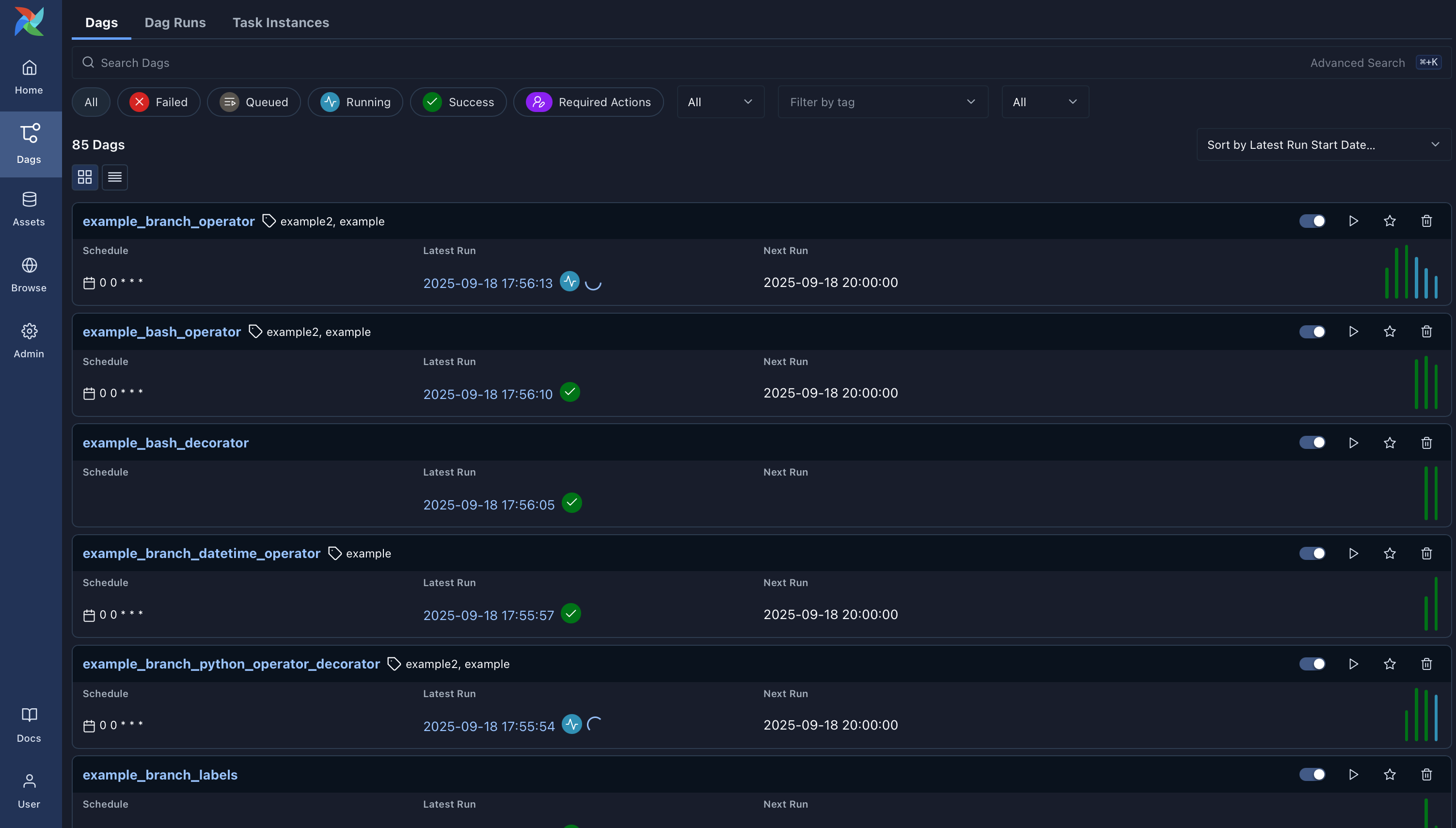
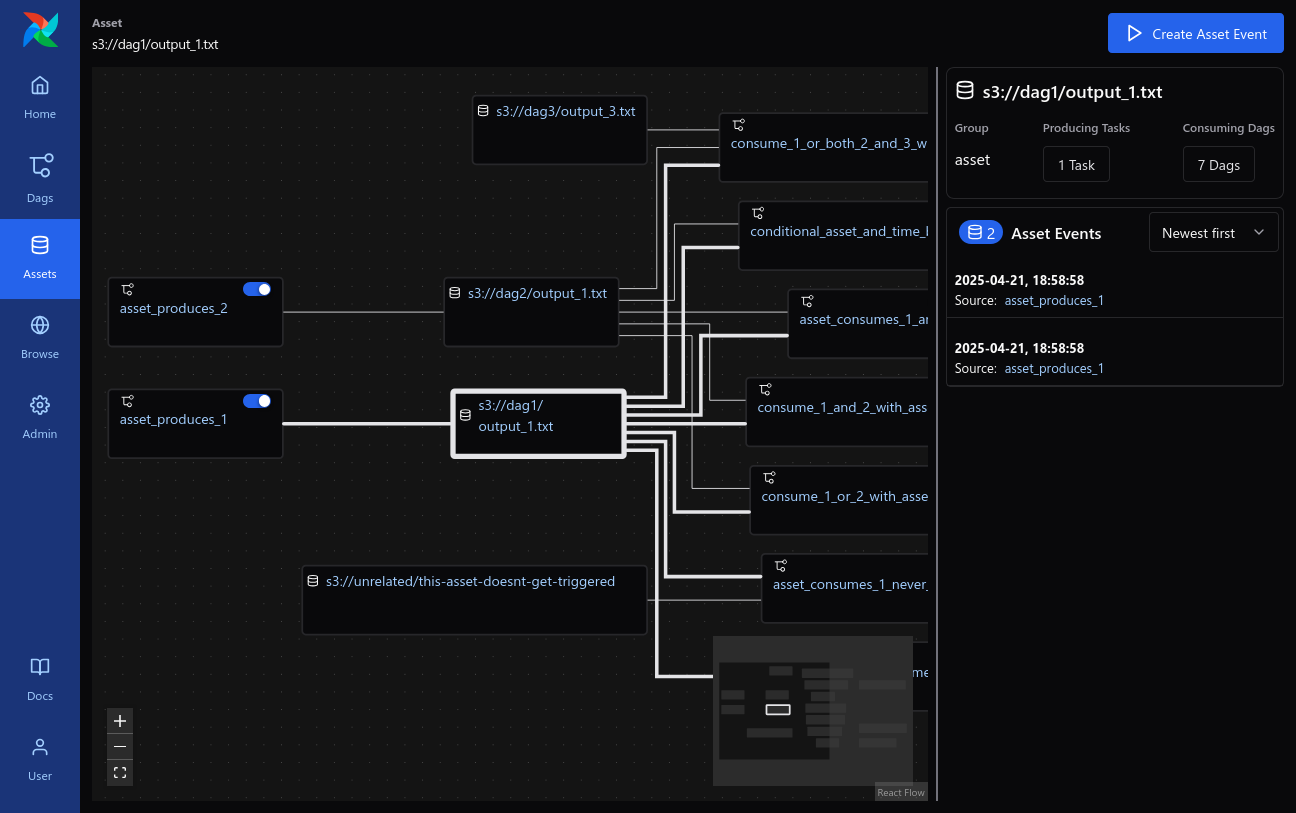
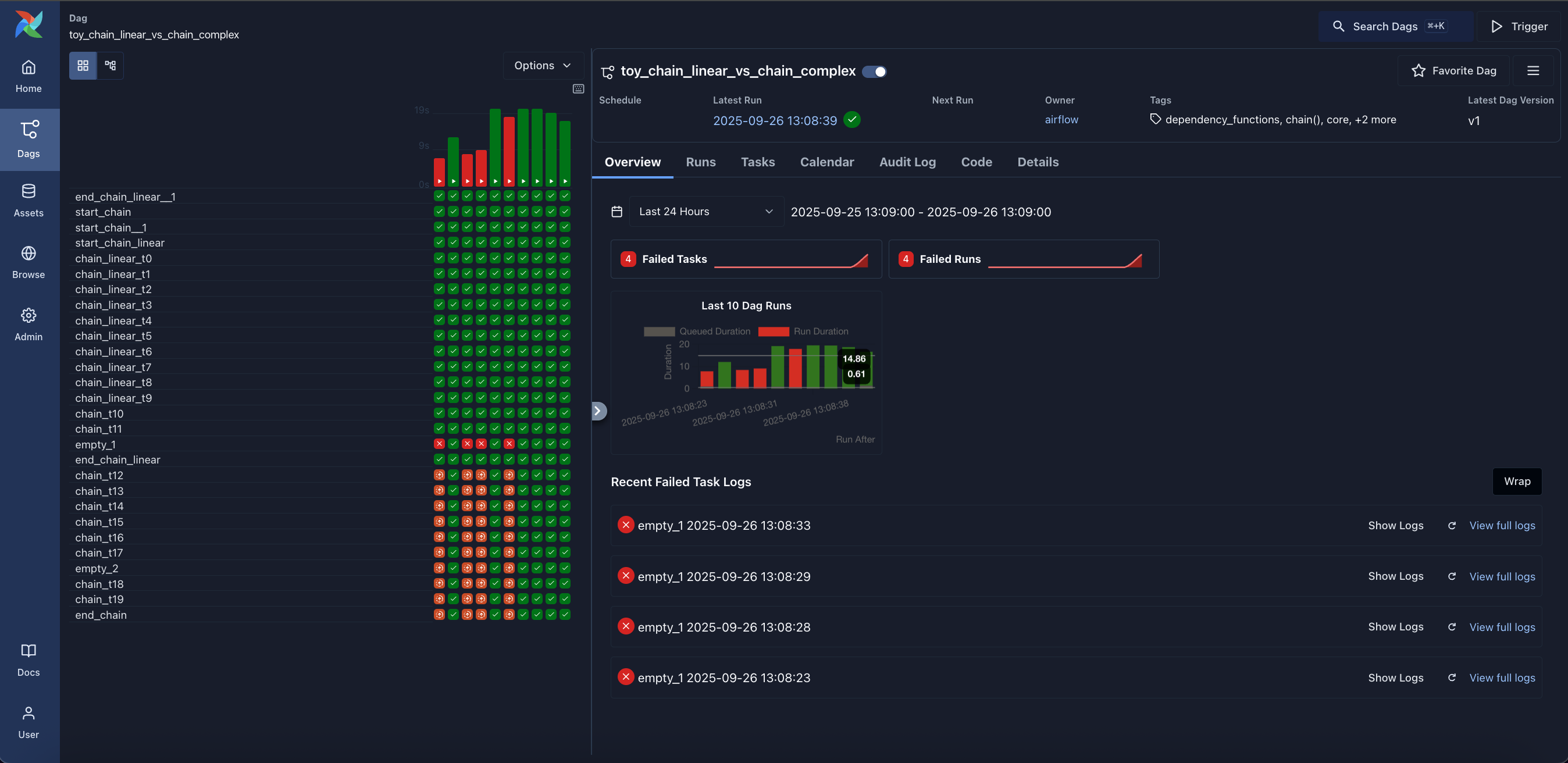
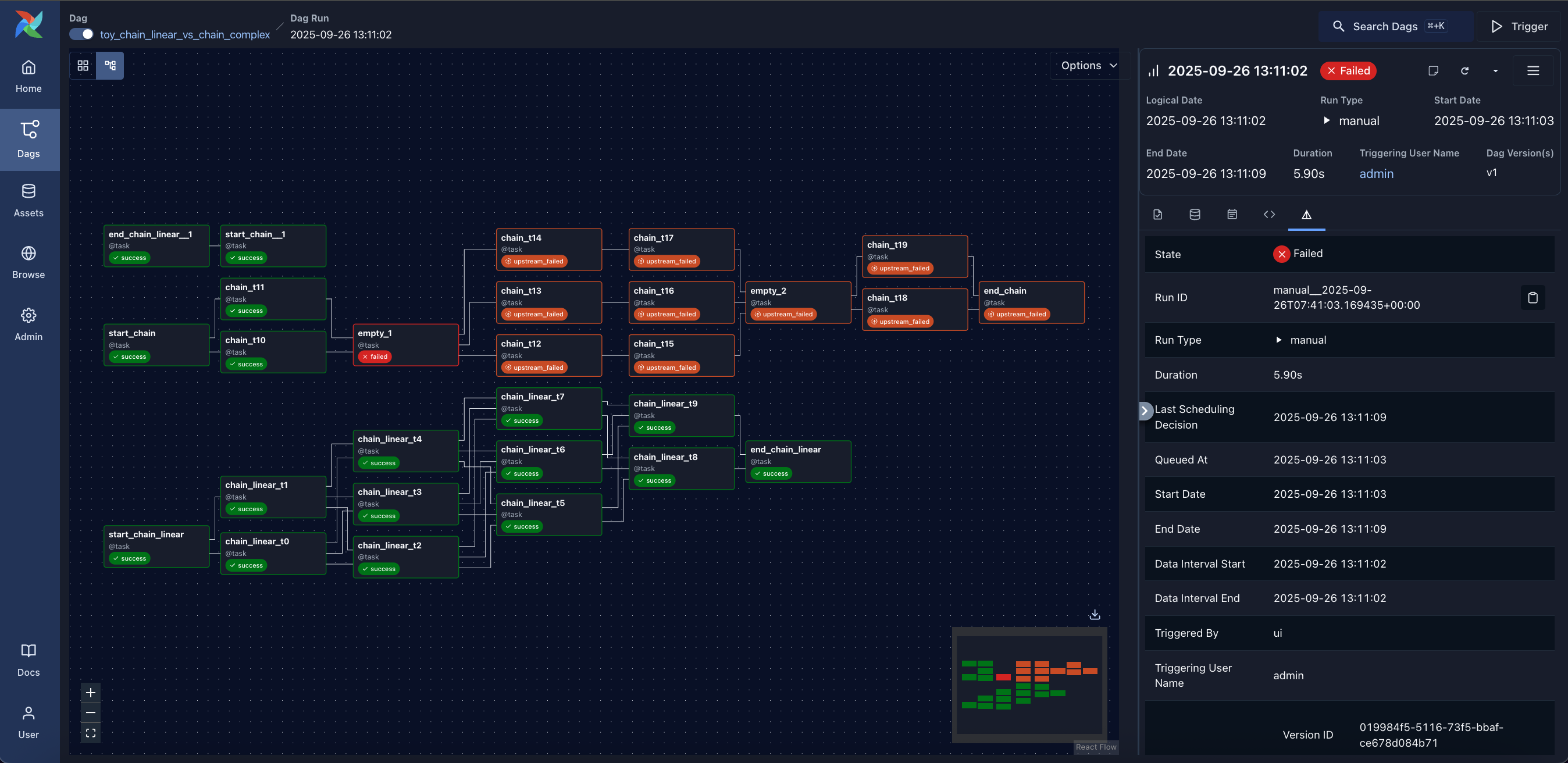
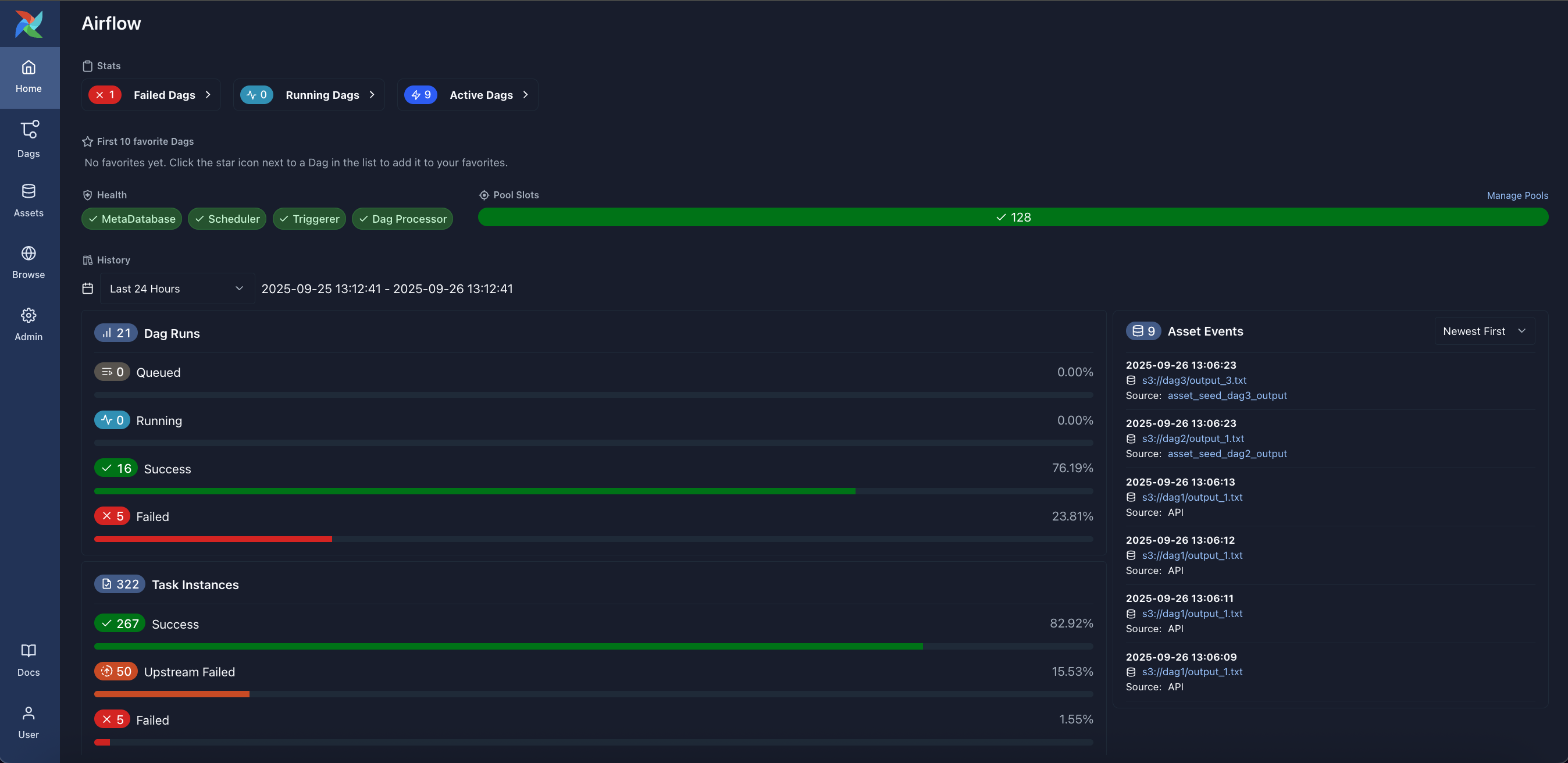
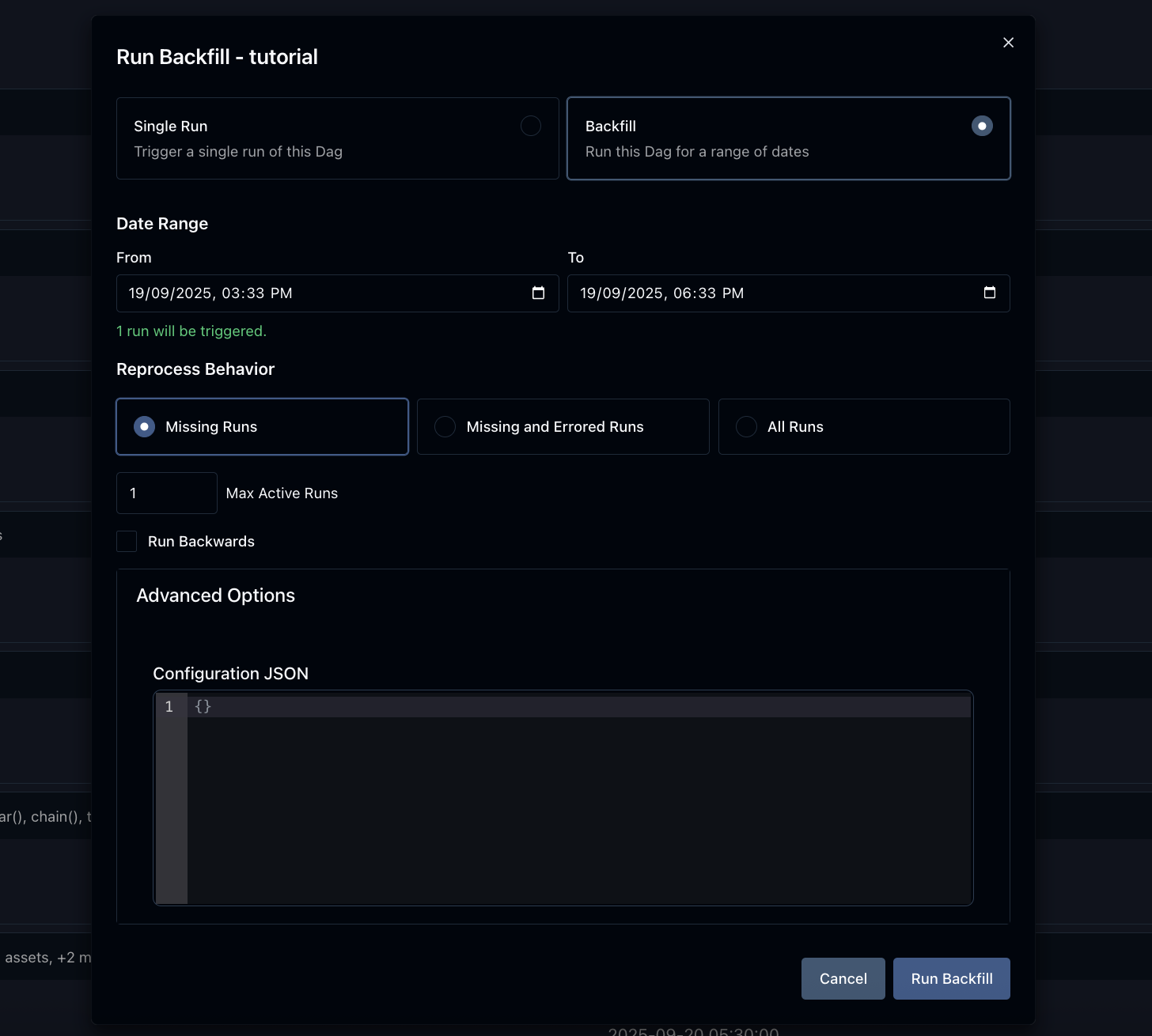
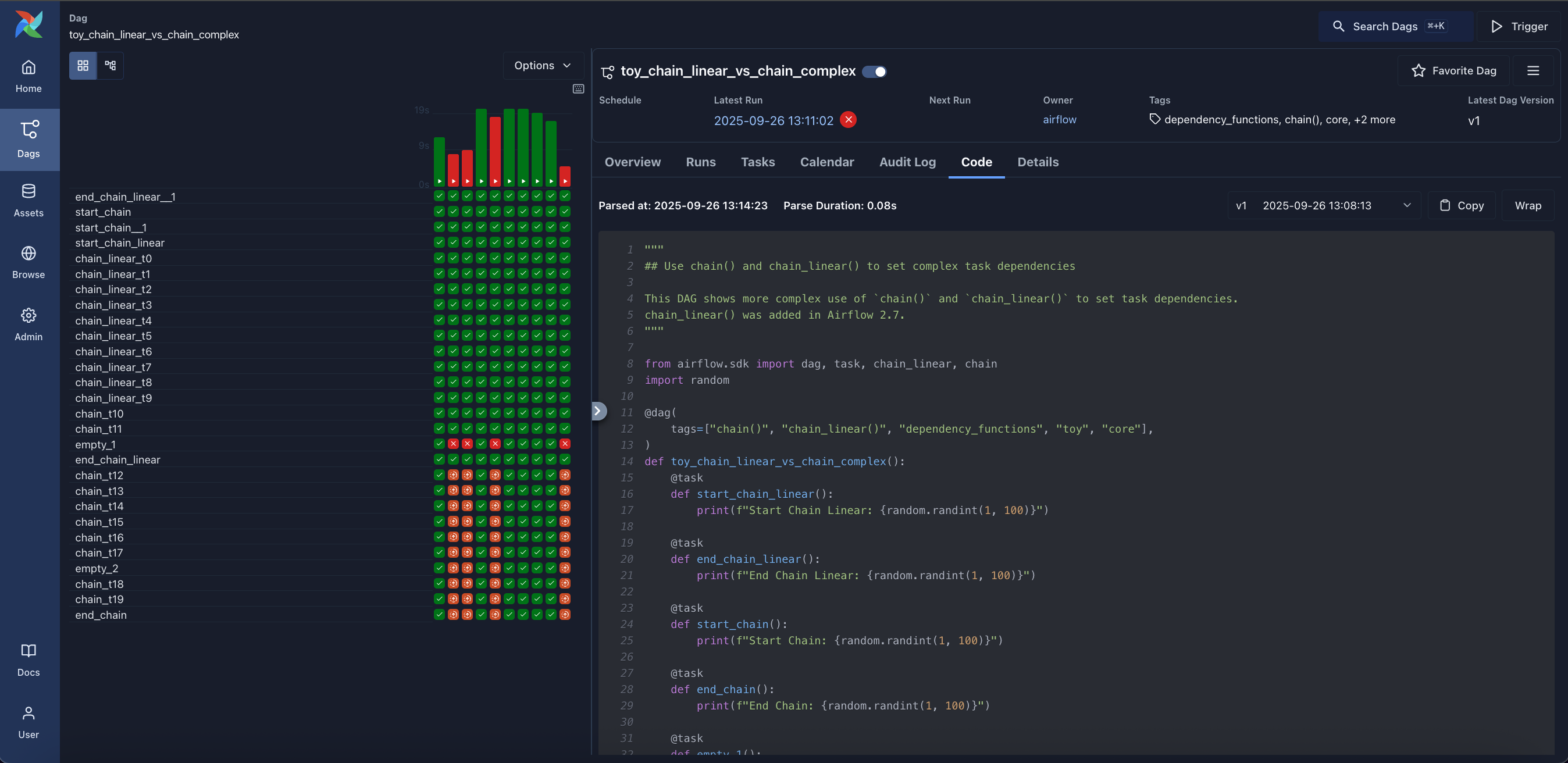
Ориентировано на инженеров данных и ML, которые работают в основном со статичными, медленно меняющимися конвейерами; всё чаще это используют и для оркестрации обучения и переобучения ML-моделей, а также шагов агентных и LLM-конвейеров, но не предназначено для потоковой обработки и передачи больших объёмов данных между задачами.Как визуализировать и отлаживать работающий конвейер?Веб-интерфейс предоставляет вкладки Dags, Grid и Graph для просмотра статуса запусков во времени и графов зависимостей каждого запуска, а также домашнюю страницу со сводной статистикой окружения и представление Backfill для повторного запуска за прошлые диапазоны дат.
Веб-интерфейс предоставляет вкладки Dags, Grid и Graph для просмотра статуса запусков во времени и графов зависимостей каждого запуска, а также домашнюю страницу со сводной статистикой окружения и представление Backfill для повторного запуска за прошлые диапазоны дат.Могут ли задачи передавать данные друг другу?Задачи должны быть идемпотентными и не должны напрямую передавать большие объёмы данных; вместо этого функция XCom в Airflow позволяет задачам обмениваться небольшими объёмами метаданных, а тяжёлую обработку данных делегируют внешним системам.
Задачи должны быть идемпотентными и не должны напрямую передавать большие объёмы данных; вместо этого функция XCom в Airflow позволяет задачам обмениваться небольшими объёмами метаданных, а тяжёлую обработку данных делегируют внешним системам.Чем Airflow отличается от Luigi или Oozie?Airflow упоминается наряду с Luigi, Oozie и Azkaban как похожий инструмент оркестрации рабочих процессов, но отличается описанием Dags в виде кода, развитым интерфейсом командной строки (CLI) и веб-интерфейсом для мониторинга.
Airflow упоминается наряду с Luigi, Oozie и Azkaban как похожий инструмент оркестрации рабочих процессов, но отличается описанием Dags в виде кода, развитым интерфейсом командной строки (CLI) и веб-интерфейсом для мониторинга.Какие каналы выпуска есть помимо PyPI?Помимо релизов, устанавливаемых через pip из PyPI, Airflow предлагает удобные Docker-образы (для Kubernetes, Helm, docker-compose, docker swarm) и помеченные тегами исходники на GitHub, однако формальными релизами считаются только официальные исходные пакеты ASF.
Помимо релизов, устанавливаемых через pip из PyPI, Airflow предлагает удобные Docker-образы (для Kubernetes, Helm, docker-compose, docker swarm) и помеченные тегами исходники на GitHub, однако формальными релизами считаются только официальные исходные пакеты ASF.What are similar projects?dagster, argo-workflows, kestra, dolphinscheduler, airbyte, full-stack-data-engineering, taipy, prefect
dagster, argo-workflows, kestra, dolphinscheduler, airbyte, full-stack-data-engineering, taipy, prefectWhich topics is it in?data-integration, workflow-orchestration, data-pipelines, dag, etl, workflow-engine, apache, mlops, scheduler, data-engineering, workflow, orchestration
data-integration, workflow-orchestration, data-pipelines, dag, etl, workflow-engine, apache, mlops, scheduler, data-engineering, workflow, orchestration