✨ oh-my-opencode-slim ✨
Seven divine beings emerged from the dawn of code, each an immortal master of their craft,
awaiting your command to forge order from chaos and build what was once thought impossible.
Opencode Multi Agent Suite · Mix any models · Auto delegate tasks
by Boring Dystopia Development



English | 简体中文 | 日本語 | 한국어
✦ ✦ ✦
What's This Plugin
oh-my-opencode-slim is an agent orchestration plugin for OpenCode. It includes a built-in team of specialized agents that can scout a codebase, look up fresh documentation, review architecture, handle UI work, and execute well-scoped implementation tasks under one orchestrator.
The main idea is simple: instead of forcing one model to do everything, the plugin routes each part of the job to the agent best suited for it, balancing quality, speed and cost. The Orchestrator plans the work graph, dispatches specialists as background tasks, and reconciles their results before continuing.
✨ Highlights
- Seven specialized agents - Orchestrator, Explorer,
Oracle, Council, Librarian, Designer, and Fixer. Each part of the job goes to
the agent best suited for it - mix any models across any providers.
- Background orchestration - the
Orchestrator dispatches specialists as background tasks, tracks them, and
reconciles results before continuing - parallel work by default.
- Bundled skills - prompt-based workflows like
deepwork,
codemap, verification-planning, and reflect, assigned per agent.
- Council - run multiple models in parallel on the same
question and synthesize a single answer with
@council.
- Companion - an optional floating desktop window
showing which agents are active, including parallel background specialists.
- Multiplexer integration - watch agents
work live in Tmux, Zellij, Herdr, cmux, or kitty panes.
- Preset switching - swap the whole team's
models at runtime with
/preset.
- Code intelligence tools - LSP tools, AST-aware search
across 25 languages, and built-in MCPs for docs and GitHub code
search.
- Fully customizable - custom agents, prompt
overrides, per-agent skill/MCP permissions, and
project-local customization.
OpenAI GPT-5.6
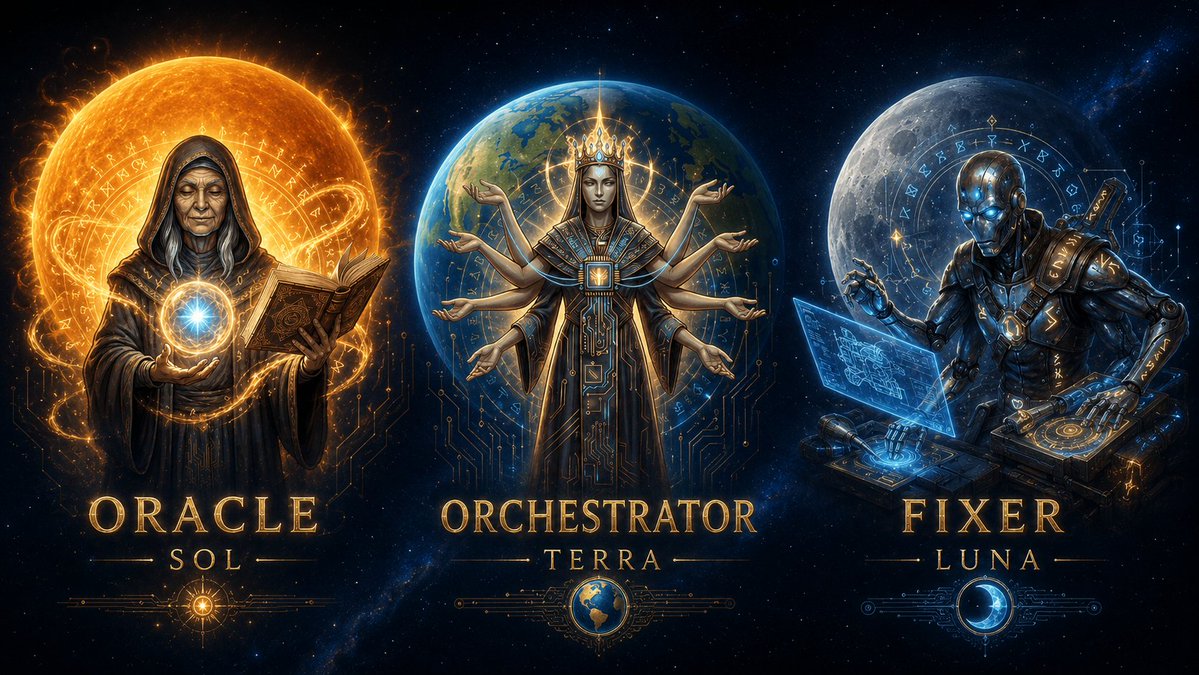
The default OpenAI preset maps Terra to Orchestrator,
Sol to Oracle, and Luna to the fast specialist lanes.
What Users Say
“Task management went from 5/10 to 8-9/10 easily. The Orchestrator sends
Fixers and Explorers, and I can still talk and plan with the Orchestrator in
the same session. The experience feels way smoother now.”
- vipor_idk
“I ditched all my harnesses for this beta version of omo-slim and don't look
back or miss anything. Great work and IMHO all in the right direction.”
- stephanschielke
“I love omo-slim, and can't imagine running opencode without it. I love that I
can create a Frankenstein of models... Makes the setup such a beast.”
- Capital-One3039
“It has significantly improved my workflow... Now, it is working very
smoothly, and I love it.”
- xenstar1
Quick Start
Copy and paste this prompt to your LLM agent (Claude Code, AmpCode, Cursor, etc.):
Install and configure oh-my-opencode-slim: https://raw.githubusercontent.com/alvinunreal/oh-my-opencode-slim/refs/heads/master/README.md
Manual Installation
bunx oh-my-opencode-slim@latest install
The published CLI is a Node-compatible bundle, so npx works too if you don't
have Bun installed:
npx oh-my-opencode-slim@latest install
Run from Master
Use this if you want the latest code, easier bug fixes, or a local setup for
development and contributions:
git clone https://github.com/alvinunreal/oh-my-opencode-slim.git ~/repos/oh-my-opencode-slim
cd ~/repos/oh-my-opencode-slim
bun install
bun run build
bun dist/cli/index.js install
The installer adds the local repo path to the plugin array in
~/.config/opencode/opencode.json, so OpenCode loads the plugin from that
folder. To update later:
cd ~/repos/oh-my-opencode-slim
git pull
bun install
bun run build
OpenCode v2 (opencode2)
The same package runs on both OpenCode v1 and v2. On v2 you get the full
agent pantheon, delegation through the host subagent tool (bridged into the
background job board), all built-in tools and slash commands, auto-registered
MCPs, /preset in the TUI, webfetch secondary-model summaries, rate-limit
model fallback, and the orchestrator-wake scheduler in children-driven
degraded mode (a periodic watchdog over stuck background children and
unreconciled jobs). Multiplexer panes stay v1-only by design (v2 renders and
notifies subagents natively).
v2 auto-refreshes unpinned plugins on startup, so pin an exact version while
both v2 and this adapter evolve quickly:
{ "plugin": ["[email protected]"] }
Details, the feature matrix, and per-feature minimum v2 builds:
OpenCode v2 Compatibility.
Getting Started
The installer generates both OpenAI and OpenCode Go presets, with OpenAI active by default.
[!TIP]
Tune the models and agents for your own workflow. The defaults are only a
starting point; the plugin is designed for deep flexibility and customization.
To make OpenCode Go active during install, run bunx oh-my-opencode-slim@latest install --preset=opencode-go or change the default preset name in ~/.config/opencode/oh-my-opencode-slim.json after installation.
Then:
Log in to the providers you want to use if you haven't already:
opencode auth login
Refresh and list the models OpenCode can see:
opencode models --refresh
Open your plugin config at ~/.config/opencode/oh-my-opencode-slim.json
Update the models you want for each agent
[!TIP]
It's recommended to understand how background orchestration works. The Orchestrator prompt contains the scheduler rules, specialist routing logic, and thresholds for when work should be assigned to background agents. You can always delegate manually by calling a subagent via: @agentName <task>
[!TIP]
Because background agents are now the default workflow, it is highly recommended to enable and configure Multiplexer Integration. It automatically opens each agent in a dedicated Tmux, Zellij, Herdr, cmux, or kitty pane, so you can watch specialists work live while the Orchestrator continues coordinating the session.
The default generated configuration includes both openai and opencode-go presets.
{
  "$schema": "https://unpkg.com/oh-my-opencode-slim@latest/oh-my-opencode-slim.schema.json",
  "preset": "openai",
  "presets": {
    "openai": {
      "orchestrator": { "model": "openai/gpt-5.6-terra", "variant": "high", "skills": ["*"], "mcps": ["*", "!context7"] },
      "oracle": { "model": "openai/gpt-5.6-sol", "variant": "high", "skills": ["simplify"], "mcps": [] },
      "librarian": { "model": "openai/gpt-5.6-luna", "variant": "low", "skills": [], "mcps": ["context7", "gh_grep"] },
      "explorer": { "model": "openai/gpt-5.6-luna", "variant": "low", "skills": [], "mcps": [] },
      "designer": { "model": "openai/gpt-5.6-luna", "variant": "medium", "skills": [], "mcps": [] },
      "fixer": { "model": "openai/gpt-5.6-luna", "variant": "high", "skills": [], "mcps": [] }
    },
    "opencode-go": {
      "orchestrator": { "model": "opencode-go/minimax-m3", "variant": "thinking" },
      "oracle": { "model": "opencode-go/qwen3.7-max", "variant": "max" },
      "librarian": { "model": "opencode-go/deepseek-v4-flash", "variant": "high" },
      "explorer": { "model": "opencode-go/deepseek-v4-flash", "variant": "high" },
      "designer": { "model": "opencode-go/kimi-k2.7-code" },
      "fixer": { "model": "opencode-go/deepseek-v4-flash", "variant": "high" },
      "observer": { "model": "opencode-go/mimo-v2.5" }
    }
  }
}
Preset Docs
- OpenAI Preset — the default generated preset; runs all agents on OpenAI models.
- OpenCode Go Preset — runs the agents on OpenCode Go models; enables the Observer agent for visual analysis since its orchestrator model isn't multimodal.
- Author's Preset — the exact config the author runs day to day, with third-party skills.
- $30 Preset — a mixed-provider setup built around Codex Plus and GitHub Copilot Pro for about $30/month.
- OpenCode Zen Free Preset — every agent runs on an opencode free model; no usage cost.
For Alternative Providers
To use custom providers or a mixed-provider setup, use Configuration for the full reference.
✅ Verify Your Setup
After installation and authentication, verify all agents are configured and responding:
opencode
Then run:
ping all agents
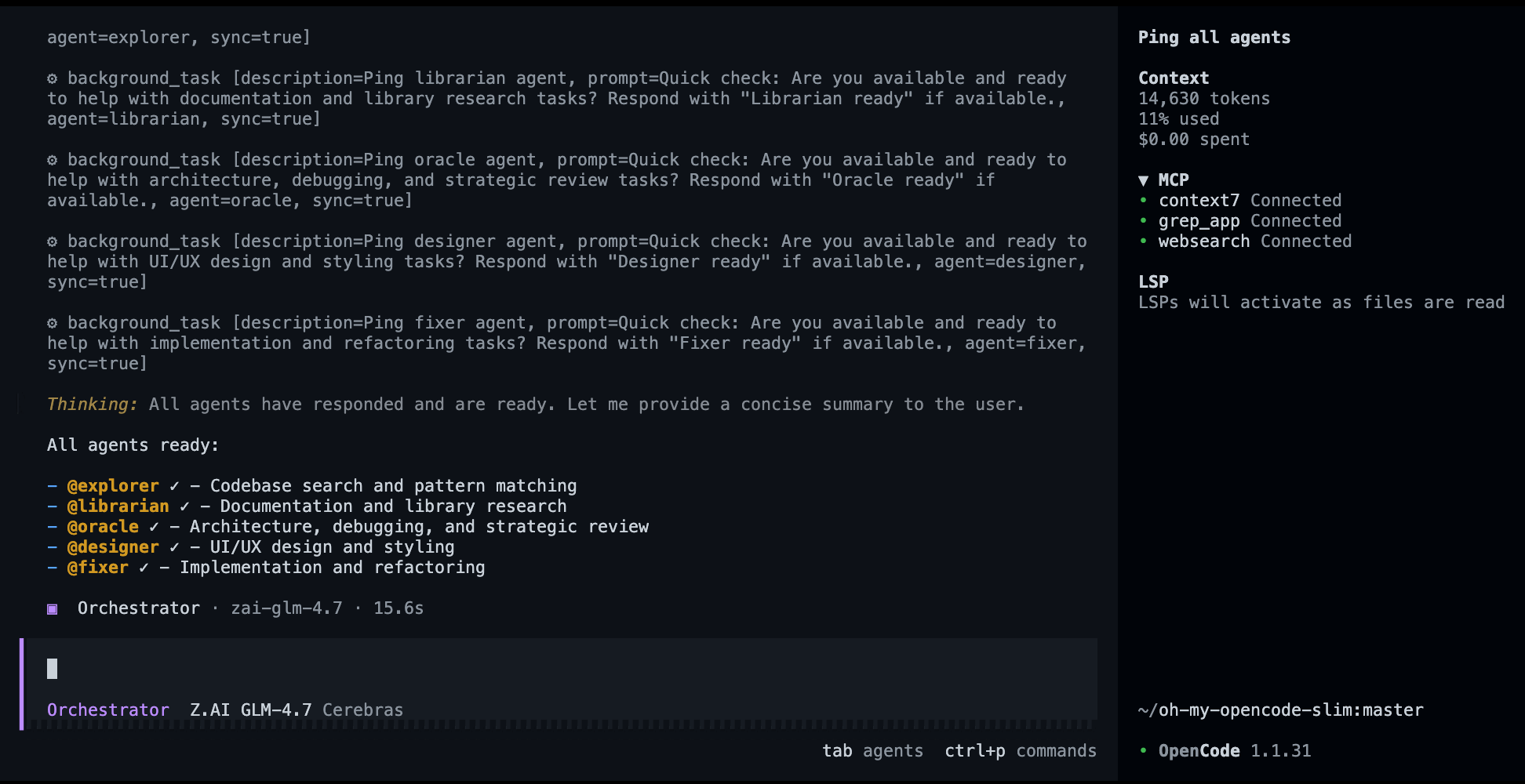
Confirmation that all configured agents are online and ready.
If any agent fails to respond, check your provider authentication and config file.
🏛️ Meet the Pantheon
01. Orchestrator: The Embodiment Of Order
Forged in the void of complexity.
|
The Orchestrator was born when the first codebase collapsed under its own complexity. Neither god nor mortal would claim responsibility - so The Orchestrator emerged from the void, forging order from chaos. It determines the optimal path to any goal, balancing speed, quality, and cost. It guides the team, summoning the right specialist for each task and delegating to achieve the best possible outcome.
|
Role: Master delegator and strategic coordinator
|
Prompt: orchestrator.ts
|
Default Model: openai/gpt-5.6-terra (medium)
|
Recommended Models: claude-fable-5 claude-opus-4-8 glm-5.2 gpt-5.6-terra mimo-v2.5 minimax-m3 qwen3.7-plus
|
|
Model Guidance: Choose your strongest planning and judgment model. Orchestrator is the workflow manager: it plans, schedules background specialists, reconciles results, and verifies outcomes, so it needs reliable instruction-following and high-level technical judgment more than raw worker throughput.
|
02. Explorer: The Eternal Wanderer

The wind that carries knowledge.
|
The Explorer is an immortal wanderer who has traversed the corridors of a million codebases since the dawn of programming. Cursed with the gift of eternal curiosity, they cannot rest until every file is known, every pattern understood, every secret revealed. Legends say they once searched the entire internet in a single heartbeat. They are the wind that carries knowledge, the eyes that see all, the spirit that never sleeps.
|
Role: Codebase reconnaissance
|
Prompt: explorer.ts
|
Default Model: openai/gpt-5.6-luna
|
Recommended Models: deepseek-v4-flash gpt-5.3-codex
|
|
Model Guidance: Choose a fast, low-cost model. Explorer handles broad scouting work, so speed and efficiency usually matter more than using your strongest reasoning model.
|
03. Oracle: The Guardian of Paths
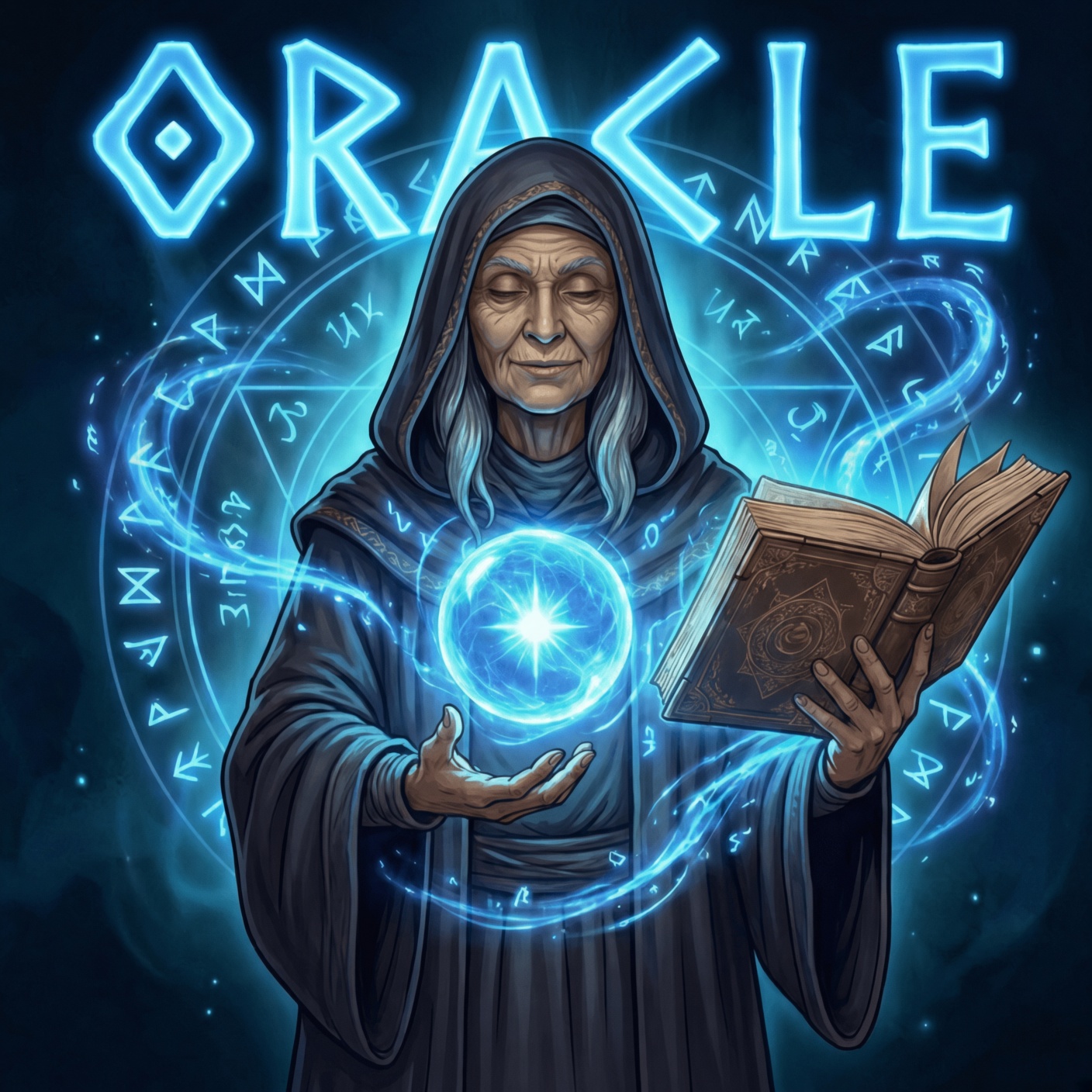
The voice at the crossroads.
|
The Oracle stands at the crossroads of every architectural decision. They have walked every road, seen every destination, know every trap that lies ahead. When you stand at the precipice of a major refactor, they are the voice that whispers which way leads to ruin and which way leads to glory. They don't choose for you - they illuminate the path so you can choose wisely.
|
Role: Strategic advisor and debugger of last resort
|
Prompt: oracle.ts
|
Default Model: openai/gpt-5.6-sol (high)
|
Recommended Models: claude-fable-5 claude-opus-4-8 deepseek-v4-pro glm-5.2 gpt-5.6-sol qwen3.7-max
|
|
Model Guidance: Choose your strongest high-reasoning model for architecture, hard debugging, trade-offs, and code review.
|
04. Council: The Chorus of Minds
[!NOTE]
Why doesn't Orchestrator auto-call Council more often? This is intentional. Council runs multiple models at once, so automatic delegation is kept strict because it is usually the highest-cost path in the system. In practice, Council is meant to be used manually when you want it, for example: @council compare these two architectures.

Many minds, one verdict.
|
The Council is not a lone being but a chamber of minds summoned when one answer is not enough. It sends your question to multiple models in parallel, gathers their competing judgments, and then the Council agent itself distills the strongest ideas into a single verdict. Where a solitary agent may miss a path, the Council cross-examines possibility itself.
|
Role: Multi-LLM consensus and synthesis
|
Prompt: council.ts
|
Guide: docs/council.md
|
Default Setup: Config-driven - councillors come from council.presets and the Council agent model comes from your normal council agent config
|
Recommended Setup: Strong Council model + diverse councillors across providers
|
|
Model Guidance: Use a strong synthesis model for the Council agent and diverse models as councillors. The value of Council comes from comparing different model perspectives, not just picking the single strongest model everywhere.
|
05. Librarian: The Weaver of Knowledge
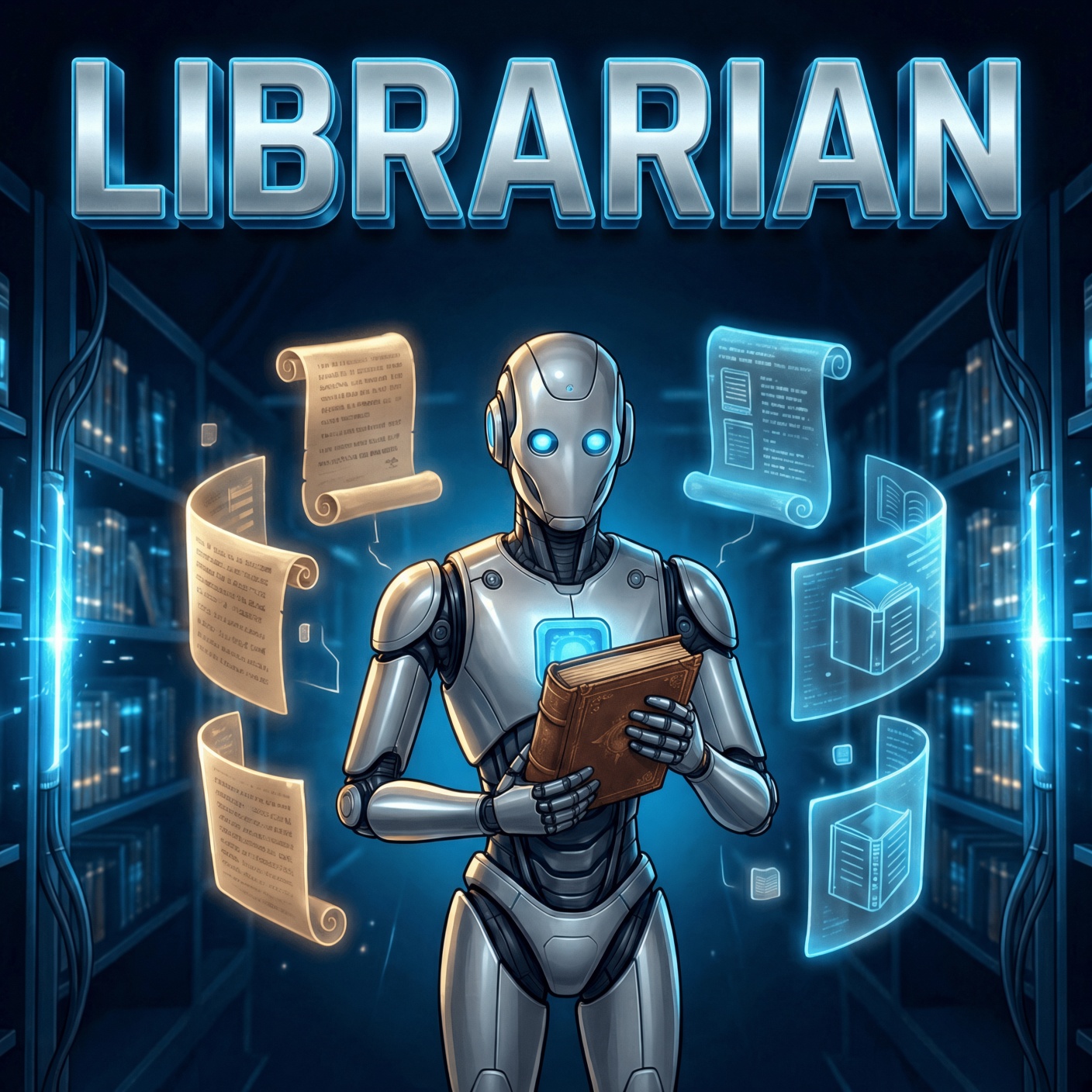
The weaver of understanding.
|
The Librarian was forged when humanity realized that no single mind could hold all knowledge. They are the weaver who connects disparate threads of information into a tapestry of understanding. They traverse the infinite library of human knowledge, gathering insights from every corner and binding them into answers that transcend mere facts. What they return is not information - it's understanding.
|
Role: External knowledge retrieval
|
Prompt: librarian.ts
|
Default Model: openai/gpt-5.6-luna
|
Recommended Models: deepseek-v4-flash gpt-5.3-codex mimo-v2.5 minimax-m2.7
|
|
Model Guidance: Choose a fast, low-cost model. Librarian handles research and documentation lookups, so speed and efficiency usually matter more than using your strongest reasoning model.
|
06. Designer: The Guardian of Aesthetics

Beauty is essential.
|
The Designer is an immortal guardian of beauty in a world that often forgets it matters. They have seen a million interfaces rise and fall, and they remember which ones were remembered and which were forgotten. They carry the sacred duty to ensure that every pixel serves a purpose, every animation tells a story, every interaction delights. Beauty is not optional - it's essential.
|
Role: UI/UX implementation and visual excellence
|

 oh-my-opencode-slim — это плагин для OpenCode, который распределяет задачи по программированию между командой специализированных агентов, а не полагается на одну модель во всём.