
Что это?
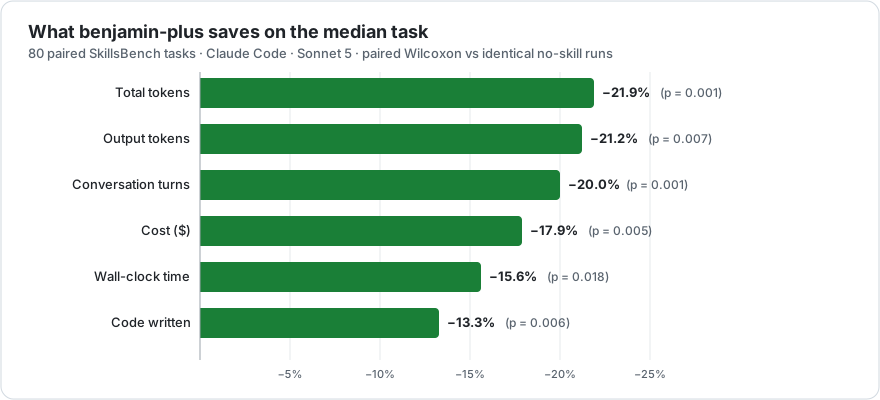
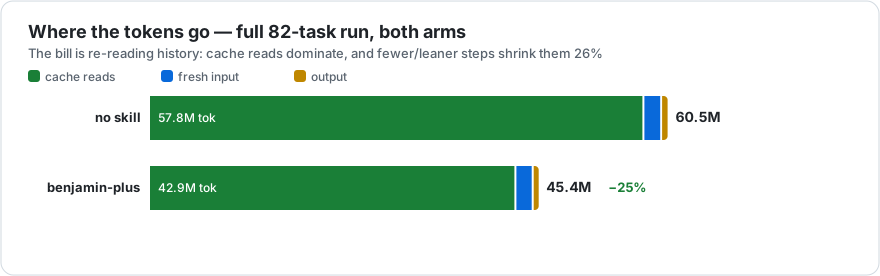
 Benjamin-Plus — это скилл экономии токенов для кодинг-агентов: он обучает пяти привычкам, связанным с поиском информации и ожиданием (а не с тем, что агент строит), и по замерам снижает затраты до 18% без потери качества.
Это плагин, который я устанавливаю, или текст, который я встраиваю в промпт агента?Это не устанавливаемый пакет — это короткий файл правил (RULESET.md, около 745 токенов), который вы встраиваете прямо в системный промпт агента или в хук; упаковка в виде обнаруживаемой папки-скилла в тестах ничего не сэкономила, потому что агенты тратили шаги только на поиск SKILL.md.
Это не устанавливаемый пакет — это короткий файл правил (RULESET.md, около 745 токенов), который вы встраиваете прямо в системный промпт агента или в хук; упаковка в виде обнаруживаемой папки-скилла в тестах ничего не сэкономила, потому что агенты тратили шаги только на поиск SKILL.md.Как добавить его своему агенту?Для Claude Code допишите правила в CLAUDE.md (например, командой 'cat ~/.benjamin-plus/injected-instruction.md >> CLAUDE.md') или подключите через хук в ~/.claude/settings.json; для Codex CLI добавьте их в AGENTS.md, так как этот файл загружается в каждой сессии; любому другому агенту допишите injected-instruction.md в его системный промпт.
Для Claude Code допишите правила в CLAUDE.md (например, командой 'cat ~/.benjamin-plus/injected-instruction.md >> CLAUDE.md') или подключите через хук в ~/.claude/settings.json; для Codex CLI добавьте их в AGENTS.md, так как этот файл загружается в каждой сессии; любому другому агенту допишите injected-instruction.md в его системный промпт.Какие кодинг-агенты могут его использовать?Он тестировался на Claude Code 2.1.201 (Sonnet 5) и Codex CLI (gpt-5.6-luna), но работает с любым кодинг-агентом, чей системный промпт или контекст вы можете редактировать — API-ключи и дополнительный инструментарий не нужны.
Он тестировался на Claude Code 2.1.201 (Sonnet 5) и Codex CLI (gpt-5.6-luna), но работает с любым кодинг-агентом, чей системный промпт или контекст вы можете редактировать — API-ключи и дополнительный инструментарий не нужны.Экономия всегда одна и та же?Экономия зависит от того, насколько раздуты ваши базовые сессии, — примерно от −10% до −18% затрат; идентичный прогон против более компактного базового уровня днём ранее дал лишь −10%, а сравнение качества (7 лучше/5 хуже/68 ничьих) не имело статистической мощности, чтобы исключить малые эффекты в любую сторону.
Экономия зависит от того, насколько раздуты ваши базовые сессии, — примерно от −10% до −18% затрат; идентичный прогон против более компактного базового уровня днём ранее дал лишь −10%, а сравнение качества (7 лучше/5 хуже/68 ничьих) не имело статистической мощности, чтобы исключить малые эффекты в любую сторону.Какие пять привычек обучает скилл?Собирать факты одним объединённым разведочным проходом вместо множества мелких запросов, читать только нужные строки файла (чтение «через замочную скважину»), проверять все зависимости за один заход, считать команду верификации самой задачи определением готовности и засчитывать ожидание как шаг, проверяя раз в 30 секунд, а не каждую секунду.
Собирать факты одним объединённым разведочным проходом вместо множества мелких запросов, читать только нужные строки файла (чтение «через замочную скважину»), проверять все зависимости за один заход, считать команду верификации самой задачи определением готовности и засчитывать ожидание как шаг, проверяя раз в 30 секунд, а не каждую секунду.Как разрабатывался и тестировался Benjamin-Plus?Агент в цикле разбирал около 1200 старых трасс агентов, составлял черновики правил и прогонял парные A/B-тесты на 80 задачах SkillsBench (Claude Code 2.1.201, Sonnet 5) в шести ревизиях, оставляя только правила, подтверждённые данными.
Агент в цикле разбирал около 1200 старых трасс агентов, составлял черновики правил и прогонял парные A/B-тесты на 80 задачах SkillsBench (Claude Code 2.1.201, Sonnet 5) в шести ревизиях, оставляя только правила, подтверждённые данными.Он работает только на Claude Code?Нет — он также замерялся на Codex CLI с gpt-5.6-luna на наборе Java SWE-bench (675 парных повторов), показав −4,4% затрат при неизменной доле решённых задач, так что подход переносится между окружениями.
Нет — он также замерялся на Codex CLI с gpt-5.6-luna на наборе Java SWE-bench (675 парных повторов), показав −4,4% затрат при неизменной доле решённых задач, так что подход переносится между окружениями.Насколько велик встраиваемый payload?Вся интеграция — около 3 КБ текста, причём само ядро правил — всего около 745 токенов после встраивания в системный промпт.
Вся интеграция — около 3 КБ текста, причём само ядро правил — всего около 745 токенов после встраивания в системный промпт.What are similar projects?SkillOpt, Intent-Router, ralph, pstack, headroom, HERO-Anti-OverDefense, SwiftUI-Agent-Skill, SwiftUI-Agent-Skill
SkillOpt, Intent-Router, ralph, pstack, headroom, HERO-Anti-OverDefense, SwiftUI-Agent-Skill, SwiftUI-Agent-SkillWhich topics is it in?optimization, prompt-engineering, shell, benchmark, coding-agent, claude, agent-skills, performance, codex, research, agent, claude-code
optimization, prompt-engineering, shell, benchmark, coding-agent, claude, agent-skills, performance, codex, research, agent, claude-code