







6.4K ·GitHub
What is this?
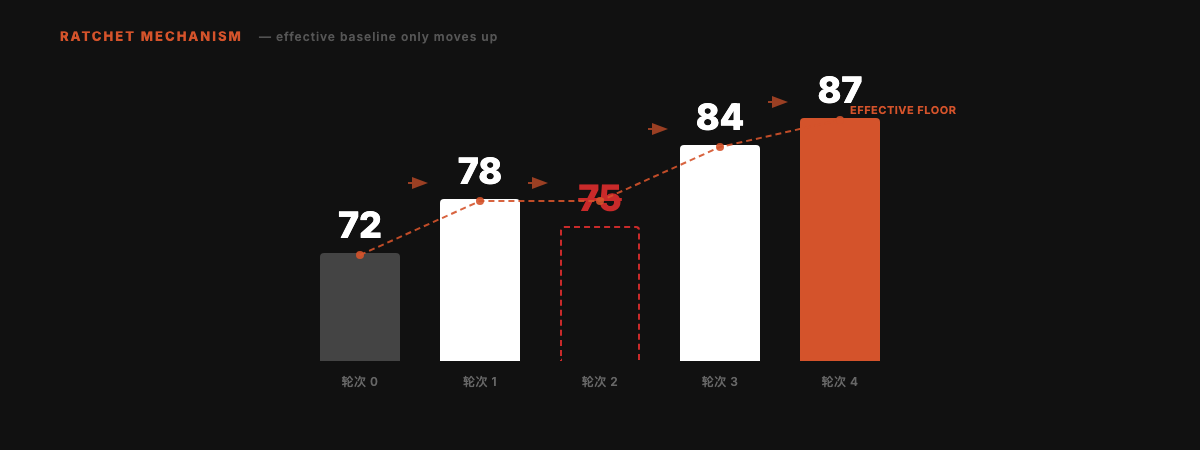
 Darwin.skill is a system that evolves Claude Code Agent Skills through an automated evaluate-improve-test-keep-or-revert loop, inspired by Andrej Karpathy's autoresearch project.
Is this a standalone tool, or a skill file I drop into Claude Code?It is a SKILL.md itself, written to run inside Claude Code and other tools that support the SKILL.md format (Codex, OpenClaw, Trae, CodeBuddy), teaching the agent how to score and optimize other skills.
It is a SKILL.md itself, written to run inside Claude Code and other tools that support the SKILL.md format (Codex, OpenClaw, Trae, CodeBuddy), teaching the agent how to score and optimize other skills.How do I start optimizing a skill with it?Load darwin-skill as a Skill in Claude Code, point it at a target SKILL.md, and it walks through baseline scoring, single-dimension edits with git commits, and regression testing, pausing after each phase for your confirmation.
Load darwin-skill as a Skill in Claude Code, point it at a target SKILL.md, and it walks through baseline scoring, single-dimension edits with git commits, and regression testing, pausing after each phase for your confirmation.What do I need to run it?You just need an agent tool that supports the SKILL.md format and git, since the optimization loop edits the target skill file via git commits and reverts.
You just need an agent tool that supports the SKILL.md format and git, since the optimization loop edits the target skill file via git commits and reverts.Does it run fully automatically?No — it is deliberately human-in-the-loop: it forces a CHECKPOINT pause after each single-dimension optimization and a STOP if score gains fall below threshold, unlike SkillOpt's fully autonomous design.
No — it is deliberately human-in-the-loop: it forces a CHECKPOINT pause after each single-dimension optimization and a STOP if score gains fall below threshold, unlike SkillOpt's fully autonomous design.What are the 9 evaluation dimensions it scores a skill on?Skills get a weighted score out of 100 across 9 dimensions, with v2.0 adding Failure Mechanism Encoding, Actionable Specificity, and a High-Risk Action Blacklist based on Microsoft's SkillLens research.
Skills get a weighted score out of 100 across 9 dimensions, with v2.0 adding Failure Mechanism Encoding, Actionable Specificity, and a High-Risk Action Blacklist based on Microsoft's SkillLens research.Why human-in-the-loop instead of full automation like SkillOpt?The author treats skill quality as more subjective than a training loss, so baseline review, each dimension edit, and regression testing force a human checkpoint instead of running unattended.
The author treats skill quality as more subjective than a training loss, so baseline review, each dimension edit, and regression testing force a human checkpoint instead of running unattended.What anti-patterns does it explicitly forbid?Eight banned patterns, including letting the same AI both edit and score a skill (LLM self-evaluation was only 46.4% accurate per SkillLens), using 'git reset --hard' for rollbacks, and padding scores with redundant content.
Eight banned patterns, including letting the same AI both edit and score a skill (LLM self-evaluation was only 46.4% accurate per SkillLens), using 'git reset --hard' for rollbacks, and padding scores with redundant content.Is there real data showing the optimization actually helps?Yes — on the huashu-gpt-image skill the score rose from 80.8 to 91.5 to 91.65 across rounds, confirmed by independent evaluator consensus, and the project's own self-score rose from 86.05 to 92.7.
Yes — on the huashu-gpt-image skill the score rose from 80.8 to 91.5 to 91.65 across rounds, confirmed by independent evaluator consensus, and the project's own self-score rose from 86.05 to 92.7.What are similar projects?Raven, CUAWright, hermes-agent-self-evolution, PRAXIST, SkillOpt, pstack, modex-mh-agent, Proteus
Raven, CUAWright, hermes-agent-self-evolution, PRAXIST, SkillOpt, pstack, modex-mh-agent, ProteusWhich topics is it in?self-evolving-agents, self-evolving, skill-md, optimization, autonomous-agents, evaluation, skill, skills, anthropic, html, claude, agent-skills
self-evolving-agents, self-evolving, skill-md, optimization, autonomous-agents, evaluation, skill, skills, anthropic, html, claude, agent-skills