




1.8K ·GitHub
What is this?
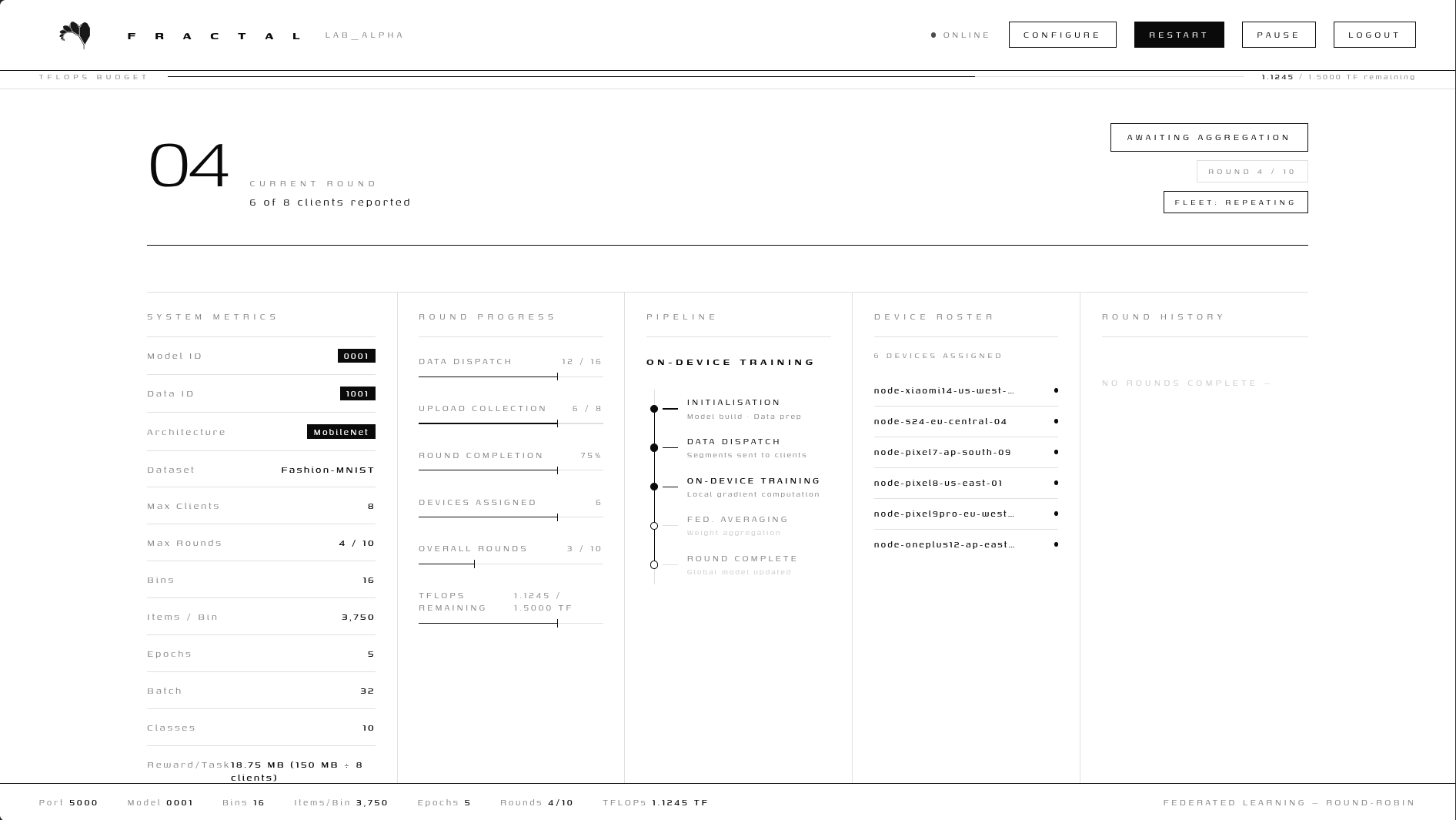
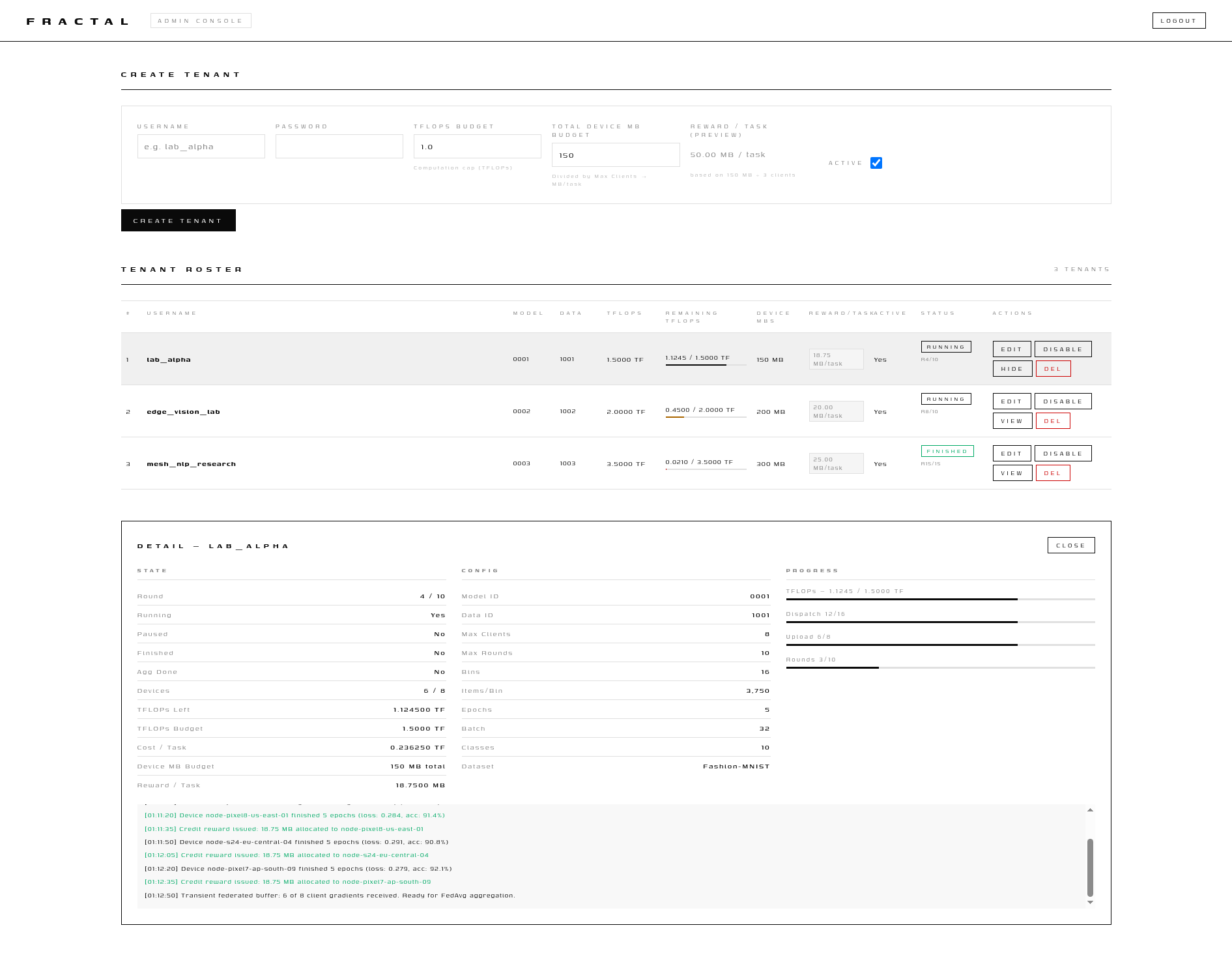
 FractalCore is the central backend orchestrator for the Fractal decentralized compute ecosystem. It coordinates federated learning tasks across Android edge nodes, manages multi-tenant TFLOPs budgets, and runs FedAvg weight aggregation to build a global model.
Is this an app I install, or a server I run myself?It is a self-hosted Python/Flask backend with a web-based admin and tenant dashboard, not a desktop or mobile app. You run it as a server that mobile edge nodes talk to over its API.
It is a self-hosted Python/Flask backend with a web-based admin and tenant dashboard, not a desktop or mobile app. You run it as a server that mobile edge nodes talk to over its API.How do I get the server running?The README documents Docker deployment as the production standard, with manual host execution as an alternative for running the Flask server directly.
The README documents Docker deployment as the production standard, with manual host execution as an alternative for running the Flask server directly.What stack does the server rely on?It's built on Python/Flask, uses TensorFlow and NumPy to run FedAvg aggregation, torchao/ExecuTorch/XNNPACK for model slicing, and Google Cloud Firestore for reward ledgering.
It's built on Python/Flask, uses TensorFlow and NumPy to run FedAvg aggregation, torchao/ExecuTorch/XNNPACK for model slicing, and Google Cloud Firestore for reward ledgering.Can I use this commercially?No. It's source-available but proprietary, and the license explicitly forbids commercial use without written authorization from the author.
No. It's source-available but proprietary, and the license explicitly forbids commercial use without written authorization from the author.What kind of devices does it coordinate?It orchestrates Android edge nodes (from the companion FractalAndroid project) that train locally and upload checkpoints, while this repo is the centralized coordinator they report to.
It orchestrates Android edge nodes (from the companion FractalAndroid project) that train locally and upload checkpoints, while this repo is the centralized coordinator they report to.Does the server see or store my raw training data?No. The security model claims zero data ingress: raw user data never leaves the edge device, only checkpoints and aggregated weights reach the server.
No. The security model claims zero data ingress: raw user data never leaves the edge device, only checkpoints and aggregated weights reach the server.What does the FedAvg aggregation actually do?It validates uploaded client checkpoints against the active task registry and deterministically averages their weights once a training round hits its threshold, producing the next global model checkpoint.
It validates uploaded client checkpoints against the active task registry and deterministically averages their weights once a training round hits its threshold, producing the next global model checkpoint.What is the model slicer for?It ingests full Hugging Face models like Llama 3 8B or TinyLlama, applies INT4 quantization and static ATen graph tracing, then lowers them with XNNPACK into small .pte partitions that mobile nodes can mmap without blowing their memory budget.
It ingests full Hugging Face models like Llama 3 8B or TinyLlama, applies INT4 quantization and static ATen graph tracing, then lowers them with XNNPACK into small .pte partitions that mobile nodes can mmap without blowing their memory budget.What are Liquid MBs?They are the reward tokens credited to a tenant's Firestore profile after a mobile node's hardware telemetry and checkpoint are verified as genuine contributed compute.
They are the reward tokens credited to a tenant's Firestore profile after a mobile node's hardware telemetry and checkpoint are verified as genuine contributed compute.How are different tenants kept from seeing each other's data?Each tenant gets a physically separate storage path on disk and must authenticate with a per-session X-Auth-Token header, so there's no shared cookie state or cross-tenant filesystem access.
Each tenant gets a physically separate storage path on disk and must authenticate with a per-session X-Auth-Token header, so there's no shared cookie state or cross-tenant filesystem access.What are similar projects?FractalWorkspace, GLM-5.3-Flash-EXL3-2x-DGX-Sparks-TensorFold, FractalWorkspace, InstinctFlash, decider, vllm-omni, openvino, Qwen3.8-Flash-Next-Dual-DGX-Sparks
FractalWorkspace, GLM-5.3-Flash-EXL3-2x-DGX-Sparks-TensorFold, FractalWorkspace, InstinctFlash, decider, vllm-omni, openvino, Qwen3.8-Flash-Next-Dual-DGX-SparksWhich topics is it in?federated-learning, orchestrator, flask, model-serving, edge-ai, tensorflow, iot, quantization, authentication, distributed-systems, inference, huggingface
federated-learning, orchestrator, flask, model-serving, edge-ai, tensorflow, iot, quantization, authentication, distributed-systems, inference, huggingface