




Что это такое?
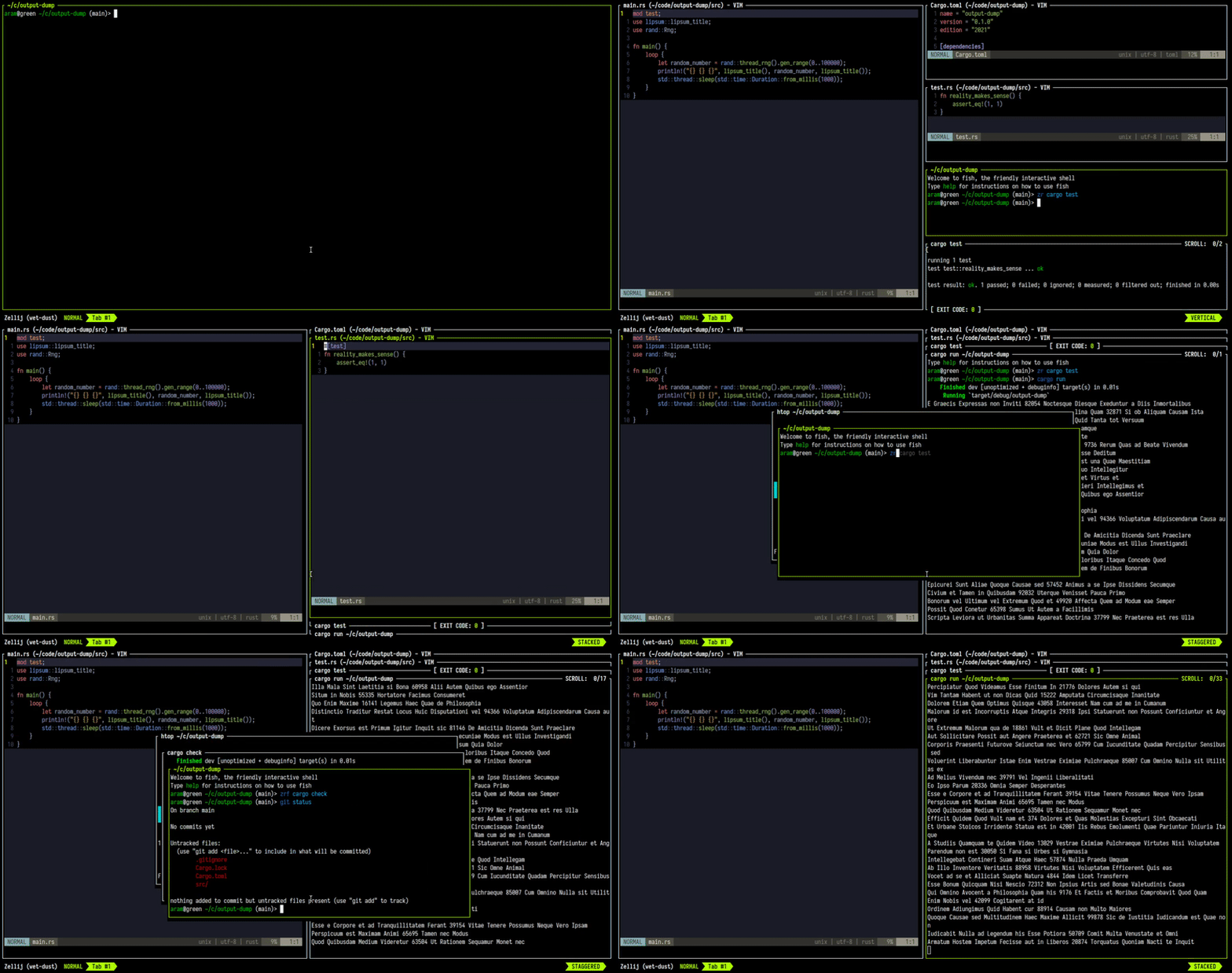
 Zellij — это терминальный рабочий инструмент (его часто называют терминальным мультиплексором), который позволяет делить терминал на панели и вкладки. В нём есть раскладки и плагины, он удобен сразу после установки и при этом достаточно мощный.
Это библиотека или программа, которую я запускаю прямо в терминале?Это самостоятельное терминальное приложение (TUI), которое вы запускаете напрямую, а не библиотека, которую подключают к коду.
Это самостоятельное терминальное приложение (TUI), которое вы запускаете напрямую, а не библиотека, которую подключают к коду.Как установить и начать пользоваться?Установите его через менеджер пакетов вашей ОС, скачайте готовый исполняемый файл из последнего релиза и поместите его в $PATH, или соберите из исходников с помощью cargo.
Установите его через менеджер пакетов вашей ОС, скачайте готовый исполняемый файл из последнего релиза и поместите его в $PATH, или соберите из исходников с помощью cargo.Нужны ли Rust или cargo, чтобы его запустить?Нет, cargo нужен только для сборки из исходников. В остальных случаях доступны готовые бинарные файлы и пакеты для ОС.
Нет, cargo нужен только для сборки из исходников. В остальных случаях доступны готовые бинарные файлы и пакеты для ОС.Стоит ли использовать сборку из ветки main?Нет, ветка main содержит предварительный код, который может быть нерабочим или сломанным и даже повредить кэш для будущих официальных релизов, поэтому рекомендуется использовать последний релиз.
Нет, ветка main содержит предварительный код, который может быть нерабочим или сломанным и даже повредить кэш для будущих официальных релизов, поэтому рекомендуется использовать последний релиз.Для кого это предназначено?Это инструмент и для новичков, и для опытных пользователей терминала, включая разработчиков и людей, которые занимаются эксплуатацией систем. Продвинутым пользователям доступна глубокая настройка.
Это инструмент и для новичков, и для опытных пользователей терминала, включая разработчиков и людей, которые занимаются эксплуатацией систем. Продвинутым пользователям доступна глубокая настройка.Работает ли это на Linux и macOS?Да, теги платформ и упаковка подтверждают поддержку Linux и macOS. Кроме того, можно запустить его в браузере через встроенный веб-клиент.
Да, теги платформ и упаковка подтверждают поддержку Linux и macOS. Кроме того, можно запустить его в браузере через встроенный веб-клиент.Могут ли несколько человек одновременно работать в одной терминальной сессии?Да, Zellij поддерживает настоящую совместную работу: несколько пользователей могут вместе работать в одной терминальной сессии.
Да, Zellij поддерживает настоящую совместную работу: несколько пользователей могут вместе работать в одной терминальной сессии.Можно ли писать плагины для Zellij на любом языке?Да, в Zellij есть система плагинов, которая поддерживает любой язык, компилируемый в WebAssembly.
Да, в Zellij есть система плагинов, которая поддерживает любой язык, компилируемый в WebAssembly.Можно ли попробовать Zellij без предварительной установки?Да, в README описан способ попробовать Zellij без установки, с отдельными инструкциями для оболочек bash/zsh и fish/xonsh.
Да, в README описан способ попробовать Zellij без установки, с отдельными инструкциями для оболочек bash/zsh и fish/xonsh.Откуда у Zellij такое название?Название происходит от традиционного исламского стиля мозаичной облицовки из вручную обработанных керамических плиток, которые складываются в геометрические узоры. Такой стиль встречается в архитектуре Марокко, Алжира, Туниса и Андалусии.
Название происходит от традиционного исламского стиля мозаичной облицовки из вручную обработанных керамических плиток, которые складываются в геометрические узоры. Такой стиль встречается в архитектуре Марокко, Алжира, Туниса и Андалусии.Which topics is it in?multiplexer, workspace, unix, collaboration, wasm, tui, command-line, plugin, rust, productivity, gui, terminal
multiplexer, workspace, unix, collaboration, wasm, tui, command-line, plugin, rust, productivity, gui, terminal