
photo-frame-dashboard README

The project's README from github.com/wesbos/photo-frame-dashboard. As one markdown file: README.md.

Taking over Android photo frames

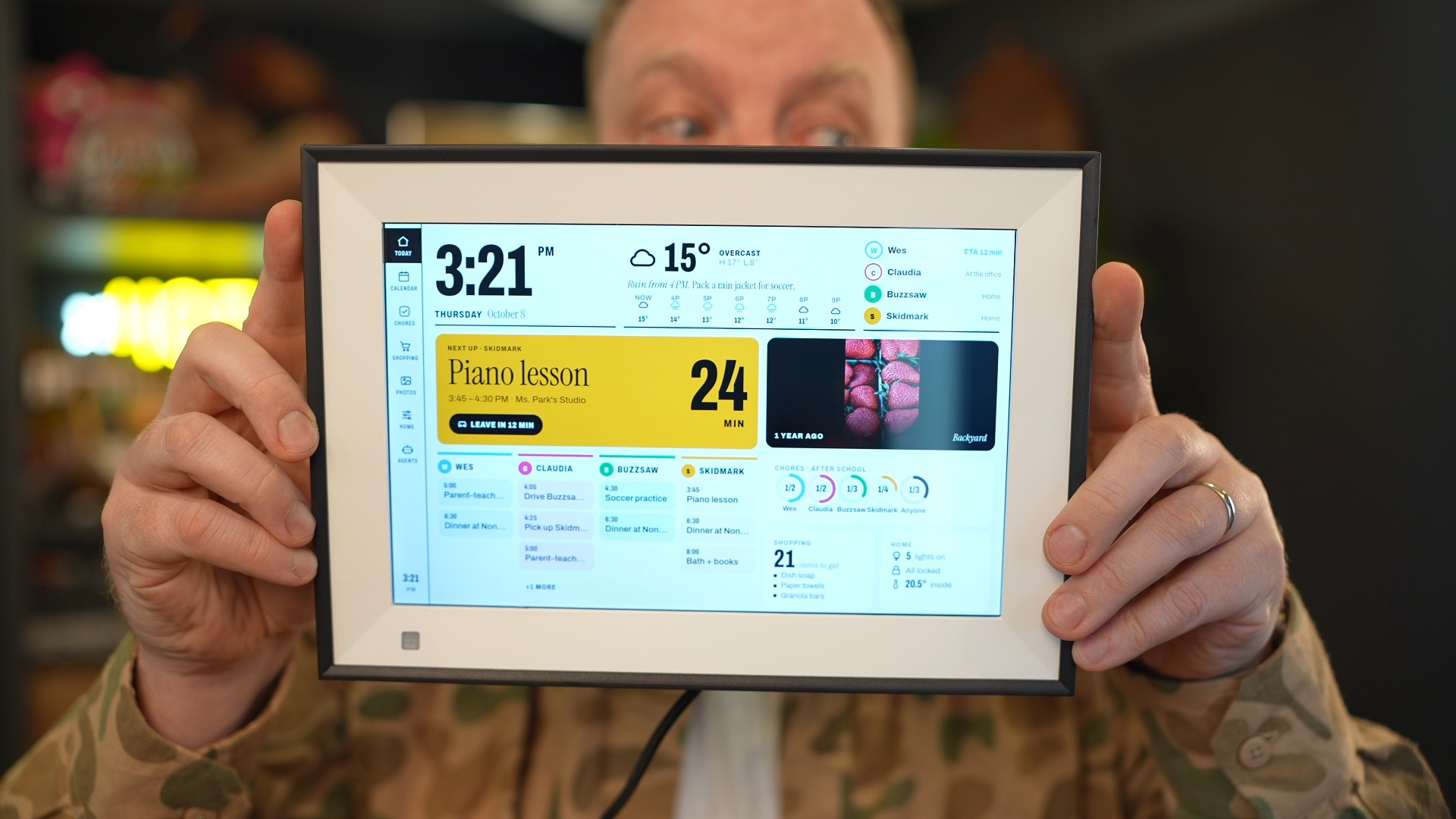
The family dashboard running on the BIUFRAME 10.1

▶️ Watch the video: https://youtu.be/ZLycoUMltNI

If you are coming from reddit or youtube, you can purchase almost any photo frame from amazon. This is the one, I used: https://amzn.to/4zneGNM (amazon aff link)

Notes and scripts from getting full control of locked-down Android displays: getting ADB, backing up the firmware, getting root, removing the vendor app, and running our own launcher, browser and kiosk app.

Which frame do you have? Frames sold under the same name, even the same Amazon listing, can have different boards. Check Settings → About before you follow any guide:

Skylight Calendar 15" (150-CAL) BIUFRAME 10.1" picture frame (in the video) PF1007L 10.1" picture frame (BIUFRAME and others)
SoC / Android Rockchip RK3566, Android 12 Rockchip RK3126, Android 6.0.1 Allwinner A33, Android 6.0.1, AiMOR home app
USB name / IDs rockchip D156, 2207:0007 (MTP) → 2207:0006 (ADB) Synergy 10X1, 2207:0006 (ADB) 1f3a:1000 (mass storage only) → 1f3a:1002 (ADB, after the boot patch)
Cable Not recorded USB-C. The first cable gave nothing, the second worked USB-C-only units need a USB-A to USB-C cable. USB-C to USB-C gives no power or data.
The cable in the box is likely power only. It does not carry data. Use another cable that already allows data transfer.
ADB out of the box No Yes, accept the prompt on screen No
How we got ADB Hidden 5-tap manufacturer menu in the Skylight app Already on Patched the boot ramdisk from U-Boot, over USB (FEL) or from the SD card alone
Backup Rockusb loader, with a patched RAM helper to read past 32 MiB dd over ADB as root Read-only U-Boot ums disk, or U-Boot dump to the SD card
Root Added /force_debuggable to the boot ramdisk, then adb root Ships with SuperSU su Stock build is debuggable: ADB shell is root once adbd runs
End result Lawnchair launcher, USB Wi-Fi dongle (onboard radio is dead) Firefox, launcher, WebView 106, custom kiosk app Launcher, WebView 106, kiosk app. Vendor app has a remote root shell: disable it

dashboard/ is the family dashboard we run on the BIUFRAME (it uses mock data). It is a Vite web app deployed to Cloudflare Workers, plus dashboard/kiosk/: a small full-screen WebView Android app, built without Gradle, that shows it. Hold two fingers still for 1.5 s to exit to the launcher.

Each is a record of one unit. Frames sold under the same name can have different boards and firmware. These are not universal flashing guides.

The PF1007L has been tested on three units by three owners. Its docs combine their findings. The vendor app on it accepts root shell commands from the vendor's server, so read aimor-remote-root-shell.md before it goes online. Do not run the Rockchip setup script on it.

For agents: start here

You are probably helping someone with a similar device plugged into a Mac over USB. Read this section, then follow the links for the phase you are in. Do not run anything from a device section unless the identity checks match exactly.

Rules we learned the hard way

  1. Ask the owner before every write. Reads are fine. Writing flash, a partition, /system, or sending a RAM payload to the SoC needs explicit approval for that specific action.
  2. No writes before a verified backup: exact byte count, SHA-256, gzip readback, a check for 0xCC filler, and independent re-reads of a few partitions that match.
  3. Don't trust OKAY. Fastboot reported a successful boot write on the Skylight that never took effect. Verify writes by reading them back and checking the result on the device.
  4. Stop at the first mismatch in a hash, model string, offset or size. Report it rather than working around it.
  5. One change at a time, undo recorded first. Keep .bak copies next to edited files.
  6. Pin downloads by SHA-256 from official sources (vendor archives, F-Droid, LineageOS, GitHub releases).
  7. Keep dumps private. They contain Wi-Fi passwords, tokens, serials, MAC addresses and copyrighted firmware. Use the ignored backups/ and diagnostics/ folders. Leave unique identifiers out of anything you commit.
  8. Write notes as you go. Keep a per-device file in docs/ like the two below, with observations kept separate from guesses.

Check for updates, and send back what you find

Many people are working on these frames at the same time. New hardware variants, fixes and routes arrive as issues and pull requests, often before they are merged. Your local copy may be out of date.

Check before you start, and again before each write and at the start of each new session:

git fetch origin && git log --oneline HEAD..origin/main   # new commits on main
gh issue list --repo wesbos/photo-frame-dashboard --state all --limit 30
gh pr list --repo wesbos/photo-frame-dashboard --state all --limit 30
gh pr view <number> --repo wesbos/photo-frame-dashboard   # read anything about your device
gh pr diff <number> --repo wesbos/photo-frame-dashboard

Without gh, use https://github.com/wesbos/photo-frame-dashboard/issues and https://github.com/wesbos/photo-frame-dashboard/pulls. Read open PRs about your device, not only merged docs. If newer information contradicts these docs, tell the owner and follow the newer information only after its checks pass on your unit. Unmerged PRs are less reviewed, so treat their scripts with extra care.

Send a pull request when you learn something new about a device that is already documented or about a new one. Examples: a new board or firmware string, a different boot image hash, a cable or port that does or does not work, a step that failed, a better route, or a correction. Failed attempts are useful too.

  1. Check open issues and PRs first. If one already covers your finding, comment there instead.
  2. Create a branch, and add your observations to the device doc in docs/. For a new device, create docs/<device>.md. Keep observations separate from guesses, and say which host OS and which unit you used.
  3. Remove private data: serials, MAC addresses, Wi-Fi details, eMMC CIDs, tokens, whole-disk hashes, dumps and vendor APKs. Firmware strings and boot image hashes are fine.
  4. Show the owner the diff, because the PR is published under their GitHub account. Then open it with gh pr create --repo wesbos/photo-frame-dashboard.

For a PF1007L, include the report template.

Phase map

Phase What to read
1. Identify the hardware USB IDs (Rockchip is VID 2207), adb shell getprop, chip query in loader mode. See the hardware tables in biuframe.md and hardware-research.md.
2. Get ADB Try in this order: (1) over USB (adb devices; accept any "Allow USB debugging" prompt on the screen), (2) over the network (adb connect <ip>:5555), (3) only then a vendor-app trick or a boot patch. The PF1007L boot patch is written from an SD card, see pf1007l-start-here.md. Ideally no one needs (3). For a vendor-app trick, decompile the vendor app (jadx) and look for hidden tap counters and code dialogs: app-analysis.md. Gestures that did not work are in research-log.md.
3. Loader mode Skylight: hold Volume − while connecting power. BIUFRAME: reset button at power-on (unconfirmed). Building rkdeveloptool on Apple silicon: research-log.md.
4. Back up If loader reads past 32 MiB return 0xCC filler, they are not a backup: loader-research.md. Patched helper and full capture: scripts/patch-usb-reader.py, scripts/load-usb-reader.py, scripts/probe-reader.py, scripts/backup-flash.py, scripts/inspect-backup.py. With root, back up over ADB instead: scripts/biuframe-setup.sh backup.
5. Root First check for a shipped su (adb shell su -c id). On Android 10+ user builds, try the debug-ramdisk route: debug-ramdisk-research.md, scripts/build-debug-boot.py. Fastboot write failures: ram-boot-research.md.
6. Make it useful Launcher: android-launcher.md. Old Android (6.x) with a browser, WebView swap, CA roots, swap, nav bar and disabling vendor apps: biuframe-setup-guide.md. Kiosk app and launcher database edits: biuframe.md. A working example of a kiosk app and dashboard is in dashboard/. Build with dashboard/kiosk/build.sh, change DEFAULT_URL in MainActivity.java to your own URL, and target the device's WebView version (see dashboard/vite.config.js).
7. Networking USB reverse tethering with gnirehtet: usb-internet-sharing.md. An app that requires Wi-Fi specifically: onboarding-network-gate.md. Dead onboard Wi-Fi and a USB dongle: usb-wifi-dongle.md.
8. Vendor updates Connecting the stock app to the internet can auto-install APK updates: app-updates.md. Disable vendor updaters (FOTA etc.) before going online.
9. Security hand-off Tell the owner what they now have: biuframe-setup-guide.md.

Device-specific starting points

Other docs

Privacy

backups/, diagnostics/, log/, loader query output and machine-local settings are excluded by .gitignore. They hold full flash dumps, decompiled vendor code, signing keys, and the unit's identifiers. Do not commit them, and do not publish dumps or vendor APKs.

photo-frame-dashboard (wesbos/photo-frame-dashboard)

embedded
Searching Database…

What is this?A collection of device-specific notes and scripts for taking full control of locked-down Android photo frames (Skylight Calendar, BIUFRAME, PF1007L): getting ADB access, dumping firmware, gaining root, removing the vendor app, and running your own launcher, browser or kiosk app.
Is this a ready-made tool or a set of hacking guides?It is a documentation repo: per-device Markdown guides paired with Python and shell scripts for backing up, patching boot images, and gaining root, plus a small example dashboard app shown via a custom Android kiosk WebView.
How do I get started with my frame?Check Settings → About on the frame to identify its SoC and firmware, then open the matching guide (pf1007l-start-here.md, biuframe-setup-guide.md, or next-session.md for Skylight), and try ADB over USB first, then over the network.
What hardware do I need besides the frame?A USB cable that actually carries data (the box cable is often power-only on USB-C-only units, so you need a USB-A to USB-C data cable), plus standard adb/fastboot tooling and, for some models, rkdeveloptool or an SD card for the boot patch.
Are these guides universal for any frame with the same name?No, frames sold under the same listing can ship different boards and firmware, so each guide only documents one specific unit; you must verify the SoC and firmware string before following any steps, and fastboot reporting OKAY does not guarantee the write actually took effect.
Who is this repo for?Hobbyists and hackers with physical access to one of these locked-down Android photo frames who want to replace the stock vendor app with their own launcher, browser, or kiosk dashboard.
Is it safe to commit the backups and dumps this repo produces?No, full flash dumps and diagnostics contain Wi-Fi passwords, tokens, serials, MAC addresses and copyrighted firmware, so they are gitignored and must never be committed or published.
What is the dashboard/ folder for?It is a mock family dashboard built as a Vite web app deployed to Cloudflare Workers, displayed full-screen through a custom Android kiosk WebView app (dashboard/kiosk/) built without Gradle; holding two fingers for 1.5 seconds exits back to the launcher.
Can an AI coding agent safely run these scripts?The README has a dedicated section of rules for agents: ask the owner before every write, verify backups with SHA-256 and readback before writing anything, and make one change at a time with a .bak copy kept.
Is there a one-click script for every frame model?No. Only the BIUFRAME has a single setup script (scripts/biuframe-setup.sh); the Skylight Calendar has no one-shot script yet, and the PF1007L runs read-only tests first before choosing between two separate root routes.
Creator
wesbos
Size
2.7 MB
Stars
1.3K
Updated
CommitOct 15
Age
10d
Commits · 90 Days