

Что это такое?
 Порт ради паритета проекта Claw Code — перестройка кодинг-харнесса Claude Code, за отслеживаемым снимком исходников которого автор решил не следить. Заявленная цель: доказать, что открытый кодинг-харнесс можно создать автономно, публично и на высокой скорости.
Порт ради паритета проекта Claw Code — перестройка кодинг-харнесса Claude Code, за отслеживаемым снимком исходников которого автор решил не следить. Заявленная цель: доказать, что открытый кодинг-харнесс можно создать автономно, публично и на высокой скорости.То есть это уже работающий кодинг-агент или всё ещё незавершённый порт?Сейчас это рабочее пространство для портирования, а не готовый агент: Python-дерево в src/ предоставляет CLI (main.py), который выводит манифесты и сводки портирования, а активный Rust-воркспейс лежит в rust/.
Сейчас это рабочее пространство для портирования, а не готовый агент: Python-дерево в src/ предоставляет CLI (main.py), который выводит манифесты и сводки портирования, а активный Rust-воркспейс лежит в rust/.С чего мне начать?Начните с USAGE.md в rust/ — там сборка, аутентификация, CLI, сессии и воркфлоу parity-harness; rust/README.md рассказывает про крейты. На стороне Python quickstart выводит сводку портирования, манифест, список модулей и проверку.
Начните с USAGE.md в rust/ — там сборка, аутентификация, CLI, сессии и воркфлоу parity-harness; rust/README.md рассказывает про крейты. На стороне Python quickstart выводит сводку портирования, манифест, список модулей и проверку.Что нужно установить, чтобы запускать проект или ковыряться в коде?Требования нигде не описаны. Но так как репозиторий сочетает Rust-воркспейс (rust/ со своим Rust CI) и Python-дерево портирования (src/), чтобы работать по всему репозиторию, понадобятся оба тулчейна.
Требования нигде не описаны. Но так как репозиторий сочетает Rust-воркспейс (rust/ со своим Rust CI) и Python-дерево портирования (src/), чтобы работать по всему репозиторию, понадобятся оба тулчейна.Порт уже работает как оригинал?Пока нет: он повторяет набор файлов из архива, имена подсистем и перечни команд/инструментов, но не эквивалентен по поведению в рантайме — в Python-дереве исполняемых рантайм-частей меньше. Репозиторий также заархивирован как временная работа на время миграции claw-code.
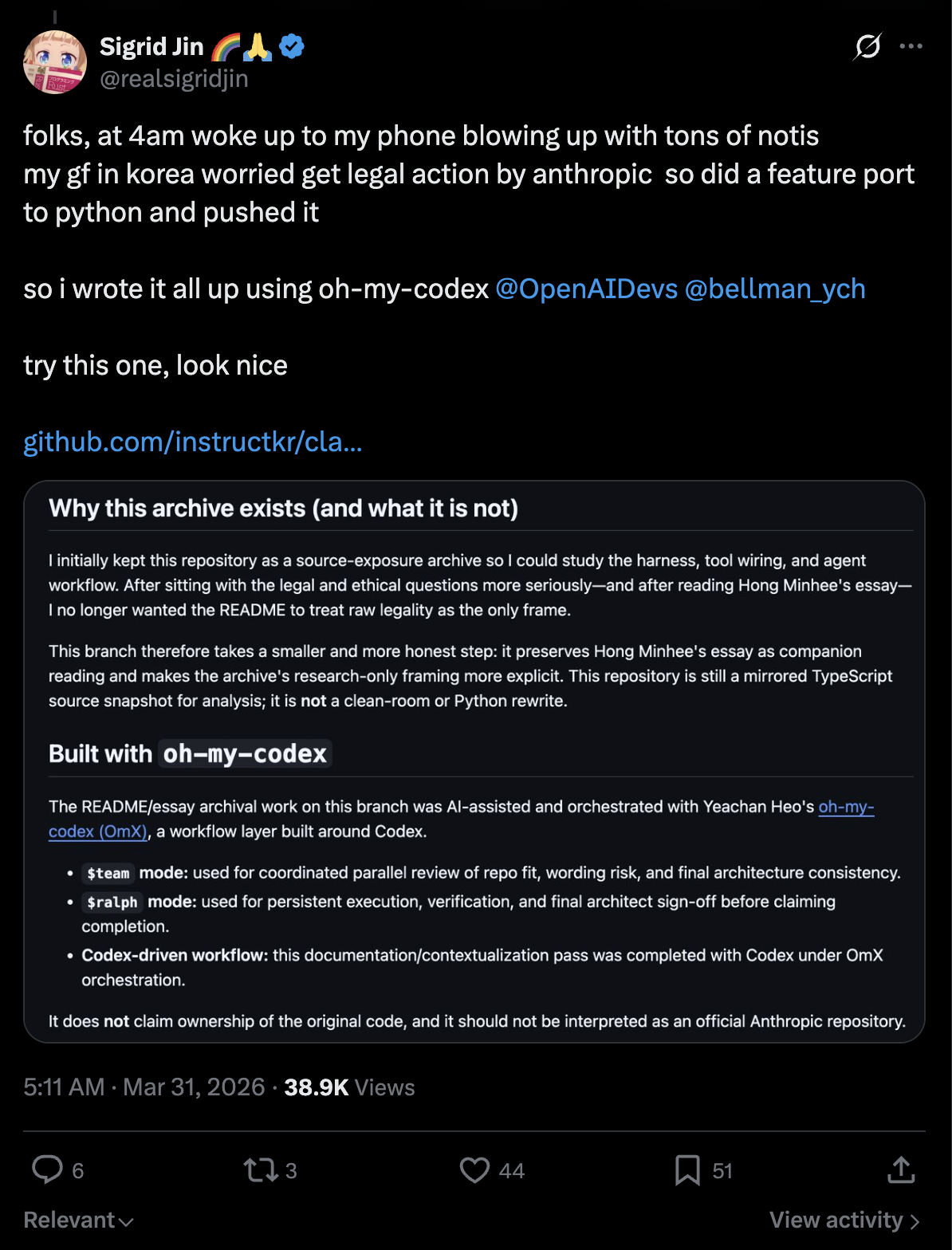
Пока нет: он повторяет набор файлов из архива, имена подсистем и перечни команд/инструментов, но не эквивалентен по поведению в рантайме — в Python-дереве исполняемых рантайм-частей меньше. Репозиторий также заархивирован как временная работа на время миграции claw-code.Почему бы просто не использовать утёкший исходник Claude Code, откуда всё это взялось?Взвесив юридические и этические вопросы (и прочитав эссе на эту тему), автор не захотел, чтобы утёкший снимок оставался отслеживаемым деревом исходников, поэтому репозиторий переключился на работу по портированию.
Взвесив юридические и этические вопросы (и прочитав эссе на эту тему), автор не захотел, чтобы утёкший снимок оставался отслеживаемым деревом исходников, поэтому репозиторий переключился на работу по портированию.Это официально связано с Anthropic или Claude Code?Нет. В README сказано, что репозиторий не претендует на владение исходными материалами Claude Code и не аффилирован с Anthropic, не одобрен ею и не поддерживается ею.
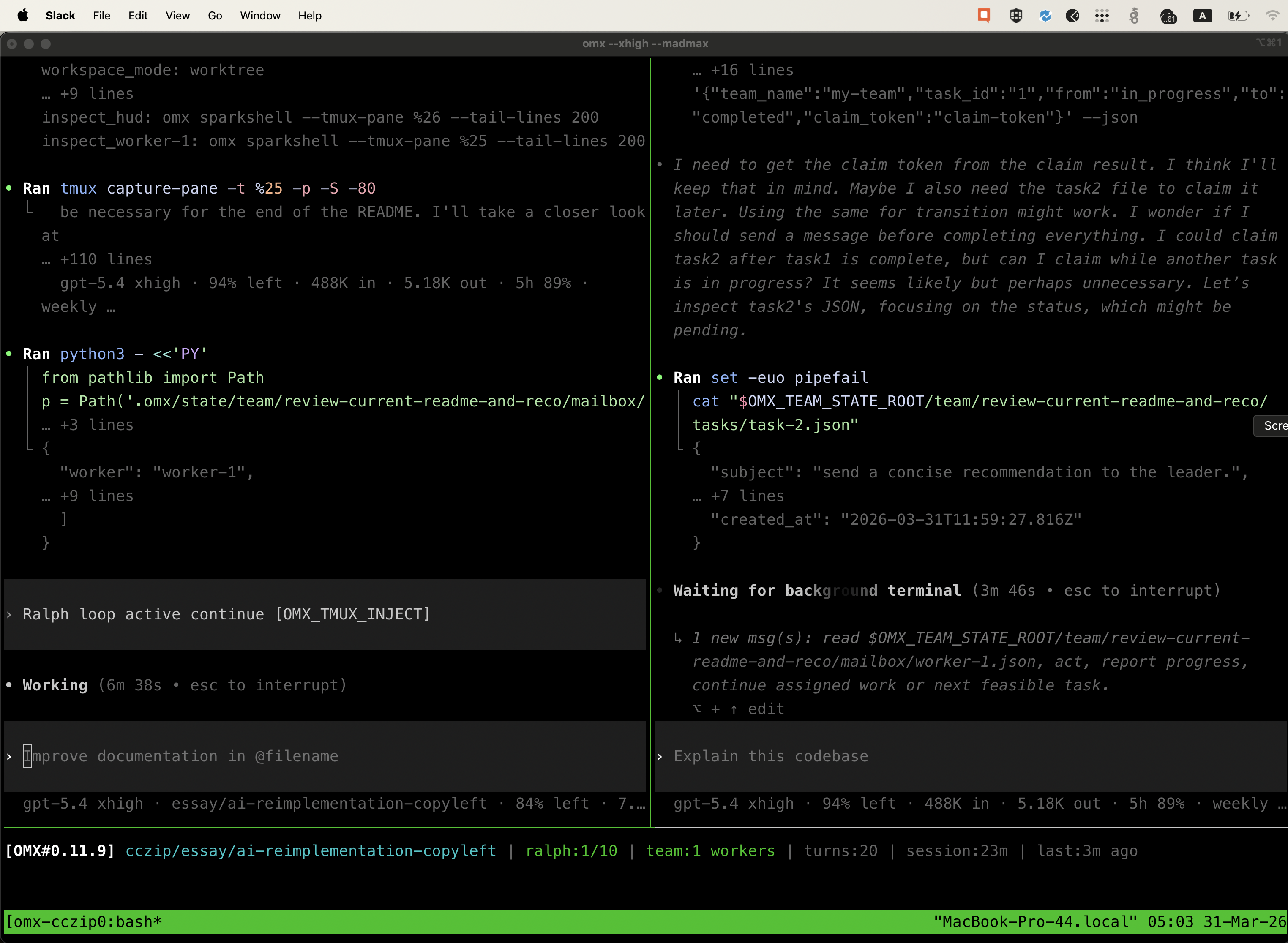
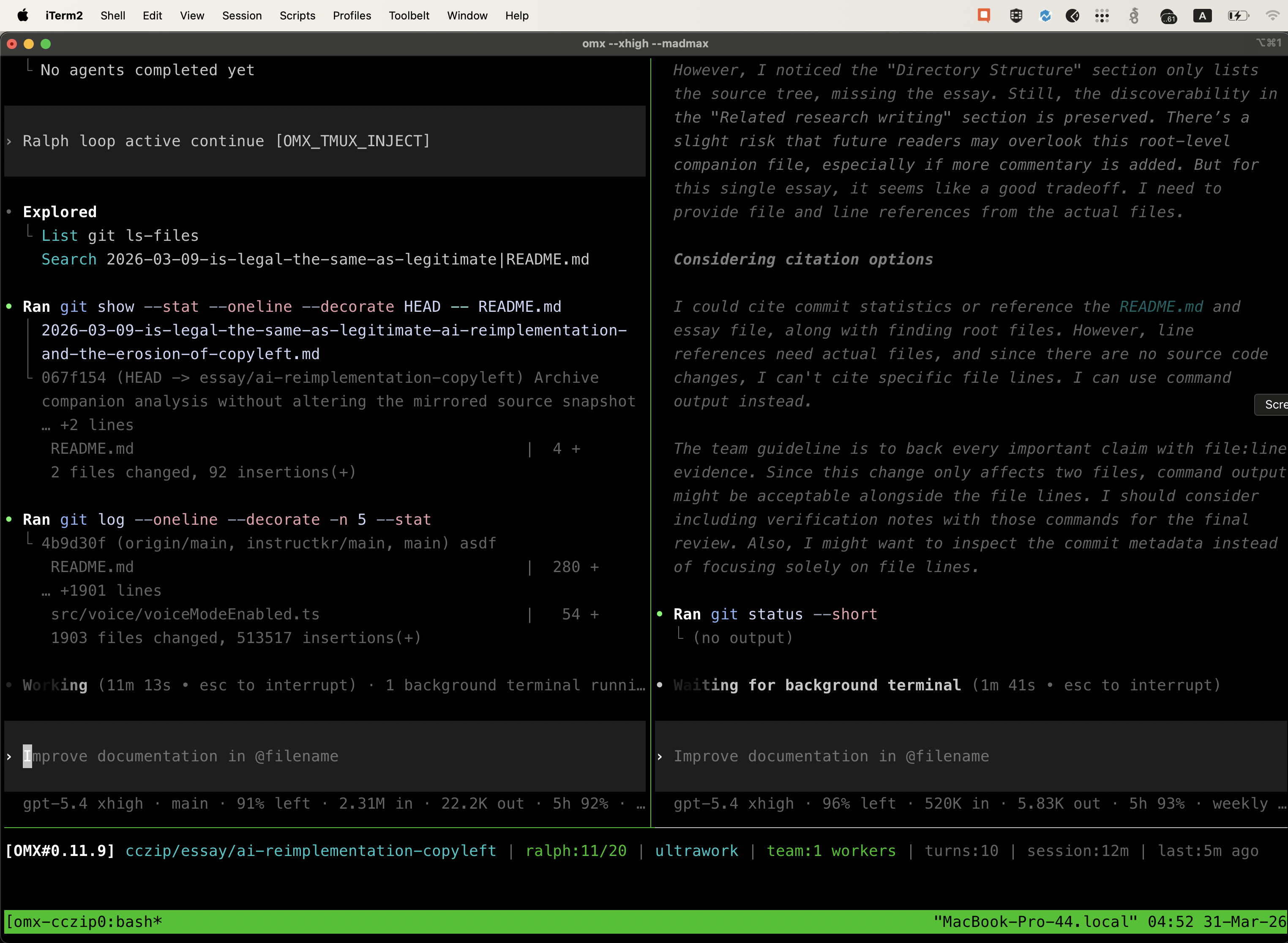
Нет. В README сказано, что репозиторий не претендует на владение исходными материалами Claude Code и не аффилирован с Anthropic, не одобрен ею и не поддерживается ею.Если код пишут не люди, то кто?Автономные воркфлоу claw (lobsters/claws): параллельные кодинг-сессии, событийная оркестрация, циклы восстановления и машиночитаемое состояние дорожек. Люди вроде Bellman / Yeachan Heo задают направление; реструктуризация и документация были скоординированы через oh-my-codex (OmX) поверх Codex.
Автономные воркфлоу claw (lobsters/claws): параллельные кодинг-сессии, событийная оркестрация, циклы восстановления и машиночитаемое состояние дорожек. Люди вроде Bellman / Yeachan Heo задают направление; реструктуризация и документация были скоординированы через oh-my-codex (OmX) поверх Codex.В описании сказано, что это порт на Rust, а в README — что всё строится вокруг Python. Так что же верно?Есть и то и другое: баннер README указывает на активный Rust-воркспейс в rust/, а Porting Status говорит, что основное дерево исходников теперь в первую очередь на Python, в src/. Обе части сосуществуют, пока идёт миграция.
Есть и то и другое: баннер README указывает на активный Rust-воркспейс в rust/, а Porting Status говорит, что основное дерево исходников теперь в первую очередь на Python, в src/. Обе части сосуществуют, пока идёт миграция.What are similar projects?munder-difflin, openrig, hive, deer-flow, ruflo, OpenTrade-Agent, fractal, agentbox
munder-difflin, openrig, hive, deer-flow, ruflo, OpenTrade-Agent, fractal, agentboxWhich topics is it in?harness-engineering, harness, autonomous-agents, orchestration, multi-agent, developers, coding-agent, rust, codex, claude-code, automation, ai-agents
harness-engineering, harness, autonomous-agents, orchestration, multi-agent, developers, coding-agent, rust, codex, claude-code, automation, ai-agents