
















62.6K ·GitHub
Что это такое?
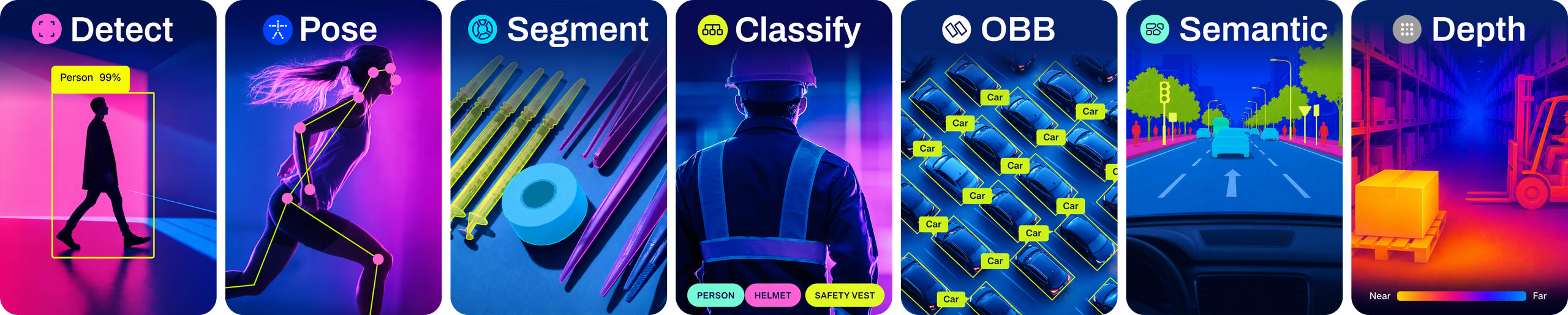
 Ultralytics YOLO — это семейство современных моделей компьютерного зрения (YOLO26, YOLO11, YOLOv8 и др.), которые умеют обнаруживать объекты, выполнять сегментацию экземпляров, семантическую сегментацию, классификацию изображений, оценку позы, обнаружение повёрнутых объектов, оценку глубины и отслеживание нескольких объектов в видео.
Ultralytics YOLO — это семейство современных моделей компьютерного зрения (YOLO26, YOLO11, YOLOv8 и др.), которые умеют обнаруживать объекты, выполнять сегментацию экземпляров, семантическую сегментацию, классификацию изображений, оценку позы, обнаружение повёрнутых объектов, оценку глубины и отслеживание нескольких объектов в видео.Это библиотека Python или отдельное приложение?Это пакет Python, который устанавливается через pip и даёт как инструмент командной строки (команда 'yolo'), так и программный интерфейс на Python; отдельного графического приложения нет.
Это пакет Python, который устанавливается через pip и даёт как инструмент командной строки (команда 'yolo'), так и программный интерфейс на Python; отдельного графического приложения нет.Как начать пользоваться?Установите пакет ultralytics через pip, а затем запускайте задачи либо через командную строку yolo (например, 'yolo predict ...'), либо импортировав его в скрипт Python с теми же аргументами.
Установите пакет ultralytics через pip, а затем запускайте задачи либо через командную строку yolo (например, 'yolo predict ...'), либо импортировав его в скрипт Python с теми же аргументами.Что нужно установить заранее?Нужны Python 3.8+ и PyTorch 1.8+; в качестве альтернативы предлагаются установка через Conda, Docker или сборка из исходного кода через Git.
Нужны Python 3.8+ и PyTorch 1.8+; в качестве альтернативы предлагаются установка через Conda, Docker или сборка из исходного кода через Git.Предобученные модели работают сразу, без настройки?Да — веса каждой модели автоматически скачиваются из последнего релиза Ultralytics при первом использовании; они предобучены на стандартных наборах данных (COCO, Cityscapes, ImageNet, DOTAv1) в зависимости от задачи.
Да — веса каждой модели автоматически скачиваются из последнего релиза Ultralytics при первом использовании; они предобучены на стандартных наборах данных (COCO, Cityscapes, ImageNet, DOTAv1) в зависимости от задачи.Можно ли использовать это в коммерческих целях бесплатно?Код распространяется под лицензией AGPL-3.0, которая бесплатна для использования в открытых проектах, но для закрытых коммерческих решений Ultralytics требует покупки отдельной корпоративной лицензии (Enterprise License).
Код распространяется под лицензией AGPL-3.0, которая бесплатна для использования в открытых проектах, но для закрытых коммерческих решений Ultralytics требует покупки отдельной корпоративной лицензии (Enterprise License).Какие задачи действительно могут решать модели YOLO?Обнаружение объектов, сегментацию экземпляров, семантическую сегментацию, классификацию, оценку позы, обнаружение повёрнутых объектов, оценку глубины и отслеживание нескольких объектов в кадрах видео — всё через один и тот же пакет.
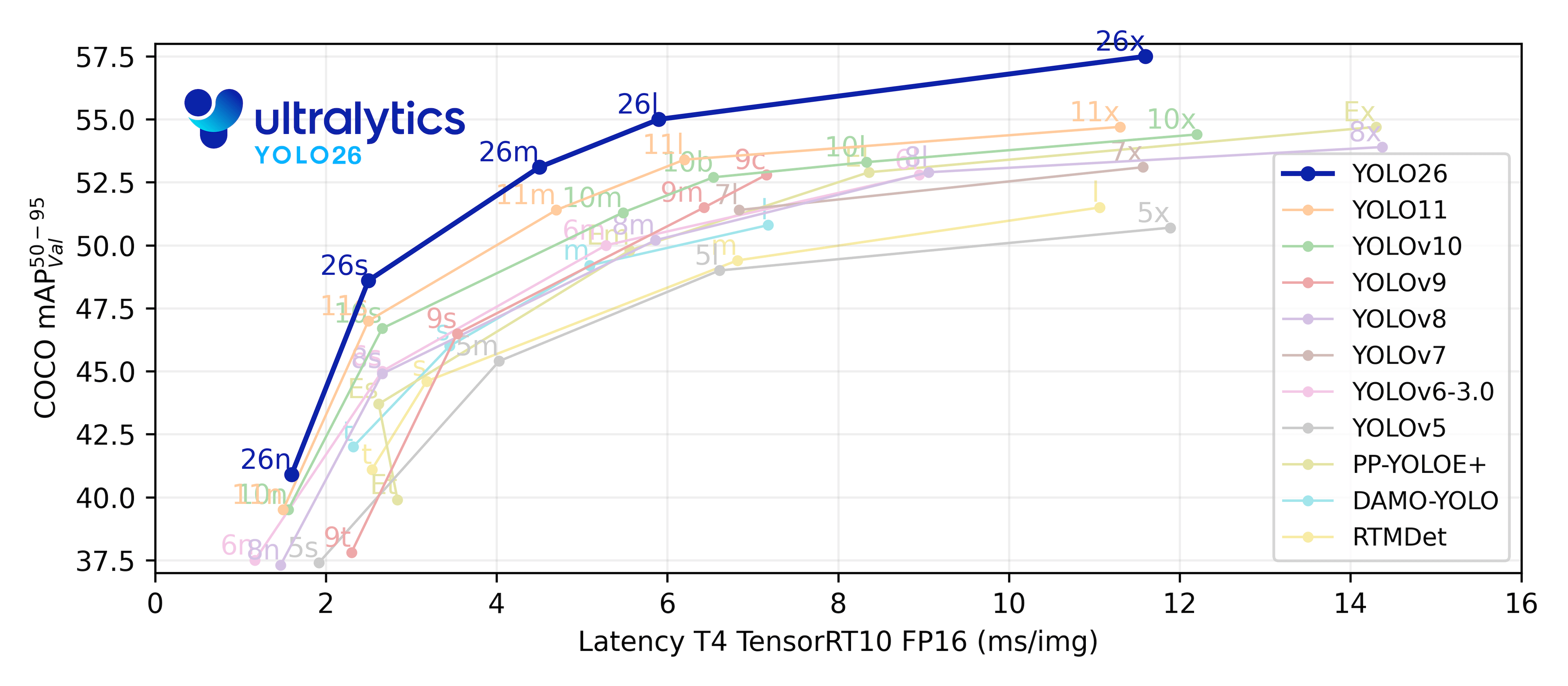
Обнаружение объектов, сегментацию экземпляров, семантическую сегментацию, классификацию, оценку позы, обнаружение повёрнутых объектов, оценку глубины и отслеживание нескольких объектов в кадрах видео — всё через один и тот же пакет.Что нового в YOLO26 по сравнению с YOLO11 или YOLOv8?YOLO26 — новейшее семейство моделей от Ultralytics с отдельными вариантами для обнаружения, сегментации, оценки позы и семантической сегментации; в README её результаты сравниваются напрямую с YOLO11 и YOLOv8 по тем же таблицам mAP и скорости.
YOLO26 — новейшее семейство моделей от Ultralytics с отдельными вариантами для обнаружения, сегментации, оценки позы и семантической сегментации; в README её результаты сравниваются напрямую с YOLO11 и YOLOv8 по тем же таблицам mAP и скорости.Могу ли я сам воспроизвести цифры из бенчмарков?Да: в каждой таблице результатов указана точная команда CLI, например 'yolo val detect data=coco.yaml device=0', так что можно повторить ту же оценку у себя локально.
Да: в каждой таблице результатов указана точная команда CLI, например 'yolo val detect data=coco.yaml device=0', так что можно повторить ту же оценку у себя локально.What are similar projects?yolov5, X-AnyLabeling, yolov7, cvat, detectron2, yolov3, deep-learning-for-image-processing, Swin-Transformer
yolov5, X-AnyLabeling, yolov7, cvat, detectron2, yolov3, deep-learning-for-image-processing, Swin-TransformerWhich topics is it in?instance-segmentation, semantic-segmentation, tracking, yolo, pose-estimation, image-classification, object-detection, onnx, agpl, nvidia, computer-vision, cuda
instance-segmentation, semantic-segmentation, tracking, yolo, pose-estimation, image-classification, object-detection, onnx, agpl, nvidia, computer-vision, cuda