




Что это такое?
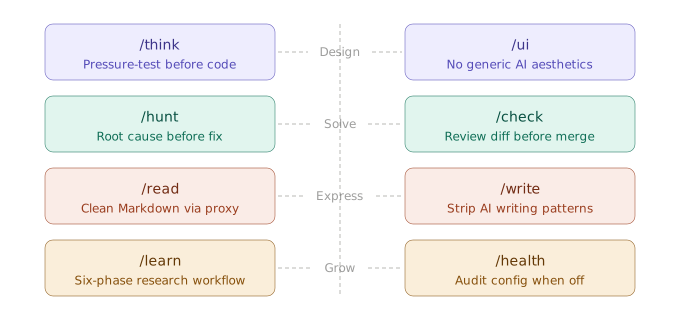
 Waza — это набор из восьми «навыков», которые превращают проверенные инженерные привычки (планирование, дизайн интерфейсов, проверку кода, отладку, написание текстов, исследования, чтение и проверку состояния агентов) в слеш-команды, которые могут выполнять ИИ-агенты для программирования, например Claude Code.
Waza — это набор из восьми «навыков», которые превращают проверенные инженерные привычки (планирование, дизайн интерфейсов, проверку кода, отладку, написание текстов, исследования, чтение и проверку состояния агентов) в слеш-команды, которые могут выполнять ИИ-агенты для программирования, например Claude Code.Это библиотека или что-то другое?Это не код, который подключается через import, а общая папка с навыками. Каждый из восьми навыков — это папка со справочными документами, вспомогательными скриптами и известными подводными камнями, которые ваш ИИ-агент читает и выполняет как слеш-команду.
Это не код, который подключается через import, а общая папка с навыками. Каждый из восьми навыков — это папка со справочными документами, вспомогательными скриптами и известными подводными камнями, которые ваш ИИ-агент читает и выполняет как слеш-команду.Как установить навыки?Выполните `npx skills update -g -y`, чтобы разместить общую копию в `~/.agents/skills`; для Claude Desktop скачайте waza.zip и добавьте его через Customize > Skills > Create skill.
Выполните `npx skills update -g -y`, чтобы разместить общую копию в `~/.agents/skills`; для Claude Desktop скачайте waza.zip и добавьте его через Customize > Skills > Create skill.Какие ИИ-агенты действительно могут использовать эти навыки?Claude Code подключается автоматически через симлинк; Codex, Cursor, Gemini CLI, Copilot, Amp, Kimi Code CLI, Pi и любой другой агент, который читает общую папку с навыками, подхватывают те же восемь навыков.
Claude Code подключается автоматически через симлинк; Codex, Cursor, Gemini CLI, Copilot, Amp, Kimi Code CLI, Pi и любой другой агент, который читает общую папку с навыками, подхватывают те же восемь навыков.Waza знает что-нибудь о моём конкретном проекте?Нет — Waza содержит только общие инженерные привычки. Команда /check во время работы учитывает особенности проекта, читая публичный контекст репозитория (README, манифесты, CI-файлы), но никогда не трогает приватные пути, учётные данные или токены.
Нет — Waza содержит только общие инженерные привычки. Команда /check во время работы учитывает особенности проекта, читая публичный контекст репозитория (README, манифесты, CI-файлы), но никогда не трогает приватные пути, учётные данные или токены.Какие восемь навыков входят в набор?/think (проверка плана на прочность перед сборкой), /ui (оригинальный дизайн фронтенда), /check (проверка изменений перед слиянием или релизом), /hunt (отладка с поиском первопричины), /write (редактирование текста в естественном стиле), /learn (шестиэтапный процесс исследования), /read (краткое изложение страниц по URL и PDF), /health (проверка состояния настройки агента).
/think (проверка плана на прочность перед сборкой), /ui (оригинальный дизайн фронтенда), /check (проверка изменений перед слиянием или релизом), /hunt (отладка с поиском первопричины), /write (редактирование текста в естественном стиле), /learn (шестиэтапный процесс исследования), /read (краткое изложение страниц по URL и PDF), /health (проверка состояния настройки агента).Можно ли объединять навыки в рабочий процесс?Да. По умолчанию каждый навык останавливается на своём результате, но вы можете разрешить цепочку вроде /think → реализация → /check → слияние или /hunt → исправление → /check, и агент будет продолжать работу без запроса подтверждения на каждом шаге.
Да. По умолчанию каждый навык останавливается на своём результате, но вы можете разрешить цепочку вроде /think → реализация → /check → слияние или /hunt → исправление → /check, и агент будет продолжать работу без запроса подтверждения на каждом шаге.Зачем создавать Waza, если есть такие инструменты, как Superpowers?Автор считает Superpowers и gstack мощными, но слишком громоздкими: в них слишком много навыков и слишком много настроек. Waza намеренно остаётся небольшим: восемь навыков, у каждого одна задача и понятный триггер, доработанных по итогам более 300 реальных сессий.
Автор считает Superpowers и gstack мощными, но слишком громоздкими: в них слишком много навыков и слишком много настроек. Waza намеренно остаётся небольшим: восемь навыков, у каждого одна задача и понятный триггер, доработанных по итогам более 300 реальных сессий.Для чего нужна дополнительная строка статуса?Это минималистичная строка статуса Claude Code, которая показывает заполненность контекстного окна и квоту за 5 часов и 7 дней с цветовой индикацией, без индикаторов прогресса; для Codex предусмотрена встроенная настройка строки статуса через ~/.codex/config.toml.
Это минималистичная строка статуса Claude Code, которая показывает заполненность контекстного окна и квоту за 5 часов и 7 дней с цветовой индикацией, без индикаторов прогресса; для Codex предусмотрена встроенная настройка строки статуса через ~/.codex/config.toml.What are similar projects?superpowers-zh, open-steps, Coding-Agent-Skills, pstack, pstack-claude, superpowers, evondevKit, brag
superpowers-zh, open-steps, Coding-Agent-Skills, pstack, pstack-claude, superpowers, evondevKit, bragWhich topics is it in?npx, claude-skill, copilot, gemini-cli, claude-code-skill, code-review, debugging, workflow, design, cursor, skills, agents
npx, claude-skill, copilot, gemini-cli, claude-code-skill, code-review, debugging, workflow, design, cursor, skills, agents