Topics / #policy-engine
Policy-engine projects on GitHub
A decision service evaluating rules and policies to authorize or restrict actions.
As of , the most-starred Policy-engine projects on GitHub are agent-governance-toolkit (6.4K stars), executor (4.2K stars) and OpenAPPA (1.6K stars). GitHub.Locker tracks 5 Policy-engine repositories with 13.7K stars combined. The fastest-growing on October 17 was omnigraph, with +10 stars in a day.
Hot right now
Most stars gained in a day · Oct 17
 +10
omnigraph
ModernRelay/omnigraph · ★ 1.3KOmnigraph is a lakehouse-native graph database that acts as the operational state and coordination layer for fleets of AI agents, combining graph traversal, vector search, and full-text search with Git-style branching so many agents can enrich a shared knowledge graph safely.
 +4
executor
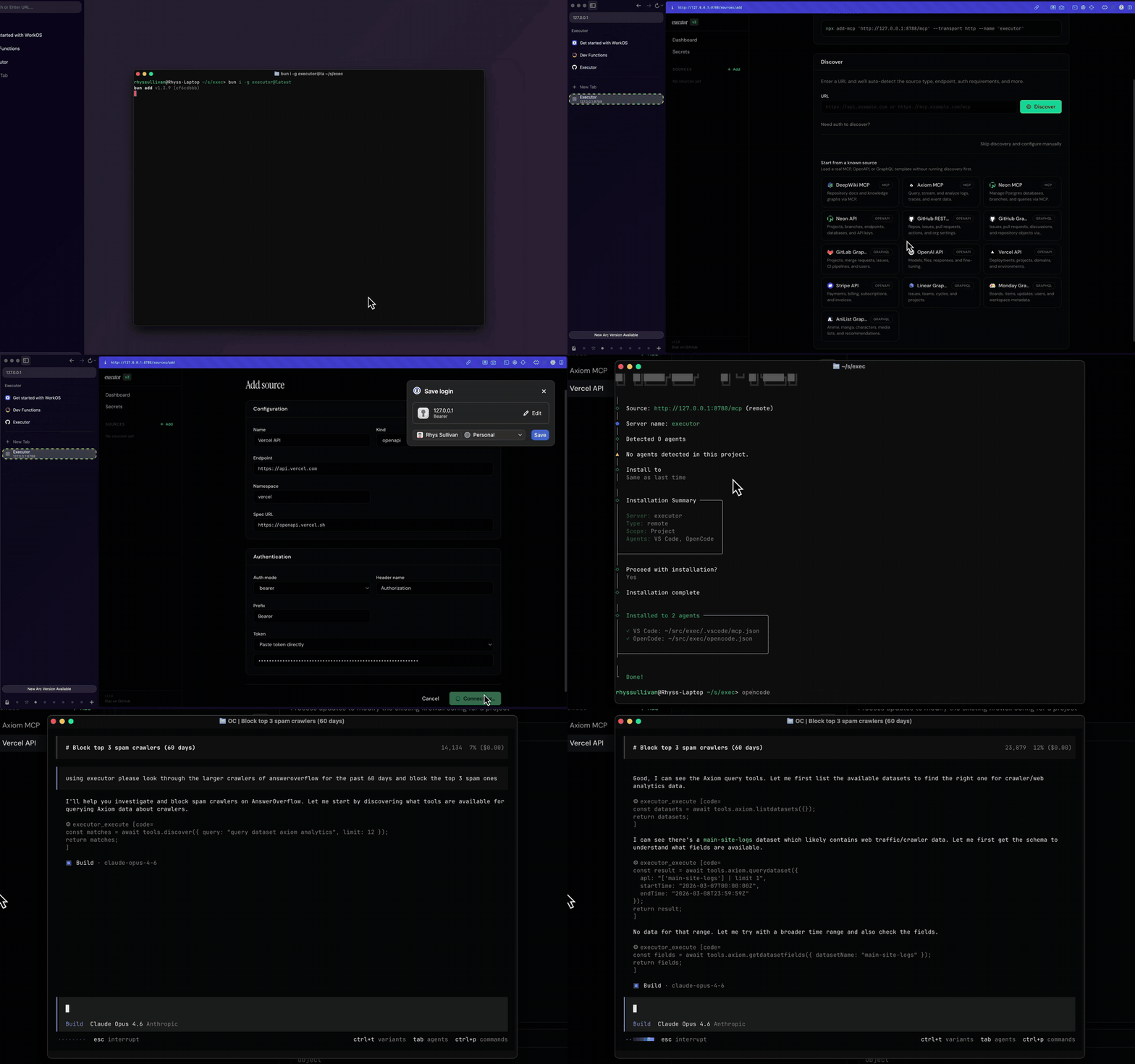
UsefulSoftwareCo/executor · ★ 4.2KAn open-source integration layer for AI agents: configure each integration (MCP servers, OpenAPI specs, GraphQL APIs) once with auth and per-tool policies, and every MCP-compatible agent shares the same catalog instead of keeping its own copy.
 +4
OpenAPPA
archestra-ai/OpenAPPA · ★ 1.6KOpenAPPA is a deterministic guardrail layer that sits between an AI agent and its tools, checking every tool call to decide whether the data involved is allowed to reach that destination.
 +1
agent-governance-toolkit
microsoft/agent-governance-toolkit · ★ 6.4KA toolkit from Microsoft that governs autonomous AI agents in production: it enforces policies on tool calls, verifies agent identity, sandboxes execution, and provides SRE controls like kill switches and SLO monitoring. It covers all 10 of the OWASP Agentic Top 10 risks.
The all-time top
5 projects · by stars
- 6.4K#1 · microsoft/agent-governance-toolkit
agent-governance-toolkit
A toolkit from Microsoft that governs autonomous AI agents in production: it enforces policies on tool calls, verifies agent identity, sandboxes execution, and provides SRE controls like kill switches and SLO monitoring. It covers all 10 of the OWASP Agentic Top 10 risks.
- 4.2K#2 · UsefulSoftwareCo/executor
executor
An open-source integration layer for AI agents: configure each integration (MCP servers, OpenAPI specs, GraphQL APIs) once with auth and per-tool policies, and every MCP-compatible agent shares the same catalog instead of keeping its own copy.
- 1.6K#3 · archestra-ai/OpenAPPA
OpenAPPA
OpenAPPA is a deterministic guardrail layer that sits between an AI agent and its tools, checking every tool call to decide whether the data involved is allowed to reach that destination.
- 4
omnigraph
1.3KModernRelay/omnigraph · RustOmnigraph is a lakehouse-native graph database that acts as the operational state and coordination layer for fleets of AI agents, combining graph traversal, vector search, and full-text search with Git-style branching so many agents can enrich a shared knowledge graph safely.
- 5

docker
165decionis/docker · GoDecionis for Docker is an execution-authority layer for AI agents: before an agent performs a sensitive action like deploying infrastructure or calling a privileged MCP tool, it checks a deterministic policy and returns PROCEED, HOLD, or BLOCK.
Related topics
Often tagged together