
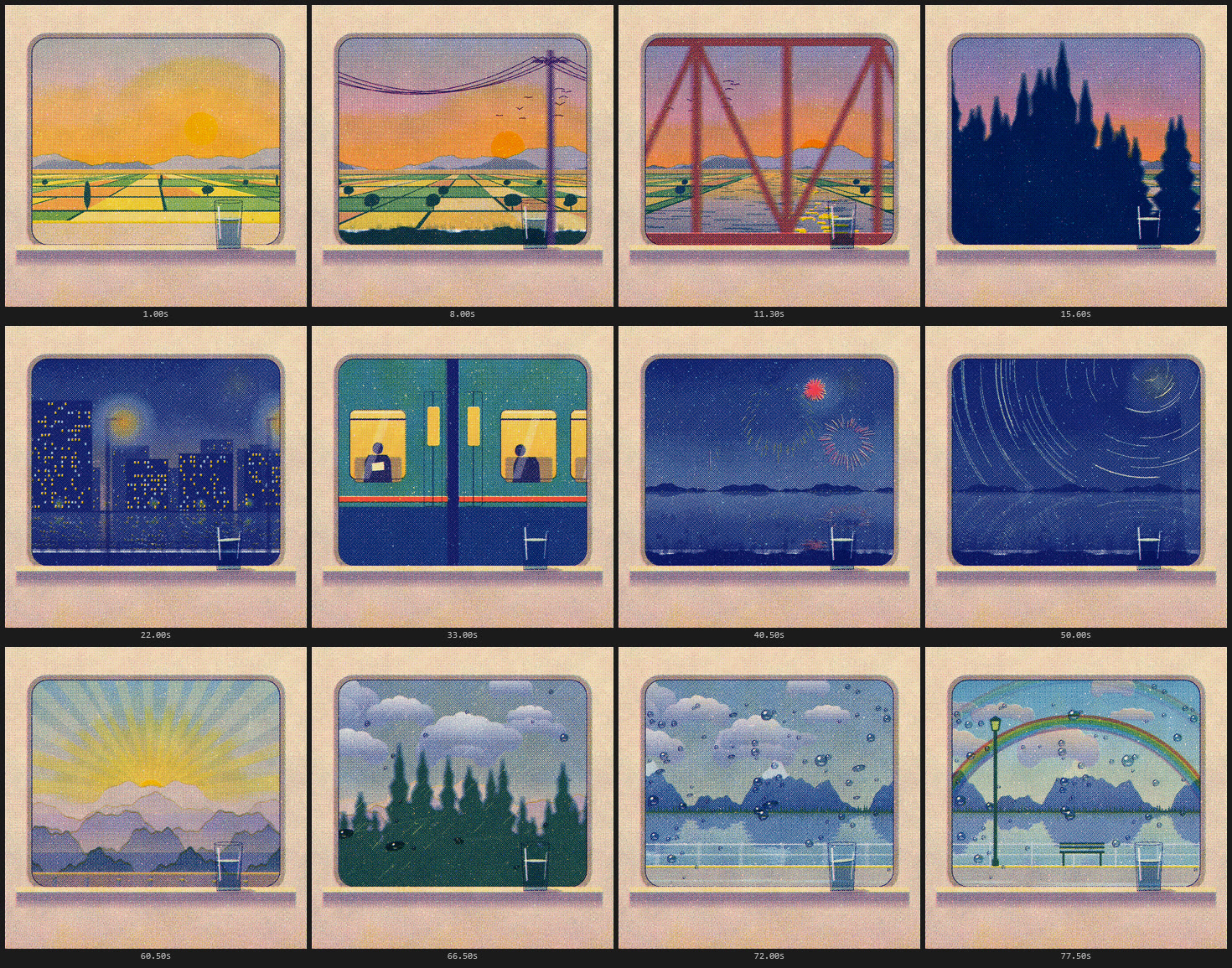
Что это такое?
 Анимационные фильмы в стиле ризографа, созданные процедурно: каждый — один самодостаточный HTML-файл на Canvas 2D и Web Audio, плюс навыки Claude Code, документы о ремесле и инструменты, которыми их делают.
Это видео, которые нужно скачать, или они запускаются в браузере?И то и другое: каждый фильм — это один файл index.html, который открывается в браузере по нажатию play, а отрендеренные MP4 — все в 1080 × 1080 при 30 fps — лежат в релизе v1.0.
И то и другое: каждый фильм — это один файл index.html, который открывается в браузере по нажатию play, а отрендеренные MP4 — все в 1080 × 1080 при 30 fps — лежат в релизе v1.0.Как сделать с его помощью свой собственный фильм?Запустите Claude Code в корне репозитория и просто попросите — например: «Сделай 40-секундный рисо-фильм о ноче смотрителя маяка». Навыки riso-film, riso-still и riso-score в .claude/skills/ содержат весь рабочий процесс и его проверки качества.
Запустите Claude Code в корне репозитория и просто попросите — например: «Сделай 40-секундный рисо-фильм о ноче смотрителя маяка». Навыки riso-film, riso-still и riso-score в .claude/skills/ содержат весь рабочий процесс и его проверки качества.Нужен ли Claude Code или что-то ещё, просто чтобы посмотреть фильмы?Нет — достаточно браузера. В файлах нет ни библиотек, ни шрифтов, ни картинок, и они не обращаются к сети, так что работают даже офлайн; Claude Code нужен только для создания новых работ с этим набором.
Нет — достаточно браузера. В файлах нет ни библиотек, ни шрифтов, ни картинок, и они не обращаются к сети, так что работают даже офлайн; Claude Code нужен только для создания новых работ с этим набором.Могу ли я подправить код фильма, ничего не сломав?Каждый кадр — чистая функция времени, поэтому любой момент остаётся в точности воспроизводимым, а экспортированный MP4 не может потерять кадры — и хук сразу предупредит, как только правка нарушит эту детерминированность.
Каждый кадр — чистая функция времени, поэтому любой момент остаётся в точности воспроизводимым, а экспортированный MP4 не может потерять кадры — и хук сразу предупредит, как только правка нарушит эту детерминированность.Какие фильмы сюда входят?Шесть: Window Seat (78 с, ночная поездка в поезде под музыку для фортепиано), Roost (70 с, огромная стая скворцов), Held (70 с, воздушный змей, который летит лишь пока кто-то держит его леер), Nonpareil (70 с, мраморная бумага), плюс две 28-секундные короткометражки, Lumen и Emergence.
Шесть: Window Seat (78 с, ночная поездка в поезде под музыку для фортепиано), Roost (70 с, огромная стая скворцов), Held (70 с, воздушный змей, который летит лишь пока кто-то держит его леер), Nonpareil (70 с, мраморная бумага), плюс две 28-секундные короткометражки, Lumen и Emergence.Откуда в фильмах печатный вид ризографа?Полутон создаётся процедурно: в Roost каждый скворец — это чернильная точка в 2–3 px, так что полутон — сама стая, сбивающаяся в тёмные печатные ленты там, где лист поворачивается ребром. Мраморные разводы в Nonpareil заданы замкнутыми формулами геометрии, поэтому каждый кадр точен.
Полутон создаётся процедурно: в Roost каждый скворец — это чернильная точка в 2–3 px, так что полутон — сама стая, сбивающаяся в тёмные печатные ленты там, где лист поворачивается ребром. Мраморные разводы в Nonpareil заданы замкнутыми формулами геометрии, поэтому каждый кадр точен.Чья музыка и звуки встроены в фильмы?Сэмпловые библиотеки: фортепиано в Window Seat — это Salamander Grand Piano V3 (CC BY 3.0), а Roost, Held и Nonpareil опираются на наборы под CC0, такие как VSCO 2 CE, VCSL и пакет handpan с Freesound — все они указаны в AUDIO-SOURCES.md.
Сэмпловые библиотеки: фортепиано в Window Seat — это Salamander Grand Piano V3 (CC BY 3.0), а Roost, Held и Nonpareil опираются на наборы под CC0, такие как VSCO 2 CE, VCSL и пакет handpan с Freesound — все они указаны в AUDIO-SOURCES.md.Как проверяется качество фильма?Каждая работа сначала проектируется в FILM.md, её самый сложный кадр доказывается первым, а инструменты из tools/ рендерят полосы кадров, кропы 1:1, контактные листы, анализ звука и экспорт MP4 для осмотра; в каждом FILM.md также перечислены оставшиеся слабые места фильма.
Каждая работа сначала проектируется в FILM.md, её самый сложный кадр доказывается первым, а инструменты из tools/ рендерят полосы кадров, кропы 1:1, контактные листы, анализ звука и экспорт MP4 для осмотра; в каждом FILM.md также перечислены оставшиеся слабые места фильма.What are similar projects?procedural-film, pdoom-video, awesome-opus5-5-videos, world-execute-me-dsh-pv, huashu-art-motion, PDoomVideo, genart-skill, motion-video-kit
procedural-film, pdoom-video, awesome-opus5-5-videos, world-execute-me-dsh-pv, huashu-art-motion, PDoomVideo, genart-skill, motion-video-kitWhich topics is it in?procedural, web-audio, ai-art, 2d, motion-graphics, claude-code-skills, generative-art, art, agentic-coding, creative-coding, no-dependencies, canvas
procedural, web-audio, ai-art, 2d, motion-graphics, claude-code-skills, generative-art, art, agentic-coding, creative-coding, no-dependencies, canvas