openhaystack README

The project's README from github.com/seemoo-lab/openhaystack. As one markdown file: README.md.

OpenHaystack application icon OpenHaystack

OpenHaystack is a framework for tracking personal Bluetooth devices via Apple's massive Find My network. Use it to create your own tracking tags that you can append to physical objects (keyrings, backpacks, ...) or integrate it into other Bluetooth-capable devices such as notebooks.
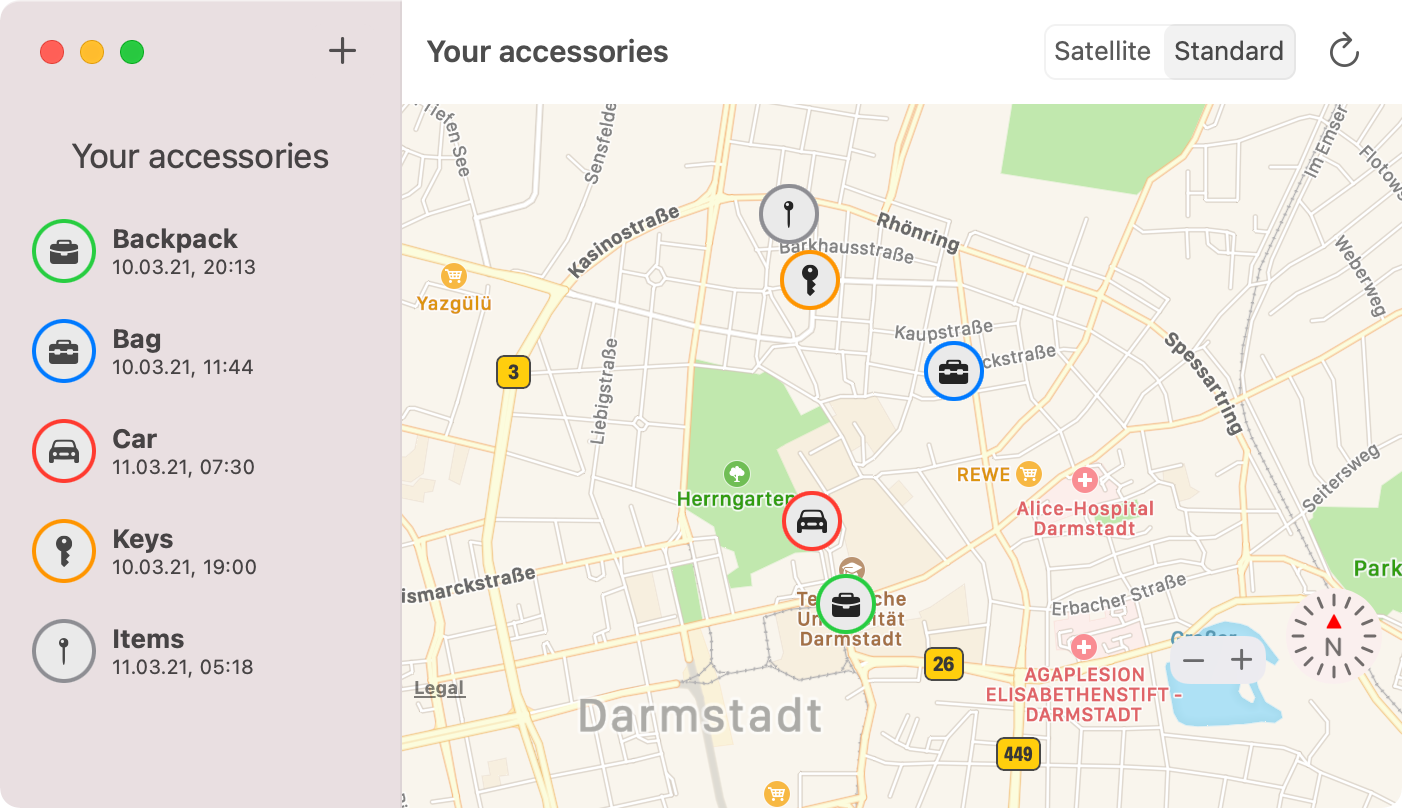
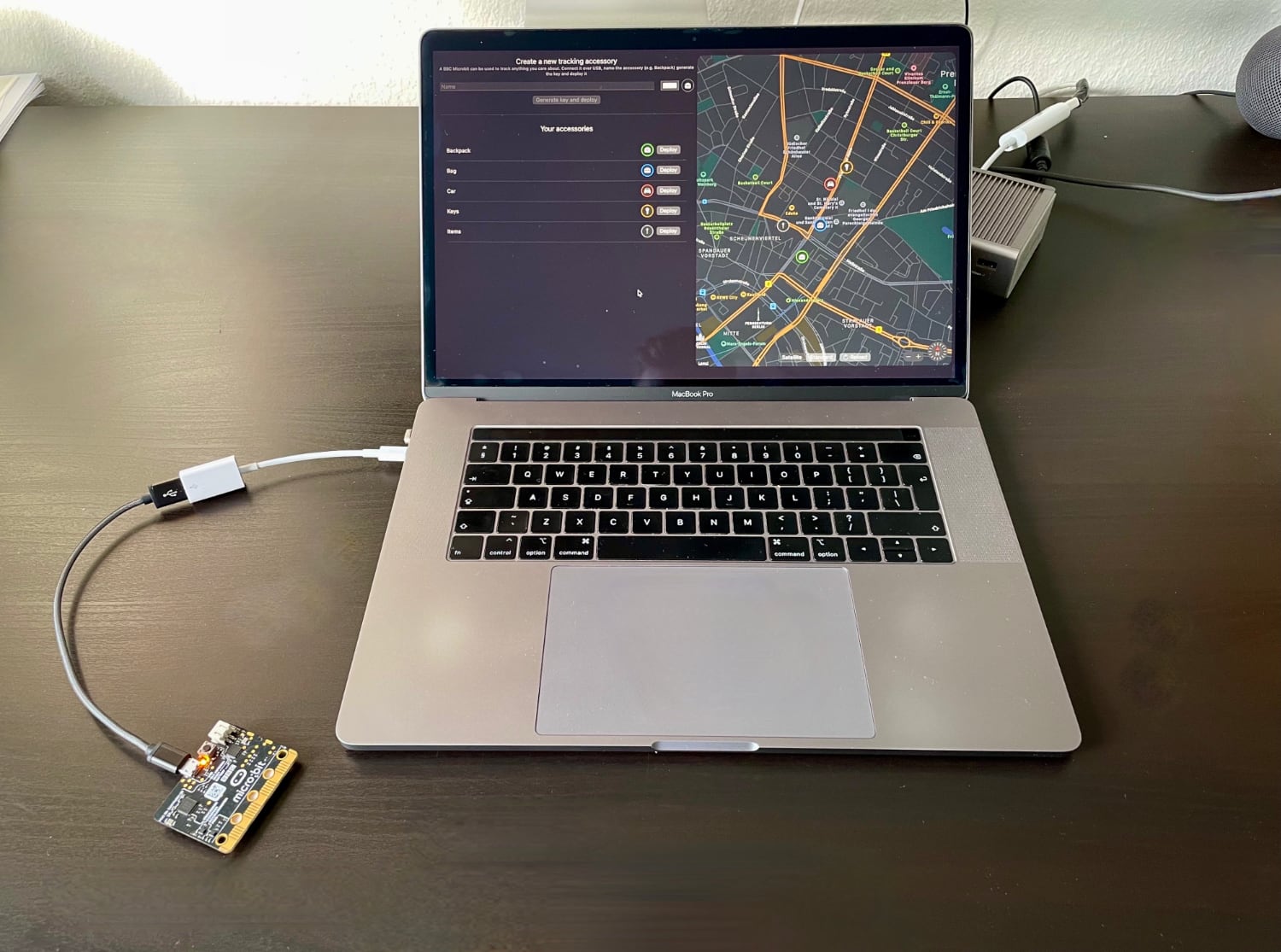
Screenshot of the app

Table of contents

What is OpenHaystack?

OpenHaystack is an application that allows you to create your own accessories that are tracked by Apple's Find My network. All you need is a Mac and a BBC micro:bit or any other Bluetooth-capable device. By using the app, you can track your accessories anywhere on earth without cellular coverage. Nearby iPhones will discover your accessories and upload their location to Apple's servers when they have a network connection.

History

OpenHaystack is the result of reverse-engineering and security analysis work of Apple's Find My network (or offline finding). We at the Secure Mobile Networking Lab of TU Darmstadt started analyzing offline finding after its initial announcement in June 2019. We identified how Apple devices can be found by iPhones devices, even when they are offline through this work. The whole system is a clever combination of Bluetooth advertisements, public-key cryptography, and a central database of encrypted location reports. We disclosed a specification of the closed parts of offline finding and conducted a comprehensive security and privacy analysis. We found two distinct vulnerabilities. The most severe one, which allowed a malicious application to access location data, has meanwhile been fixed by Apple (CVE-2020-9986). For more information about the security analysis, please read our paper. Since its release, we received quite a bit of press and media coverage.

Disclaimer

OpenHaystack is experimental software. The code is untested and incomplete. For example, OpenHaystack accessories using our firmware broadcast a fixed public key and, therefore, are trackable by other devices in proximity (this might change in a future release). OpenHaystack is not affiliated with or endorsed by Apple Inc.

How to use OpenHaystack?

OpenHaystack consists of two components. First, we provide a macOS application that can display the last reported location of your personal Bluetooth devices. Second, the firmware image enables Bluetooth devices to broadcast beacons that make them discoverable by iPhones.

System requirements

OpenHaystack requires macOS 11 (Big Sur).

Installation

The OpenHaystack application requires a custom plugin for Apple Mail. It is used to download location reports from Apple's servers via a private API (technical explanation: the plugin inherits Apple Mail's entitlements required to use this API). Therefore, the installation procedure is slightly different and requires you to temporarily disable Gatekeeper. Our plugin does not access any other private data such as emails (see source code).

  1. Download a precompiled binary release from our GitHub page.
    Alternative: build the application from source via Xcode.
  2. Open OpenHaystack. This will ask you to install the Mail plugin in ~/Library/Mail/Bundle.
  3. Open a terminal and run sudo spctl --master-disable, which will disable Gatekeeper and allow our Apple Mail plugin to run.
  4. Open Apple Mail. Go to Preferences → General → Manage Plug-Ins... and activate the checkbox next to OpenHaystackMail.mailbundle.
    • If the Manage Plug-Ins... button does not appear. Run this command in terminal sudo defaults write "/Library/Preferences/com.apple.mail" EnableBundles 1
  5. Allow access and restart Mail.
  6. Open a terminal and enter sudo spctl --master-enable, which will enable Gatekeeper again.

Usage

Adding a new accessory. To create a new accessory, you just need to enter a name for it and optionally select a suitable icon and a color. The app then generates a new key pair that is used to encrypt and decrypt the location reports. The private key is stored in your Mac's keychain.

Deploy to device. Connect a supported device via USB to your Mac and hit the Deploy button next to the accessory's name and choose the corresponding. Instead of using OpenHaystack's integrated deployment, you may also copy the public key used for advertising (right click on accessory) and deploy it manually.

Display devices' locations. It can take up to 30 minutes until you will see the first location report on the map on the right side. The map will always show all your items' most recent locations. You can click on every item to check when the last update was received. By clicking the reload button, you can update the location reports.

How does Apple's Find My network work?

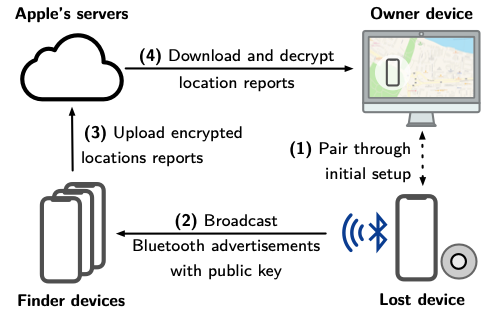
We briefly explain Apple's offline finding system (aka Find My network). Please refer to our PETS paper and Apple's accessory specification for more details. We provide a schematic overview (from our paper) and explain how we integrate the different steps in OpenHaystack below.

Find My Overview

Pairing (1)

To use Apple's Find My network, we generate a public-private key pair on an elliptic curve (P-224). The private key remains on the Mac securely stored in the keychain, and the public key is deployed on the accessory, e.g., an attached micro:bit.

Losing (2)

In short, the accessories broadcast the public key as Bluetooth Low Energy (BLE) advertisements (see firmware). Nearby iPhones will not be able to distinguish our accessories from a genuine Apple device or certified accessory.

Finding (3)

When a nearby iPhone receives a BLE advertisement, the iPhone fetches its current location via GPS, encrypts it using public key from the advertisement, and uploads the encrypted report to Apple's server. All iPhones on iOS 13 or newer do this by default. OpenHaystack is not involved in this step.

Searching (4)

Apple does not know which encrypted locations belong to which Apple account or device. Therefore, every Apple user can download any location report as long as they know the corresponding public key. This is not a security issue: all reports are end-to-end encrypted and cannot be decrypted unless one knows the corresponding private key (stored in the keychain). We leverage this feature to download the reports from Apple that have been created for our OpenHaystack accessories. We use our private keys to decrypt the location reports and show the most recent one on the map.

Apple protects their database against arbitrary access by requiring an authenticated Apple user to download location reports. We use our Apple Mail plugin, which runs with elevated privileges, to access the required authentication information. The OpenHaystack app communicates with the plugin while downloading reports. This is why you need to keep Mail open while using OpenHaystack.

How to track other Bluetooth devices?

In principle, any Bluetooth device can be turned into an OpenHaystack accessory that is trackable via Apple's Find My network. Currently, we provide a convenient deployment method of our OpenHaystack firmwares for a small number of embedded devices (see table below). We also support Linux devices via our generic HCI script. Feel free to port OpenHaystack to other devices that support Bluetooth Low Energy based on the source code of our firmware and the specification in our paper. Please share your results with us!

Platform Tested on Deploy via app Comment
Nordic nRF51 BBC micro:bit v1 ✓ Only supports nRF51822 at this time (see issue #6).
Espressif ESP32 SP32-WROOM, ESP32-WROVER ✓ Deployment can take up to 3 minutes. Requires Python 3. Thanks @fhessel.
Linux HCI Raspberry Pi 4 w/ Raspbian Should support any Linux machine.

Setup

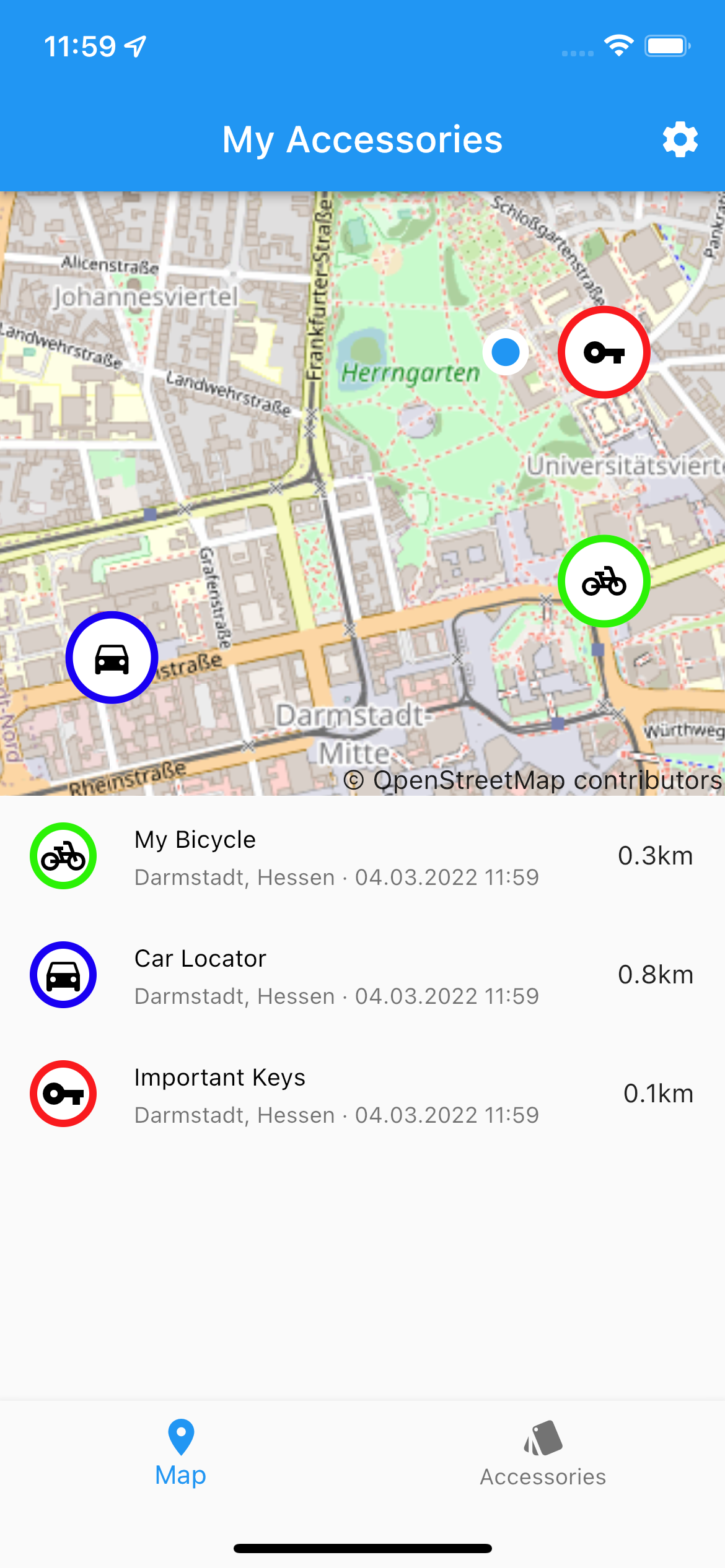
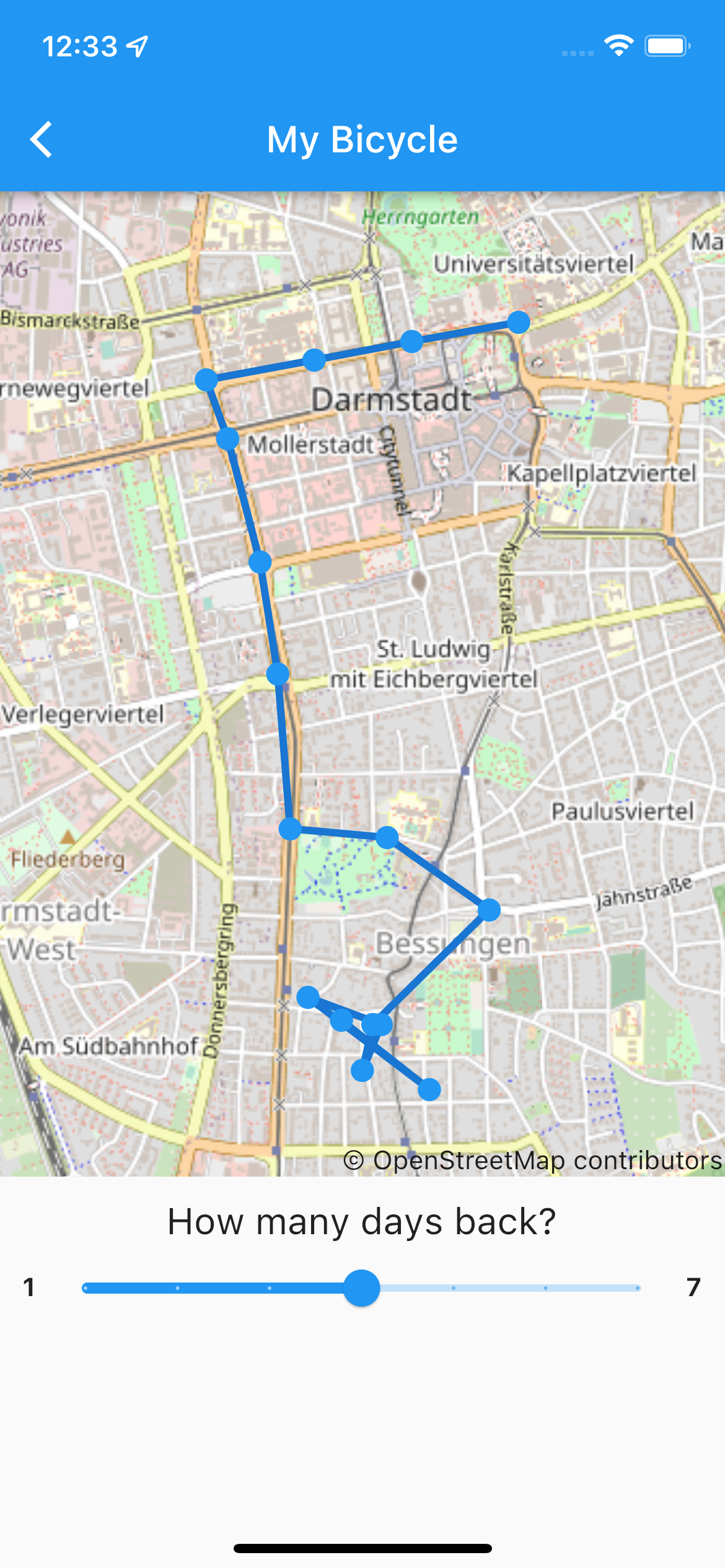
OpenHaystack Mobile

OpenHaystack Mobile is a complete reimplementation of the OpenHaystack macOS application for smartphones. The app provides the same functionality to create and track accessories and aims to increase the usability, especially for new users. In contrast to the macOS application, the location reports cannot be fetched directly on the smartphone, so the app requires a proxy server hosted on Mac hardware to access the Find My network. The proxy server can be accessed over a network by multiple users simultaneously.

To connect to your proxy server set the correct URL in: openhaystack-mobile/lib/findMy/reports_fetcher.dart

OpenHaystack Mobile is built with the cross-platform Flutter framework and currently runs on Android and iOS. More information about the app and usage instructions can be found in the openhaystack-mobile folder of this repository.

Authors

References

License

OpenHaystack is licensed under the GNU Affero General Public License v3.0.

openhaystack (seemoo-lab/openhaystack)

Searching Database…

What is this?OpenHaystack is a framework that lets you build your own 'AirTag'-like trackers by exploiting Apple's Find My network, so you can track Bluetooth accessories (keyrings, backpacks, notebooks) using nearby iPhones as relays.
Is this a Mac app, a firmware image, or both?It is both: a macOS application that shows the last reported location of your devices, plus a firmware image flashed onto a Bluetooth device (like a micro:bit) that broadcasts the beacons Apple's network picks up.
How do I get it running?Download the precompiled macOS app (or build it from source with Xcode), let it install a Mail plugin, temporarily disable Gatekeeper with 'sudo spctl --master-disable' to activate the plugin in Mail's Preferences, then re-enable Gatekeeper; finally create an accessory in the app and deploy the key to a connected device.
What hardware do I need to create a tracker?You need a Mac running macOS 11 (Big Sur) and a Bluetooth-capable device such as a BBC micro:bit, an ESP32, or a Linux machine like a Raspberry Pi to run the beacon firmware.
Is this safe/stable to rely on for tracking?No — the authors call it experimental, untested software, and the firmware broadcasts a fixed public key, so your accessory can actually be tracked by other people's devices in proximity too.
Does it work on Android/iOS too, not just Mac?There's a separate companion app, OpenHaystack Mobile, built with Flutter for Android and iOS, but it still needs a proxy server running on a Mac to actually fetch location reports from Apple.
Why does it need a Mail plugin instead of just talking to Apple's servers directly?Apple's location-report API is private and only accessible with Apple Mail's entitlements, so OpenHaystack installs a custom Mail plugin that inherits those entitlements to fetch the encrypted reports on its behalf.
How long until I see a location for a new tag?It can take up to 30 minutes after an iPhone passes near the accessory before the first location report shows up on the map.
Where did this project come from?It grew out of a security and privacy analysis of Apple's Find My (offline finding) network by TU Darmstadt's Secure Mobile Networking Lab, which found vulnerabilities including one Apple fixed as CVE-2020-9986.
Which devices can be turned into trackers?Officially supported with one-click deployment are the BBC micro:bit v1 (Nordic nRF51822) and Espressif ESP32 boards; any Linux machine (e.g. Raspberry Pi 4) can also broadcast beacons via a generic HCI script.
Creator
seemoo-lab
Size
9.2 MB
Stars
13.8K
Age
5y
Commits · 90 Days