What is this?
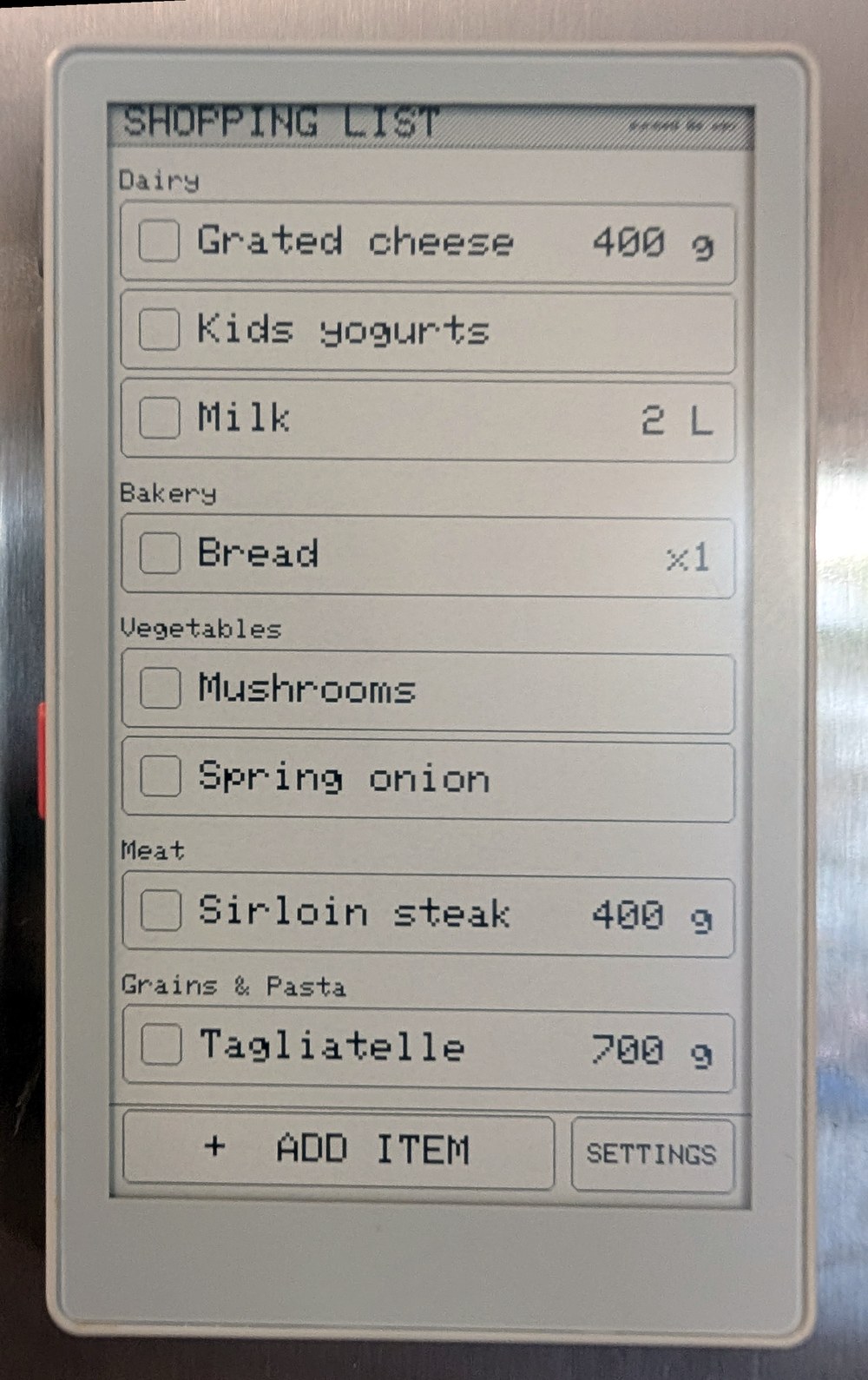
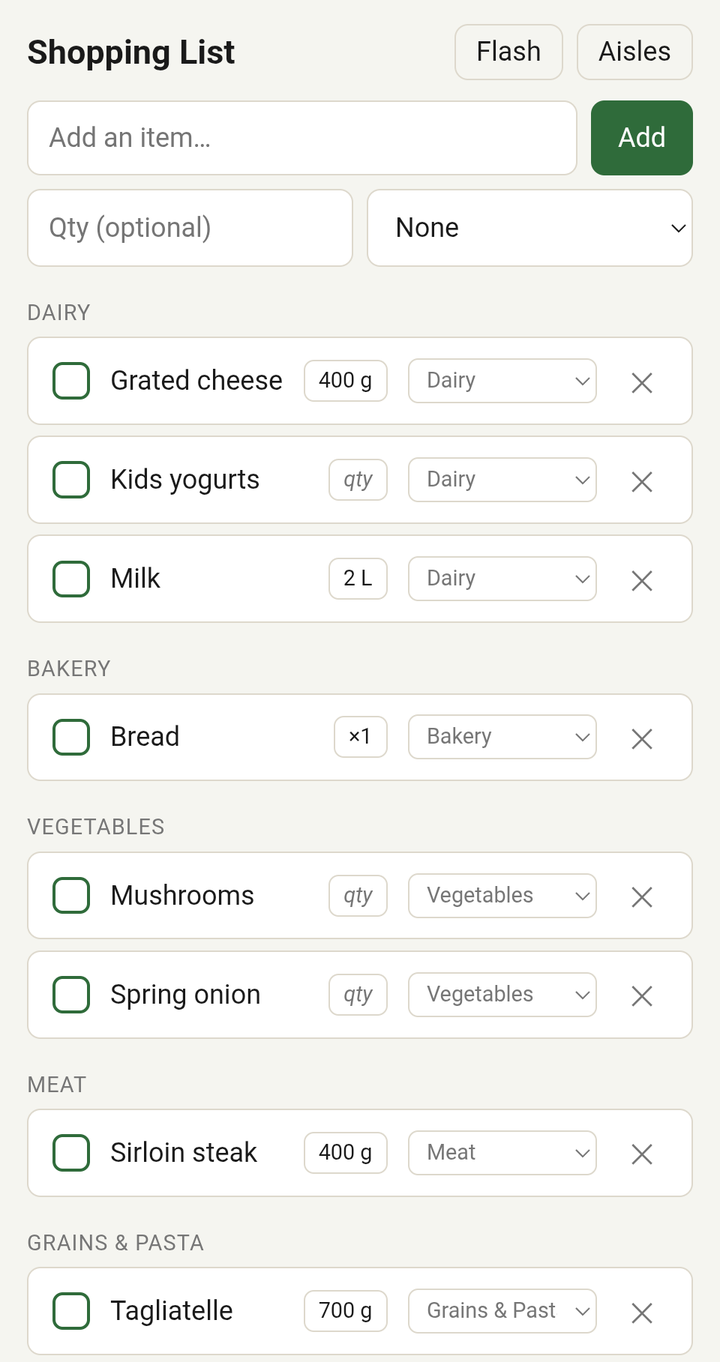
 Firmware and a companion server that turn the M5Stack PaperMono e-paper device into a household shopping list that lives on the fridge and stays in sync with a phone web app.
Firmware and a companion server that turn the M5Stack PaperMono e-paper device into a household shopping list that lives on the fridge and stays in sync with a phone web app.Is this just firmware, or does it include a server too?It is C++ firmware for the PaperMono hardware plus a small Python FastAPI server that stores the list and syncs it between the e-paper device and a phone web UI.
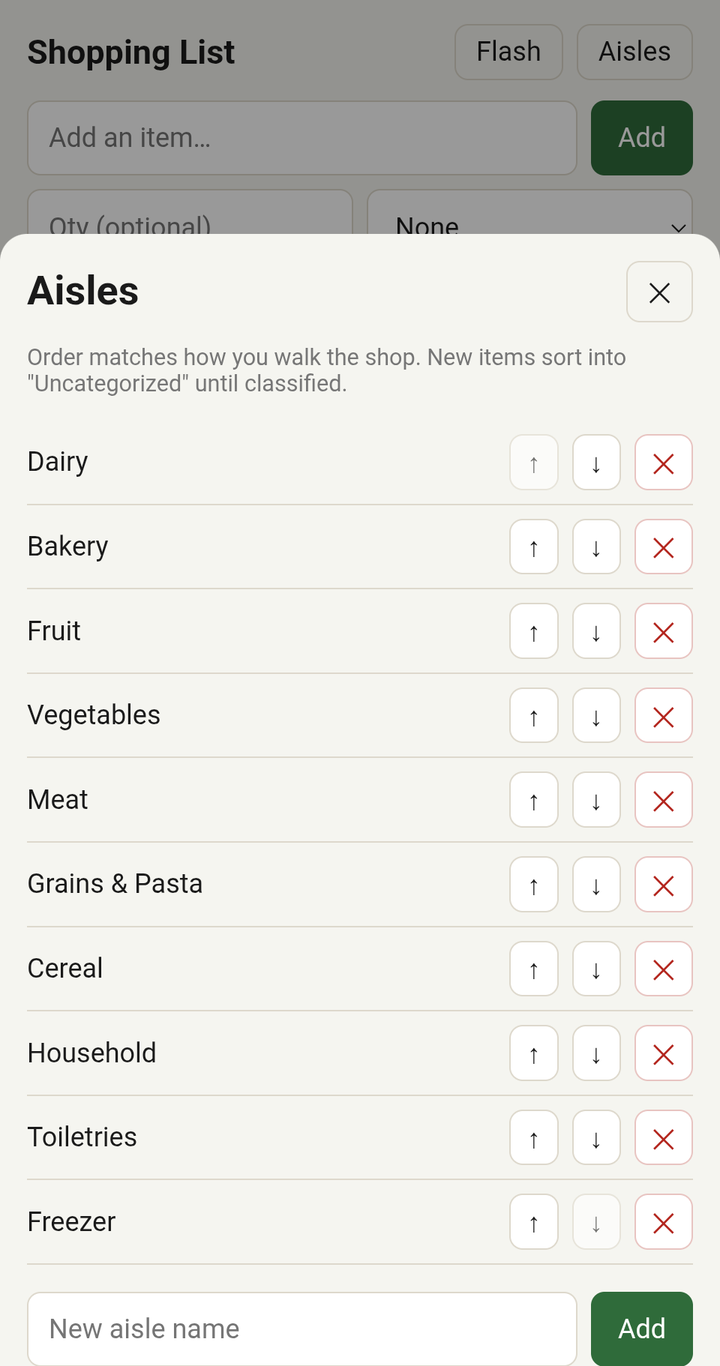
It is C++ firmware for the PaperMono hardware plus a small Python FastAPI server that stores the list and syncs it between the e-paper device and a phone web UI.How do I get it running?Run the server first and open it on your phone to add your shop's aisles, then build and flash the firmware onto the PaperMono with PlatformIO.
Run the server first and open it on your phone to add your shop's aisles, then build and flash the firmware onto the PaperMono with PlatformIO.What do I need to build and flash the firmware?PlatformIO and a PaperMono connected over USB-C to flash the device; the server side just needs Python/FastAPI, optionally run with Docker or systemd.
PlatformIO and a PaperMono connected over USB-C to flash the device; the server side just needs Python/FastAPI, optionally run with Docker or systemd.What are the current limitations?There's no on-device Wi-Fi setup since credentials are compiled in, the server has no authentication so it should stay on your LAN or behind a reverse proxy, and only the PaperMono C153 model has been tested.
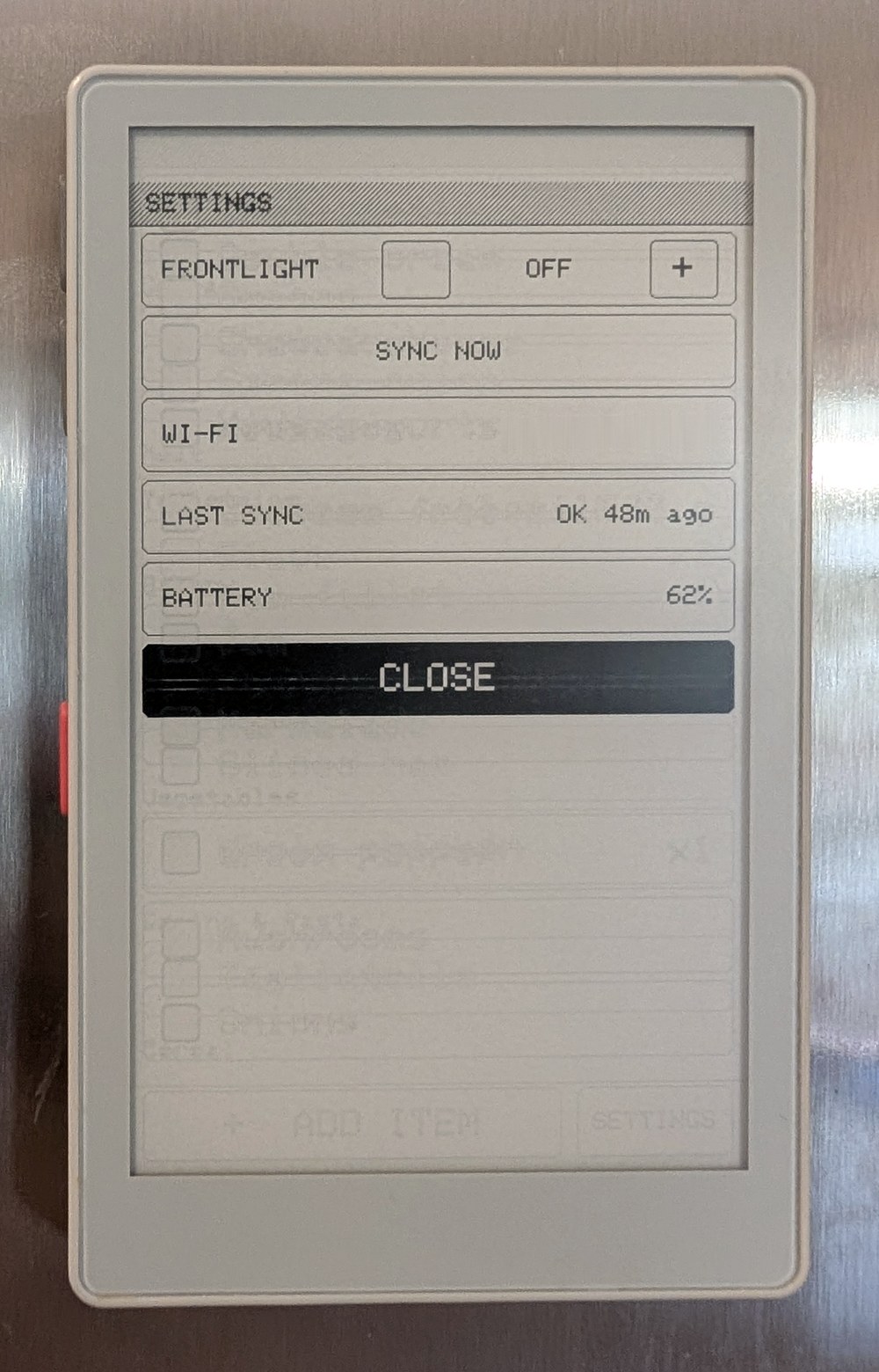
There's no on-device Wi-Fi setup since credentials are compiled in, the server has no authentication so it should stay on your LAN or behind a reverse proxy, and only the PaperMono C153 model has been tested.Does the shopping list still work without Wi-Fi?Yes, ticking off and adding items works fully offline; Wi-Fi only turns on roughly hourly (or right after an edit) to sync, and edits queue on flash until then.
Yes, ticking off and adding items works fully offline; Wi-Fi only turns on roughly hourly (or right after an edit) to sync, and edits queue on flash until then.What is the PaperMono hardware itself?It's an ESP32-S3 device with a 3.97-inch, 480x800 e-paper touchscreen, which this project turns into a shopping list display.
It's an ESP32-S3 device with a 3.97-inch, 480x800 e-paper touchscreen, which this project turns into a shopping list display.Can new items be sorted into aisles automatically?Optionally yes: the first time the server sees an item name it can send it to Claude to file it under the right aisle, and if you move it manually that correction sticks.
Optionally yes: the first time the server sees an item name it can send it to Claude to file it under the right aisle, and if you move it manually that correction sticks.How good is the e-paper interface in practice?Taps, scrolling and typing use fast partial refreshes with no flashing, a full refresh is forced every 10 partial updates to limit ghosting, and greys are rendered as 1-bit dot patterns so they look consistent either way.
Taps, scrolling and typing use fast partial refreshes with no flashing, a full refresh is forced every 10 partial updates to limit ghosting, and greys are rendered as 1-bit dot patterns so they look consistent either way.Can I reuse this for my own PaperMono project?Yes, the author built it both as a working shopping list and as a compact, readable (~2,400 lines of C++) starting point for other PaperMono firmware.
Yes, the author built it both as a working shopping list and as a compact, readable (~2,400 lines of C++) starting point for other PaperMono firmware.What are similar projects?tiny-engineer, RuView, kindle-wall-display, esp-sdr, WLED, ESP32Marauder, cardputer-ai, arduino-esp32
tiny-engineer, RuView, kindle-wall-display, esp-sdr, WLED, ESP32Marauder, cardputer-ai, arduino-esp32Which topics is it in?display, wifi, home-automation, esp32, embedded-systems, reverse-proxy, firmware, offline-first, iot, fastapi, embedded, hardware
display, wifi, home-automation, esp32, embedded-systems, reverse-proxy, firmware, offline-first, iot, fastapi, embedded, hardware