



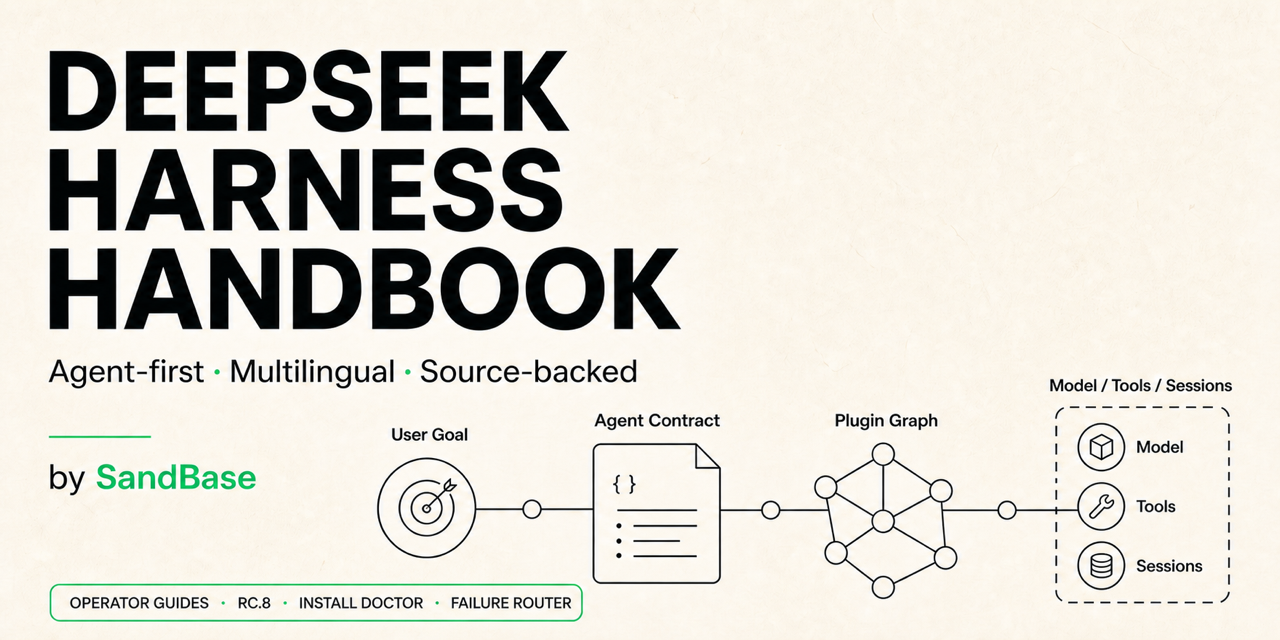
Что это такое?
 Поддерживаемый сообществом справочник для DeepSeek Harness, ориентированный на агентов: 173 руководства со ссылками на исходники о запуске, отладке и расширении рантайма агента, плюс отобранная карта экосистемы из 79 записей. Канонический язык — английский, при этом есть 202 локализованных документа, включая выверенный китайский в упрощённой письменности.
Это плагин, который я добавляю в DeepSeek Harness, или просто документация?Чистая документация, а не плагин — устанавливать ничего не нужно. В README прямо предупреждают, что не стоит запускать dsh plugin add для этого репозитория, потому что у него нет контракта активации dsh.bundle; читать его нужно на GitHub или на визуальном сайте полевых руководств.
Чистая документация, а не плагин — устанавливать ничего не нужно. В README прямо предупреждают, что не стоит запускать dsh plugin add для этого репозитория, потому что у него нет контракта активации dsh.bundle; читать его нужно на GitHub или на визуальном сайте полевых руководств.С чего мне начать?Выберите путь под свою цель: пятиминутный quickstart для первых запусков, Agent Harness Scorecard для оценки или Interactive Failure Router для отладки, плюс полный индекс по конкретным задачам. Всё читается прямо на GitHub или на сайте визуальных полевых руководств.
Выберите путь под свою цель: пятиминутный quickstart для первых запусков, Agent Harness Scorecard для оценки или Interactive Failure Router для отладки, плюс полный индекс по конкретным задачам. Всё читается прямо на GitHub или на сайте визуальных полевых руководств.Есть ли подводные камни, прежде чем я стану на это полагаться?Это независимая документация от сообщества, а не официальная поддержка DeepSeek, а сам DSH находится в статусе developer preview с изменениями, ломающими совместимость, — на страницах указаны даты проверки, поэтому фиксируйте ту ревизию, которую разворачиваете. Записи в экосистеме — лишь зацепки для поиска, а не заверения в безопасности.
Это независимая документация от сообщества, а не официальная поддержка DeepSeek, а сам DSH находится в статусе developer preview с изменениями, ломающими совместимость, — на страницах указаны даты проверки, поэтому фиксируйте ту ревизию, которую разворачиваете. Записи в экосистеме — лишь зацепки для поиска, а не заверения в безопасности.Оно написано для разработчиков агентов или для конечных пользователей DeepSeek?Для тех, кто создаёт и обслуживает агентов, — рантайм объясняется с точки зрения разработчика и оператора, а не конечного пользователя, который просто общается с моделью.
Для тех, кто создаёт и обслуживает агентов, — рантайм объясняется с точки зрения разработчика и оператора, а не конечного пользователя, который просто общается с моделью.Что такое DeepSeek Harness — рантайм, которому посвящён этот справочник?Это компонуемый рантайм агентов, который через граф плагинов связывает провайдеров моделей, инструменты, подтверждения, песочницу, долговременные сессии, субагентов и пользовательские интерфейсы. Главный тезис справочника: это больше, чем просто обёртка над моделью.
Это компонуемый рантайм агентов, который через граф плагинов связывает провайдеров моделей, инструменты, подтверждения, песочницу, долговременные сессии, субагентов и пользовательские интерфейсы. Главный тезис справочника: это больше, чем просто обёртка над моделью.Что входит в «полная граница Agent»?Маршрутизация моделей, инструменты, подтверждения, песочница, долговременные сессии, плагины, MCP, ACP и восстановление после сбоев, видимое оператору, — так утверждения об инструментах, контексте или долго работающих агентах проверяются на правильной границе: модель, провайдер, фреймворк или рантайм.
Маршрутизация моделей, инструменты, подтверждения, песочница, долговременные сессии, плагины, MCP, ACP и восстановление после сбоев, видимое оператору, — так утверждения об инструментах, контексте или долго работающих агентах проверяются на правильной границе: модель, провайдер, фреймворк или рантайм.Насколько руководства опираются на источники?Каждая запись называет зафиксированную официальную ревизию, по которой её проверяли, — сейчас это rc.2 (b150a551...) или alpha.1 (cd5ef814...) — и помечает утверждения как наблюдаемые, подтверждённые источником, выведенные или предлагаемые, вместо готовых «счастливых путей» для копипасты используются критерии приёмки.
Каждая запись называет зафиксированную официальную ревизию, по которой её проверяли, — сейчас это rc.2 (b150a551...) или alpha.1 (cd5ef814...) — и помечает утверждения как наблюдаемые, подтверждённые источником, выведенные или предлагаемые, вместо готовых «счастливых путей» для копипасты используются критерии приёмки.Какие проблемы решают руководства по устранению неполадок?Конкретные сбои «в поле»: пустой веб-клиент только в Firefox, успешные команды PowerShell, затерянные в шуме stderr из-за ConstrainedLanguage, одна повреждённая сессия, блокирующая запуск веб-интерфейса, sandbox-exec с ENOENT на macOS и растущее потребление памяти WebContent в длинных сессиях ChatView.
Конкретные сбои «в поле»: пустой веб-клиент только в Firefox, успешные команды PowerShell, затерянные в шуме stderr из-за ConstrainedLanguage, одна повреждённая сессия, блокирующая запуск веб-интерфейса, sandbox-exec с ENOENT на macOS и растущее потребление памяти WebContent в длинных сессиях ChatView.What are similar projects?awesome-deepseek-harness, Awesome-DeepSeek-Harness-Plugins, awesome-deepseek-harness, Blue-Whale-Harness, Proteus, awesome-dsh-plugin, deepseek-harness-orange-book, awesome-harness-engineering
awesome-deepseek-harness, Awesome-DeepSeek-Harness-Plugins, awesome-deepseek-harness, Blue-Whale-Harness, Proteus, awesome-dsh-plugin, deepseek-harness-orange-book, awesome-harness-engineeringWhich topics is it in?troubleshooting, agent-runtime, acp, plugins, agent-harness, debugging, dsh, evaluation, sandbox, deepseek-harness, multilingual, deepseek
troubleshooting, agent-runtime, acp, plugins, agent-harness, debugging, dsh, evaluation, sandbox, deepseek-harness, multilingual, deepseek