



What is this?
 Anneal is a local orchestration system that runs chains of coding agents on your own machine: you write a spec, queue it on a board, and it is planned, reviewed, implemented, verified and merged unattended using your own Codex and Claude Code subscriptions.
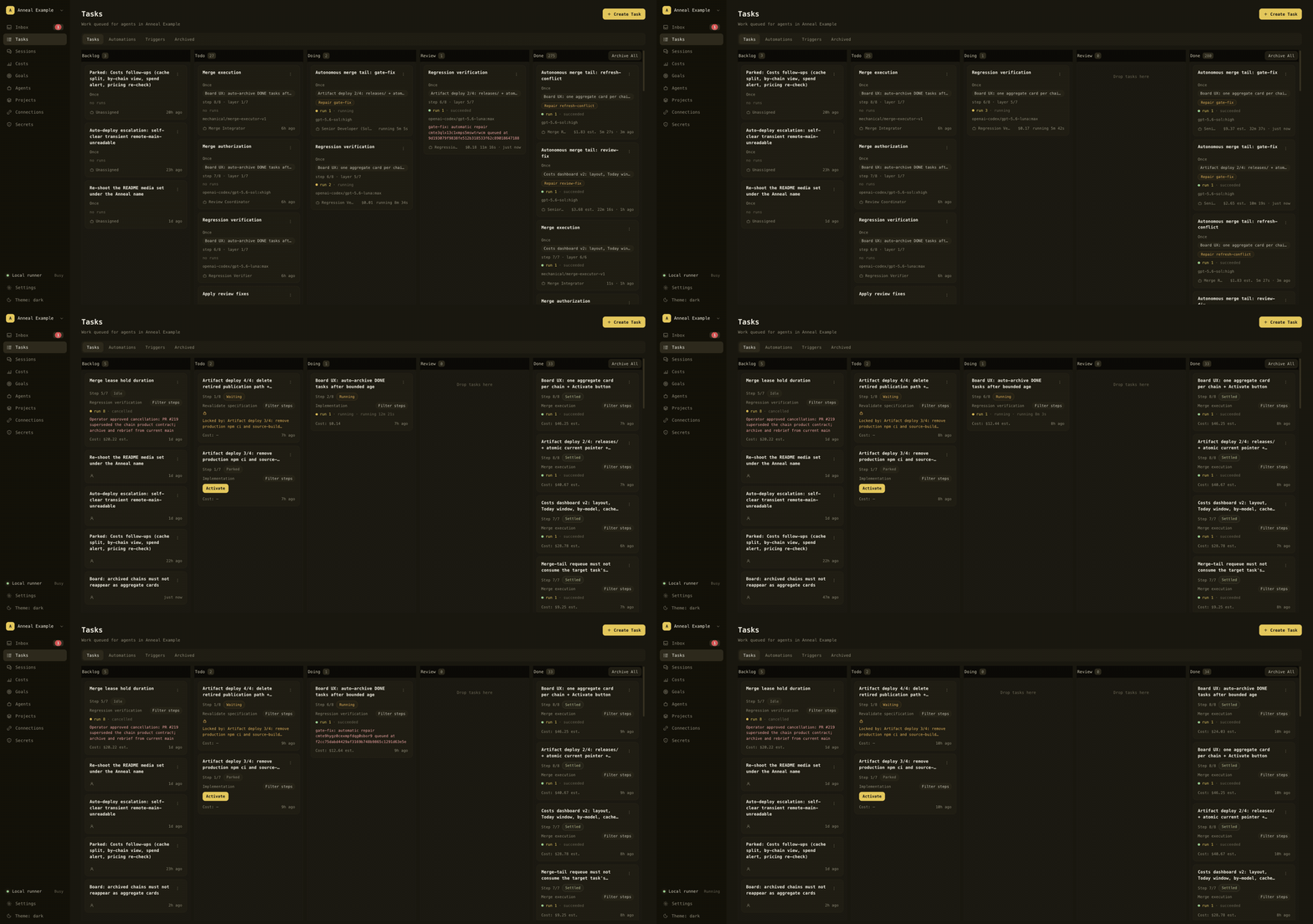
Anneal is a local orchestration system that runs chains of coding agents on your own machine: you write a spec, queue it on a board, and it is planned, reviewed, implemented, verified and merged unattended using your own Codex and Claude Code subscriptions.Is this a CLI tool or a local service with a UI?It's a local multi-process service: an API, a runner and a web app you start separately, with a browser board where you queue tasks and a web Inbox for the questions agents escalate to you.
It's a local multi-process service: an API, a runner and a web app you start separately, with a browser board where you queue tasks and a web Inbox for the questions agents escalate to you.How do I get it running on my machine?Clone the repo and run npm run dev:api, npm run dev:runner and npm run dev:web in three separate terminals, in that order, then open the web board.
Clone the repo and run npm run dev:api, npm run dev:runner and npm run dev:web in three separate terminals, in that order, then open the web board.Do I need API keys for Codex and Claude, or do I just sign in?No API keys needed: Anneal launches the Codex CLI, Claude Code and Pi you already have installed and signed in to on your subscription, and holds no credentials or proxy of its own. It also needs Node (^20.19/^22.13/>=24), Docker Compose and Git.
No API keys needed: Anneal launches the Codex CLI, Claude Code and Pi you already have installed and signed in to on your subscription, and holds no credentials or proxy of its own. It also needs Node (^20.19/^22.13/>=24), Docker Compose and Git.Is this stable enough to point at a project I care about?Not yet — it's Developer Preview 8, interfaces and stored data can change between previews with only a fresh-install upgrade path, and it runs CLIs with permission bypass outside a sandbox, so the README recommends a disposable repo and a machine you're fine letting an agent modify.
Not yet — it's Developer Preview 8, interfaces and stored data can change between previews with only a fresh-install upgrade path, and it runs CLIs with permission bypass outside a sandbox, so the README recommends a disposable repo and a machine you're fine letting an agent modify.Does it run on Windows, or only macOS and Linux?Only Apple Silicon Macs and Linux (Ubuntu 24.04 LTS) are release-verified; Intel Macs are expected to work but unverified, and Windows is unsupported.
Only Apple Silicon Macs and Linux (Ubuntu 24.04 LTS) are release-verified; Intel Macs are expected to work but unverified, and Windows is unsupported.Is it safe to let this touch my real codebase?The README explicitly warns it is not, for now: agents run with non-interactive permission bypass under your own user account with no sandbox, so a test-only repo is recommended.
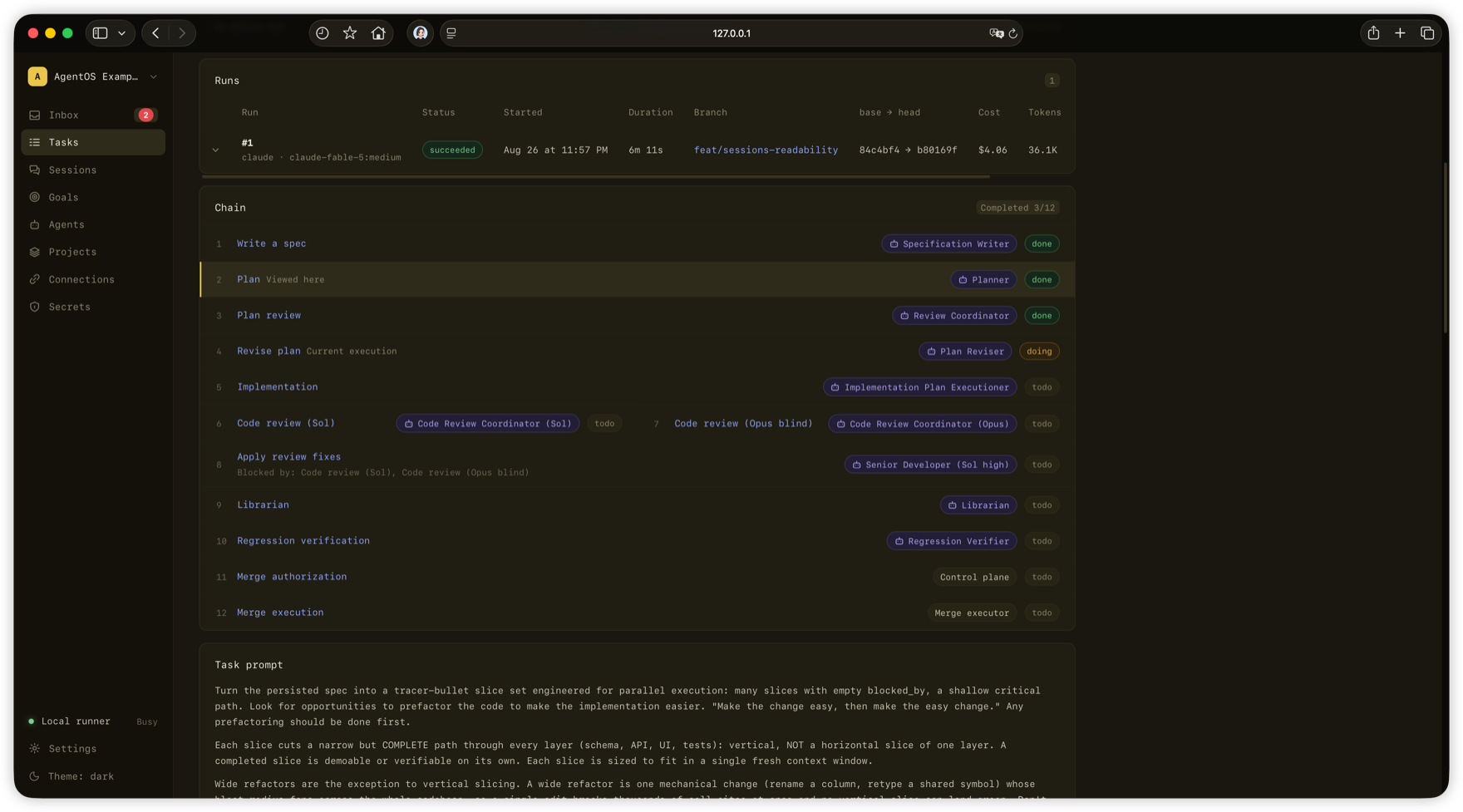
The README explicitly warns it is not, for now: agents run with non-interactive permission bypass under your own user account with no sandbox, so a test-only repo is recommended.What does the Full Assurance template actually do?It's a 12-step chain covering spec writing, planning, plan review, revision, implementation, two blind code reviews, fix application, documentation, regression verification, and a final mechanical merge-readiness and merge-execution step.
It's a 12-step chain covering spec writing, planning, plan review, revision, implementation, two blind code reviews, fix application, documentation, regression verification, and a final mechanical merge-readiness and merge-execution step.Why are there two separate code reviews?Anneal's design rule is that whoever wrote the code never judges it: the two code reviews run blind to each other's findings, and a later step adjudicates both sets of findings before applying fixes.
Anneal's design rule is that whoever wrote the code never judges it: the two code reviews run blind to each other's findings, and a later step adjudicates both sets of findings before applying fixes.Can I customize the agent roles and chain steps?Yes, the template is data, not code: roles, prompts, models and gates live in editable files under agents/templates/, so you can define your own agent roles and reshape the workflow.
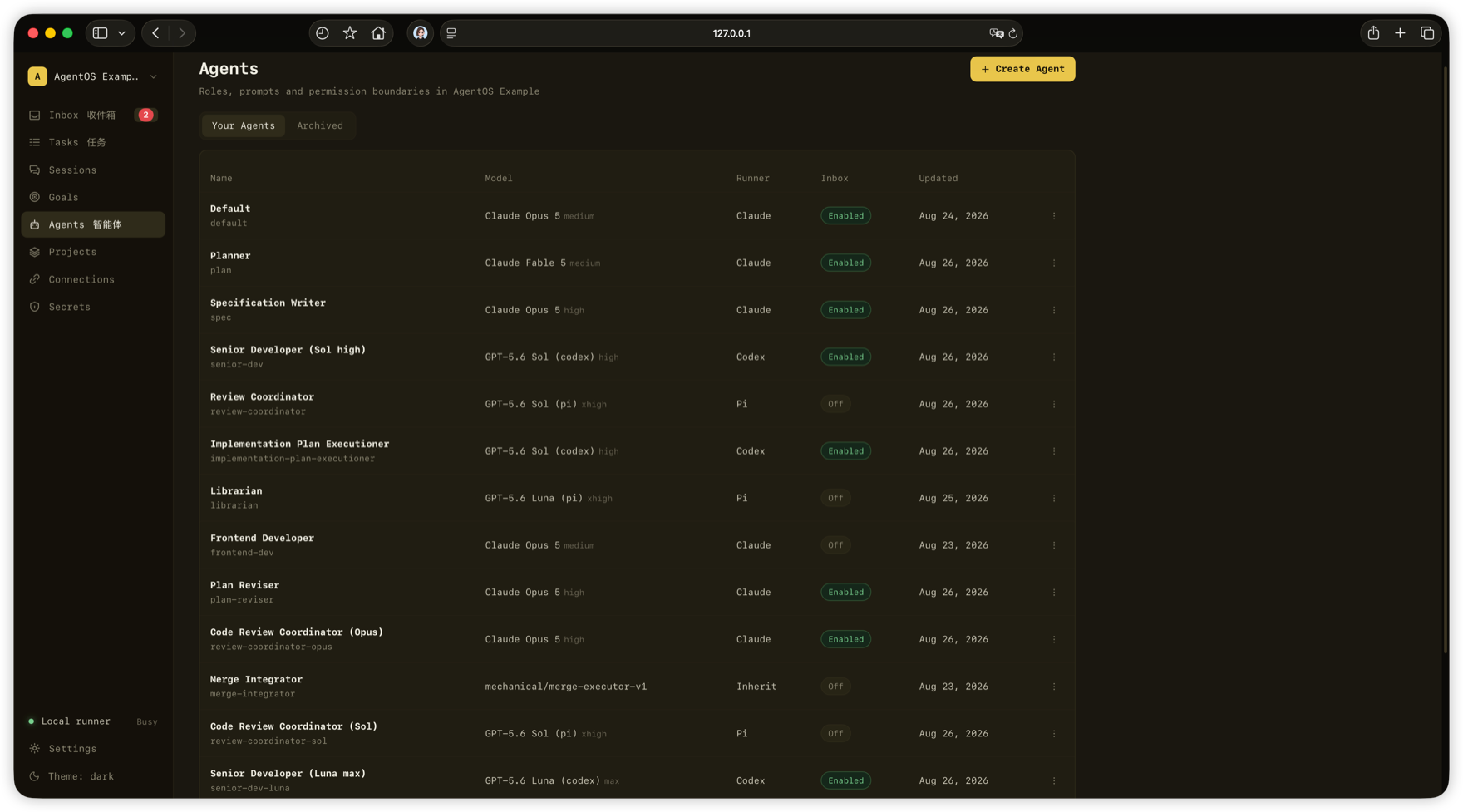
Yes, the template is data, not code: roles, prompts, models and gates live in editable files under agents/templates/, so you can define your own agent roles and reshape the workflow.What happens when a chain can't proceed without me?It stops and waits: an agent can ask a question through the web Inbox, a step you marked as gated pauses for your decision, or a run escalates, and the chain resumes once you answer.
It stops and waits: an agent can ask a question through the web Inbox, a step you marked as gated pauses for your decision, or a run escalates, and the chain resumes once you answer.What are similar projects?orca, gastown, wicked-studio, oh-my-codex, cc-wf-studio, buzz, claude-code, oh-my-subagents
orca, gastown, wicked-studio, oh-my-codex, cc-wf-studio, buzz, claude-code, oh-my-subagentsWhich topics is it in?code-review, gpt, workflow-automation, agent-orchestration, git, docker-compose, multi-agent, local-first, claude, codex, agent, claude-code
code-review, gpt, workflow-automation, agent-orchestration, git, docker-compose, multi-agent, local-first, claude, codex, agent, claude-code