





Что это такое?
 Полностью настраиваемый фреймворк для создания редакторов с форматированием текста в браузере — в духе Medium, Dropbox Paper или Google Docs — построенный как расширяемый contenteditable поверх React.
Полностью настраиваемый фреймворк для создания редакторов с форматированием текста в браузере — в духе Medium, Dropbox Paper или Google Docs — построенный как расширяемый contenteditable поверх React.То есть это не готовый компонент редактора, который можно просто подключить?Это фреймворк, а не готовый редактор: вся логика живёт в плагинах, а ядро почти ничего не предполагает о схеме ваших данных, так что вы собираете нужный вам опыт редактирования, а не боретесь со встроенными допущениями.
Это фреймворк, а не готовый редактор: вся логика живёт в плагинах, а ядро почти ничего не предполагает о схеме ваших данных, так что вы собираете нужный вам опыт редактирования, а не боретесь со встроенными допущениями.Как добавить его в проект?Добавьте пакеты slate и slate-react в своё приложение, затем пройдите руководства Getting Started и документацию Concepts, чтобы разобраться в архитектуре и базовых моделях Slate.
Добавьте пакеты slate и slate-react в своё приложение, затем пройдите руководства Getting Started и документацию Concepts, чтобы разобраться в архитектуре и базовых моделях Slate.Он привязывает меня к React?Да — он построен поверх React, а пакет slate-react поставляет React-компоненты, которые отрисовывают редактор, так что стек на React — фактически обязательное условие.
Да — он построен поверх React, а пакет slate-react поставляет React-компоненты, которые отрисовывают редактор, так что стек на React — фактически обязательное условие.Он помечен как beta — насколько это рискованно, если я буду строить на нём проект уже сейчас?Основной API уже можно использовать, но часть API не финализирована и может измениться с нарушением совместимости, а графика релиза 1.0 нет. Проект развивается силами сообщества без поддержки какой-либо компании, так что исправления сложных случаев, возможно, лягут на вас.
Основной API уже можно использовать, но часть API не финализирована и может измениться с нарушением совместимости, а графика релиза 1.0 нет. Проект развивается силами сообщества без поддержки какой-либо компании, так что исправления сложных случаев, возможно, лягут на вас.Почему автор создал Slate, если Draft.js и ProseMirror уже существовали?Попробовав Draft.js, ProseMirror и Quill, он снова и снова упирался в одни и те же проблемы: жёстко зашитые схемы данных, запутанные программные преобразования, сериализацию как вспомогательную задачу, кастомные слои отображения и плоские модели документов, из-за которых таблицы и вставки превращались в боль.
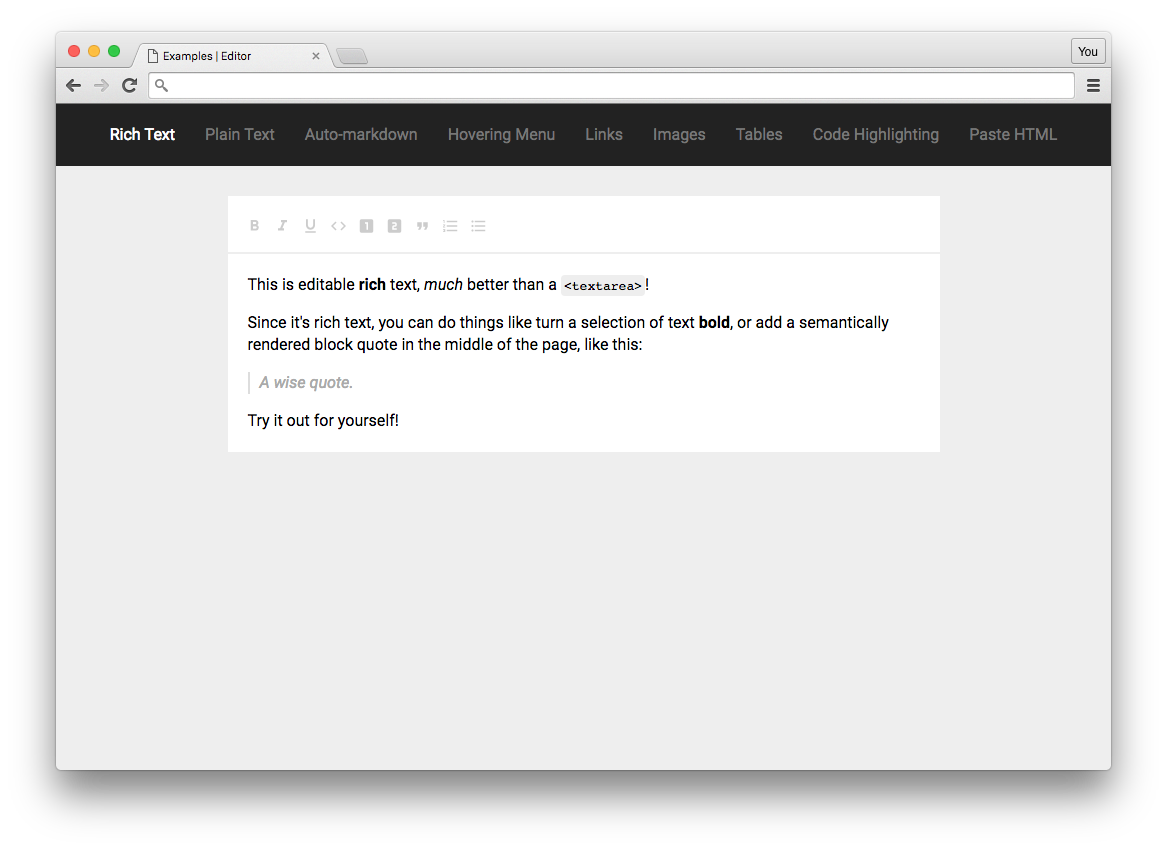
Попробовав Draft.js, ProseMirror и Quill, он снова и снова упирался в одни и те же проблемы: жёстко зашитые схемы данных, запутанные программные преобразования, сериализацию как вспомогательную задачу, кастомные слои отображения и плоские модели документов, из-за которых таблицы и вставки превращались в боль.Что умеют редакторы из примеров?В репозитории есть рабочие примеры: простой текст, форматированный текст, шорткаты в стиле Markdown, строчные узлы, картинки, всплывающая панель инструментов, таблицы, вставка HTML через HTML-сериализатор и @-упоминания — хороший обзор того, что покрывает система плагинов.
В репозитории есть рабочие примеры: простой текст, форматированный текст, шорткаты в стиле Markdown, строчные узлы, картинки, всплывающая панель инструментов, таблицы, вставка HTML через HTML-сериализатор и @-упоминания — хороший обзор того, что покрывает система плагинов.Как устроено представление документов внутри?Как вложенное рекурсивное дерево, аналогичное DOM: используются выделения и диапазоны, доступны стандартные обработчики событий, поэтому сложные структуры вроде таблиц и вложенных цитат поддерживаются на равных. Операции спроектированы так, чтобы поверх можно было добавить совместное редактирование.
Как вложенное рекурсивное дерево, аналогичное DOM: используются выделения и диапазоны, доступны стандартные обработчики событий, поэтому сложные структуры вроде таблиц и вложенных цитат поддерживаются на равных. Операции спроектированы так, чтобы поверх можно было добавить совместное редактирование.Какие пакеты публикует монорепозиторий и за что каждый отвечает?Четыре: slate (логика основной модели данных), slate-react (React-компоненты для отрисовки), slate-history (плагин отмены и повтора действий) и slate-hyperscript (инструмент для записи документов Slate в JSX).
Четыре: slate (логика основной модели данных), slate-react (React-компоненты для отрисовки), slate-history (плагин отмены и повтора действий) и slate-hyperscript (инструмент для записи документов Slate в JSX).Which topics is it in?contenteditable, rich-text, rich-text-editor, wysiwyg, text-editor, dom, collaboration, plugin-system, monorepo, editor, browser, plugin
contenteditable, rich-text, rich-text-editor, wysiwyg, text-editor, dom, collaboration, plugin-system, monorepo, editor, browser, plugin