824 ·GitHub
Что это такое?
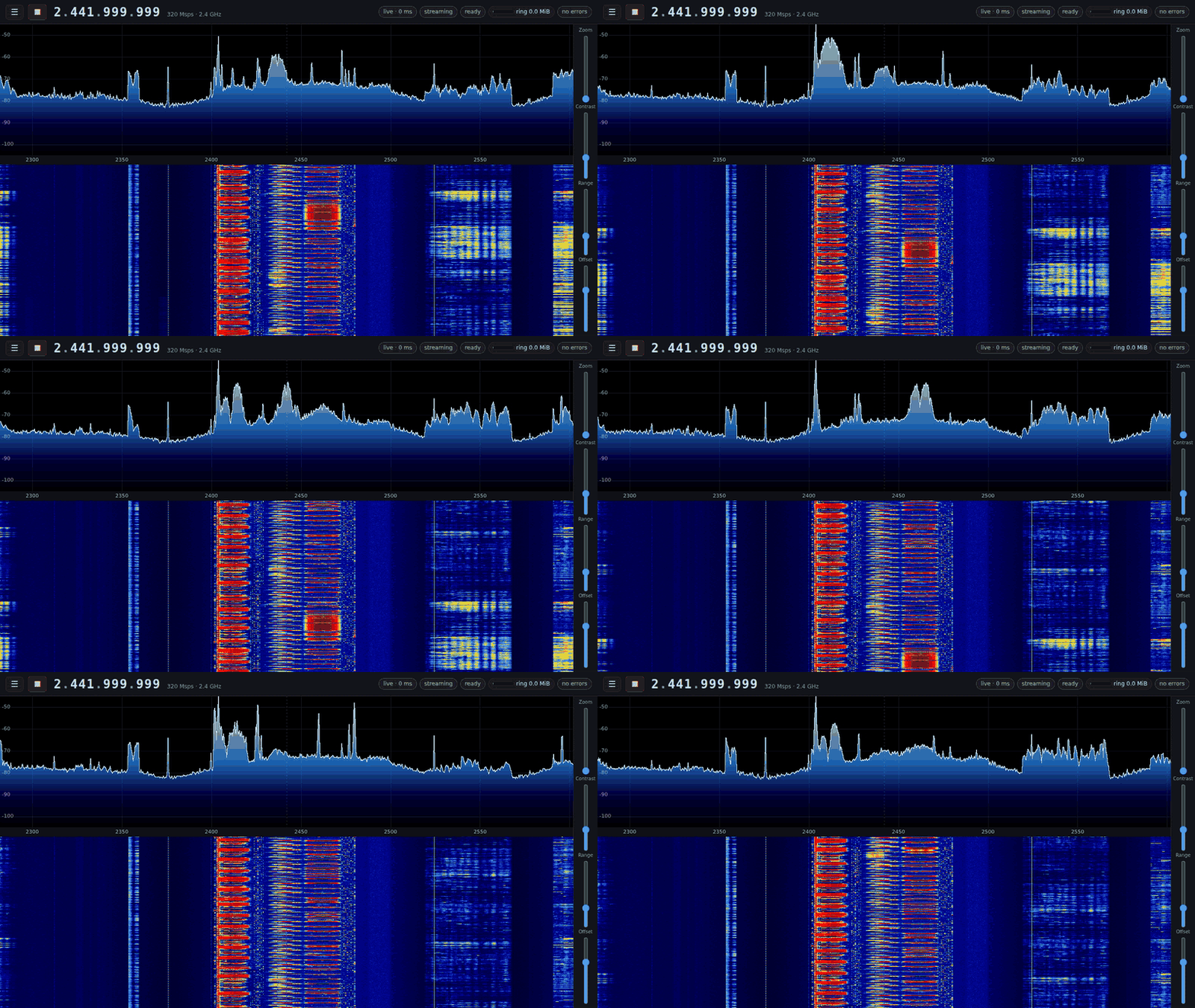
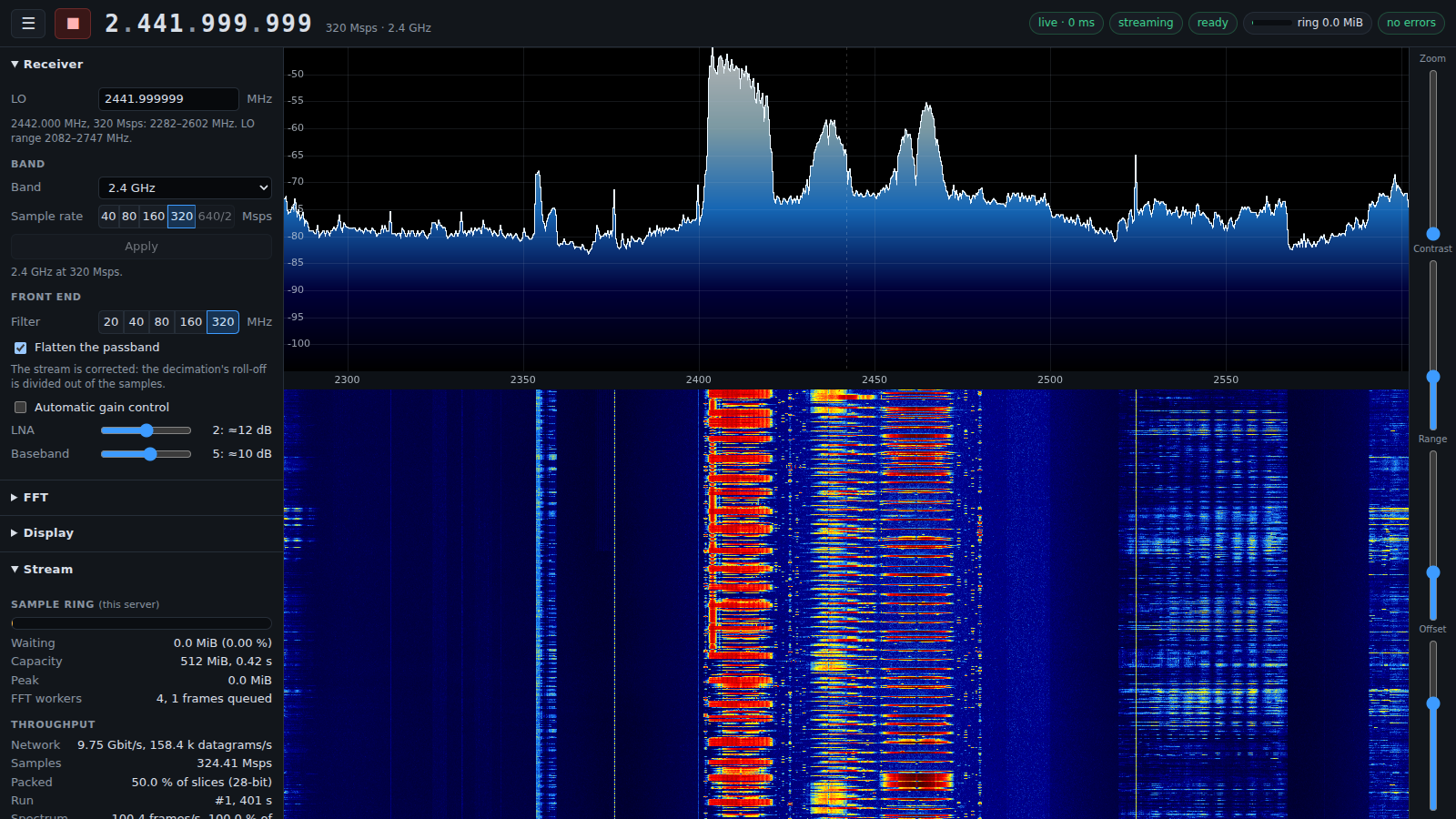
 W1700K SDR превращает Wi-Fi 7 роутер Gemtek W1700K в широкополосный программно-определяемый приёмник: радиомодуль MediaTek MT7996 в роутере снимает сырые 14-битные IQ-данные со скоростью до 320 Msps, SoC AN7581 передаёт их поток по 10 GbE, а Linux-хост показывает их в браузере как живой спектр и waterfall.
W1700K SDR превращает Wi-Fi 7 роутер Gemtek W1700K в широкополосный программно-определяемый приёмник: радиомодуль MediaTek MT7996 в роутере снимает сырые 14-битные IQ-данные со скоростью до 320 Msps, SoC AN7581 передаёт их поток по 10 GbE, а Linux-хост показывает их в браузере как живой спектр и waterfall.Я устанавливаю что-то на свой компьютер, или это прошивка, которая записывается в роутер?И то и другое: кастомная прошивка (патч ROM плюс программы WM и WA, без кода MediaTek) заменяет штатную прошивку радио/SoC роутера, а отдельное ПО для хоста (w1700k-stream, w1700k-spectrum, sdr-recv) запускается на Linux-ПК, чтобы принимать IQ-поток и показывать интерфейс в браузере.
И то и другое: кастомная прошивка (патч ROM плюс программы WM и WA, без кода MediaTek) заменяет штатную прошивку радио/SoC роутера, а отдельное ПО для хоста (w1700k-stream, w1700k-spectrum, sdr-recv) запускается на Linux-ПК, чтобы принимать IQ-поток и показывать интерфейс в браузере.Как это запустить?Подключите USB-переходник в COM-порт на 3,3 В к консольному разъёму W1700K, Ethernet-кабель к его порту lan3 для установки и сетевую карту 10 GbE на хосте к его порту wan, затем прошейте командой init/install; после этого просто откройте веб-интерфейс и нажмите play, чтобы загрузить и запустить прошивку приёмника.
Подключите USB-переходник в COM-порт на 3,3 В к консольному разъёму W1700K, Ethernet-кабель к его порту lan3 для установки и сетевую карту 10 GbE на хосте к его порту wan, затем прошейте командой init/install; после этого просто откройте веб-интерфейс и нажмите play, чтобы загрузить и запустить прошивку приёмника.Что нужно на машине для сборки, кроме самого роутера?Для сборки нужны компилятор C/C++, make, git, Python 3.10+, стандартные зависимости Buildroot, clang, ld.lld, llvm-objcopy и llvm-readobj для прошивки RISC-V, openssl для контейнера прошивки, а также libfftw3-dev и zlib для серверов stream и spectrum.
Для сборки нужны компилятор C/C++, make, git, Python 3.10+, стандартные зависимости Buildroot, clang, ld.lld, llvm-objcopy и llvm-readobj для прошивки RISC-V, openssl для контейнера прошивки, а также libfftw3-dev и zlib для серверов stream и spectrum.Безопасно ли прошивать, и можно ли всё вернуть обратно?Кастомная прошивка работает только на приём (передача остаётся выключенной) и никогда не записывает постоянный бит eFuse от MediaTek, но её установка полностью заменяет штатную систему роутера; init/install сначала делает резервную копию NAND, чтобы init/restore мог вернуть устройство к заводскому состоянию, а обращение к недокументированным регистрам может подвесить SoC до отключения питания.
Кастомная прошивка работает только на приём (передача остаётся выключенной) и никогда не записывает постоянный бит eFuse от MediaTek, но её установка полностью заменяет штатную систему роутера; init/install сначала делает резервную копию NAND, чтобы init/restore мог вернуть устройство к заводскому состоянию, а обращение к недокументированным регистрам может подвесить SoC до отключения питания.Почему бы просто не использовать штатную прошивку от MediaTek?Всё, что работает на радиомодуле, написано с нуля для этого проекта (патч ROM, WM и WA), без какого-либо кода MediaTek. Начальная загрузка и калибровка радио были расшифрованы регистр за регистром по трассировке собственной прошивки MediaTek, поэтому никакие проприетарные блобы не скачиваются и не нужны во время работы.
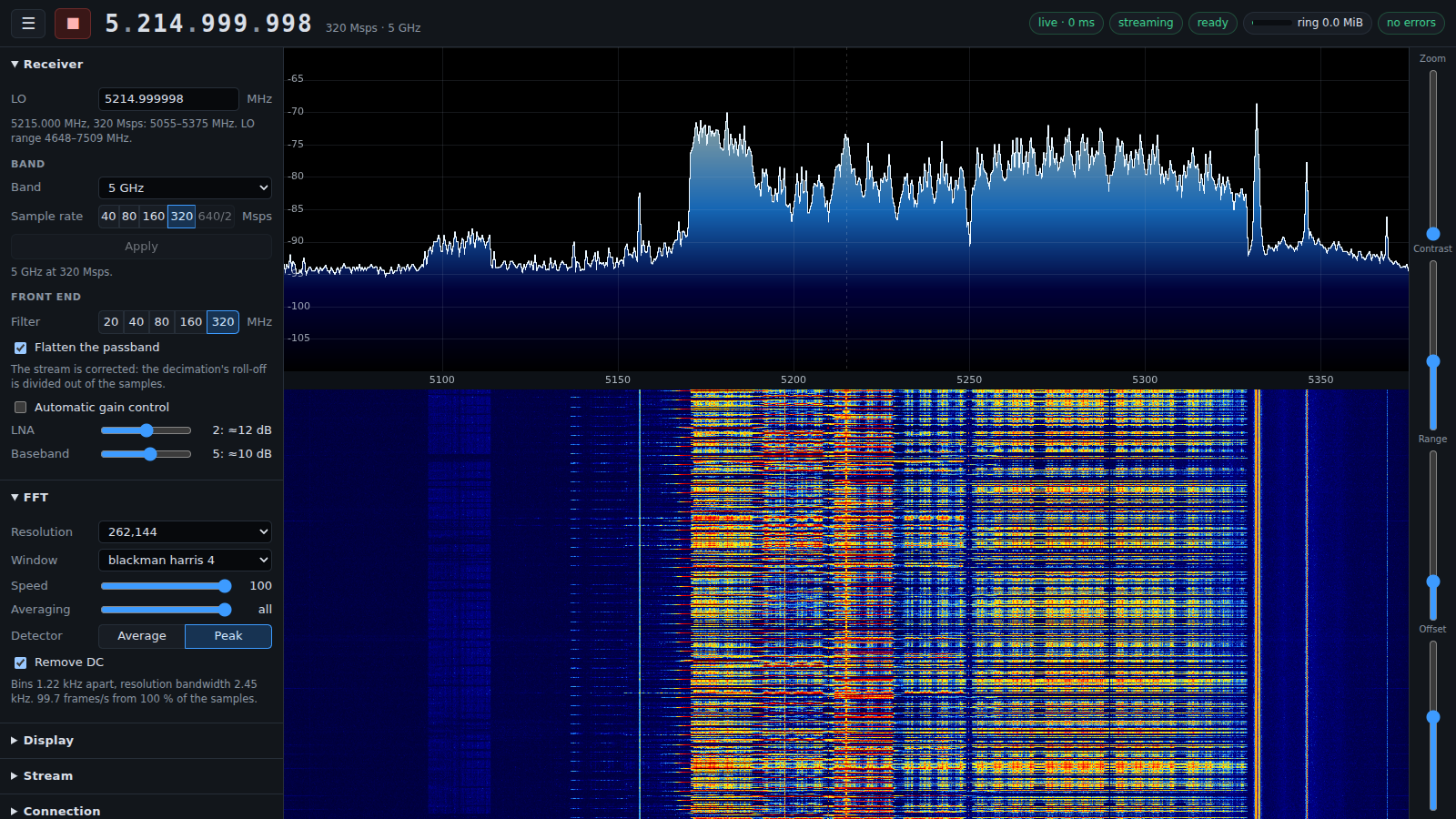
Всё, что работает на радиомодуле, написано с нуля для этого проекта (патч ROM, WM и WA), без какого-либо кода MediaTek. Начальная загрузка и калибровка радио были расшифрованы регистр за регистром по трассировке собственной прошивки MediaTek, поэтому никакие проприетарные блобы не скачиваются и не нужны во время работы.Какие частоты дискретизации и диапазоны он может захватывать?Он захватывает комплексные 14-битные IQ-данные на 40, 80, 160 или 320 Msps в диапазонах 2,4, 5 и 6 ГГц с помощью радиомодулей MT7976/MT7977, плюс дополнительный режим 640/2 Msps на band 2. LO можно настроить на любую частоту, на которой захватывается синтезатор диапазона, и перестраивать на ходу примерно за 1 мс.
Он захватывает комплексные 14-битные IQ-данные на 40, 80, 160 или 320 Msps в диапазонах 2,4, 5 и 6 ГГц с помощью радиомодулей MT7976/MT7977, плюс дополнительный режим 640/2 Msps на band 2. LO можно настроить на любую частоту, на которой захватывается синтезатор диапазона, и перестраивать на ходу примерно за 1 мс.Если что-то сломается, можно ли вернуться на заводскую прошивку?Да — init/install перед прошивкой сохраняет исходные данные NAND на хост, а init/restore записывает эту копию обратно и возвращает устройство к заводской прошивке MediaTek.
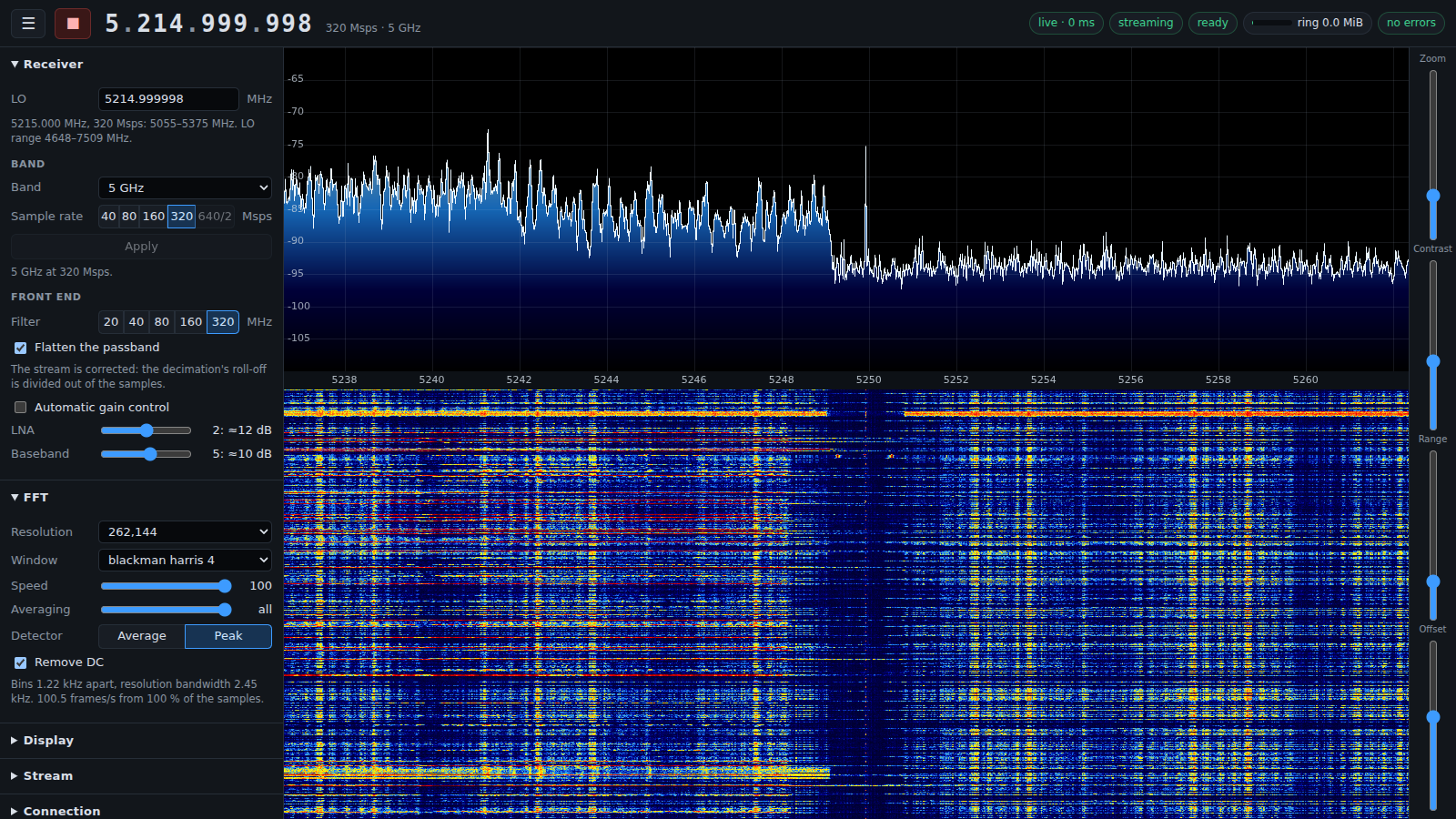
Да — init/install перед прошивкой сохраняет исходные данные NAND на хост, а init/restore записывает эту копию обратно и возвращает устройство к заводской прошивке MediaTek.Насколько быстро обновляется живой спектр?w1700k-spectrum выполняет FFT на 262 144 точки по каждому массиву сэмплов со скоростью 100 спектров в секунду, со сглаженной («flattened») коррекцией ската децимации прямо в потоке, и рисует картинку в браузере в реальном времени рядом с органами управления приёмника.
w1700k-spectrum выполняет FFT на 262 144 точки по каждому массиву сэмплов со скоростью 100 спектров в секунду, со сглаженной («flattened») коррекцией ската децимации прямо в потоке, и рисует картинку в браузере в реальном времени рядом с органами управления приёмника.What are similar projects?esp-sdr, ESP32-Bit-Pirate, mu300-linux, BLEhound, immortalwrt, unleashed-firmware, wifit3, xcertplay
esp-sdr, ESP32-Bit-Pirate, mu300-linux, BLEhound, immortalwrt, unleashed-firmware, wifit3, xcertplay